Therapeutic exercise
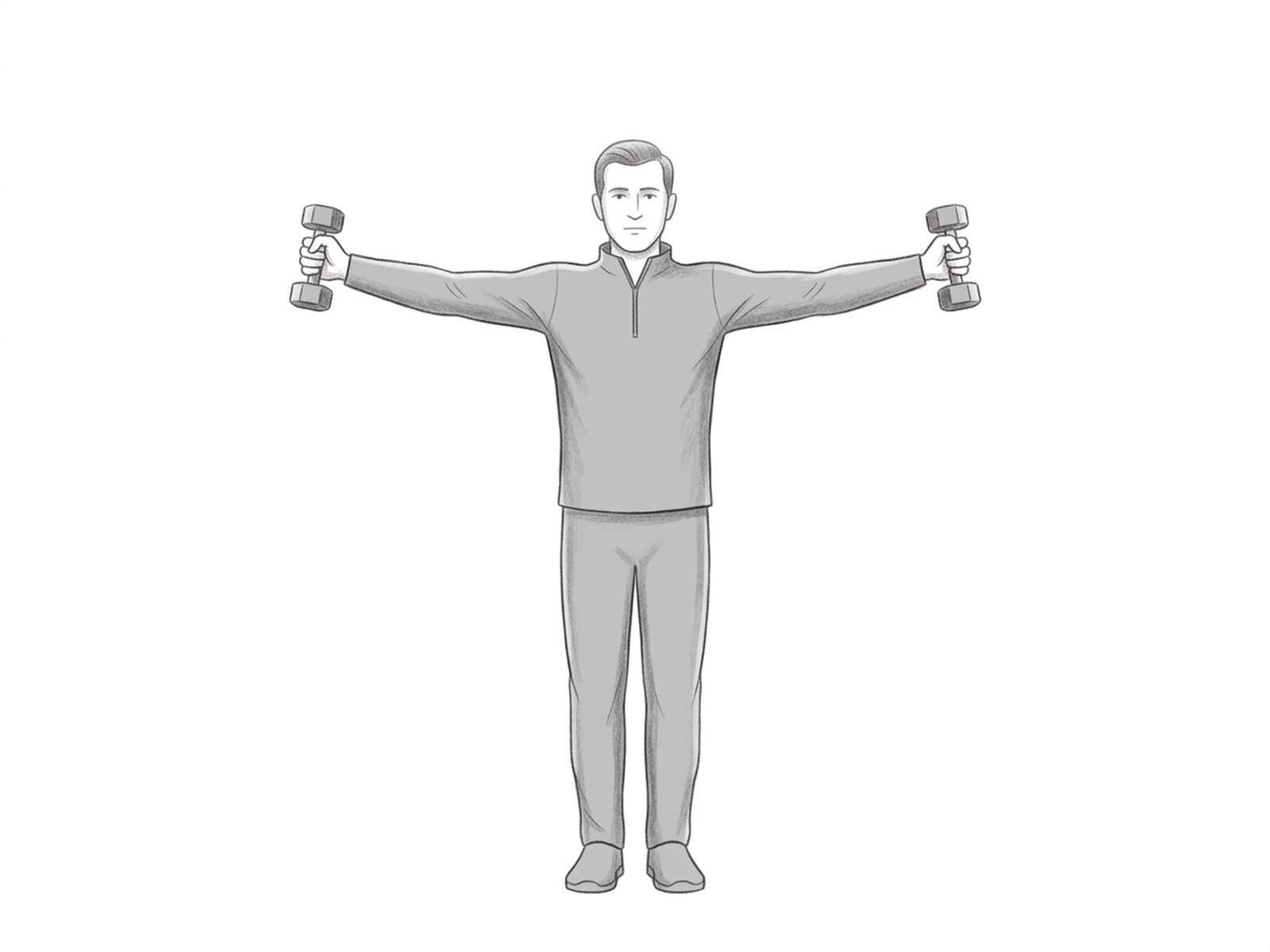
Full Can in the Scapular Plane (Scaption)
Shoulder elevation in the scapular plane (30° forward from the frontal plane) with the thumb pointing up. Recruits the supraspinatus in a safe position, without the mechanical impingement of the classic empty can — the exercise of choice in supraspinatus tendinopathy rehabilitation.
How to perform
- Starting position. Stand with feet shoulder-width apart, holding a light dumbbell (1–3 kg) in each hand.
- Step 2. Raise the arms forward and laterally at a 30° angle (scapular plane), with the thumbs always pointing up.
- Step 3. Raise the arms to shoulder height, without going beyond — the movement is controlled and without momentum.
- Step 4. Hold the high position for 1 second and lower slowly over 3 seconds.
- Return. Avoid any compensation with the upper trapezius — the shoulders should stay far from the ears.
When not to perform
- Supraspinatus tendinopathy in an acute reactive phase
- Impingement syndrome in an inflammatory phase
- Symptomatic partial or full rotator-cuff tear
- Recent shoulder surgery
- Adhesive capsulitis in a freezing phase
- Cervical pain that worsens with arm elevation
Medical disclaimer. These exercises are presented for informational purposes only. Always consult your physician before starting any exercise program, especially in case of acute pain, recent injury, or underlying clinical condition.
Related Exercises
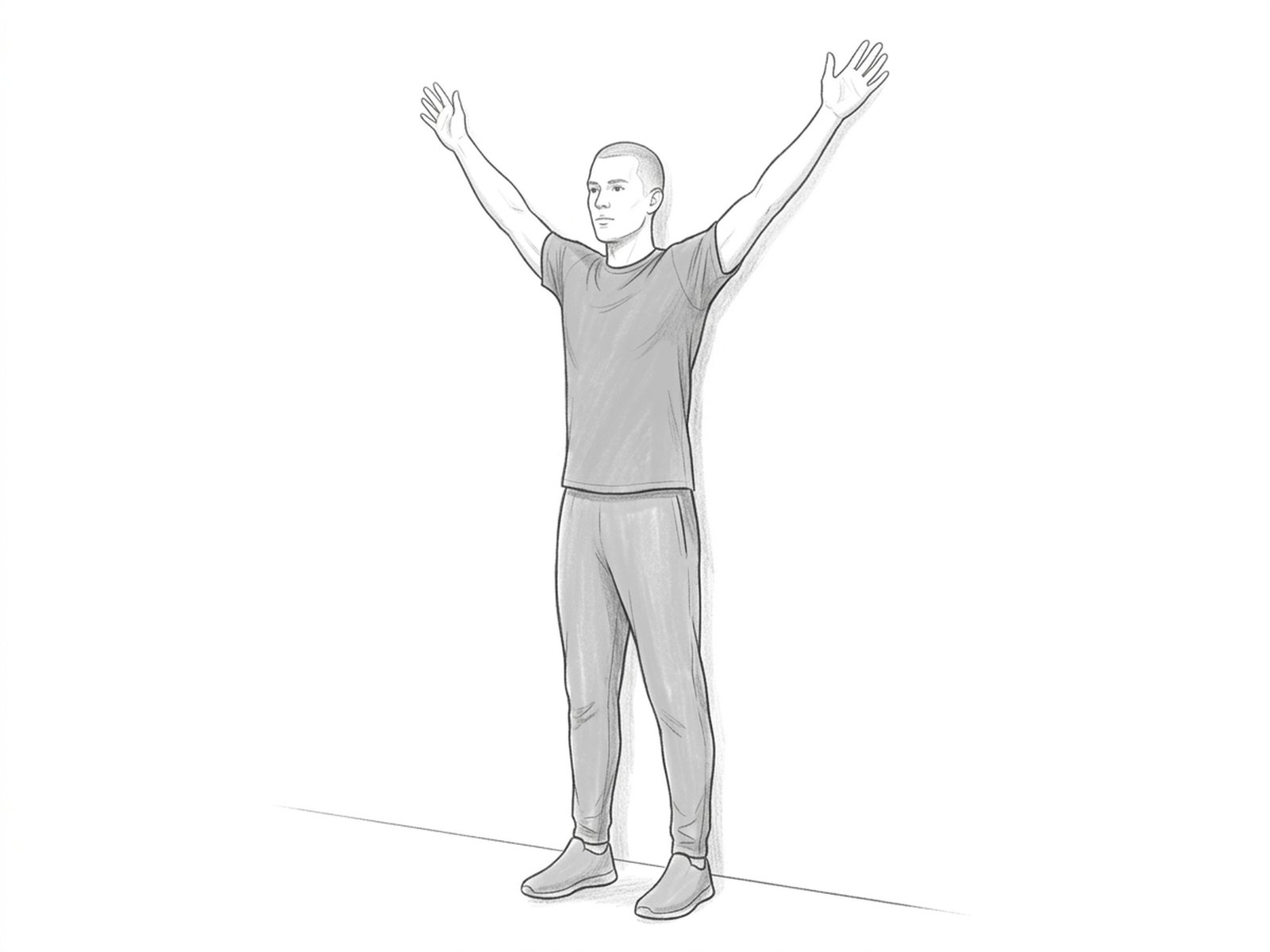
Wall Slide
Mobilization of the scapulothoracic chain in a functional elevation pattern. Restores the scapulohumeral rhythm, frequently dysfunctional in impingement syndrome.
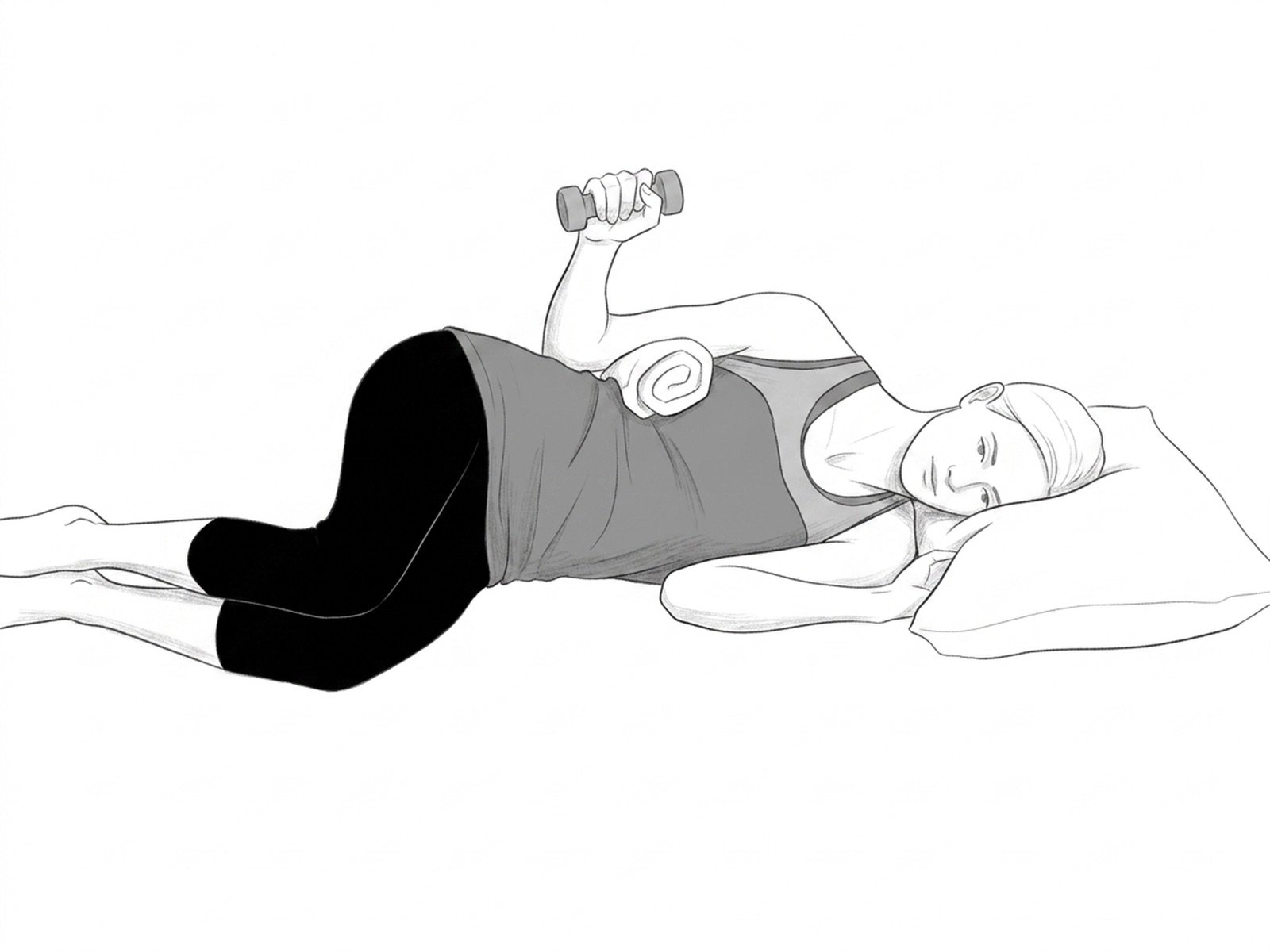
Side-Lying Shoulder Wiper
A wide windshield-wiper-like sweeping motion of the shoulder in side-lying, covering the range of internal and external rotation in a controlled manner. Isolates the subscapularis and the posterior cuff simultaneously — useful for recovering range and coordination after immobilization.
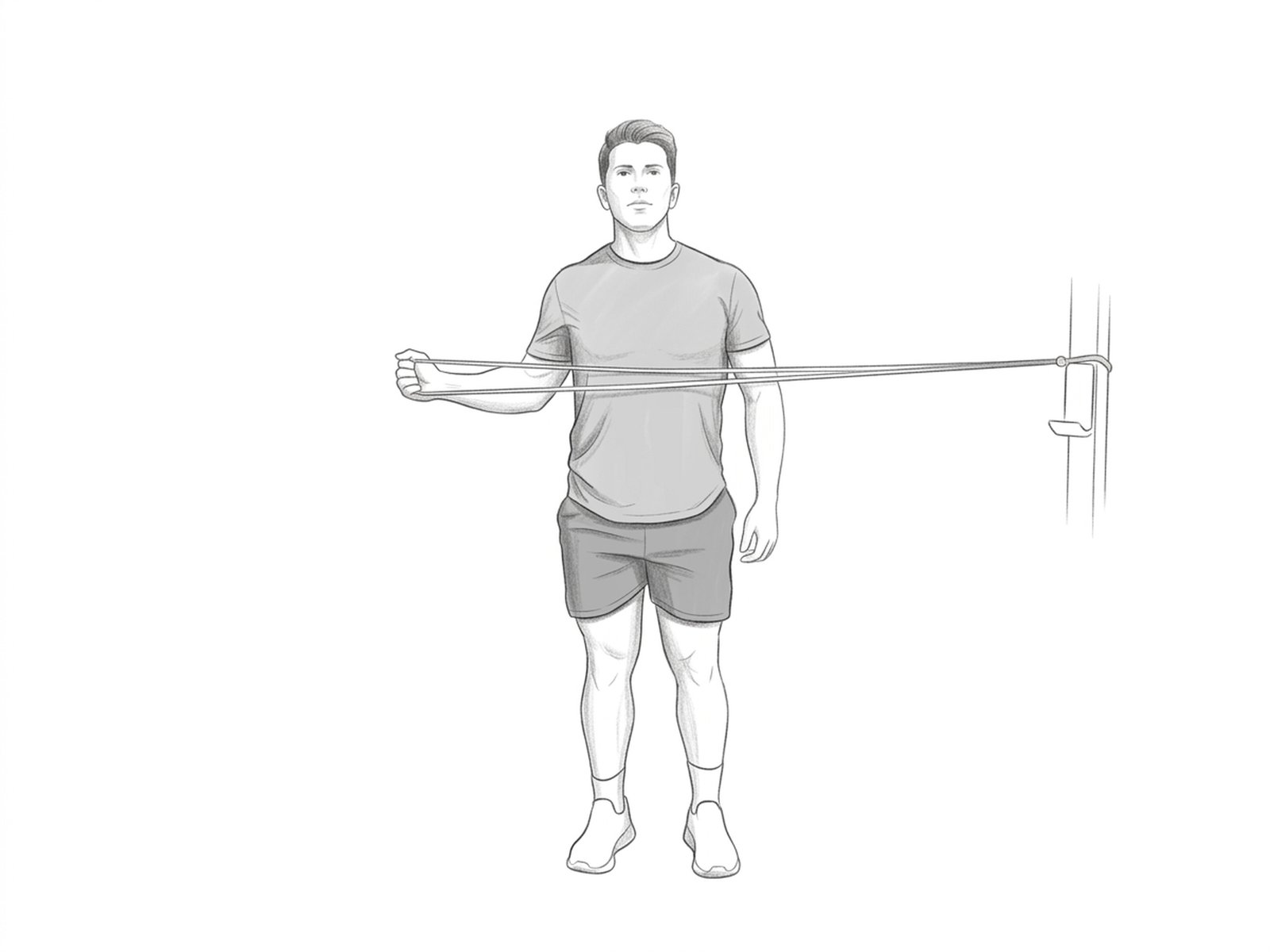
Banded External Rotation
A functional variant of external rotation, performed standing with elastic resistance. Excellent for progression and maintenance in chronic rotator-cuff tendinopathy.