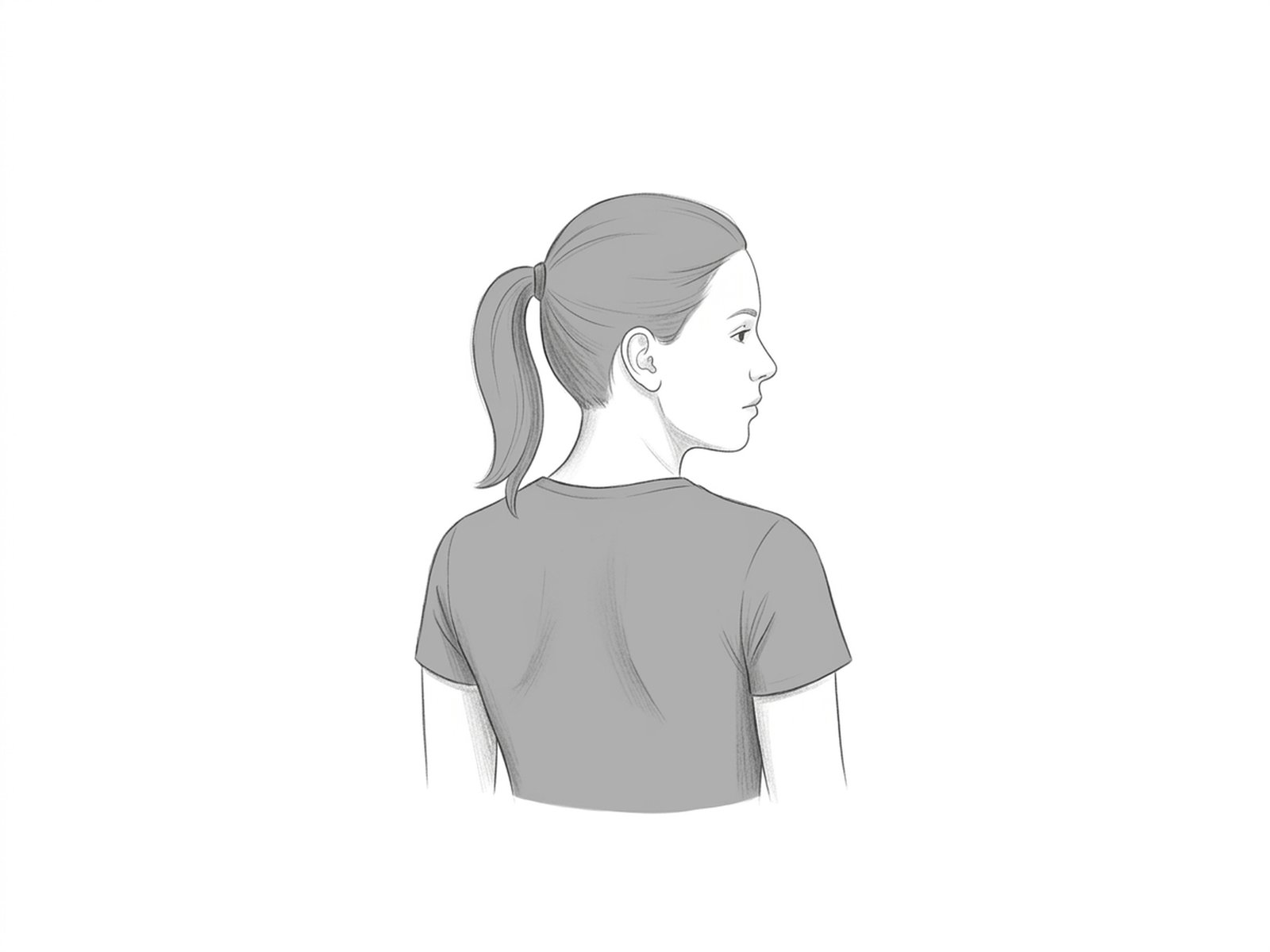
Therapeutic exercise
Gentle Neck Rotation Within Tolerance
Active cervical mobilization within a pain-free range. Reintroduces movement after acute torticollis and reduces fear of movement (kinesiophobia).
How to perform
- Starting position. Sit upright with your shoulders relaxed.
- Step 2. Slowly rotate your head to one side to the first sign of discomfort (NOT to pain).
- Step 3. Return to center and rotate to the other side.
- Return. Progressively increase the range of motion each session.
When not to perform
- Intense pain radiating into the arm
- Dizziness during the movement
Medical disclaimer. These exercises are presented for informational purposes only. Always consult your physician before starting any exercise program, especially in case of acute pain, recent injury, or underlying clinical condition.
Related Exercises
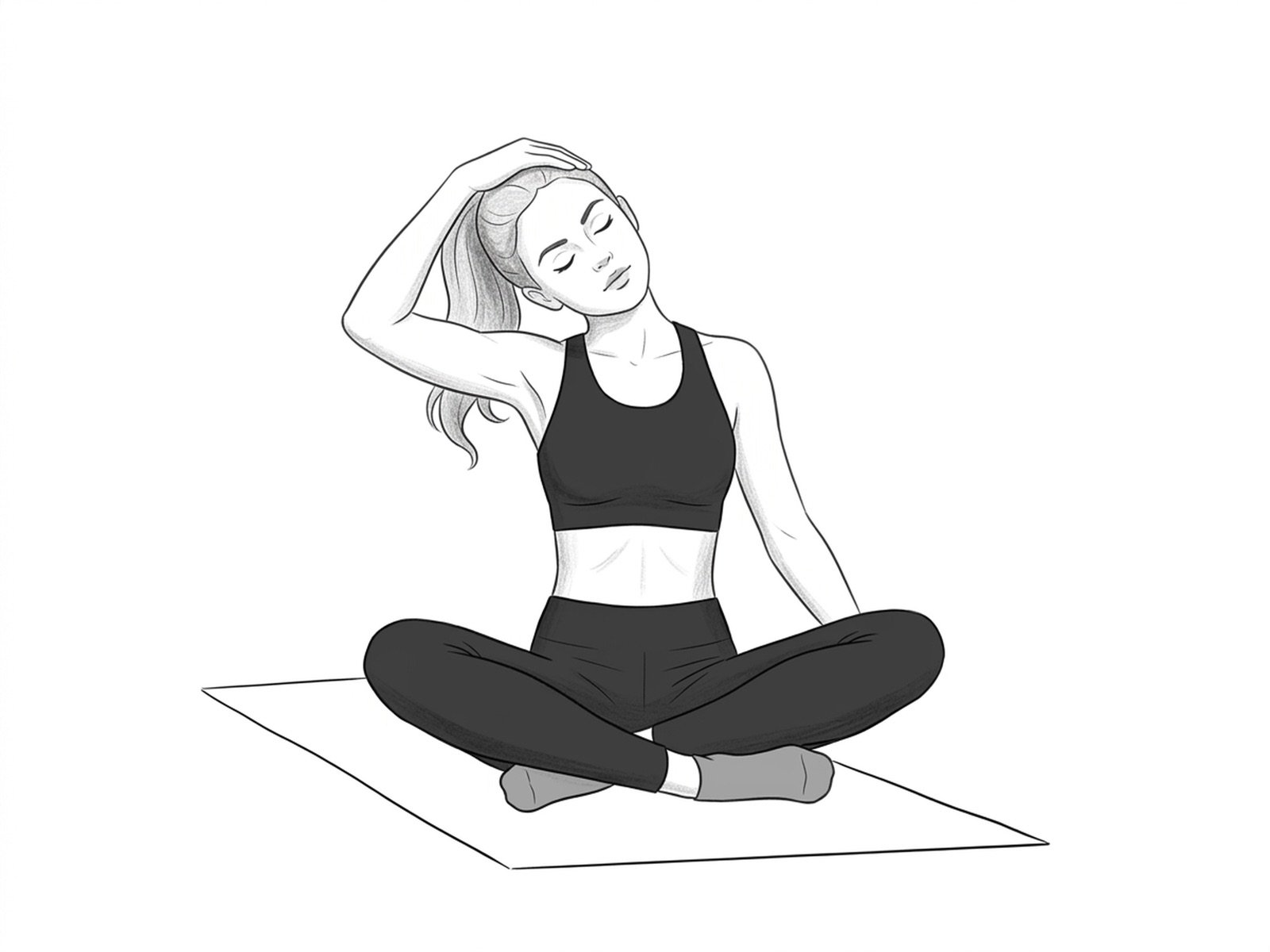
Sternocleidomastoid (SCM) Stretch
Selective stretch of the sternocleidomastoid — a muscle frequently shortened in patients with tension-type headache, cervicogenic headache, and forward-head posture. The position combines extension, rotation, and contralateral lateral flexion.
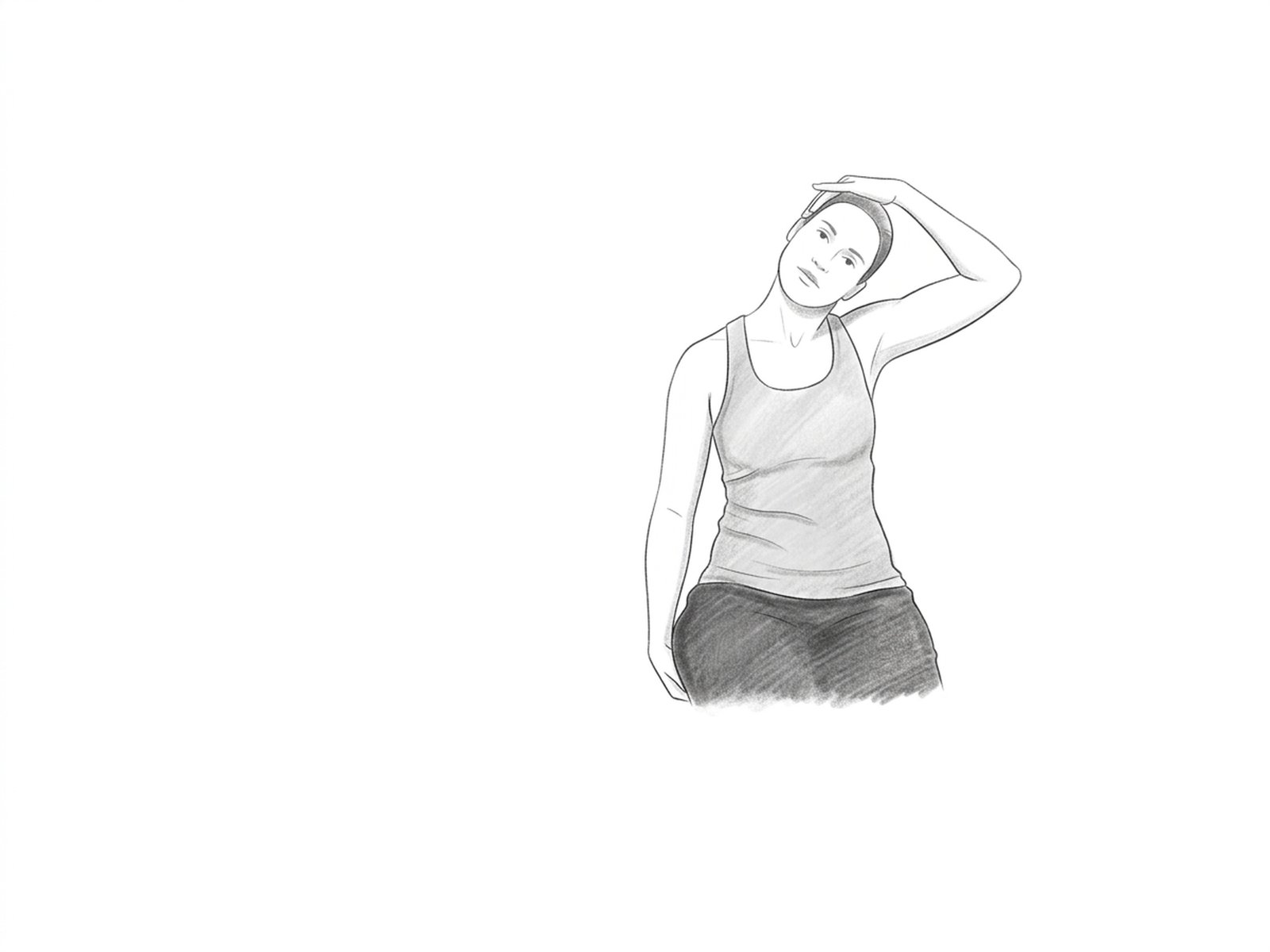
Upper-Trapezius Stretch
Stretches the upper trapezius — a muscle that is commonly hypertonic in patients with mechanical neck pain. Relieves the sensation of heaviness and tension in the neck and shoulders.
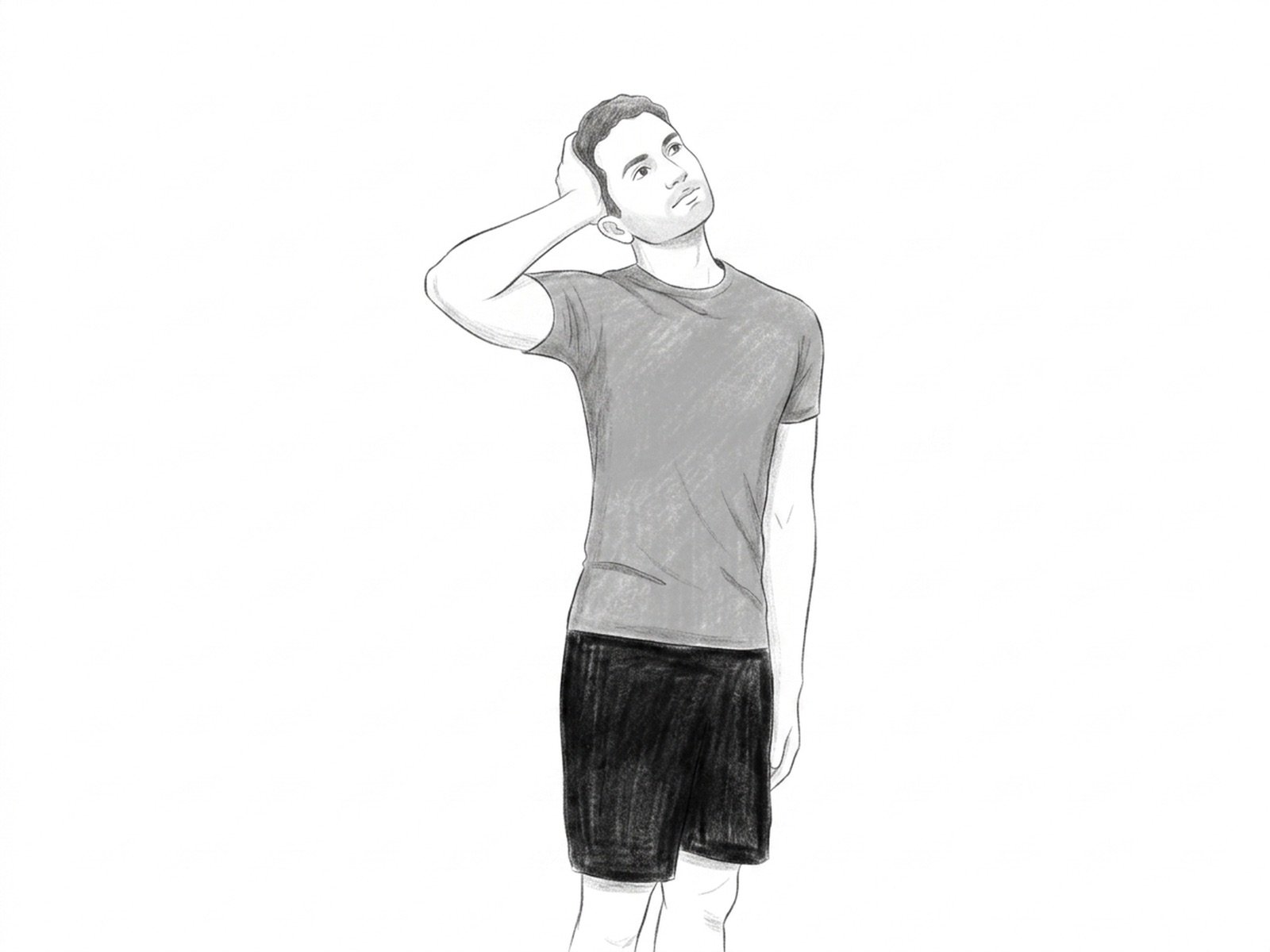
Isotonic Cervical Side-Bend with Resistance
Dynamic strengthening of the lateral neck flexors (scalenes and contralateral sternocleidomastoid) with manual or elastic resistance. Complements isometric work in patients with levator-scapulae dysfunction — develops endurance capacity in a functional pattern.