Therapeutic exercise
Heel Slide for Knee Range
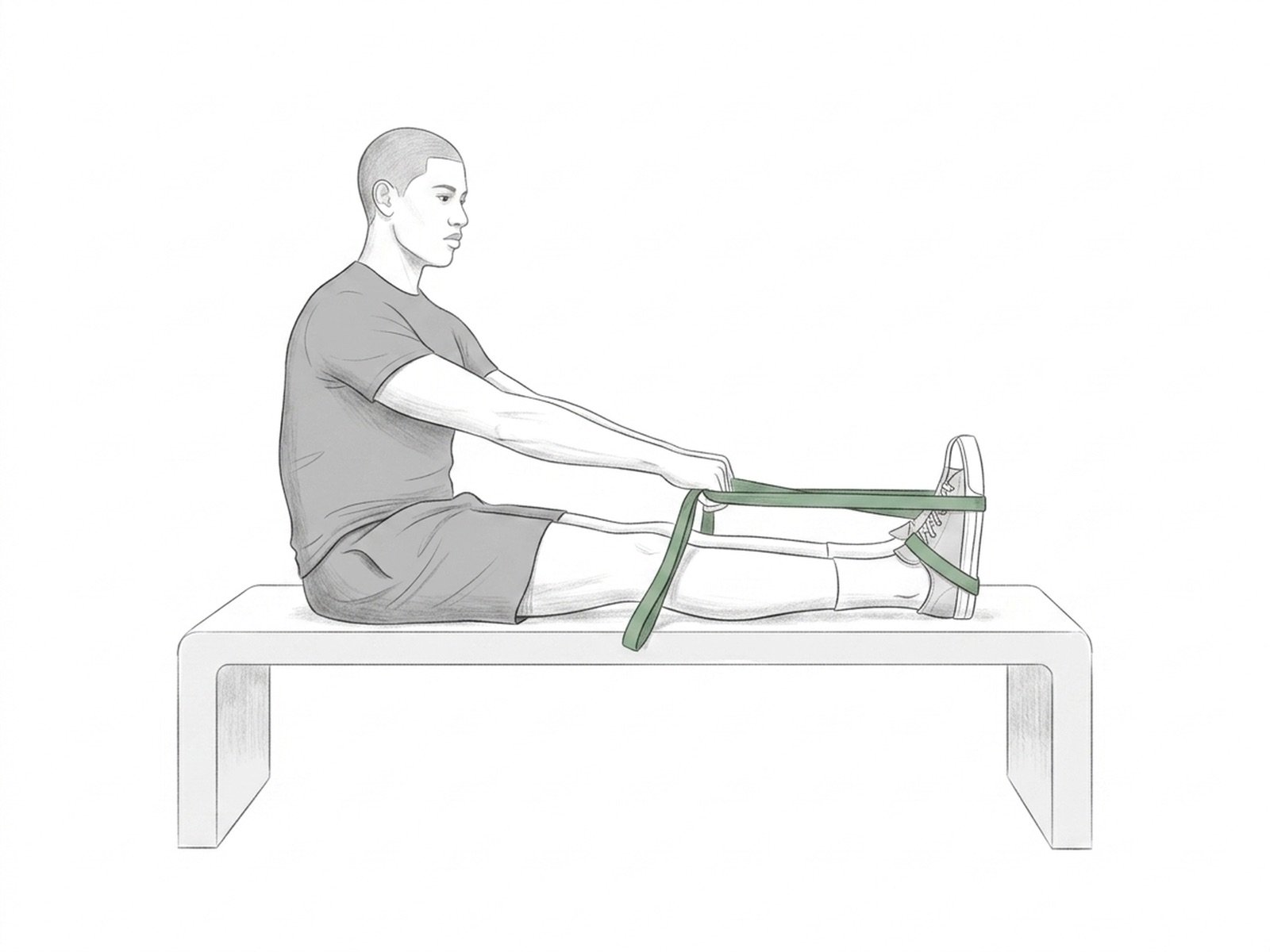
Passive-active heel slide toward the glute, restoring knee flexion range. The foundational exercise after prolonged immobilization (meniscal, ligamentous, or post-operative) — progresses range without loading, safely.
How to perform
- Starting position. Lie face up with the legs extended.
- Step 2. Slowly slide the heel of the affected leg toward the glute, progressively flexing the knee.
- Step 3. Go to the tolerable limit without acute pain and hold the position for 5 seconds.
- Step 4. Use a towel around the foot to assist the movement if flexion is difficult at first (manual self-traction).
- Return. Slowly return to the starting position (extension) and repeat. Range increases progressively over the days.
When not to perform
- Very recent post-operative surgery without medical clearance
- Knee joint locking (suspected meniscal fragment)
- Active joint infection
- Suspected deep vein thrombosis
- Intense acute pain with knee flexion
- Non-consolidated femur or tibia fracture
Medical disclaimer. These exercises are presented for informational purposes only. Always consult your physician before starting any exercise program, especially in case of acute pain, recent injury, or underlying clinical condition.
Related Exercises
Quadriceps Isometric Sets
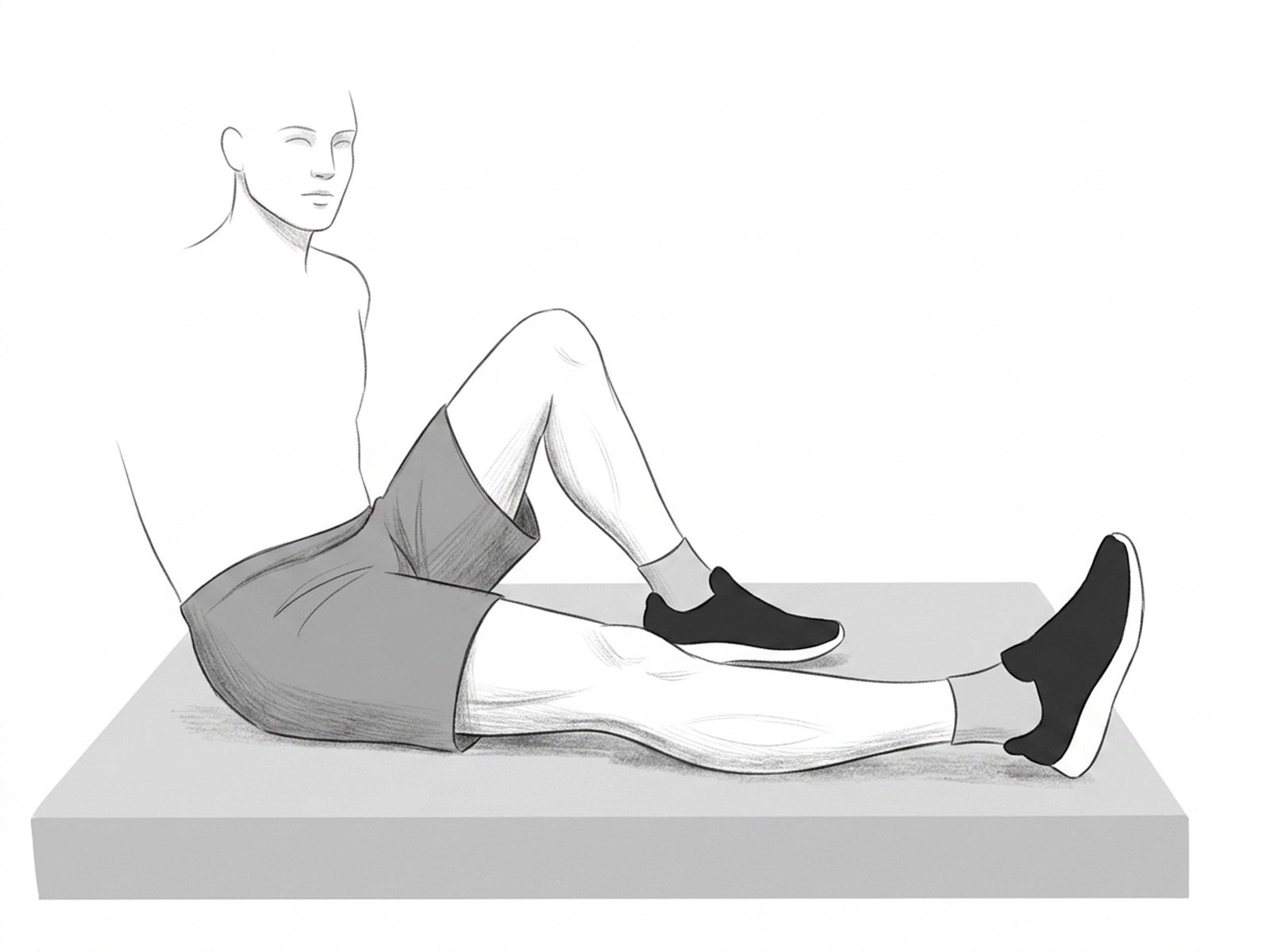
Isometric quadriceps activation without joint movement. Preserves strength without overloading the joint — a cornerstone of conservative treatment for knee osteoarthritis.
Straight-Leg Raise
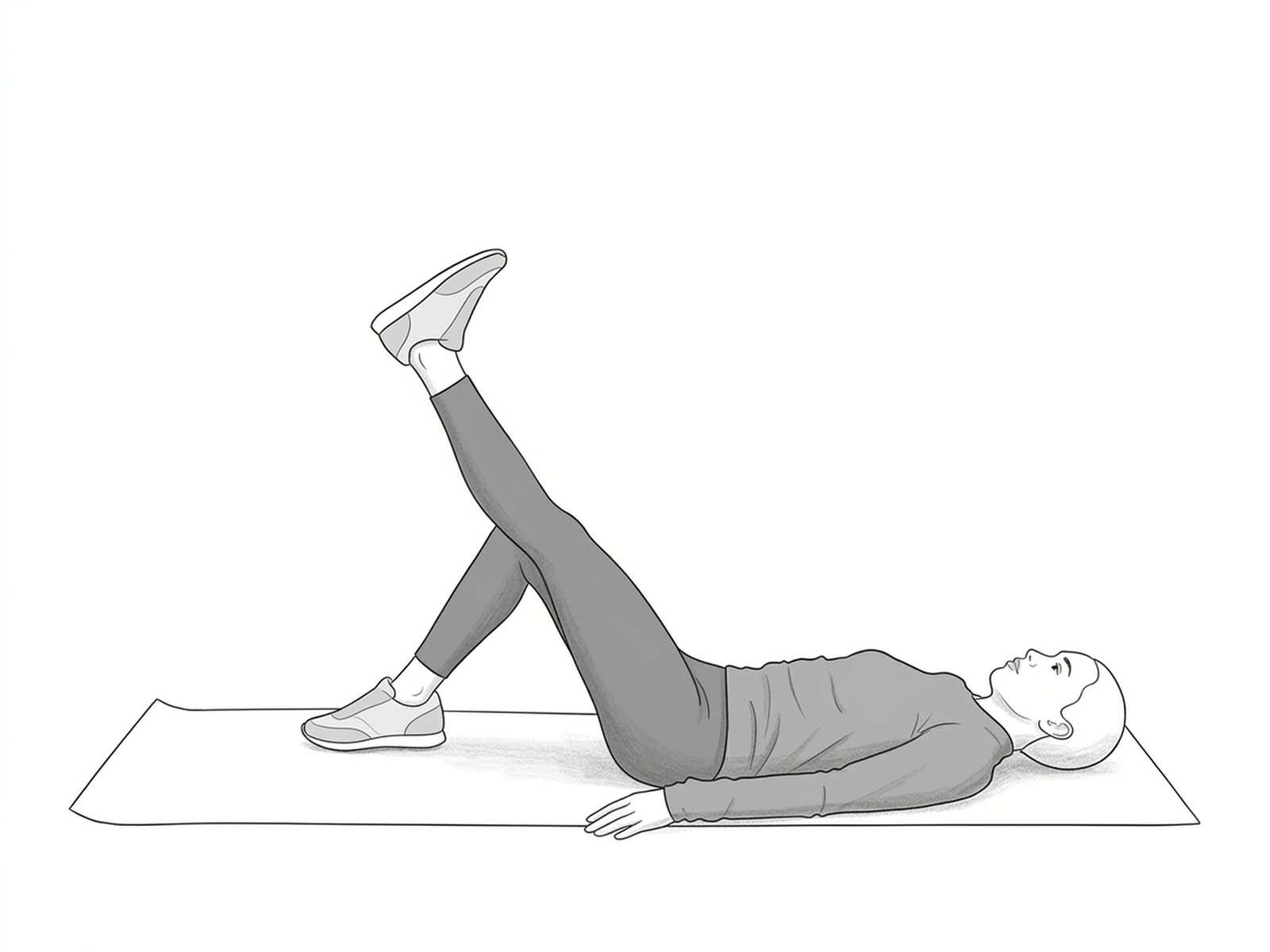
Strengthens the quadriceps and hip flexors without bending the knee. Effective for moderate knee osteoarthritis when squats are contraindicated.
Seated Knee Extension
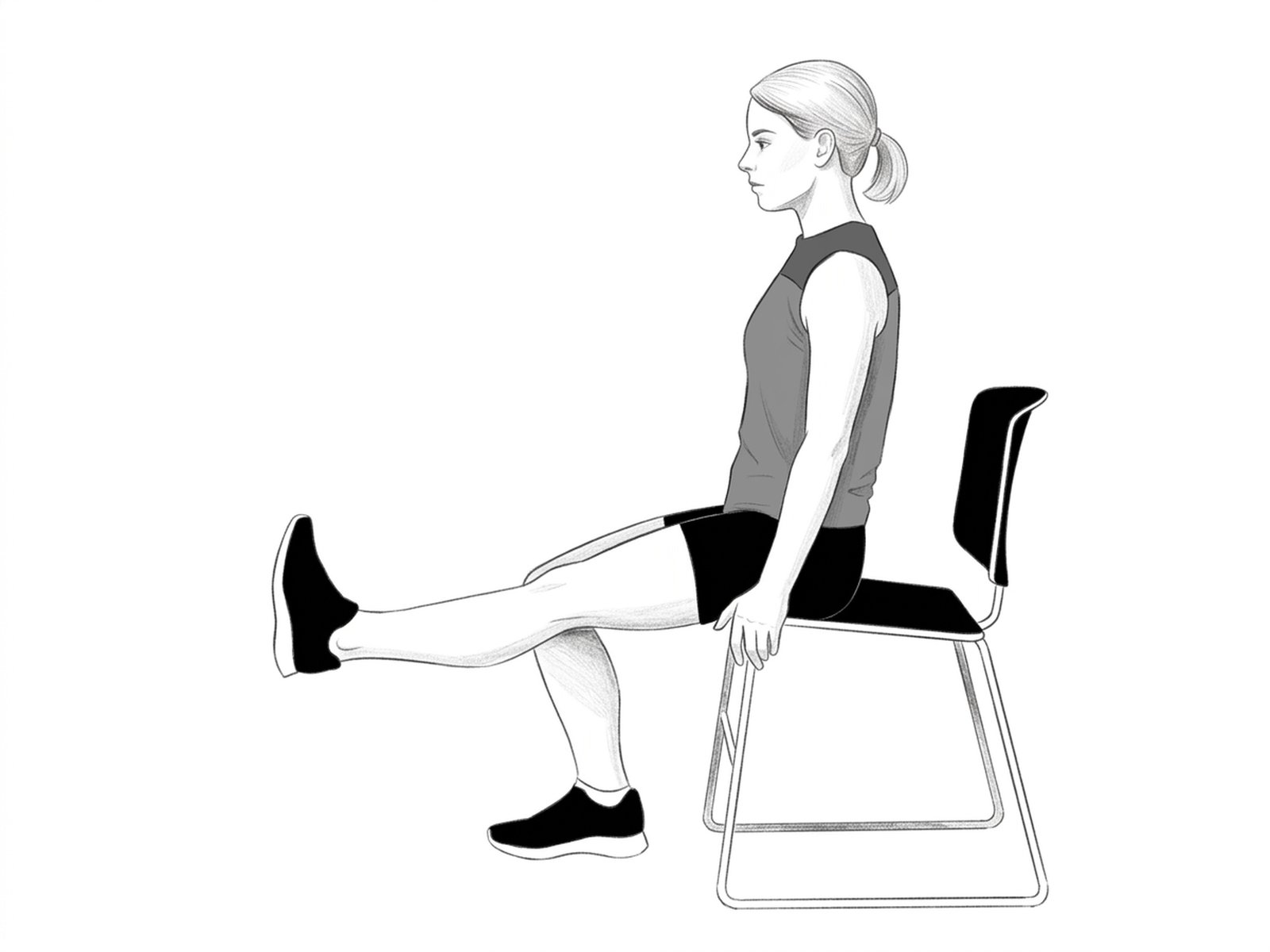
Open-kinetic-chain isotonic knee extension performed seated in a chair. Unlike the SLR (straight-leg raise), it isolates the quadriceps in end-range — useful in advanced knee osteoarthritis to recover pure extensor strength.