Therapeutic exercise
Codman Pendulum Exercise
Passive shoulder mobilization through gravity, without active muscle contraction. The first exercise prescribed for acute shoulder pain, adhesive capsulitis, and post-operative care — allows joint movement without rotator-cuff loading.
How to perform
- Starting position. Lean the trunk forward, resting the unaffected hand on a table or chair.
- Step 2. Let the affected arm hang relaxed like a pendulum.
- Step 3. Move the body gently to generate arm oscillations: front/back, side-to-side, and in circles.
- Return. The arm stays completely relaxed — the movement comes from the body, not the shoulder.
When not to perform
- Unreduced glenohumeral dislocation
- Non-consolidated humeral fracture
Medical disclaimer. These exercises are presented for informational purposes only. Always consult your physician before starting any exercise program, especially in case of acute pain, recent injury, or underlying clinical condition.
Related Exercises
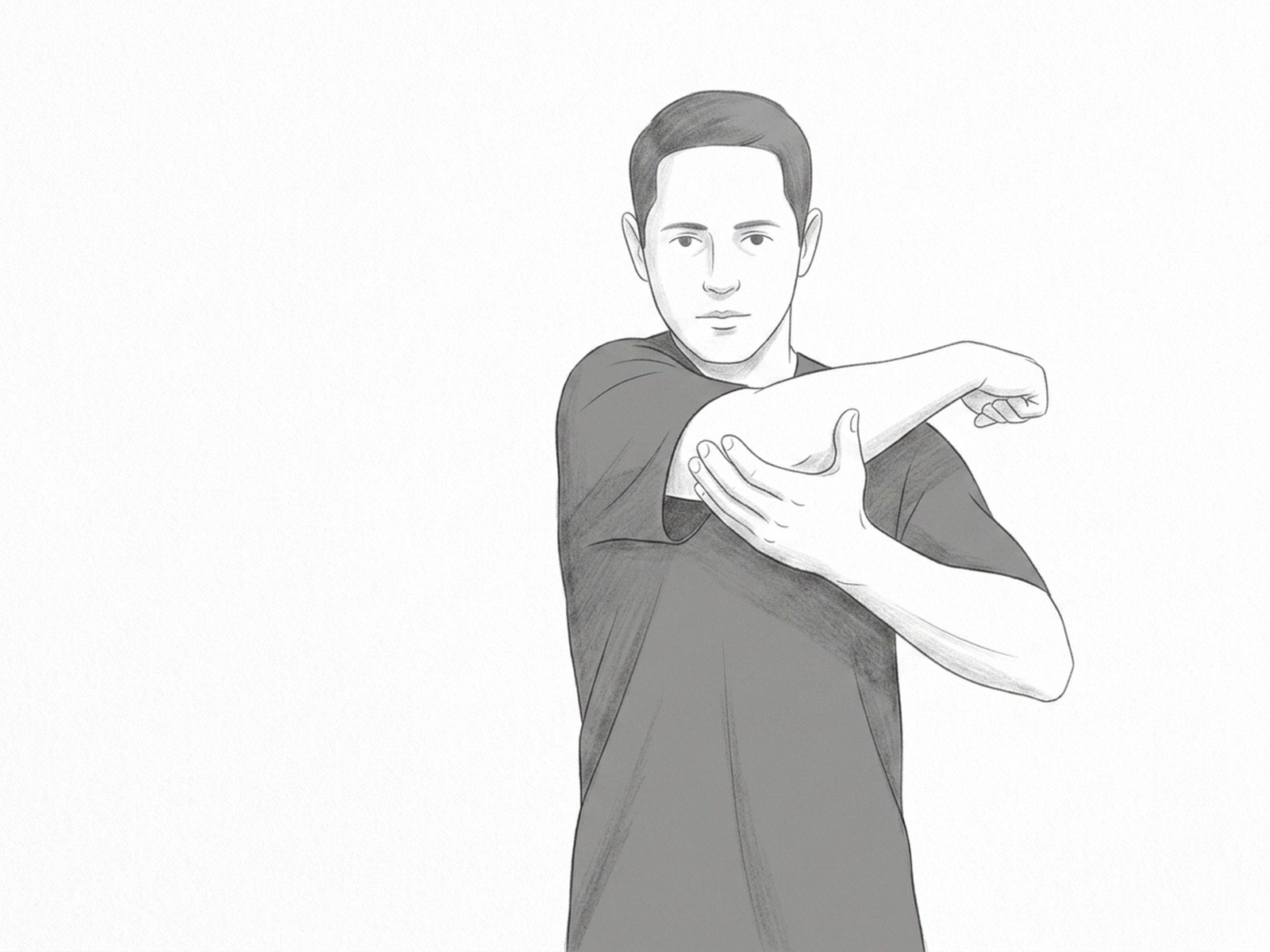
Cross-Body Shoulder Stretch
Stretch of the posterior shoulder capsule and external rotators in a functional position. Complements the sleeper stretch to correct the internal-rotation deficit (GIRD) common in rotator-cuff tendinopathy.
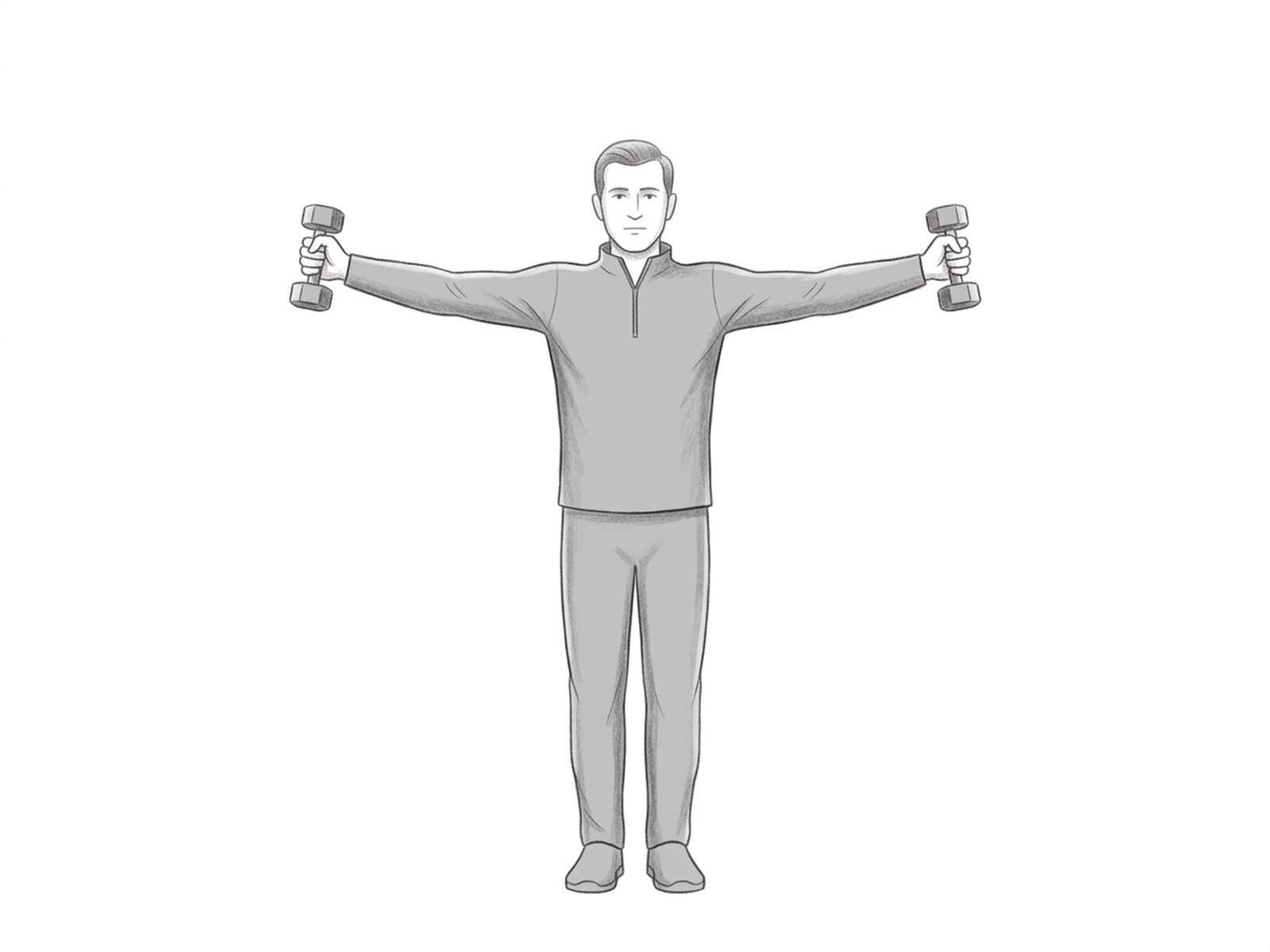
Full Can in the Scapular Plane (Scaption)
Shoulder elevation in the scapular plane (30° forward from the frontal plane) with the thumb pointing up. Recruits the supraspinatus in a safe position, without the mechanical impingement of the classic empty can — the exercise of choice in supraspinatus tendinopathy rehabilitation.
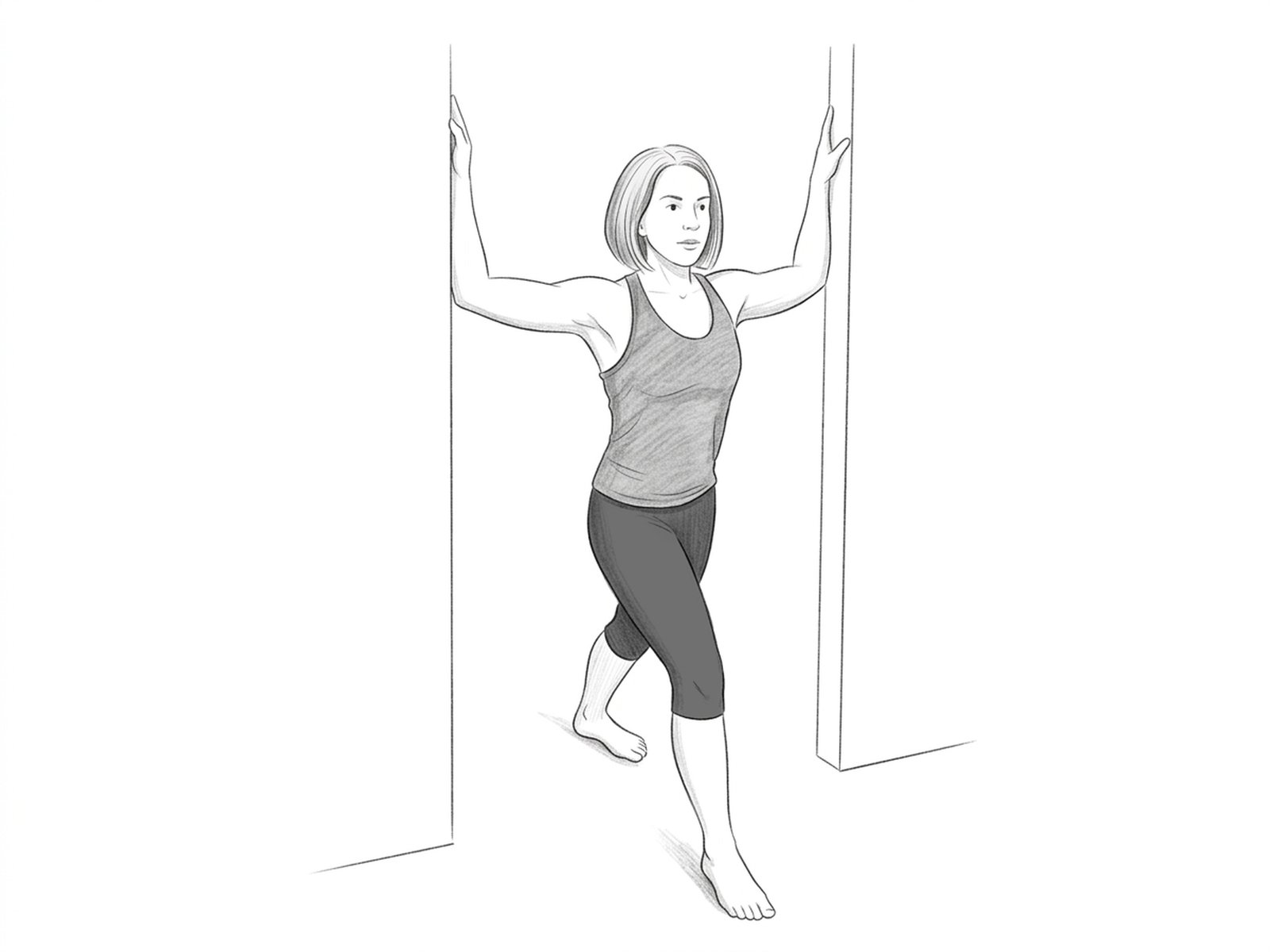
Doorway Pectoral Stretch
Stretches the pectoralis major and minor, muscles that are shortened in forward-head/rounded-shoulder posture. Reduces the passive scapular protraction that aggravates rotator-cuff tendinopathy.