Therapeutic exercise
Prone W-Raise
Combines glenohumeral external rotation with scapular retraction in a prone position, forming a W with the body. Simultaneously recruits the posterior rotator cuff and scapular stabilizers — ideal for advanced progression of the Prone series.
How to perform
- Starting position. Lie face-down on a bench, with the trunk supported and the arms hanging at the sides.
- Step 2. Flex the elbows to 90°, keeping them tucked against the body and the forearms parallel to the floor.
- Step 3. Raise the forearms (performing shoulder external rotation) while squeezing the scapulae together — the body forms a W viewed from above.
- Step 4. Hold the maximum position for 2 seconds, feeling the external rotators and the middle trapezius.
- Return. Lower slowly over 3 seconds, without losing the scapular retraction during the descent.
When not to perform
- Rotator-cuff tendinopathy in an acute reactive phase
- Recent shoulder surgery
- Posterior glenohumeral instability
- Acute cervical pain
- Dorsal scapular nerve injury
- Recent prior shoulder dislocation
Medical disclaimer. These exercises are presented for informational purposes only. Always consult your physician before starting any exercise program, especially in case of acute pain, recent injury, or underlying clinical condition.
Related Exercises
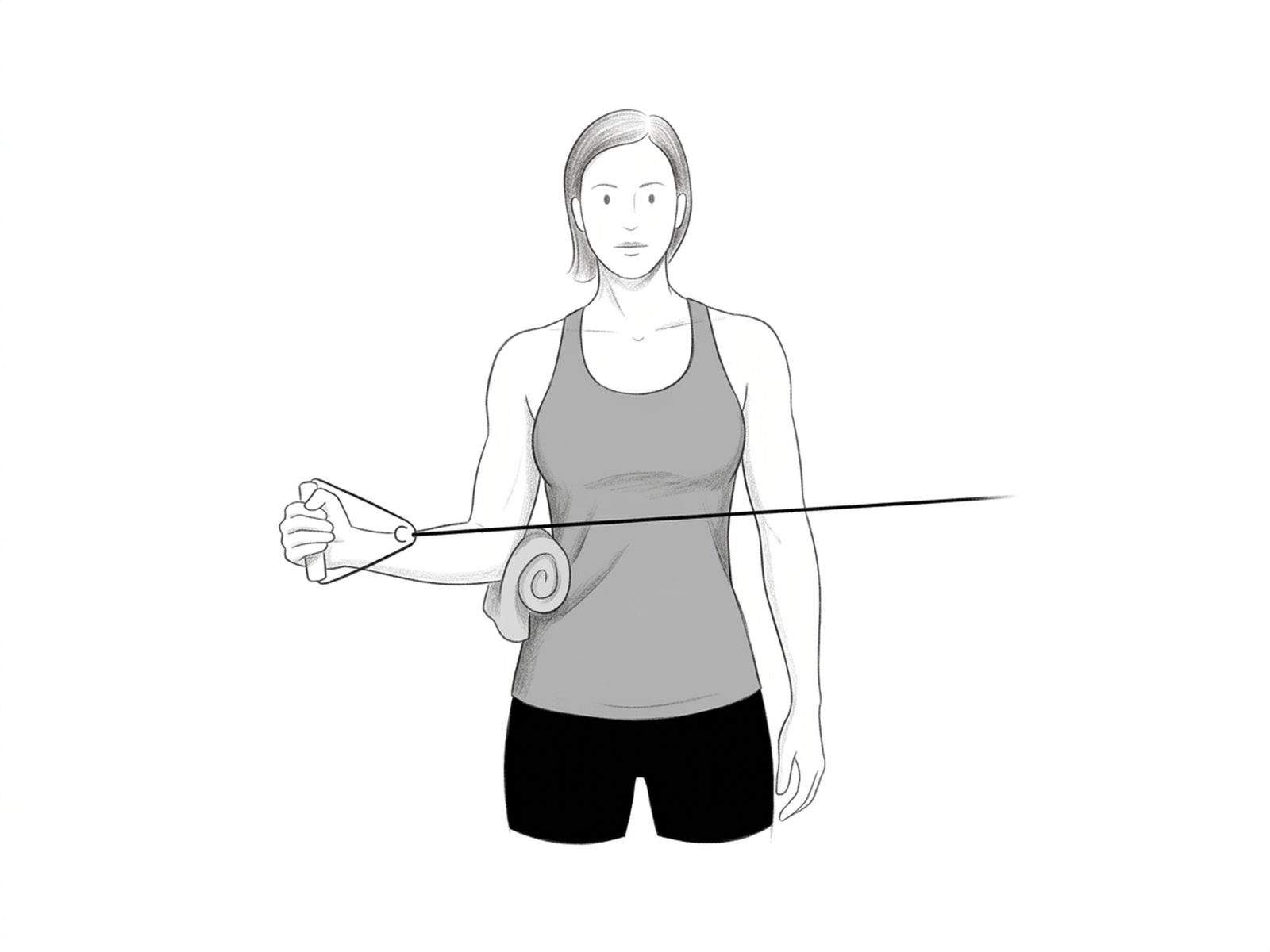
Standing Banded W
Standing version of the Prone W, performed with a resistance band. Simultaneously strengthens the external rotators and scapular retraction in a functional pattern that approaches daily activities — a progression from the Prone W when the patient already tolerates standing load.
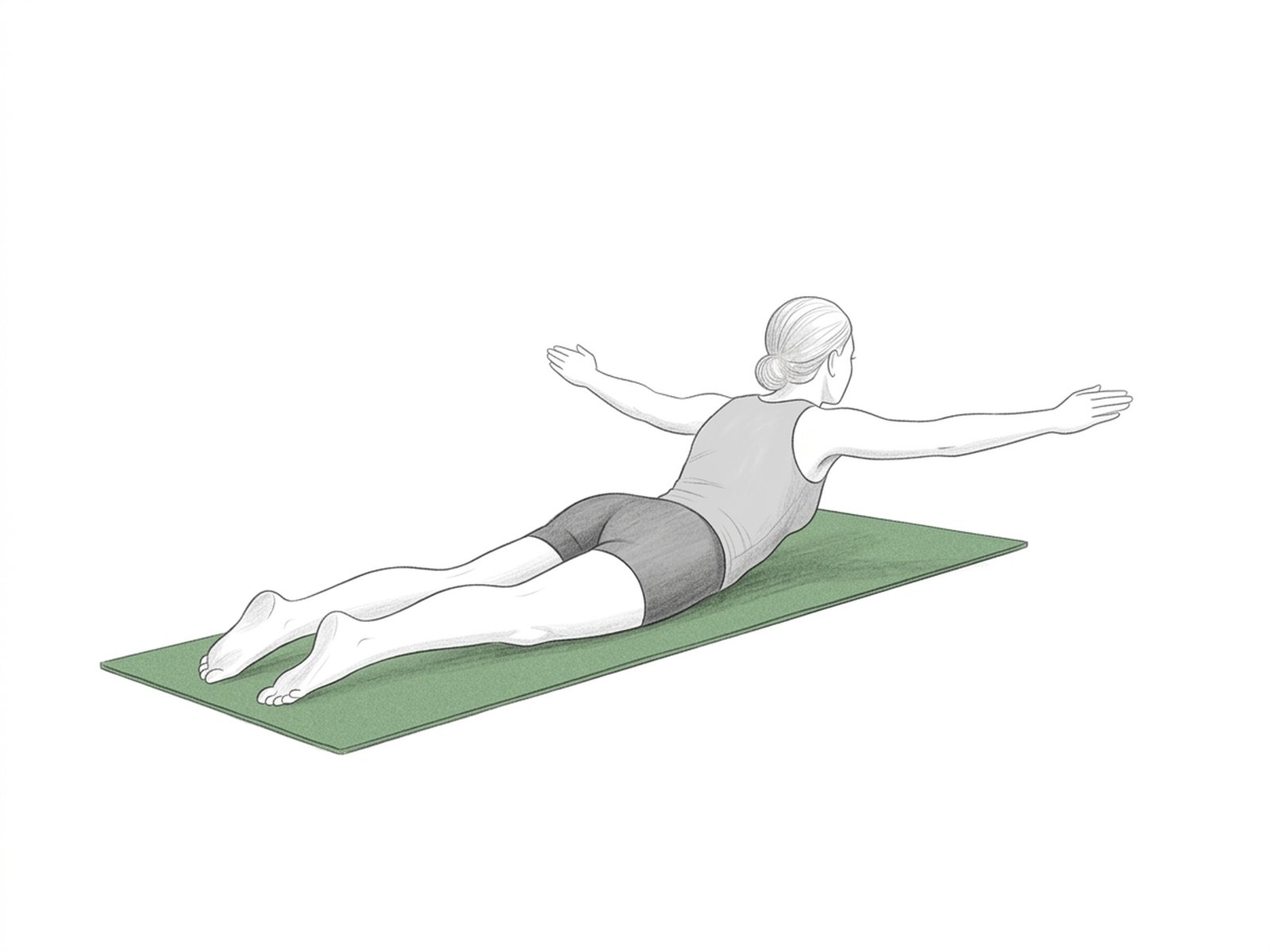
Prone T-Raise
Isolation of the middle trapezius and posterior deltoid in a prone position. Component of the Prone I/T/Y/W series — essential for re-balancing the shoulder girdle in patients with upper-crossed syndrome and scapular dyskinesia.
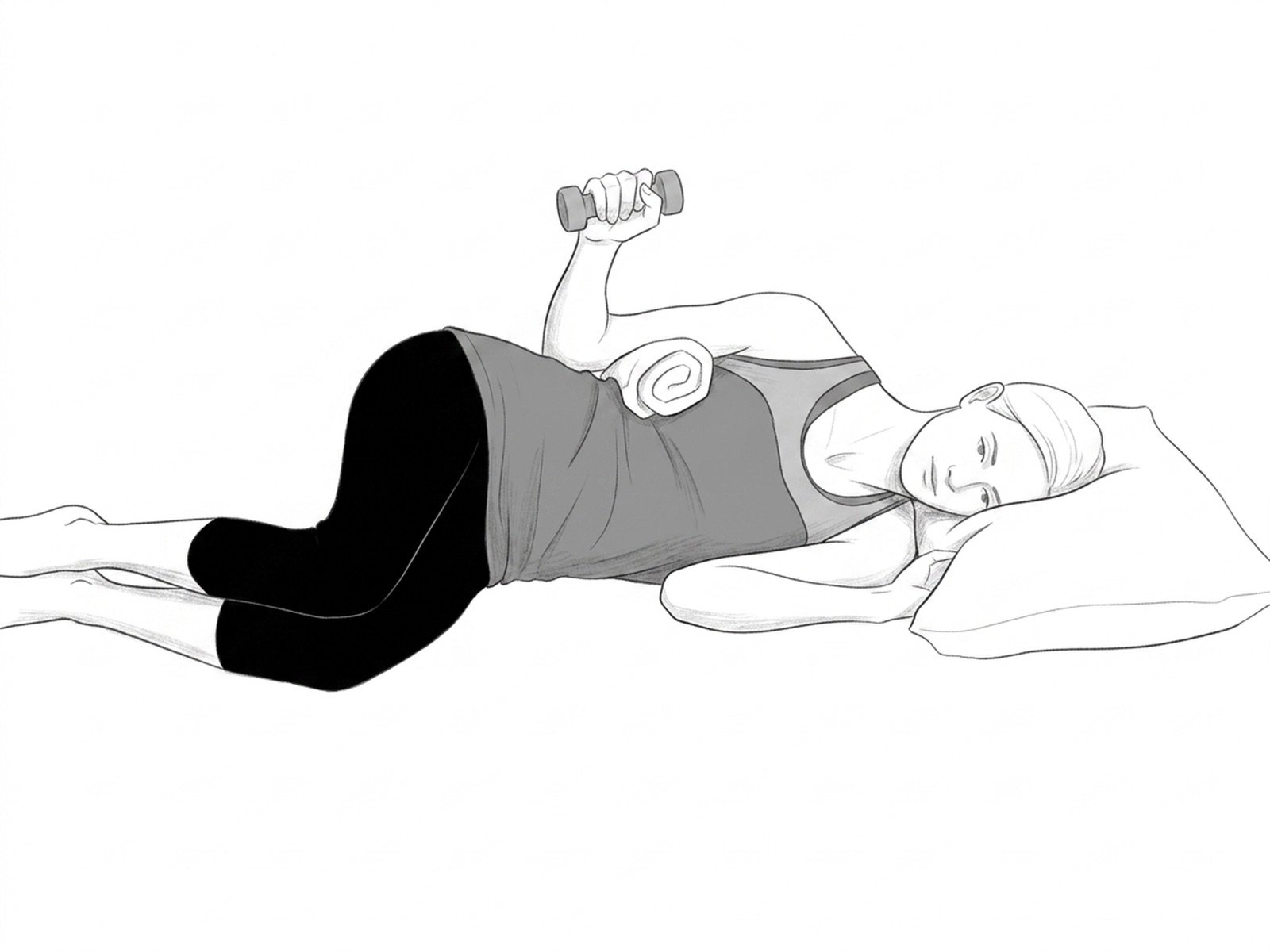
Side-Lying Shoulder Wiper
A wide windshield-wiper-like sweeping motion of the shoulder in side-lying, covering the range of internal and external rotation in a controlled manner. Isolates the subscapularis and the posterior cuff simultaneously — useful for recovering range and coordination after immobilization.