Therapeutic exercise
Reverse Tyler Twist (Wrist Flexor Eccentric)
Inverted version of the Tyler Twist protocol for medial epicondylitis. Uses a Flexbar or similar resistance for eccentric loading of the wrist flexors — remodels the degenerated tendon at the medial epicondyle (golfer's elbow).
How to perform
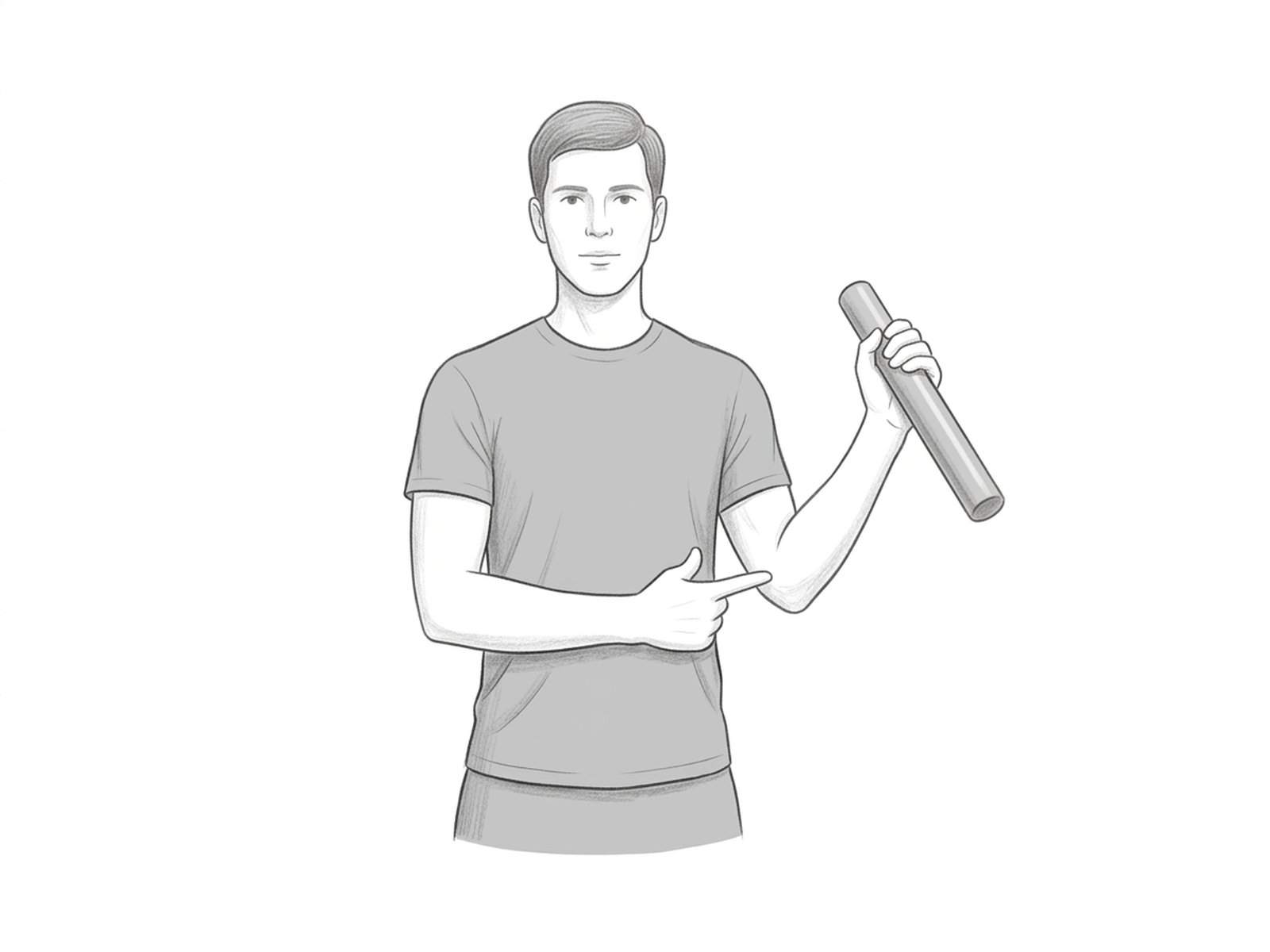
- Starting position. Hold a Flexbar vertically with the hand on the healthy side, with the wrist in full flexion (wrist bent forward).
- Step 2. With the hand on the affected side, grasp the other end of the Flexbar with the wrist in neutral extension.
- Step 3. Twist the Flexbar with the healthy hand (maximum tension) and keep the affected side in neutral extension.
- Step 4. Now, slowly release the twist on the affected side over 4 seconds, allowing the affected hand to move into flexion against the elastic resistance of the Flexbar — this is the eccentric phase.
- Return. Return to the starting position without resistance (use the contralateral hand) and repeat. Pain up to 5/10 during the exercise is acceptable, but it should resolve within 24 hours.
When not to perform
- Medial epicondylitis in an acute reactive phase (start with isometrics first)
- Carpal tunnel syndrome in an acute phase
- Ulnar neuritis with paresis
- Recent forearm fracture
- Post-operative elbow surgery
- Pain that does not resolve within 24 hours after the exercise
Medical disclaimer. These exercises are presented for informational purposes only. Always consult your physician before starting any exercise program, especially in case of acute pain, recent injury, or underlying clinical condition.
Related Exercises
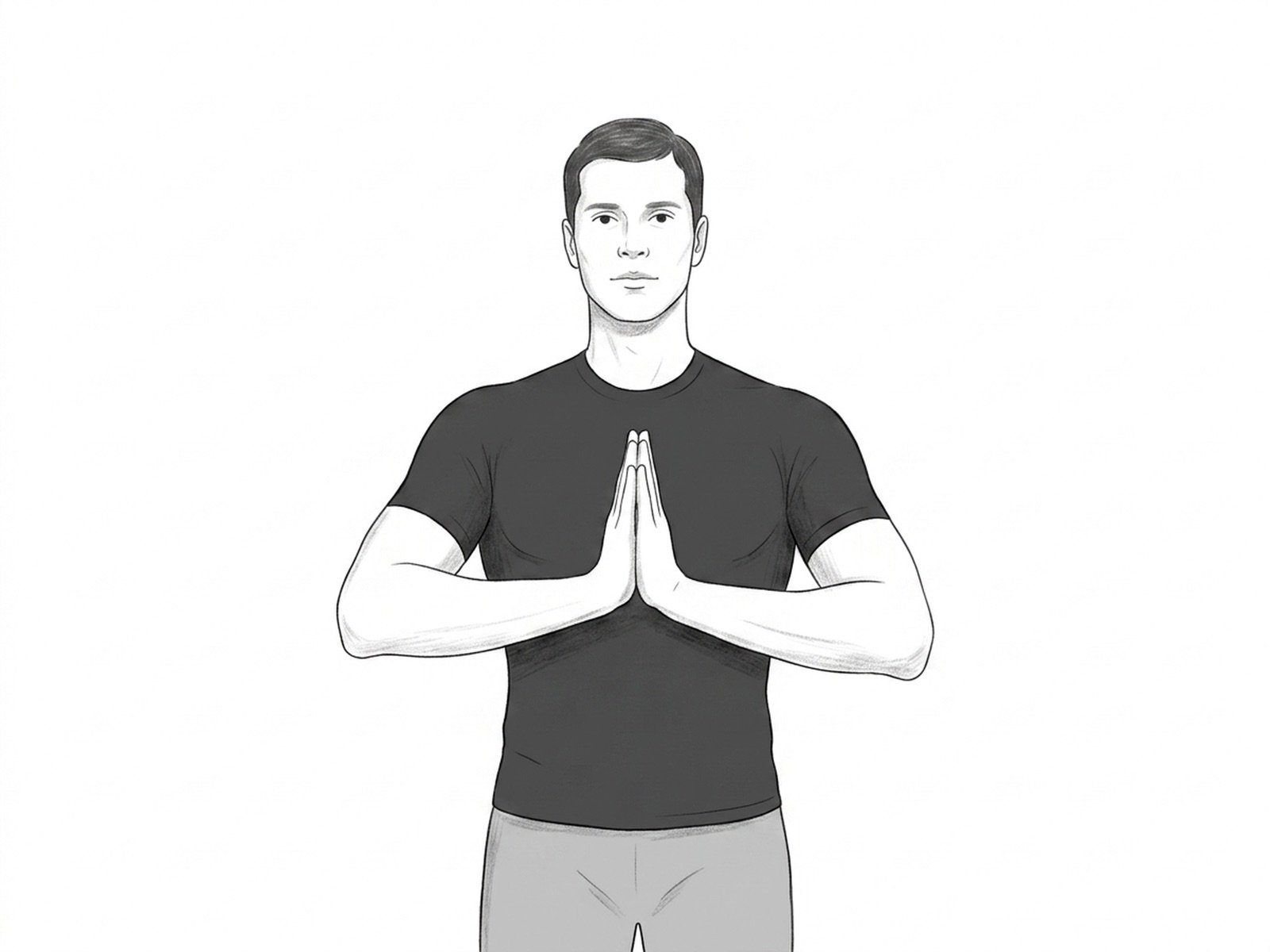
Prayer Stretch
Bilateral stretch of the wrist and forearm flexors in a prayer position. Useful in carpal tunnel syndrome — it stretches the flexor retinaculum and the flexor tendons simultaneously, complementing median-nerve glides in the conservative phase.
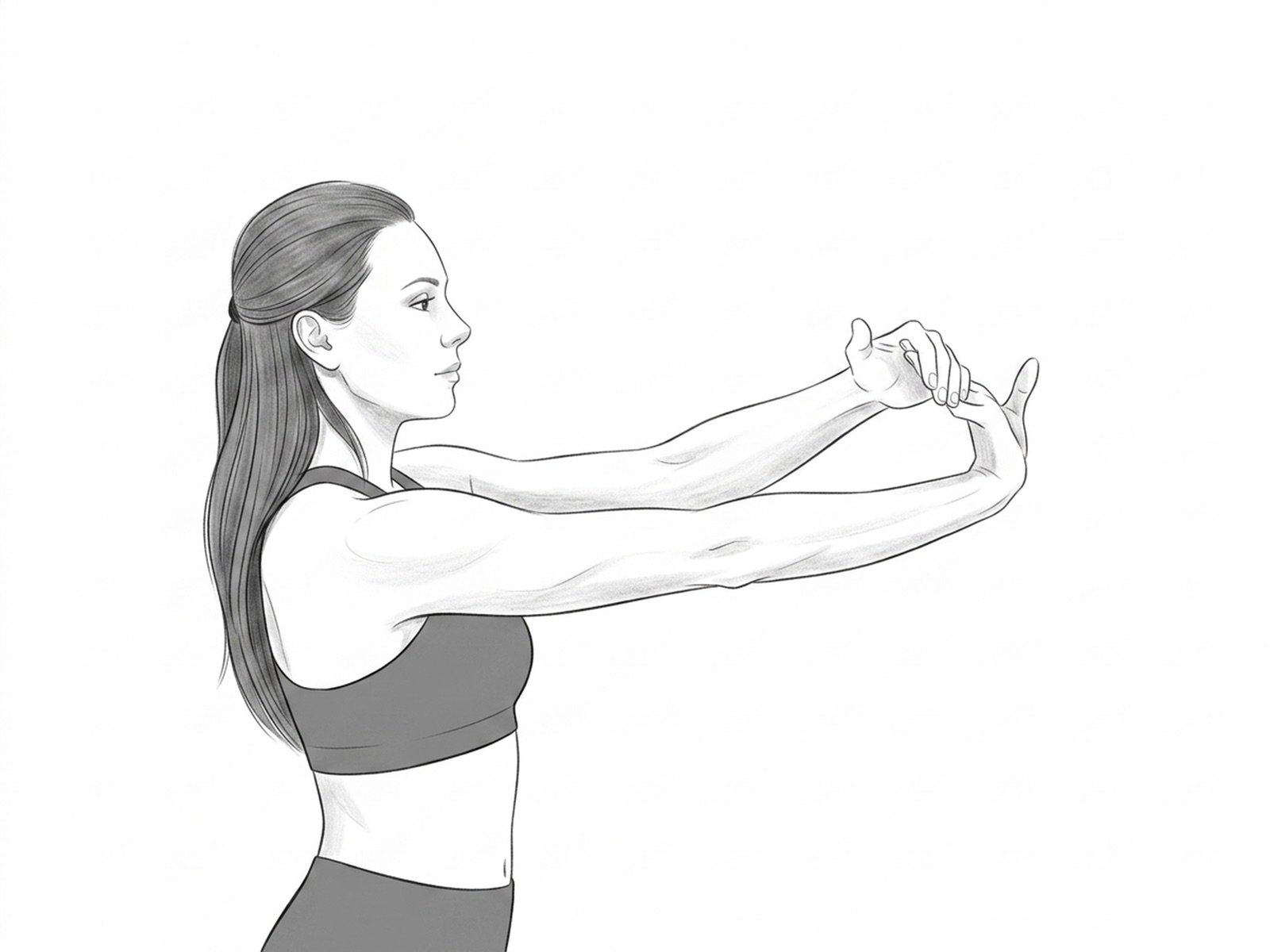
Wrist Flexor Stretch
Stretch of the wrist flexors and the common flexor apparatus. Reduces pressure in the carpal tunnel and complements the neural mobilization.
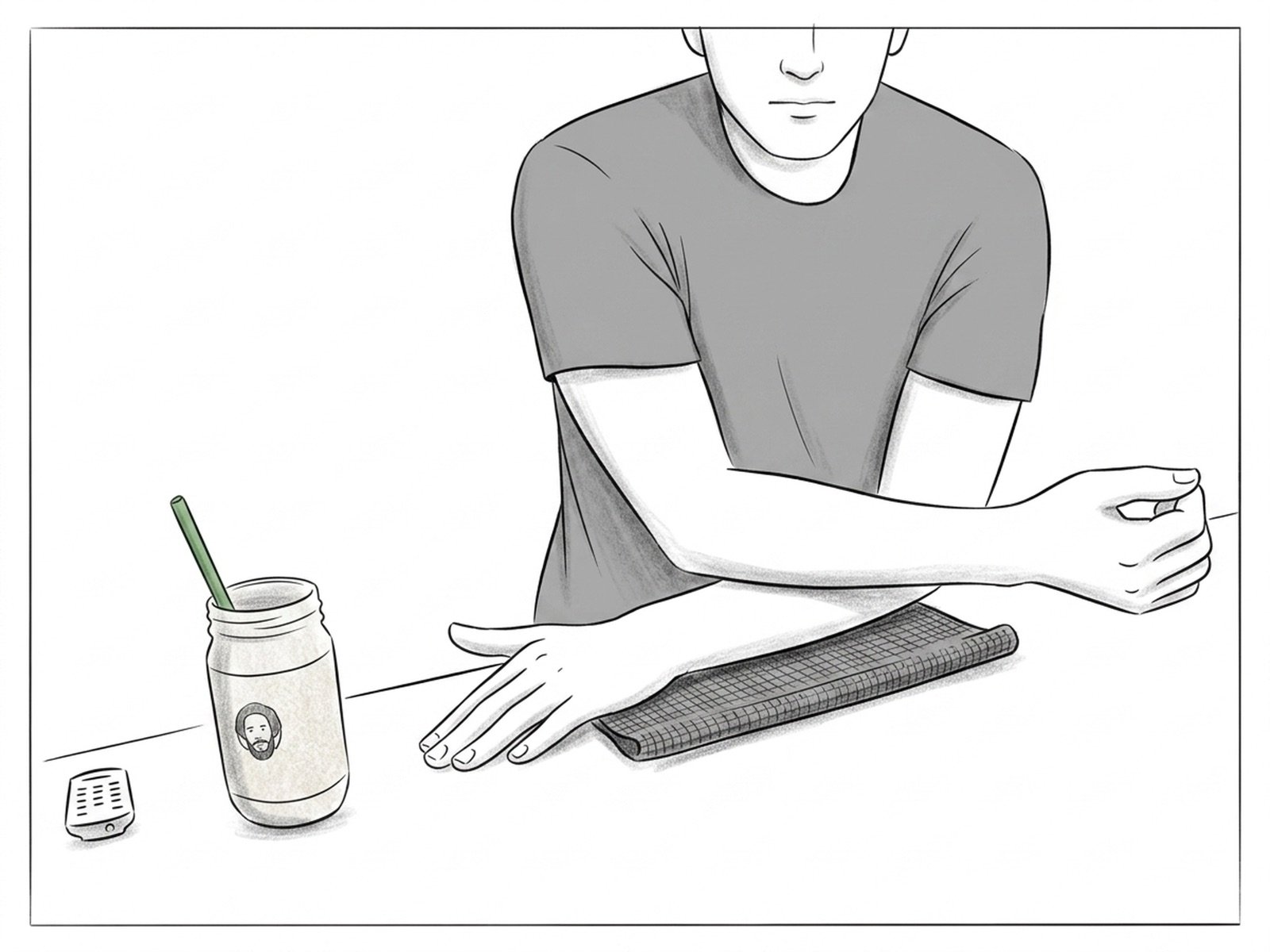
Forearm Self-Massage
Transverse self-massage technique over the forearm extensors. Reduces tension in the affected muscles and improves local circulation.