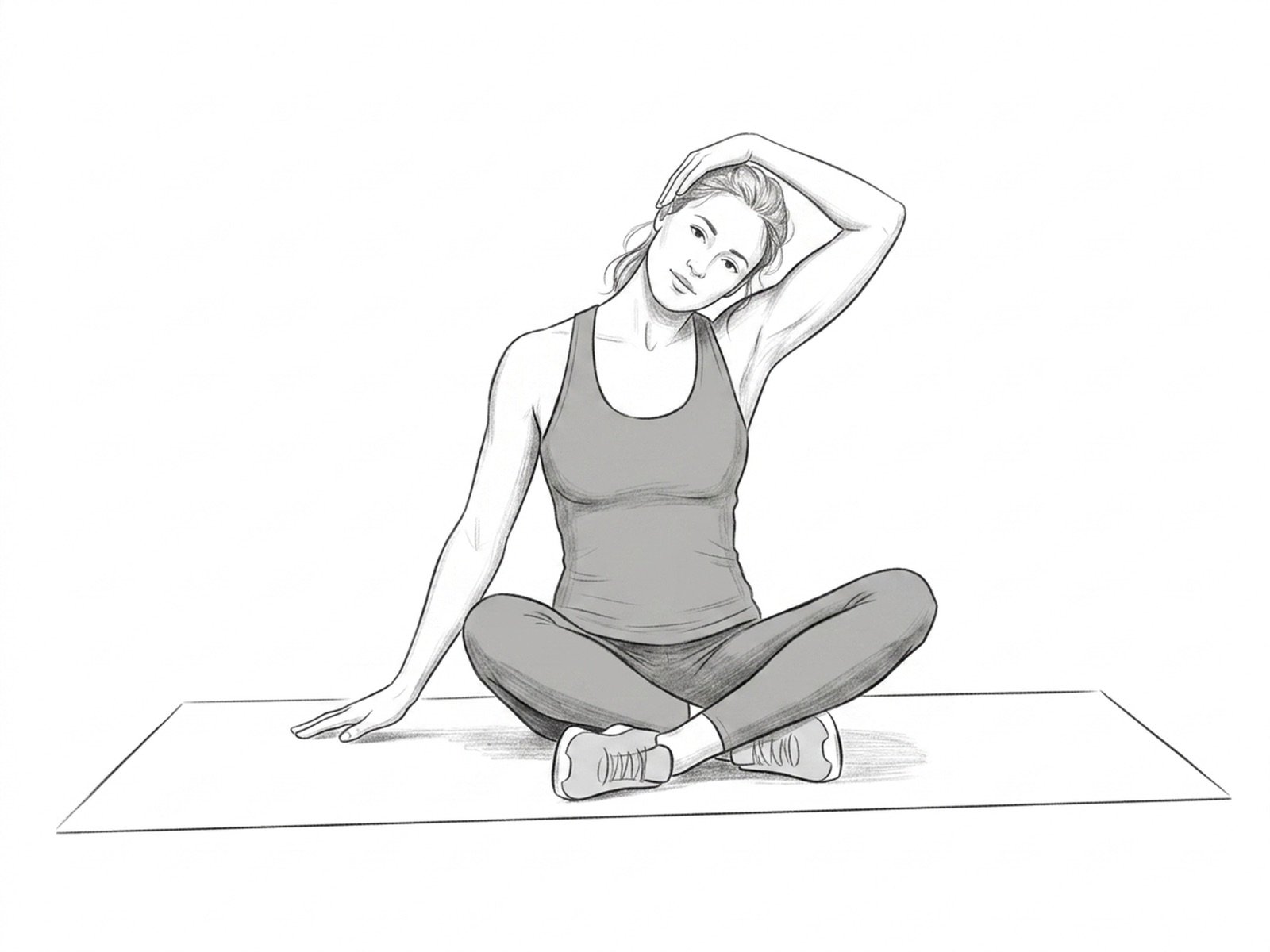
Therapeutic exercise
Seated Cervical Release with a Ball
Pinpoint ischemic compression over the upper trapezius and levator scapulae. Releases active trigger points in these muscles, commonly implicated in cervicogenic headache.
How to perform
- Starting position. Sit in a chair next to a wall, with a tennis ball between the scapula and the wall.
- Step 2. Press the ball against a painful point on the upper trapezius or levator scapulae.
- Step 3. Hold sustained pressure for 60–90 seconds until you feel the point 'release'.
- Return. Move the ball to another point and repeat.
When not to perform
- Acute cervical pain radiating into the arm
- Vertigo on cervical pressure
Medical disclaimer. These exercises are presented for informational purposes only. Always consult your physician before starting any exercise program, especially in case of acute pain, recent injury, or underlying clinical condition.
Related Exercises
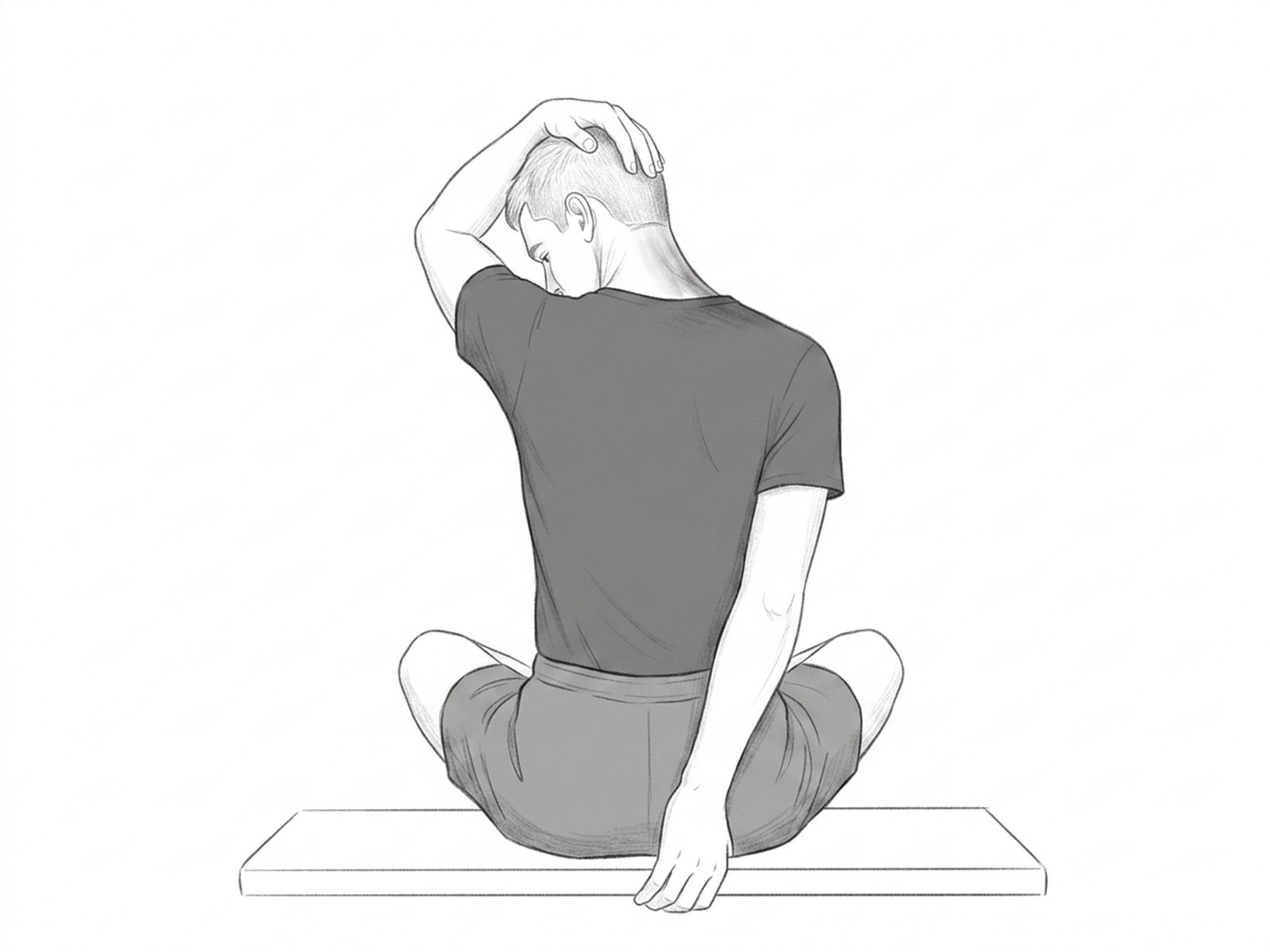
Levator Scapulae Stretch
Stretches the levator scapulae — a classic culprit in posterolateral neck pain and that sensation of heaviness around the neck, typical of people who spend long hours with the head forward in front of screens.
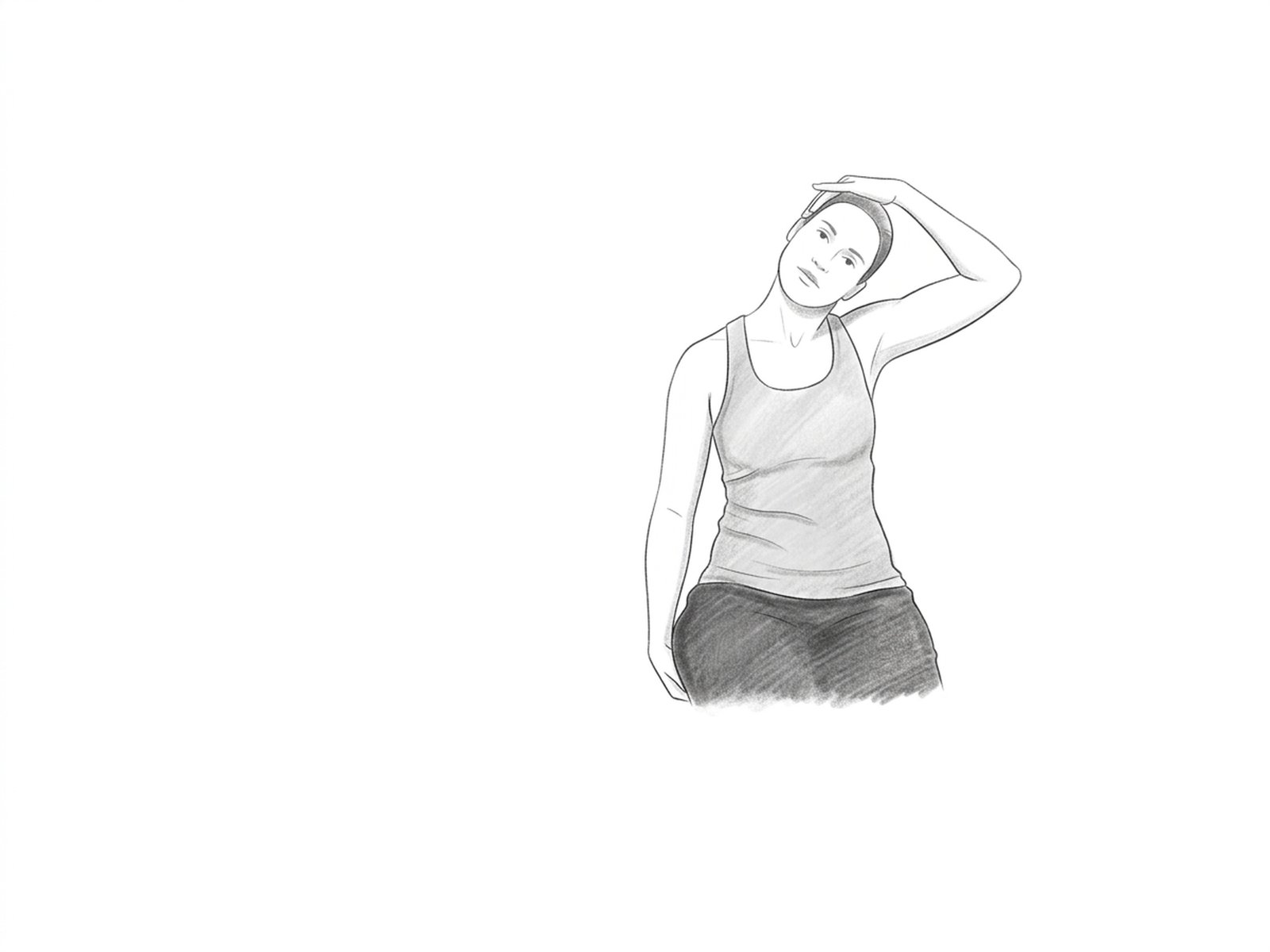
Upper-Trapezius Stretch
Stretches the upper trapezius — a muscle that is commonly hypertonic in patients with mechanical neck pain. Relieves the sensation of heaviness and tension in the neck and shoulders.
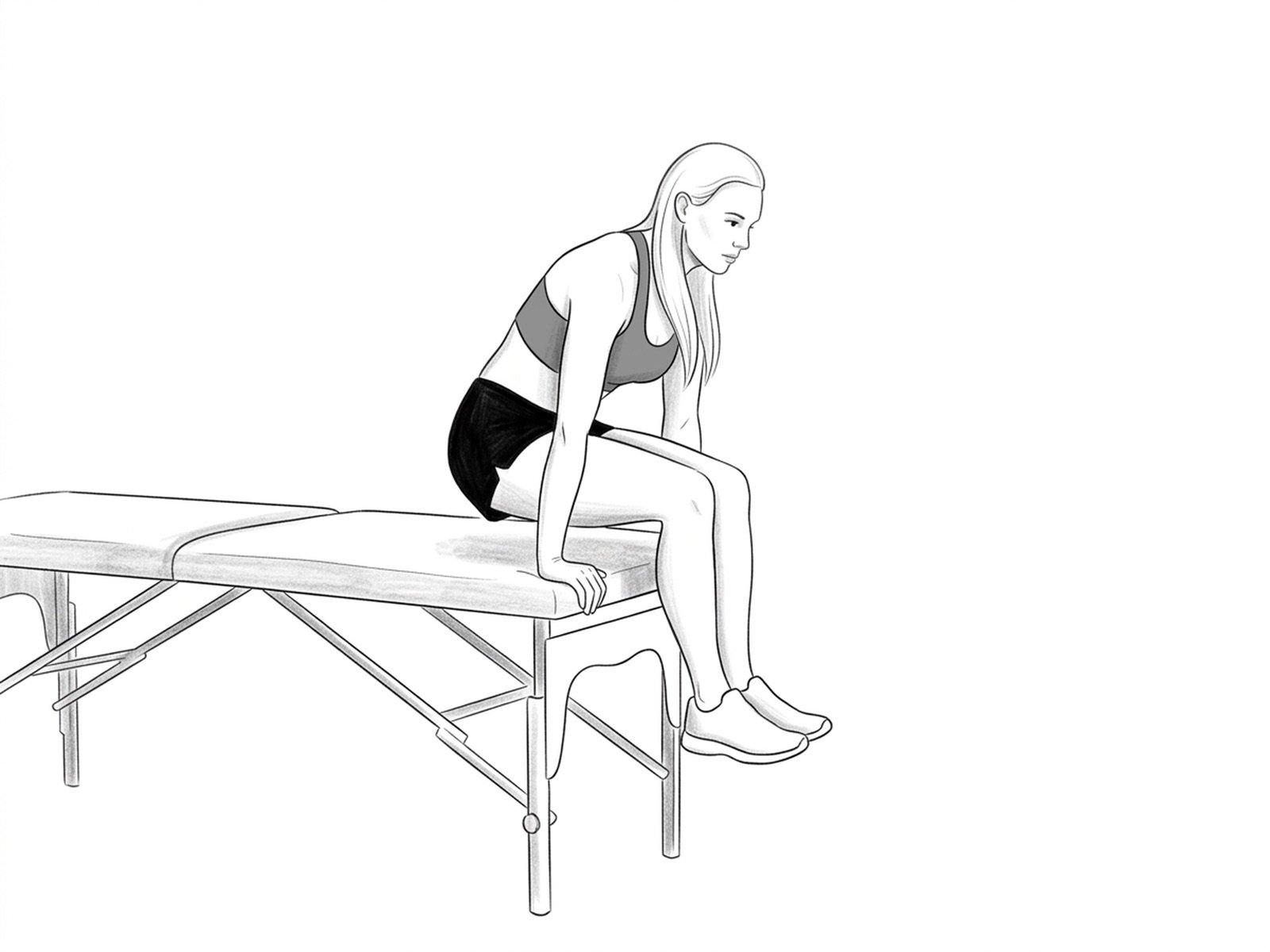
Seated Scapular Depression Press-Up
Isolated activation of the latissimus dorsi and lower trapezius fibers to promote active scapular depression in seated position. Reflexively inhibits the levator scapulae and upper trapezius — essential in levator-scapulae syndrome and chronic torticollis.