Therapeutic exercise
Side-Lying Shoulder External Rotation
Isolated strengthening of the infraspinatus and teres minor. Central to rehabilitation of rotator-cuff tendinopathy when external rotation strength is deficient.
How to perform
- Starting position. Lie on your side with the affected arm on top and a small weight (or light dumbbell) in your hand.
- Step 2. Keep the elbow bent at 90° and tucked against your body (you can place a small towel between the elbow and the trunk).
- Step 3. Rotate the forearm upward (external rotation) to about 60° above horizontal.
- Return. Lower with control.
When not to perform
- Acute shoulder pain during the movement
- Recent shoulder surgery
Medical disclaimer. These exercises are presented for informational purposes only. Always consult your physician before starting any exercise program, especially in case of acute pain, recent injury, or underlying clinical condition.
Related Exercises
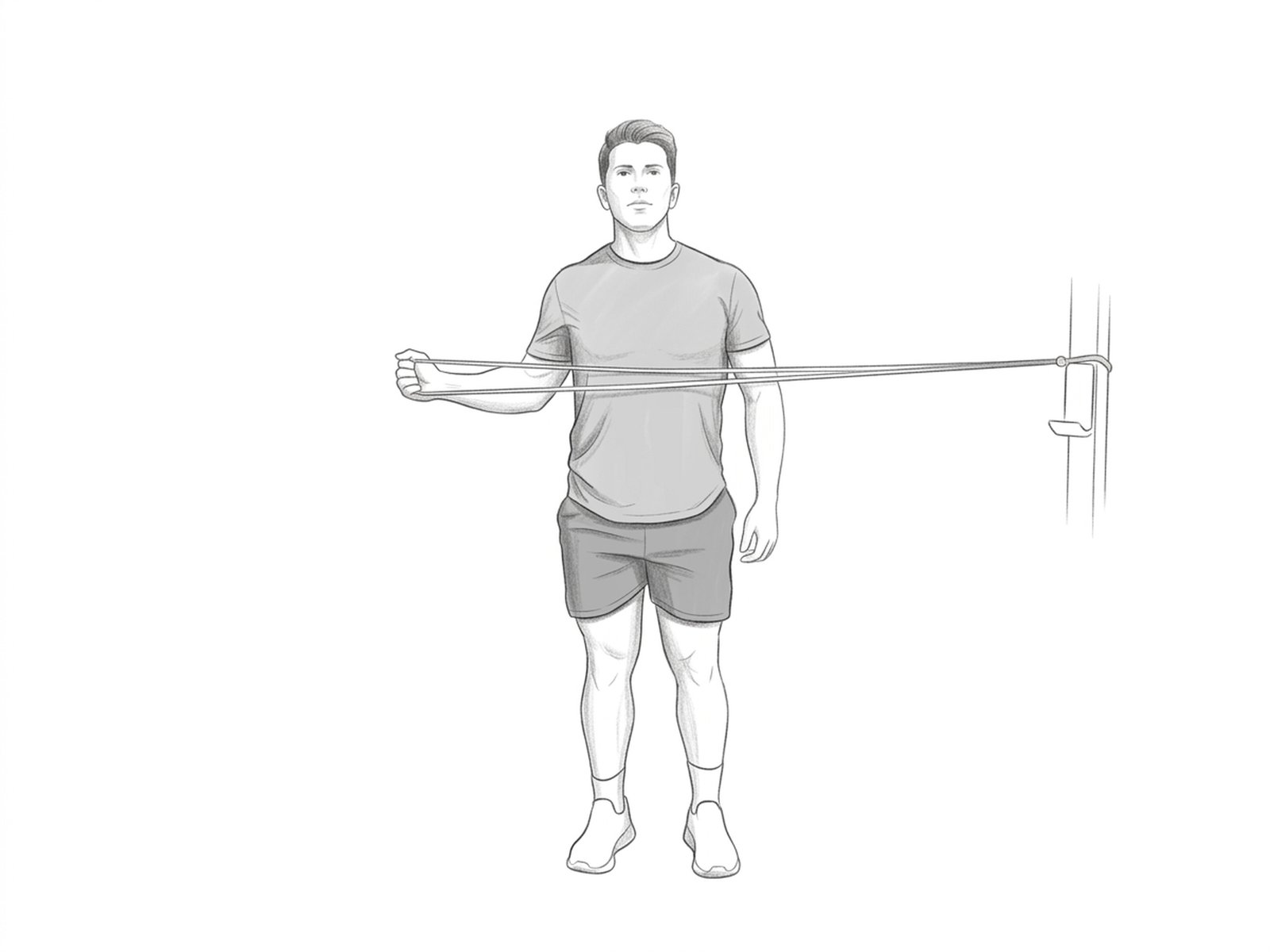
Banded External Rotation
A functional variant of external rotation, performed standing with elastic resistance. Excellent for progression and maintenance in chronic rotator-cuff tendinopathy.
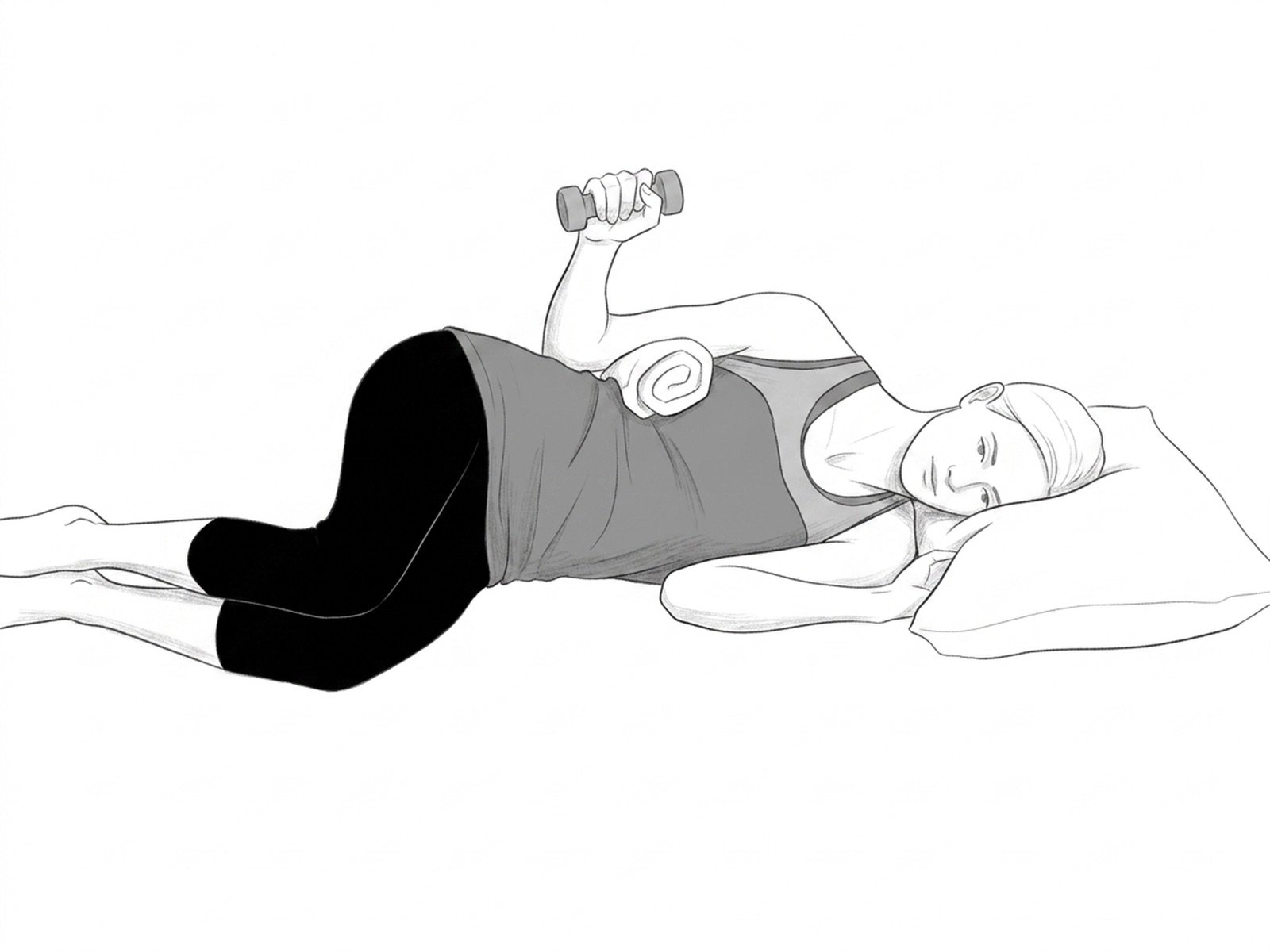
Side-Lying Shoulder Wiper
A wide windshield-wiper-like sweeping motion of the shoulder in side-lying, covering the range of internal and external rotation in a controlled manner. Isolates the subscapularis and the posterior cuff simultaneously — useful for recovering range and coordination after immobilization.
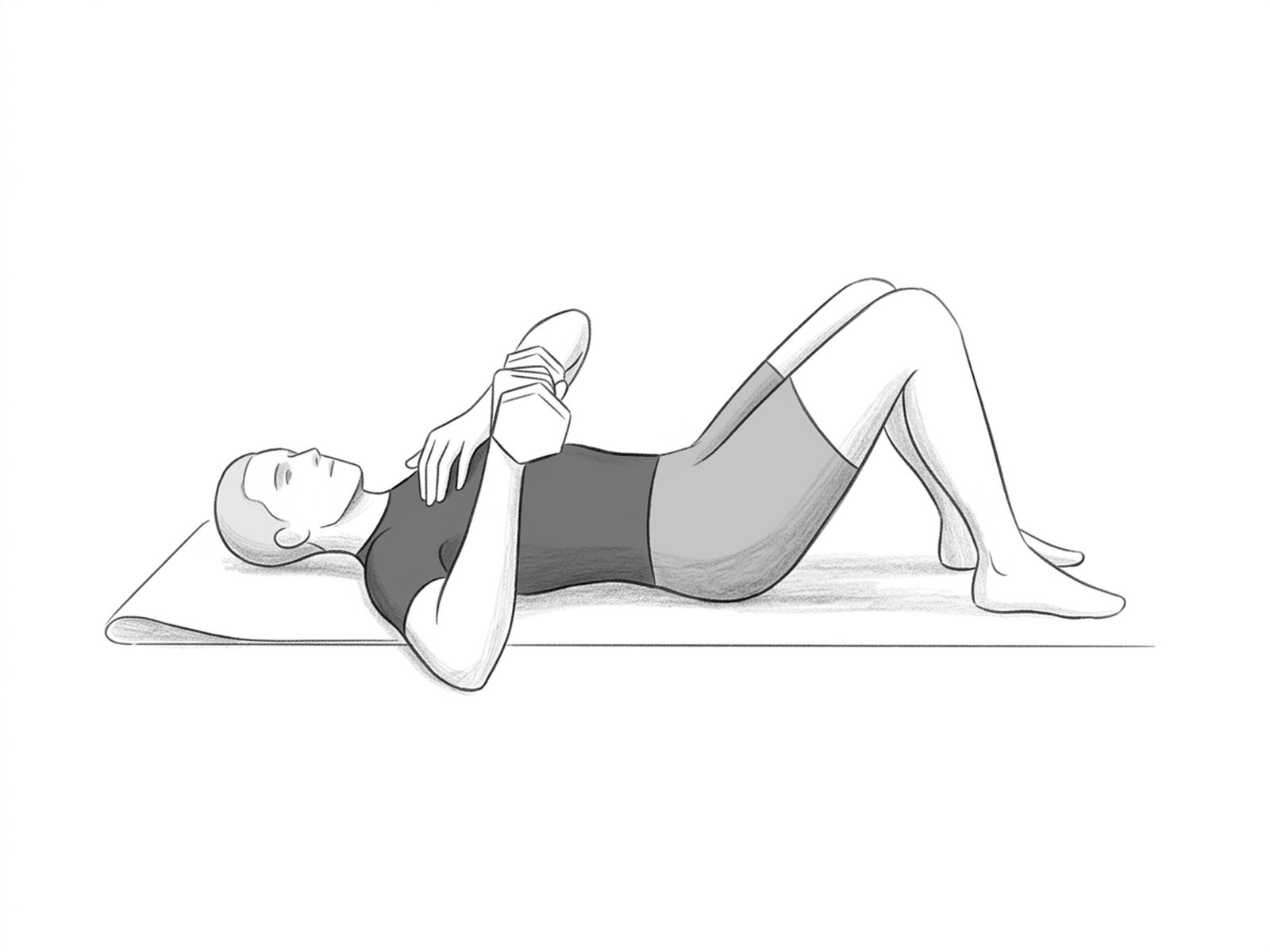
Side-Lying Eccentric External Rotation
Eccentric variant of side-lying external rotation with a dumbbell. The focus is on the controlled lowering phase — essential in rotator-cuff tendinopathy rehabilitation, when the patient already tolerates dynamic load but needs to remodel the tendon with prolonged loading.