Therapeutic exercise
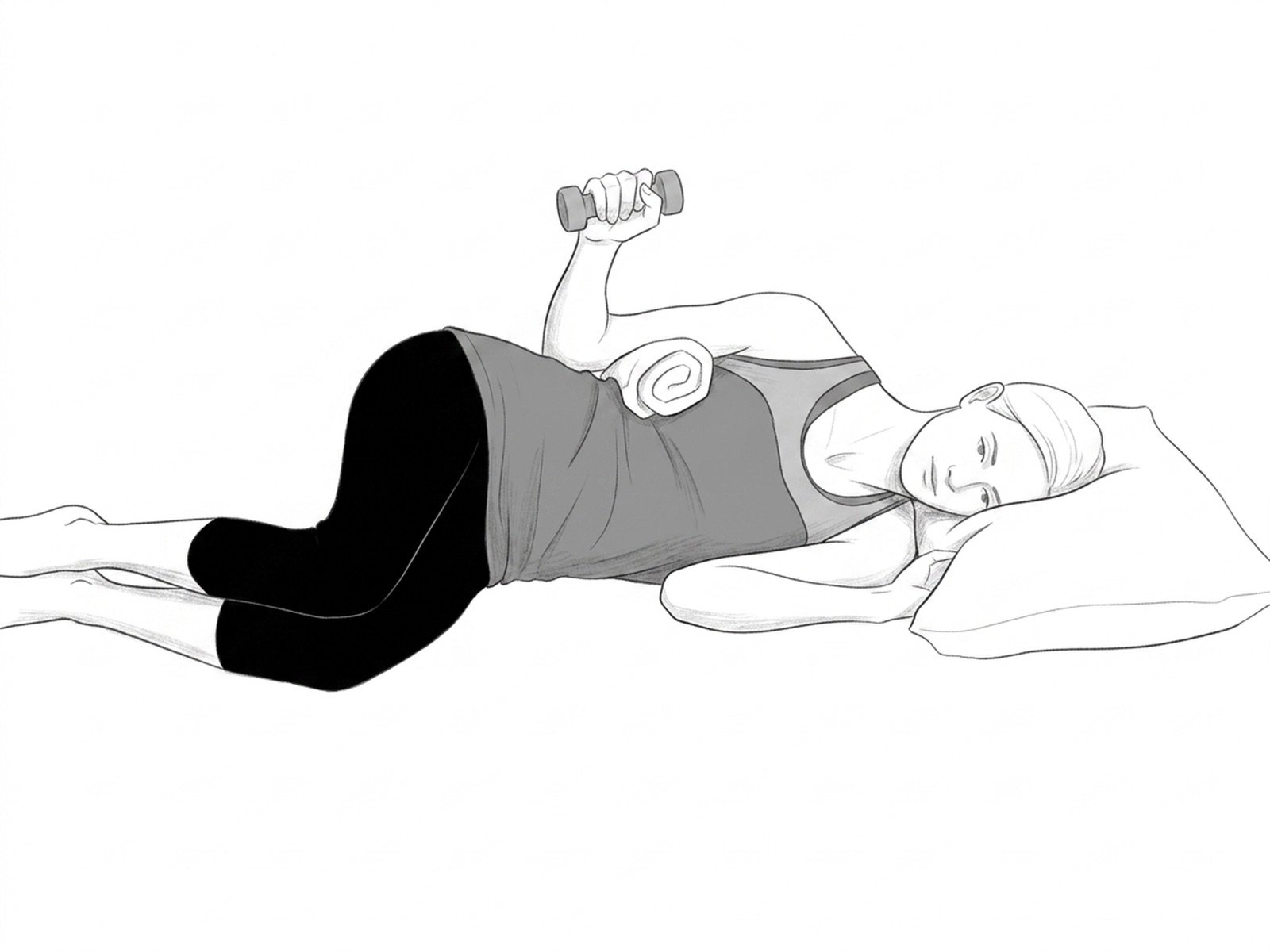
Side-Lying Shoulder Wiper
A wide windshield-wiper-like sweeping motion of the shoulder in side-lying, covering the range of internal and external rotation in a controlled manner. Isolates the subscapularis and the posterior cuff simultaneously — useful for recovering range and coordination after immobilization.
How to perform
- Starting position. Lie on your side, with the affected side up, head resting on a pillow.
- Step 2. Flex the elbow on the affected side to 90° and position the arm along the side of the trunk, with the forearm parallel to the floor.
- Step 3. Hold a light dumbbell (1–2 kg) and, keeping the elbow stable, sweep the forearm in an arc — passing through external rotation (forearm toward the ceiling) and internal rotation (forearm toward the floor).
- Step 4. The movement should be continuous and smooth, like a windshield wiper, covering the entire available range.
- Return. Control the speed — 2 seconds in each direction — and avoid abrupt movements or trunk compensation.
When not to perform
- Acute rotator-cuff injury
- Multidirectional glenohumeral instability
- Recent post-operative labral repair
- Adhesive capsulitis in a freezing phase (restricted range is a contraindication)
- Uncontrolled acute pain
- Subacromial bursitis in an acute inflammatory phase
Medical disclaimer. These exercises are presented for informational purposes only. Always consult your physician before starting any exercise program, especially in case of acute pain, recent injury, or underlying clinical condition.
Related Exercises
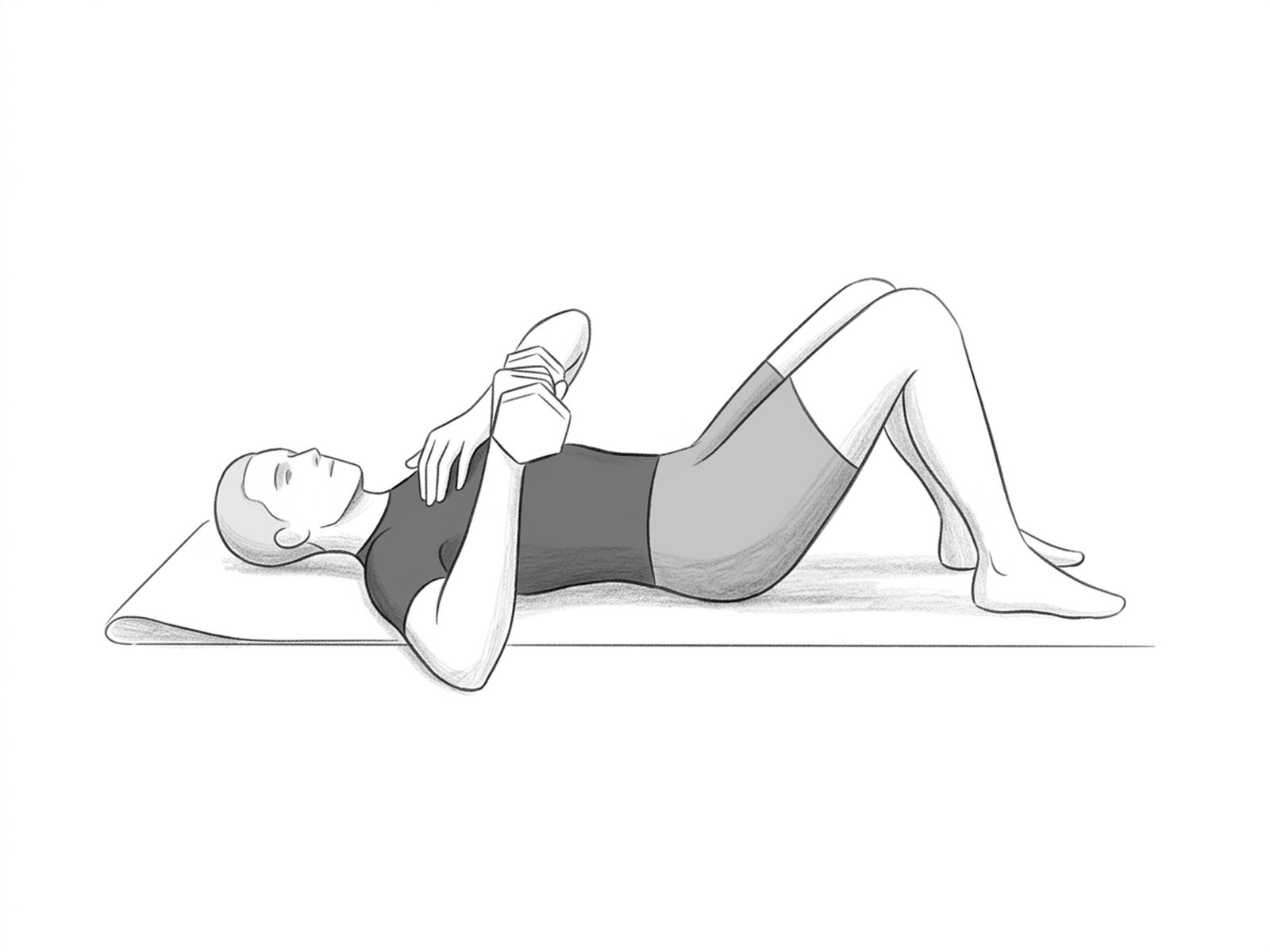
Side-Lying Eccentric External Rotation
Eccentric variant of side-lying external rotation with a dumbbell. The focus is on the controlled lowering phase — essential in rotator-cuff tendinopathy rehabilitation, when the patient already tolerates dynamic load but needs to remodel the tendon with prolonged loading.
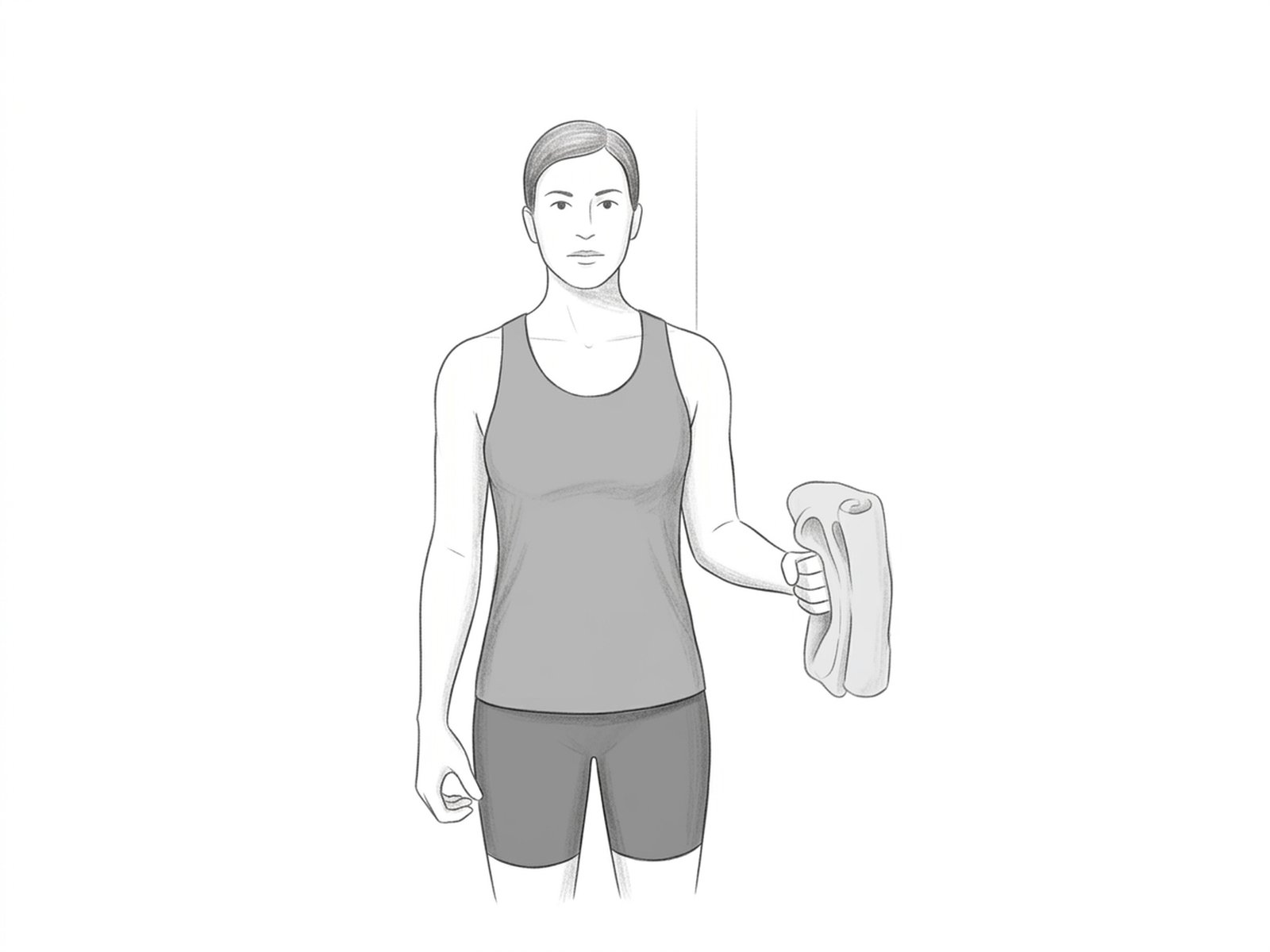
Isometric Shoulder External Rotation
Isometric contraction of the shoulder external rotators (infraspinatus and teres minor) without joint movement. The first stage of rehabilitation in reactive rotator-cuff tendinopathy — reduces pain through central analgesic mechanisms without loading the inflamed tendon.
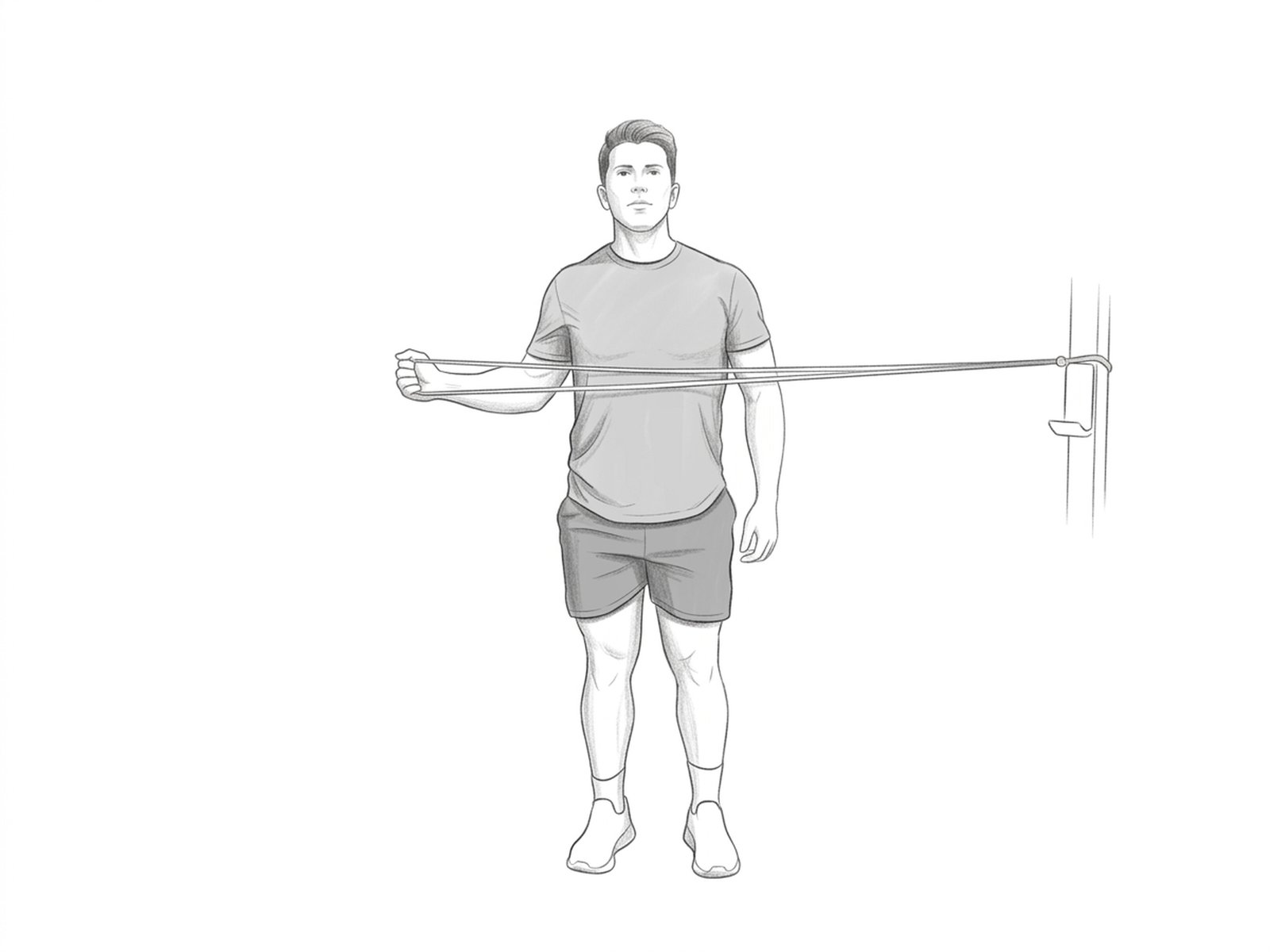
Banded External Rotation
A functional variant of external rotation, performed standing with elastic resistance. Excellent for progression and maintenance in chronic rotator-cuff tendinopathy.