What Are Chronic Hiccups?
A hiccup (singultus) is an involuntary, spasmodic contraction of the diaphragm followed by reflex closure of the glottis, producing the characteristic sound. Transient hiccups are universal and benign. However, when they persist for more than 48 hours, they are classified as persistent hiccups; when they exceed one month, they are called intractable hiccups.
Chronic hiccups are relatively rare, but can cause great suffering. They interfere with eating, speech, sleep, and breathing. In extreme cases, they lead to malnutrition, exhaustion, depression, and suicidal ideation. The exact prevalence is unknown, but men are affected significantly more than women.
Unlike self-limited acute hiccups, chronic hiccups generally point to an underlying organic cause that requires systematic workup. Identifying and treating the underlying cause is essential to control the episodes.
Temporal Classification
Acute: up to 48 hours. Persistent: more than 48 hours. Intractable: more than 1 month. Chronic hiccups encompass the latter two categories.
Complex Reflex Arc
Hiccups involve afferent pathways (vagus and phrenic nerves), an integrating center in the brainstem, and efferent pathways (phrenic nerve and intercostal muscles).
Underlying Cause
More than 100 causes have been described, spanning the central nervous system, gastrointestinal tract, thorax, and metabolic and pharmacologic triggers.
Pathophysiology
The hiccup results from activation of a reflex arc whose afferent pathways include the vagus nerve, the phrenic nerve, and the thoracic sympathetic nerves (T6-T12). The integrating center is located in the brainstem (bulbar reticular formation), near the respiratory and vomiting centers. The efferent pathways are mediated by the phrenic nerve (diaphragmatic contraction) and by the intercostal nerves.
Any stimulation along this reflex arc may trigger hiccups. Gastric distension is the most common cause of benign acute hiccups, activating vagal mechanoreceptors in the esophagus and stomach. Lesions of the central nervous system (brainstem tumors, stroke, multiple sclerosis) may directly affect the hiccup center.

Neurotransmitters such as GABA, dopamine, and serotonin modulate the hiccup reflex arc, which explains the efficacy of GABAergic drugs (baclofen, gabapentin) and antidopaminergic drugs (chlorpromazine, metoclopramide) in treatment. Vagal irritation by gastroesophageal reflux disease (GERD) is one of the most frequent causes of persistent hiccups.
Main Causes of Chronic Hiccups
| Category | Examples | Mechanism |
|---|---|---|
| Gastrointestinal | GERD, hiatal hernia, gastroparesis | Esophagogastric vagal irritation |
| Central Nervous System | Stroke, brainstem tumor, multiple sclerosis | Direct injury to the hiccup center |
| Thoracic | Pericarditis, pneumonia, mediastinal tumor | Irritation of the phrenic or thoracic vagus nerve |
| Metabolic | Uremia, hypocalcemia, hyponatremia | Alteration of neuronal excitability |
| Pharmacologic | Corticosteroids, benzodiazepines, chemotherapy agents | Modulation of the central reflex arc |
Three neurobiological levels of medical acupuncture: from muscle to central modulation
Mechanical stimulation of myelinated peripheral afferents engages local tissue perfusion, spinal dorsal horn gating, and descending brainstem analgesia across sessions.
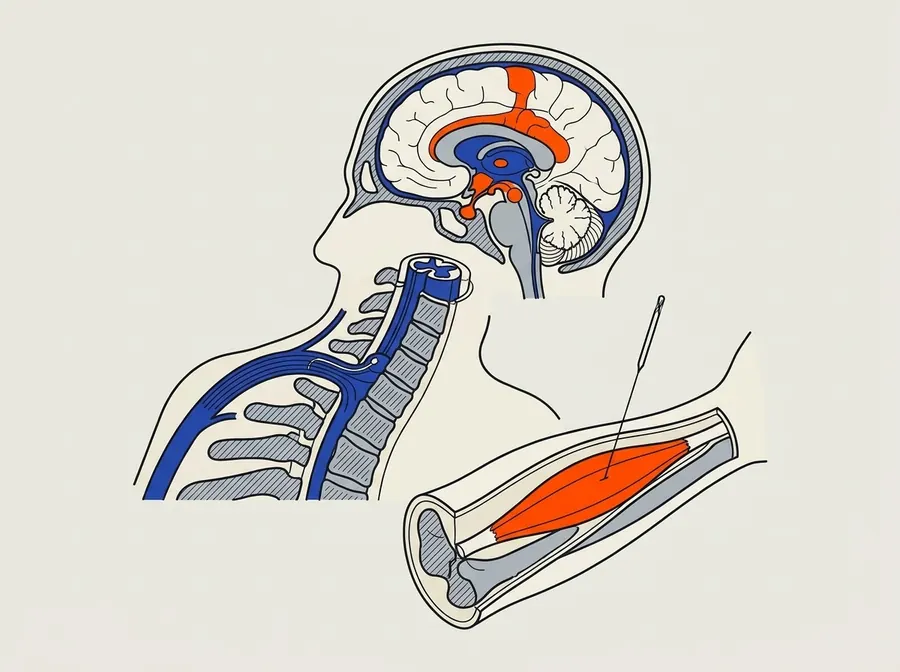
1. Local & myofascial coupling
Recruits Aβ/Aδ mechanoreceptors, releases local adenosine, and restores micro-perfusion in taut muscle bands.
2. Spinal dorsal horn gating
Segmental inhibitory interneurons dampen ascending nociceptive signaling and calm viscerosomatic reflexes.
3. Descending central control
Engages periaqueductal gray and brainstem relays, recruiting endogenous opioids and monoamines.
Symptoms
The cardinal symptom is obvious: rhythmic involuntary diaphragmatic contractions with sound. However, the impact of chronic hiccups extends far beyond mechanical discomfort, causing significant complications across multiple domains.
Impact of Chronic Hiccups
Eating difficulty
Hiccups during meals cause dysphagia, aspiration risk, and reduced caloric intake, which may lead to malnutrition.
Insomnia and fatigue
Hiccups that persist during sleep fragment rest, causing chronic sleep deprivation and incapacitating daytime fatigue.
Thoracic and abdominal pain
Repetitive diaphragm and intercostal contractions cause persistent myalgia and thoracic and abdominal discomfort.
Psychological impact
Depression, anxiety, social embarrassment, and isolation are common. Intractable cases may lead to suicidal ideation.
Respiratory difficulty
In severe cases, a disorganized breathing pattern may cause dyspnea and reduced oxygen saturation.
Gastroesophageal reflux
Hiccups may aggravate or be aggravated by reflux, creating a vicious cycle of vagal irritation and persistent hiccups.
Diagnosis
The diagnostic workup for chronic hiccups aims to identify the underlying cause. A detailed history should cover duration, frequency, relationship to meals, body position, presence during sleep, current medications, and comorbidities. Persistence during sleep points to an organic cause.
Further workup is guided by clinical suspicion, following a systematic approach that evaluates the three segments of the reflex arc: afferent (gastrointestinal/thoracic), central (neurologic), and efferent (phrenic nerve/diaphragm).
Systematic Investigation
- Laboratory tests: complete blood count, renal function, electrolytes (calcium, sodium, magnesium), liver function
- Gastrointestinal workup: upper digestive endoscopy, pH-metry/impedancemetry, chest radiograph
- Neurologic workup: brain and brainstem MRI if neurologic signs are present
- Thoracic workup: chest CT if a mediastinal or phrenic lesion is suspected
- Pharmacologic review: identify potentially causative medications
Differential Diagnosis
Hiccups from Phrenic Nerve Irritation
- Tumor or thoracic/cervical mass compressing the phrenic
- Constant hiccups without relief
- Associated with chest pain or dyspnea
- No response to simple measures
- New hiccups in a smoker — screen for lung cancer
GERD
Read more- Heartburn, regurgitation, postprandial hiccups
- Worse when lying down
- Response to PPI
- Most common cause of persistent hiccups
Metabolic Disturbance
- Uremia (advanced CKD)
- Hyponatremia, hypocalcemia
- Hiccups as a systemic symptom
- Other signs of the underlying disease present
Hiccups from Medications or CNS
- Use of corticosteroids, benzodiazepines, chemotherapy agents
- Stroke, encephalitis, brainstem lesion
- Sudden-onset hiccups + other neurologic deficits
- Neurologic déficit associated with hiccups — investigate brainstem stroke
Psychogenic Cause
- Hiccups that cease during sleep
- Associated with stress, anxiety, trauma
- No identified organic cause after complete investigation
- Improvement with psychotherapeutic interventions
Case reports and case series describe medical acupuncture in psychogenic and refractory hiccups, with limited evidence; the proposed mechanism involves modulation of the vagus nerve and diaphragm. The acupuncturist physician may integrate this approach into treatment.
GERD and Phrenic Nerve Irritation: The Most Common and Most Serious Causes
GERD is one of the most frequent causes of persistent hiccups. Gastric acid that has refluxed into the esophagus irritates vagus nerve endings and triggers the hiccup reflex. 24-hour esophageal pH-metry and a therapeutic trial of a proton pump inhibitor (PPI) are the first steps. Most GERD-related hiccups improve with adequate reflux treatment in 1-2 weeks.
Phrenic nerve irritation by a thoracic or cervical mass is the most concerning organic cause. Any patient with new chronic hiccups, especially smokers or those with a history of malignancy, should undergo chest CT. Pulmonary, mediastinal, hepatic, and gastric tumors can compress the course of the phrenic nerve. Hiccups may be the first sign of an undiagnosed malignancy.
Metabolic and Central Nervous System Causes
Uremia (advanced chronic renal failure) is a classic cause of persistent hiccups — accumulating uremic toxins irritate the hiccup center in the brainstem. Electrolyte disturbances such as hyponatremia and hypocalcemia may also trigger the condition. The basic workup should include renal function, electrolytes, and complete blood count.
Central nervous system lesions — brainstem stroke, encephalitis, brainstem tumors — can cause chronic hiccups as a neurologic manifestation. Red flag: sudden-onset hiccups with any neurologic déficit (dysphagia, diplopia, dysarthria, hemiparesis) require urgent brain and brainstem MRI.
Psychogenic Hiccups and the Role of Acupuncture
Psychogenic hiccups are a diagnosis of exclusion, made after a complete negative organic workup. A useful clinical clue: psychogenic hiccups generally stop during sleep — unlike organic causes. Psychiatric evaluation is essential, since anxiety, conversion disorder, and trauma may perpetuate the reflex.
Case reports and case series describe medical acupuncture for refractory and psychogenic hiccups, with limited evidence. Vagal neuromodulation and diaphragmatic modulation by acupuncture are proposed to interrupt the reflex cycle. The acupuncturist physician integrates this approach into multimodal treatment, including pharmacotherapy (metoclopramide, baclofen, gabapentin) and psychotherapeutic interventions.
Treatment
The fundamental principle is to treat the underlying cause when identified. Control of gastroesophageal reflux, correction of electrolyte disturbances, withdrawal of causative medications, or treatment of neurologic lesions may resolve the hiccups. When the cause is not identifiable or etiologic treatment is not sufficient, specific therapies for the hiccup are employed.
Physical Maneuvers
Valsalva maneuver, pharyngeal stimulation, drinking cold water, diaphragm compression (carotid sinus massage should not be done without medical guidance, because of the risk of bradycardia, fainting, and stroke). Mainly effective for acute hiccups, limited in chronic cases.
First-Line Pharmacotherapy
Baclofen (GABA-B agonist, 5-20 mg 3x/day) and gabapentin (300-1,800 mg/day) are the drugs with the best evidence. Chlorpromazine (25-50 mg IV/PO) is the only one approved by the FDA for hiccups.
Second-Line Pharmacotherapy
Metoclopramide, omeprazole (if GERD is present), nifedipine, sodium valproate, amitriptyline. Drug combinations may be necessary in refractory cases.
Invasive Treatments
Phrenic nerve block (local anesthetic or neurolysis), vagus nerve stimulation, diaphragmatic pacemaker implant. Reserved for absolutely intractable cases.
- The fundamental principle is to treat the underlying cause when identified.
- Control of gastroesophageal reflux, correction of electrolyte disturbances, withdrawal of causative medications, or treatment of neurologic lesions may resolve the hiccups.
- When the cause is not identifiable or etiologic treatment is not sufficient, specific therapies for the hiccup are employed.
Acupuncture as Treatment
Acupuncture is one of the complementary therapies described for chronic and intractable hiccups. Case reports and case series in indexed journals describe resolution of intractable hiccups refractory to pharmacologic treatment after acupuncture sessions. The level of evidence, although growing, remains limited by the scarcity of large randomized clinical trials.
The proposed mechanisms — largely inferred from the physiology of the reflex arc — include possible modulation of the hiccup reflex arc by stimulation of somatic afferent fibers that converge with vagal and phrenic pathways in the brainstem, with hypothetical influence on inhibitory neurotransmitters (GABA, endorphins) and on vagal tone. These mechanisms remain under characterization.
Case studies report rapid responses — sometimes after a single session — in patients who have had intractable hiccups for weeks or months. Acupuncture has a favorable safety profile and may be considered especially in patients who do not tolerate drug side effects, or as an adjuvant to pharmacologic treatment.
Prognosis
The prognosis of chronic hiccups depends fundamentally on the underlying cause. When the etiology is identifiable and treatable (such as GERD, electrolyte disturbances, or medication effects), resolution is generally complete once the cause is treated.
Idiopathic hiccups or those associated with irreversible neurologic conditions may require prolonged pharmacologic treatment. Most patients respond to at least one available treatment option, although finding the right strategy may require trials of different drugs or combinations.
Truly intractable cases — refractory to all pharmacologic and complementary interventions — are rare but do occur. In these patients, invasive procedures such as phrenic nerve block may be considered as a last resort, though they carry the risk of diaphragmatic paralysis.
Myths and Facts
Myth vs. Fact
Chronic hiccups are "nervousness" and have no organic cause
More than 80% of chronic hiccups have an identifiable organic cause — gastrointestinal, neurologic, thoracic, or metabolic. Stress may be a contributing factor, but is rarely the sole cause.
Just being scared is enough to stop chronic hiccups
Home remedies such as scaring someone or drinking water upside down may work for acute hiccups, but are ineffective for chronic hiccups caused by underlying pathology.
There is no treatment for intractable hiccups
Multiple treatment options exist, including drugs (baclofen, gabapentin), acupuncture, nerve block, and vagus nerve stimulation. Most patients respond to at least one of these approaches.
Chronic hiccups are harmless, just an annoyance
Chronic hiccups may cause malnutrition, sleep deprivation, depression, chest pain, and respiratory compromise. In severe cases, the impact on quality of life is devastating and requires active treatment.
When to Seek Help
Hiccups lasting more than 48 hours warrant medical evaluation. The earlier the workup begins, the greater the chance of identifying and treating the underlying cause before chronicity sets in.
Frequently Asked Questions about Chronic Hiccups
Hiccups lasting more than 48 hours are classified as persistent; over 30 days, as intractable or chronic. Transient hiccups (minutes to hours) are benign and resolve on their own, but chronic hiccups usually point to an underlying cause that needs investigation — GERD, metabolic disturbances, CNS lesions, or phrenic nerve compression. Seek medical care if hiccups persist beyond 48 hours.
Yes. GERD is the most common cause of persistent hiccups. Acid reflux into the esophagus irritates vagus nerve endings, triggering the hiccup reflex. Adequate reflux treatment with proton pump inhibitors (PPIs) usually resolves hiccups in 1-2 weeks. 24-hour esophageal pH-metry and upper digestive endoscopy confirm the diagnosis.
Preliminary evidence, mainly from case reports and case series, describes improvement or resolution of persistent and intractable hiccups refractory to drugs. Evidence quality remains limited by the absence of large randomized clinical trials. Proposed mechanisms involve modulation of the vagal and phrenic pathways and of the reflex arc in the brainstem. The acupuncturist physician integrates acupuncture into pharmacologic treatment rather than replacing it.
Pharmacologic treatment includes: metoclopramide (improves gastric emptying and inhibits the reflex), baclofen (muscle relaxant — reduces hiccup frequency), gabapentin (neural modulation — especially useful in refractory chronic hiccups), haloperidol (for centrally caused hiccups), and PPI (when GERD is the cause). Treatment should be guided by the identified cause and prescribed by a specialist physician.
Yes. Sudden-onset hiccups, especially when accompanied by other neurologic symptoms — difficulty swallowing, double vision, slurred speech, severe vertigo, or weakness on one side of the body — may indicate a brainstem stroke (Wallenberg syndrome). This is a medical emergency. If these symptoms appear together with sudden hiccups, immediately call your local emergency number (911 in the US, 999 in the UK, 112 in EU, 000 in Australia) or go to the emergency room.
Popular maneuvers (holding the breath, drinking cold water, getting scared) work for transient acute hiccups, which resolve spontaneously anyway. For chronic hiccups (> 48 hours), these techniques have no established efficacy. Chronic hiccups require medical investigation and treatment of the underlying cause — there is no effective "home technique" to resolve them.
Studies show a 3-fold higher prevalence of chronic hiccups in men. The exact mechanisms remain unclear, but contributing factors include higher rates of GERD, hiatal hernia, and alcohol consumption in men. Alcohol is an important trigger — it directly irritates the gastric mucosa and relaxes the lower esophageal sphincter, favoring reflux and hiccups.
Yes. Psychogenic hiccups occur in settings of intense anxiety, stress, or conversion disorder. A useful clue pointing to a psychogenic cause: hiccups generally stop during sleep — unlike organic causes, which persist through sleep. The diagnosis is one of exclusion, made after a complete negative organic workup. Psychotherapy and relaxation techniques are the mainstays; acupuncture may be considered as an adjunct.
Yes. In severe cases, chronic hiccups directly interfere with feeding — they make complete meals impossible, trigger vomiting, and prevent adequate swallowing. Chronic diaphragm fatigue may compromise breathing. Patients with long-standing intractable hiccups frequently develop significant weight loss, malnutrition, and a severe impact on quality of life, including depression and insomnia.
The workup follows a logical sequence: 1) Basic tests — complete blood count, renal function, electrolytes, glucose; 2) Upper digestive endoscopy and pH-metry — for GERD and gastric lesions; 3) CT of chest, abdomen, and cervical region — to rule out masses compressing the phrenic nerve; 4) Brain and brainstem MRI — if there is neurologic suspicion; 5) Psychiatric evaluation — if the organic workup is negative. The physician should pursue this investigation systematically.
Related Reading
Deepen your knowledge with related articles