What Is Erectile Dysfunction?
Erectile dysfunction (ED) is defined as the persistent or recurrent inability to obtain and/or maintain a penile erection sufficient for satisfactory sexual intercourse. To be considered clinically significant, the difficulty must be present for at least three months.
ED is extremely prevalent, affecting approximately 52% of men aged 40 to 70 to some degree. Prevalence increases with age: about 40% at age 40 and 70% at age 70. However, ED is not an inevitable consequence of aging.
Beyond the impact on sexual quality of life, ED is an important marker of cardiovascular health. The endothelial dysfunction that causes ED frequently precedes cardiovascular events by 3 to 5 years, making the diagnosis of ED an opportunity for cardiovascular screening.
Cardiovascular Marker
ED shares risk factors with atherosclerosis. Prospective studies describe increased cardiovascular risk in men with ED in subsequent years, with magnitude varying by cohort.
Vascular Condition
In men over 50, the vascular component (endothelial dysfunction, atherosclerosis) is frequently the most relevant; purely psychogenic forms are more common in young men.
High Prevalence
ED has significant global prevalence, though precise estimates vary by study methodology and age range.
Pathophysiology
Penile erection is a neurovascular event that depends on the integrity of three systems: vascular (arteries and corpora cavernosa), neurologic (autonomic and somatic nerves), and endocrine (testosterone). Dysfunction in any of these systems can cause ED.
The central mechanism is the release of nitric oxide (NO) by nerve endings and the endothelium of the corpora cavernosa. NO activates guanylate cyclase, increasing cGMP levels, which promotes relaxation of cavernosal smooth muscle and blood inflow. Phosphodiesterase type 5 (PDE5) degrades cGMP, ending the erection.

Vascular and Endocrine Factors
Endothelial dysfunction is the most important vascular mechanism. Factors such as hypertension, diabetes, dyslipidemia, and smoking damage the endothelium, reducing NO bioavailability. Because the penile arteries have a smaller diameter than the coronary arteries (1-2 mm vs 3-4 mm), endothelial dysfunction first manifests as ED.
Hypogonadism (testosterone deficiency) contributes to ED in up to 20% of cases. Testosterone regulates expression of endothelial NO synthase in the corpora cavernosa and maintains the trophism of erectile tissue. Adequate testosterone levels are necessary for the efficacy of PDE5 inhibitors.
Symptoms
The main manifestation is difficulty obtaining or maintaining an erection. Symptoms can vary according to the predominant etiology — vascular, neurogenic, hormonal, or psychogenic — and severity may be mild, moderate, or complete.
Differences Between Organic and Psychogenic ED
| Feature | Organic ED | Psychogenic ED |
|---|---|---|
| Onset | Gradual and progressive | Sudden |
| Nocturnal/morning erections | Absent or reduced | Preserved |
| Erection with masturbation | Compromised | Generally preserved |
| Specific situation | Present in all situations | Selective (with partner) |
| Libido | May be preserved | Variable |
| Risk factors | Diabetes, hypertension, smoking | Anxiety, stress, conflict |
| Age range | More common after age 50 | Any age |
Clinical Presentations of ED
Difficulty initiating an erection
Inability to obtain sufficient rigidity for penetration, even with adequate stimulation.
Loss of erection during intercourse
Premature detumescence during sexual activity, suggestive of veno-occlusive insufficiency.
Reduced rigidity
Partial erection insufficient for penetration, which may indicate arterial impairment.
Absence of nocturnal erections
Loss of spontaneous erections during REM sleep, suggestive of organic etiology.
Reduced libido
Decreased sexual desire may indicate associated hypogonadism or depression.
Secondary premature ejaculation
Acceleration of ejaculation as a compensatory mechanism — the patient ejaculates rapidly out of fear of losing the erection.
Diagnosis
The diagnosis of ED is based on detailed clinical history and physical examination. The validated questionnaire IIEF-5 (International Index of Erectile Function) quantifies severity and monitors response to treatment. Laboratory tests assess risk factors and treatable causes.
The basic laboratory workup includes fasting glucose, lipid profile, morning total testosterone, TSH, and PSA in men over 40. Specialized tests such as penile Doppler ultrasound and nocturnal tumescence testing are reserved for selected cases.
Differential Diagnosis
Hypogonadism
- Prominent reduced libido
- Low total testosterone
- Gynecomastia, decreased muscle mass
- Very low testosterone with systemic symptoms
Limited clinical evidence; may be considered only as an adjuvant, without replacing hormone treatment
Vascular Disease (Arterial)
- ED of gradual onset
- Multiple cardiovascular risk factors
- Reduced rigidity, not complete
- ED may be an early marker of coronary artery disease
Improved microcirculation and reduced vascular oxidative stress
Diabetic Neuropathy
Read more- Known diabetes mellitus
- Early and progressive ED
- Associated peripheral neuropathy
- Inadequate glycemic control
Limited evidence; glycemic control and ED treatment remain the foundation
Medication Side Effects
- Onset of ED correlated with new medication
- Antihypertensives (beta-blockers, thiazides)
- Antidepressants (SSRIs, tricyclics), antipsychotics
May attenuate sexual side effects of medications; adjuvant without drug interactions
Psychogenic Causes
- Preserved nocturnal and morning erections
- Selective ED (with partner but not in masturbation)
- Evident performance anxiety
Reduced performance anxiety and regulation of the autonomic nervous system
Hypogonadism
Hypogonadism is a treatable cause of ED that should be systematically excluded, especially when reduced libido is prominent. Testosterone is essential for erectile function — it regulates nitric oxide synthase expression in erectile tissue and maintains PDE5 sensitivity. Testosterone levels below 300 ng/dL warrant hormone replacement.
The sample should be obtained in the morning (circadian peak), and diagnosis requires at least 2 below-normal measurements. Testosterone replacement improves libido, mood, muscle mass, and erectile function — although PDE5 inhibitors may be required concomitantly in established ED with an organic component.
Vasculogenic ED and Psychogenic ED
The distinction between organic ED (vasculogenic, neurologic, hormonal) and psychogenic ED is clinically relevant. The most reliable marker is preserved nocturnal and morning erections: in psychogenic ED, the erectile mechanism is intact and erections occur during REM sleep; in organic ED, nocturnal erections are reduced or absent.
The Rigiscan (nocturnal erection monitoring) is the reference test for this differentiation. In clinical practice, a careful history — erections in certain situations but not others, performance anxiety, relationship to stressful events — frequently guides the diagnosis without additional testing.
Medications as a Cause of ED
Medication review should be a mandatory part of the ED assessment. Beta-blockers (especially propranolol), thiazide diuretics, aldosterone antagonists, antidepressants (mainly SSRIs), and antipsychotics are the drug classes most frequently associated with ED as a side effect.
When the physician identifies a temporal correlation between medication initiation and ED, substitution with an equivalent with less sexual impact may resolve the problem without additional pharmacotherapy. This screening should precede any PDE5 inhibitor prescription.
Treatment
Treatment of ED follows a stepwise approach, beginning with lifestyle modifications and progressing to pharmacotherapy and more invasive interventions as needed. Management of cardiovascular risk factors is an integral part of treatment.
Lifestyle Modifications
Weight loss, regular aerobic exercise (approximately 150 min/week), smoking cessation, reduced alcohol intake, and control of diabetes and hypertension. May contribute significantly to functional improvement in mild cases, alone or combined with pharmacologic treatment.
PDE5 Inhibitors (First Line)
Sildenafil, tadalafil, vardenafil, and avanafil. Act by potentiating the NO/cGMP pathway. Show good clinical response rates in studies, varying by etiology. Contraindicated with nitrates. Adverse effects: headache, facial flushing, nasal congestion, dyspepsia. Prescription and dose adjustment by the physician.
Second Line
Intracavernosal injection of alprostadil (prostaglandin E1), vacuum erection devices, testosterone replacement therapy (when indicated for confirmed hypogonadism). Low-intensity shock waves (still investigational, with heterogeneous evidence) in mild vasculogenic ED.
Third Line
Penile prosthesis implantation — inflatable or semi-rigid. Indicated when less invasive treatments fail. High satisfaction rate (90-95%) among patients and partners.
- Treatment of ED follows a stepwise approach, beginning with lifestyle modifications.
- Pharmacotherapy and more invasive interventions are added as needed.
- Management of cardiovascular risk factors is an integral part of treatment.
Acupuncture as Treatment
Acupuncture has been investigated as a complementary therapeutic option for ED, especially in cases with a psychogenic or mixed component. The hypothesized mechanisms — still under investigation — include influence on pelvic blood flow, modulation of the autonomic nervous system (sympathetic-parasympathetic balance), reduction of performance anxiety, and effects on pathways involving endothelial nitric oxide.
Preliminary studies suggest acupuncture may be associated with improved IIEF scores in selected subgroups, particularly in patients with psychogenic or mixed ED, although methodologic heterogeneity limits firm conclusions. Electroacupuncture may act on sacral parasympathetic afferents involved in reflex erection control, a hypothesis that remains under study.
Acupuncture does not replace first-line drug treatment, but can be useful as an adjunct, especially in patients with performance anxiety, predominant psychogenic component, or medication intolerance. A typical protocol involves 10-12 sessions, with periodic response assessments.
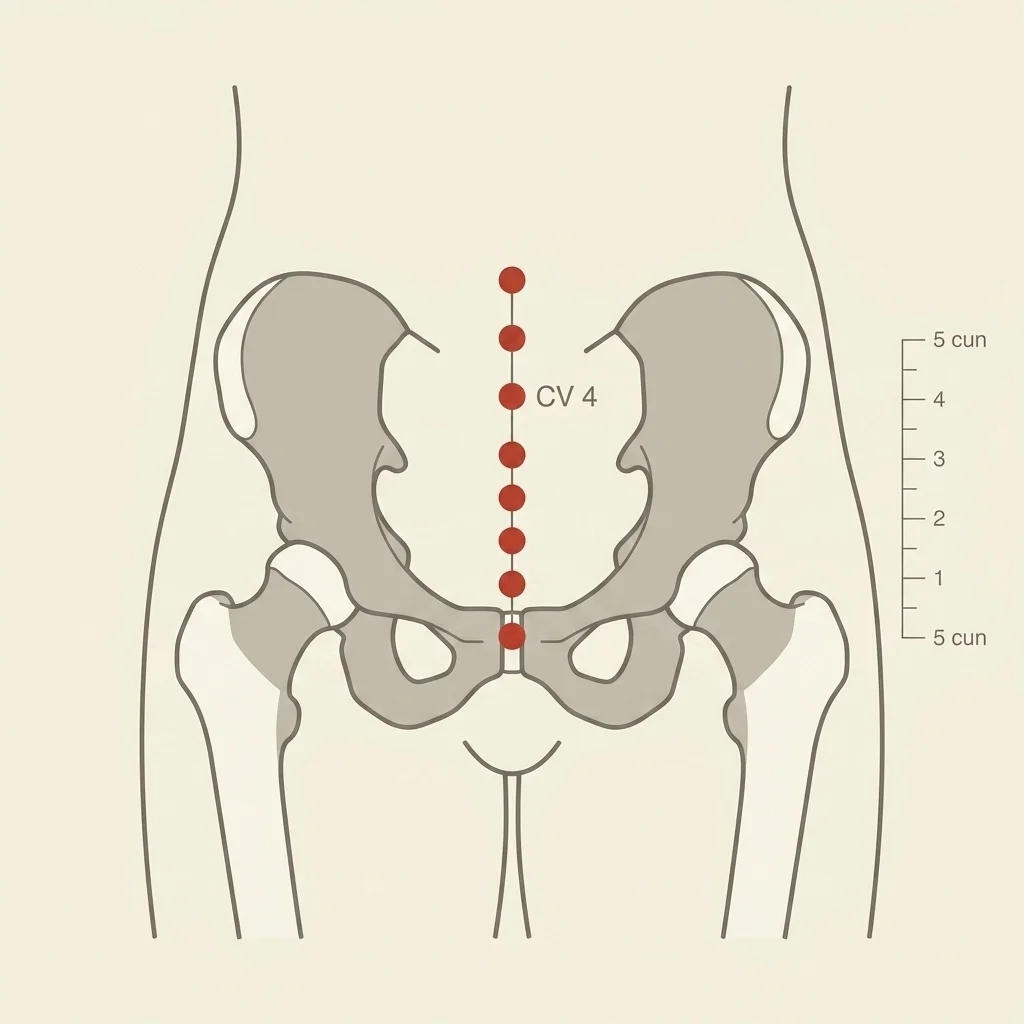
- Location
- In the lower abdomen, on the anterior midline, 3 cun inferior to the umbilicus.
Prognosis
ED prognosis depends on etiology and severity. Psychogenic ED has an excellent prognosis with adequate treatment. Vasculogenic ED can improve significantly with lifestyle modifications and pharmacotherapy, although complete resolution depends on the degree of vascular impairment.
Factors associated with a better prognosis include recent onset, absence of severe comorbidities, good response to PDE5 inhibitors, adherence to lifestyle changes, and a collaborative partnership. A 10% body weight loss may improve erectile function in up to 30% of obese men.
ED treatment should be ongoing, with periodic reassessment. Even when pharmacotherapy is necessary indefinitely, most patients achieve a satisfactory sexual life. Penile prosthesis offers a definitive solution for refractory cases.
Myths and Facts
Myth vs. Fact
Erectile dysfunction is a normal consequence of aging
Although prevalence increases with age, ED is not inevitable. Healthy men can maintain erectile function throughout life. ED is a sign of treatable underlying disease.
ED is always psychological — it's all in your head
About 70-80% of cases have a predominantly organic component, generally vascular. Pure psychogenic ED is more common in young men without risk factors.
Using medications for erection creates dependence
PDE5 inhibitors do not cause physical dependence or tolerance. They do not alter the physiologic mechanism of erection — they only potentiate the NO pathway during sexual stimulation.
Testosterone solves any type of ED
Testosterone replacement is only indicated when hypogonadism is laboratory-confirmed. In men with normal testosterone, replacement does not improve erectile function and may carry risks.
Cycling causes permanent impotence
Prolonged cycling can cause pudendal nerve compression and temporary ED. With an adequate saddle and regular breaks, the risk is minimal. ED from cycling is reversible in most cases.
When to Seek Help
ED should be evaluated whenever it causes discomfort or impacts quality of life. Beyond sexual health, the assessment is an opportunity to investigate cardiovascular risk factors.
Frequently Asked Questions
Erectile dysfunction (ED) is the persistent inability to obtain or maintain an erection sufficient for satisfactory sexual activity. Occasional erectile difficulty — related to stress, extreme tiredness, or excessive alcohol consumption — is normal and does not constitute ED. The clinical diagnosis applies when it occurs in at least 50% of sexual attempts for at least 3 months. ED affects about 50% of men aged 40 to 70 to some degree, and prevalence increases with age.
The mechanisms by which medical acupuncture might contribute to erectile dysfunction remain under investigation. Hypotheses under study include effects on nitric oxide and pelvic microcirculation pathways, modulation of pelvic parasympathetic afferents, effects on hormonal axes, and reduced performance anxiety — mechanisms that may coexist. None of these mechanisms is conclusively demonstrated in human ED, and the available clinical studies show protocol heterogeneity and variable methodologic quality.
Yes, and this is one of the most important reasons not to ignore ED or treat it symptomatically alone. Erectile dysfunction is an early marker of cardiovascular disease — penile arteries have a smaller diameter than coronary arteries and develop atherosclerosis earlier. Studies show that men with ED have increased risk of heart attack and stroke over the next 5 to 10 years. ED can also be the first sign of undiagnosed diabetes mellitus, hypertension, hypogonadism, or neurologic disorders. A complete medical evaluation is essential.
There is no firm consensus in the literature on the ideal number of sessions, since protocols vary across studies. Clinical reviews commonly describe initial cycles of roughly 8 to 12 sessions (1 to 2 per week), with periodic reassessment. Response rates vary by etiology, severity, and study quality — and acupuncture should be viewed as adjuvant, not a substitute for etiologic treatment (management of cardiovascular factors, PDE5 inhibitors when indicated, hormone replacement in confirmed hypogonadism). The medical acupuncturist defines the individualized plan.
Medical acupuncture has no known direct pharmacologic interaction with PDE5 inhibitors (sildenafil, tadalafil, vardenafil) and can be used as an adjuvant approach in patients already taking these medications. Any dose adjustment of PDE5 inhibitors must be made exclusively by the prescribing physician (urologist or clinician), based on clinical response and individual safety profile — not by the medical acupuncturist and not driven by acupuncture itself. Inform all involved professionals about ongoing treatments.
Yes, psychological factors account for up to 30% of ED cases, and are especially prevalent in young men (under 40). Performance anxiety, depression, chronic stress, relationship conflicts, and sexual trauma are the most common psychogenic causes. Medical acupuncture may help in these situations, but the evidence is limited; proposed mechanisms include a reduced stress response and modulation of the autonomic nervous system toward the parasympathetic — the state necessary for erection. The psychogenic component often coexists with an organic cause, and acupuncture can be a complement in both dimensions.
The evidence is consistent: lifestyle modifications can improve erectile function in a significant proportion of patients with mild to moderate ED, especially before age 50. The best-supported measures include regular aerobic exercise (around 150 minutes per week), weight loss in patients with overweight or obesity, smoking cessation, moderate alcohol consumption, a Mediterranean diet, and adequate control of diabetes and hypertension. These measures complement clinical treatment led by the physician.
ED prevalence increases with age — from approximately 40% at age 40 (to any degree) to about 70% at age 70. However, ED is not an inevitable consequence of healthy aging. Many men maintain satisfactory erectile function into their 80s and 90s. Aging reduces vascular elasticity and testosterone levels, but associated comorbidities — diabetes, hypertension, cardiovascular disease, obesity, sedentary lifestyle — primarily determine ED severity. Treating these conditions and maintaining a healthy lifestyle are essential for preserving sexual function.
Yes, the medical acupuncturist selects points individually based on each patient's functional diagnosis. The most studied points for ED include Guanyuan (CV-4) and Zhongji (CV-3), located in the lower abdomen and linked to urogenital function regulation; Shenshu (BL-23) and Mingmen (GV-4), on the lumbar back, associated with renal and hormonal function; and Sanyinjiao (SP-6), which integrates the liver, spleen, and kidney meridians. Electroacupuncture — low-frequency electrical stimulation at the acupuncture points — is frequently used to enhance vasodilator and neurotrophic effects.
Seek medical evaluation if erectile difficulty occurs in more than 50% of attempts for longer than 3 months, if there is progressive worsening, if other symptoms appear such as reduced libido, intense fatigue, or mood changes (which may indicate hypogonadism), or if ED causes significant distress or affects the relationship. The consultation is especially urgent with cardiovascular risk factors, such as high blood pressure, elevated cholesterol, or family history of heart disease — since ED can be the first sign of vascular disease. The medical acupuncturist can integrate diagnostic workup and treatment.
Related Reading
Deepen your knowledge with related articles