Therapeutic exercise
Isotonic Calf Raises
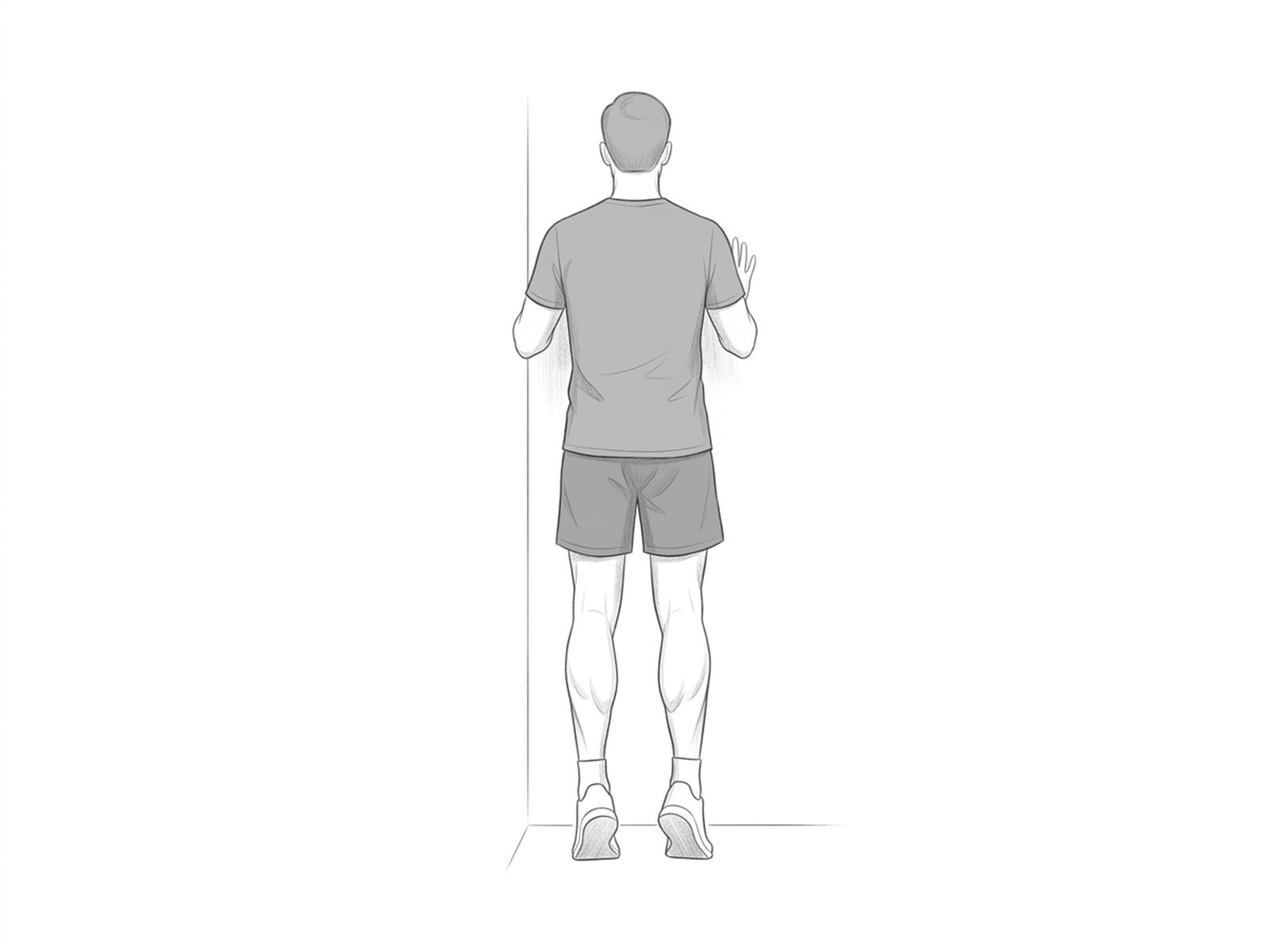
Controlled raising and lowering of the heels in standing, recruiting gastrocnemius and soleus dynamically. Complements static isometric work with concentric-eccentric loading, essential in knee osteoarthritis (impact absorption) and advanced Achilles tendinopathy rehab.
How to perform
- Starting position. Stand near a wall or chair for light support, with the feet hip-width apart.
- Step 2. Slowly raise the heels off the floor over 2 seconds, transferring weight to the balls of the feet.
- Step 3. At the top, hold maximum elevation for 1 to 2 seconds, feeling the intense calf contraction.
- Step 4. Lower the heels slowly over 3 to 4 seconds until they touch the floor.
- Return. For progression, perform unilaterally or on a step (lowering past neutral for additional Achilles stretch).
When not to perform
- Achilles tendinopathy in acute reactive phase (start with isometric)
- Severe ankle instability
- Recent post-operative ankle or foot surgery
- Recent calcaneal or metatarsal fracture
- Highly inflammatory plantar fasciitis
- Peripheral neuropathy with fall risk
Medical disclaimer. These exercises are presented for informational purposes only. Always consult your physician before starting any exercise program, especially in case of acute pain, recent injury, or underlying clinical condition.
Related Exercises
Seated Heavy Soleus Raise
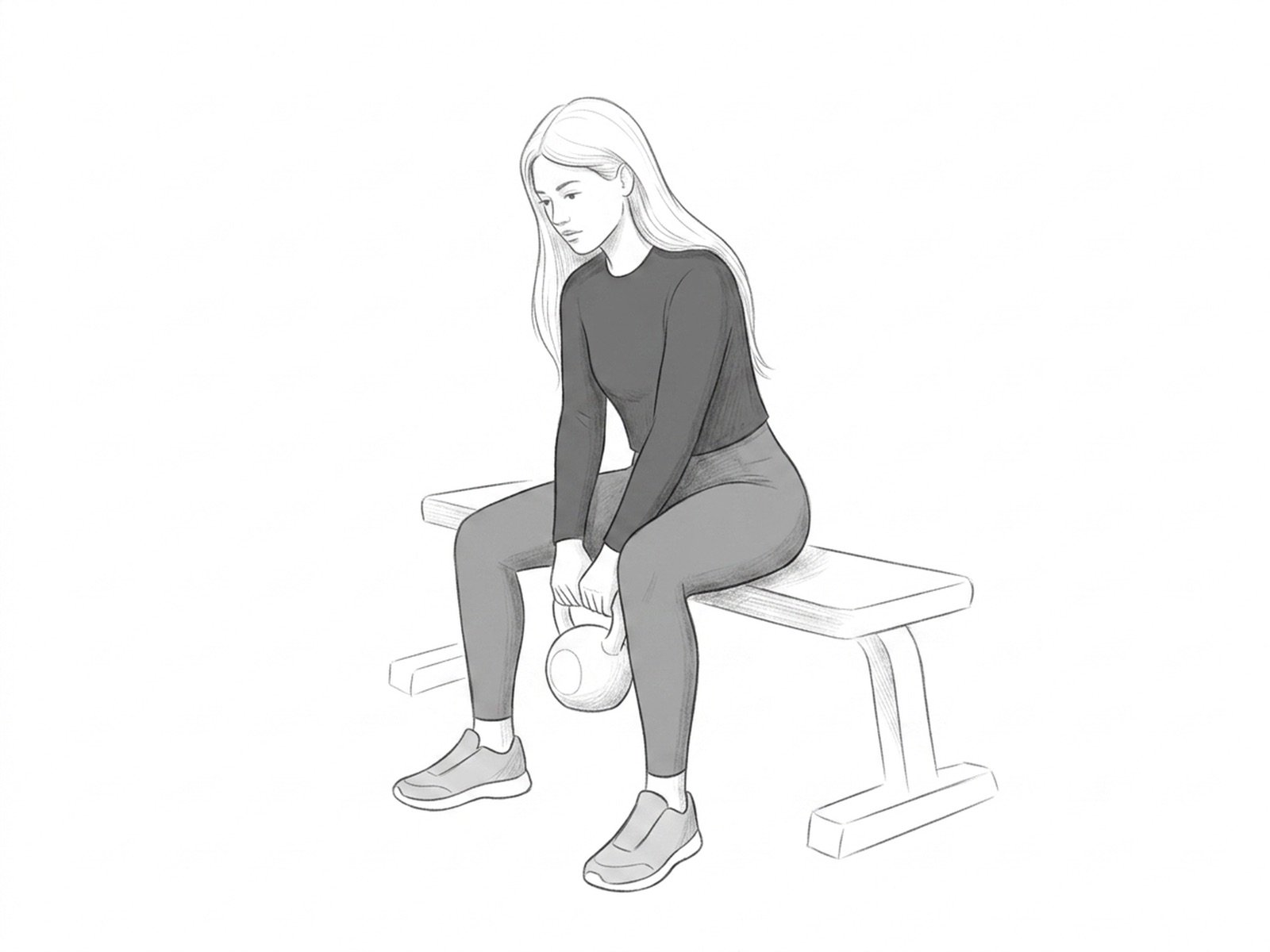
Heel raise in seated position with heavy load on the knees, isolating the soleus (with the gastrocnemius at mechanical disadvantage). Essential in Achilles tendinopathy — the soleus is often neglected in the Alfredson protocol (which predominantly loads the gastrocnemius).
Gastrocnemius Wall Stretch
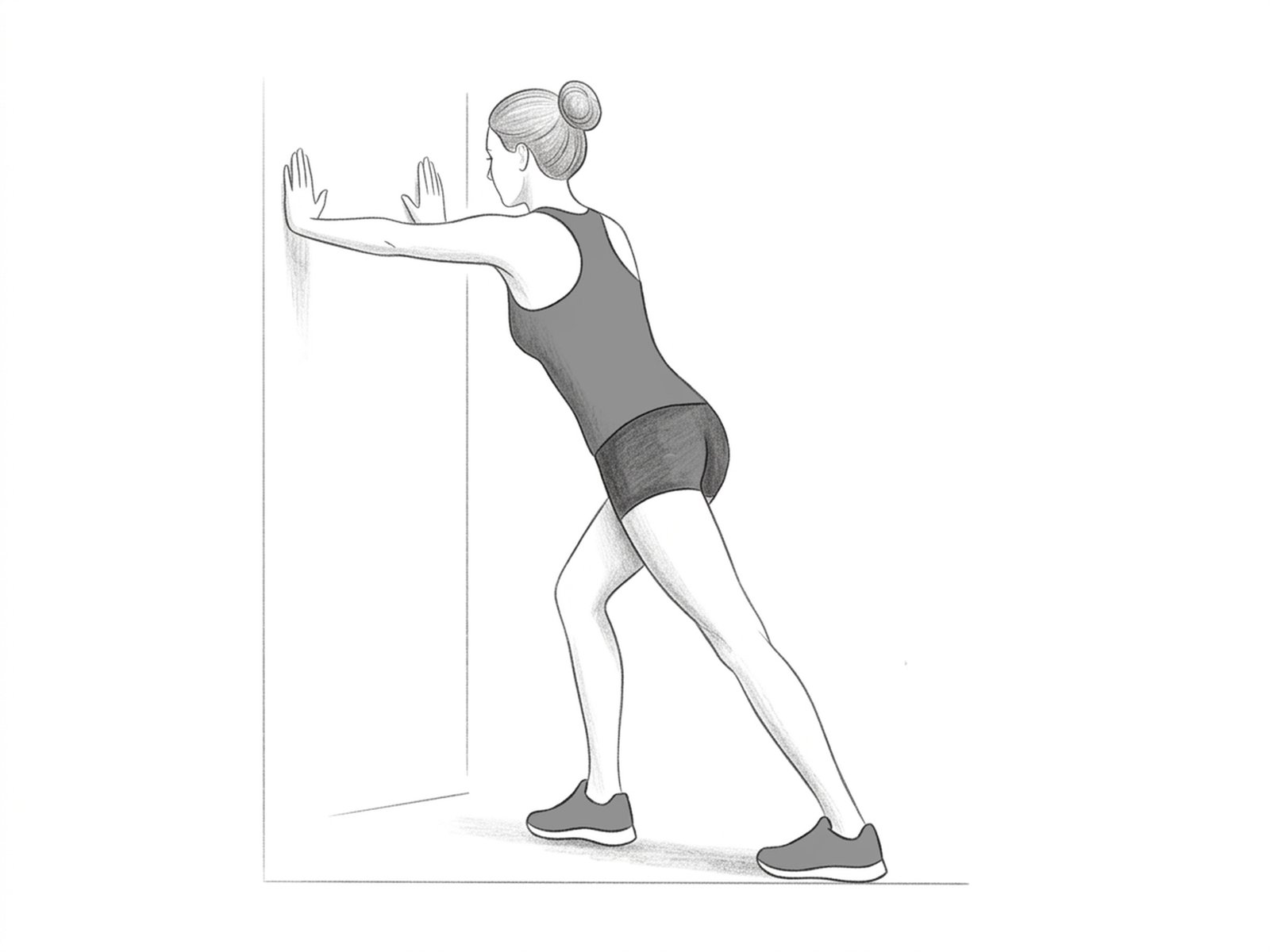
Calf stretch with the knee straight. Restores flexibility of the posterior chain and reduces traction on the Achilles tendon.
Soleus Stretch (Bent-Knee)
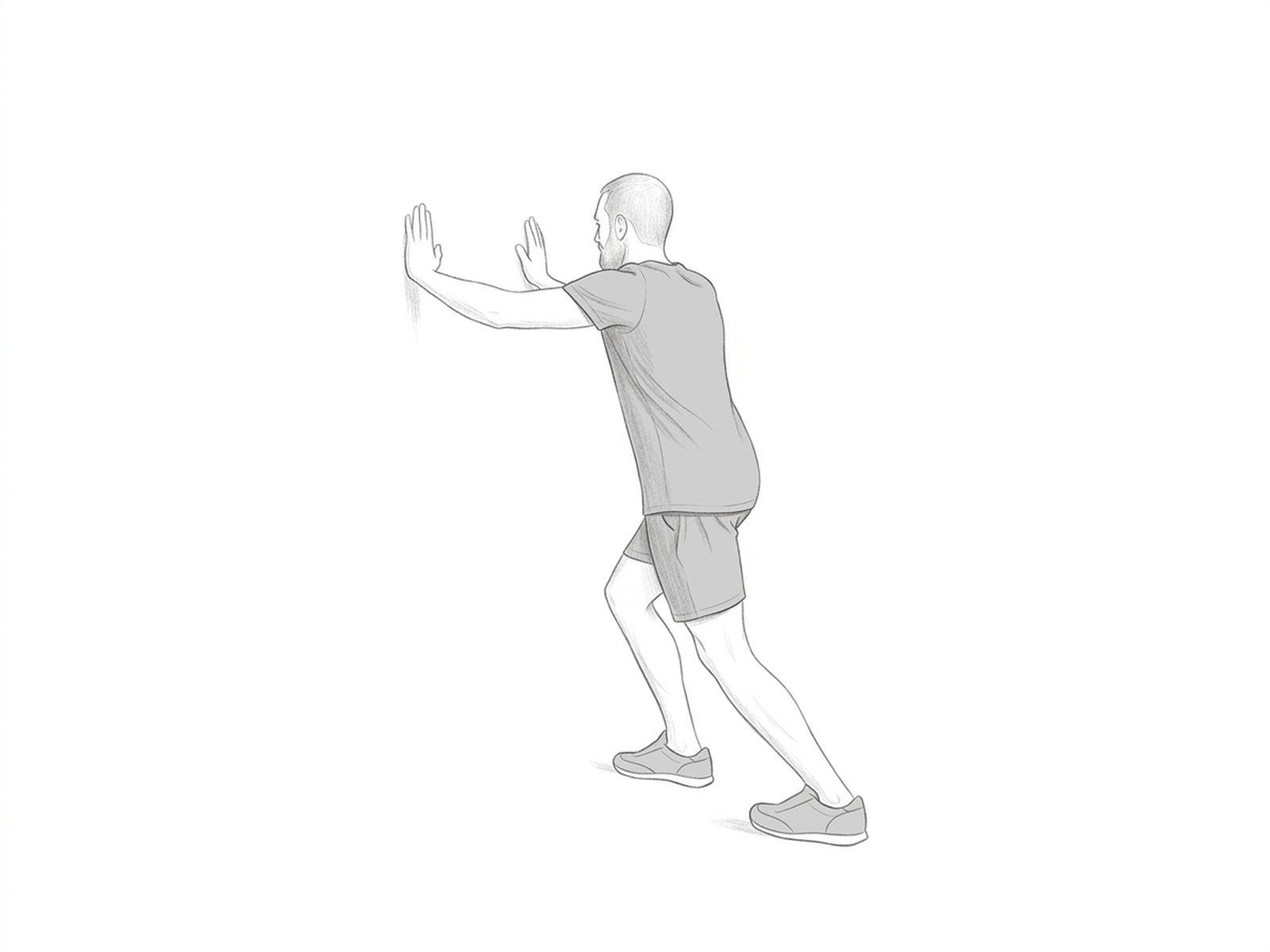
Stretches the soleus — the deep calf muscle that is only isolated with the knee bent. Complements the gastrocnemius stretch (knee straight) for complete flexibility of the calf complex.