Therapeutic exercise
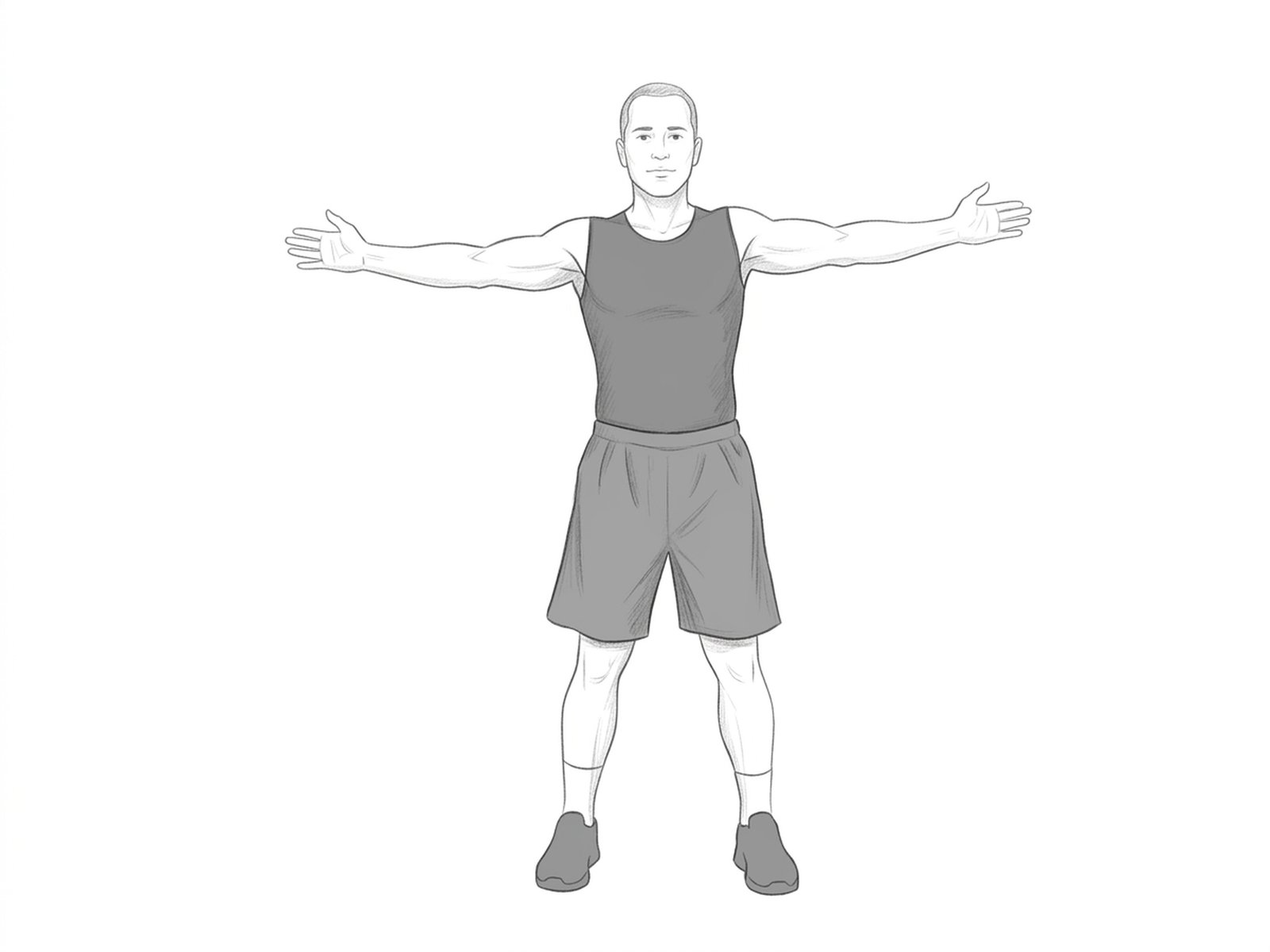
Chest Expansion for Ankylosing Spondylitis
Specific rib-cage expansion exercise for ankylosing spondylitis. Counters the chest-wall stiffness that compromises vital capacity — a clinical measure of disease progression.
How to perform
- Starting position. Sit upright or stand with your hands clasped behind your head.
- Step 2. Inhale deeply through the nose, expanding the chest to its maximum (focus on pushing the ribs out to the sides).
- Step 3. Hold the maximum inhalation for 3 seconds.
- Return. Exhale slowly, then repeat without pausing between cycles.
When not to perform
- Acute rib pain
- Recent rib fracture
Medical disclaimer. These exercises are presented for informational purposes only. Always consult your physician before starting any exercise program, especially in case of acute pain, recent injury, or underlying clinical condition.
Related Exercises
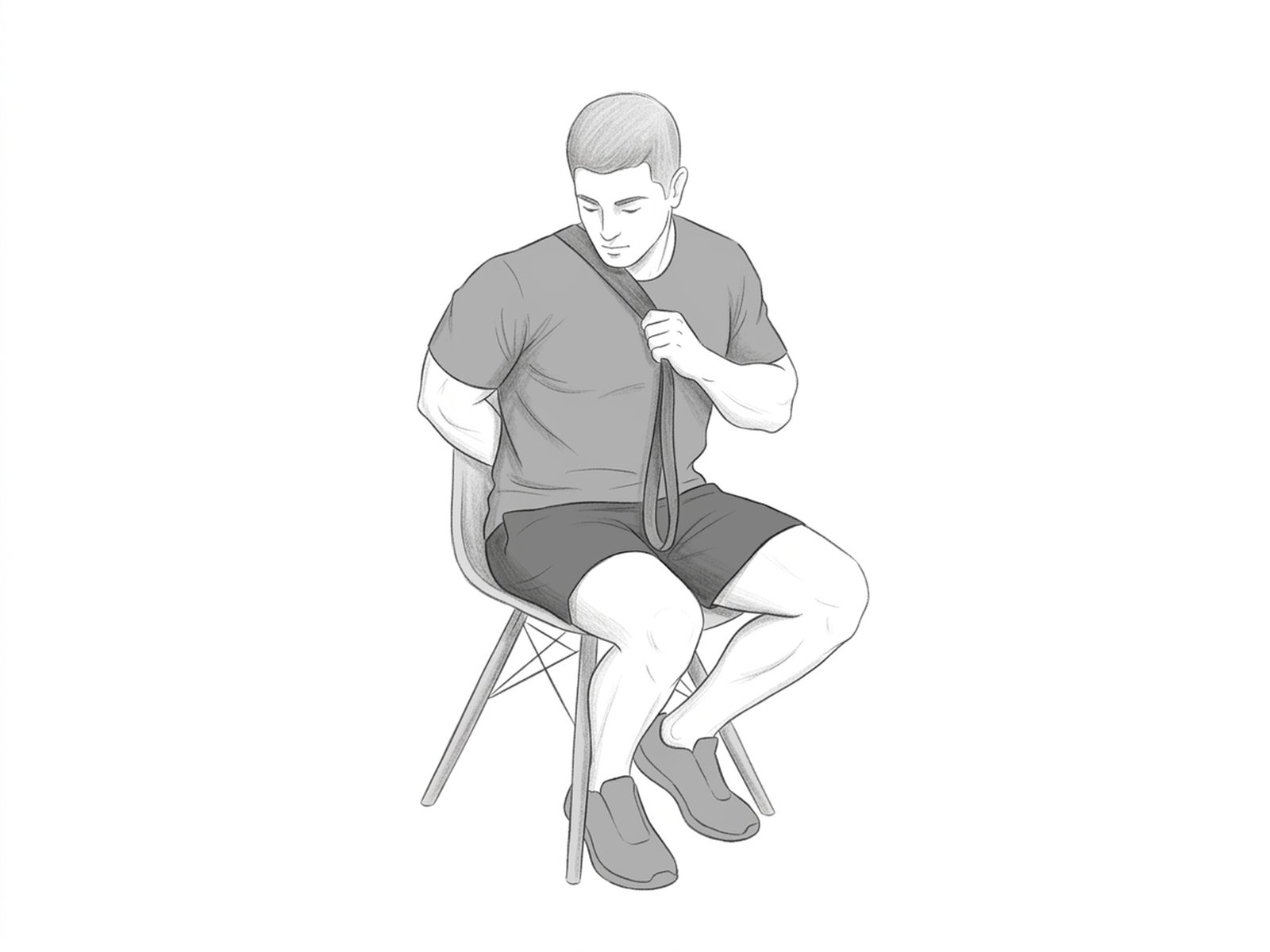
Seated Rib Mobilization with Deep Breathing
Combination of active rib mobilization with deep diaphragmatic breathing, seated. Specific for costochondritis and somatic rib dysfunction — chest expansion with each inhalation mobilizes the costochondral joints while reducing associated myofascial pain.
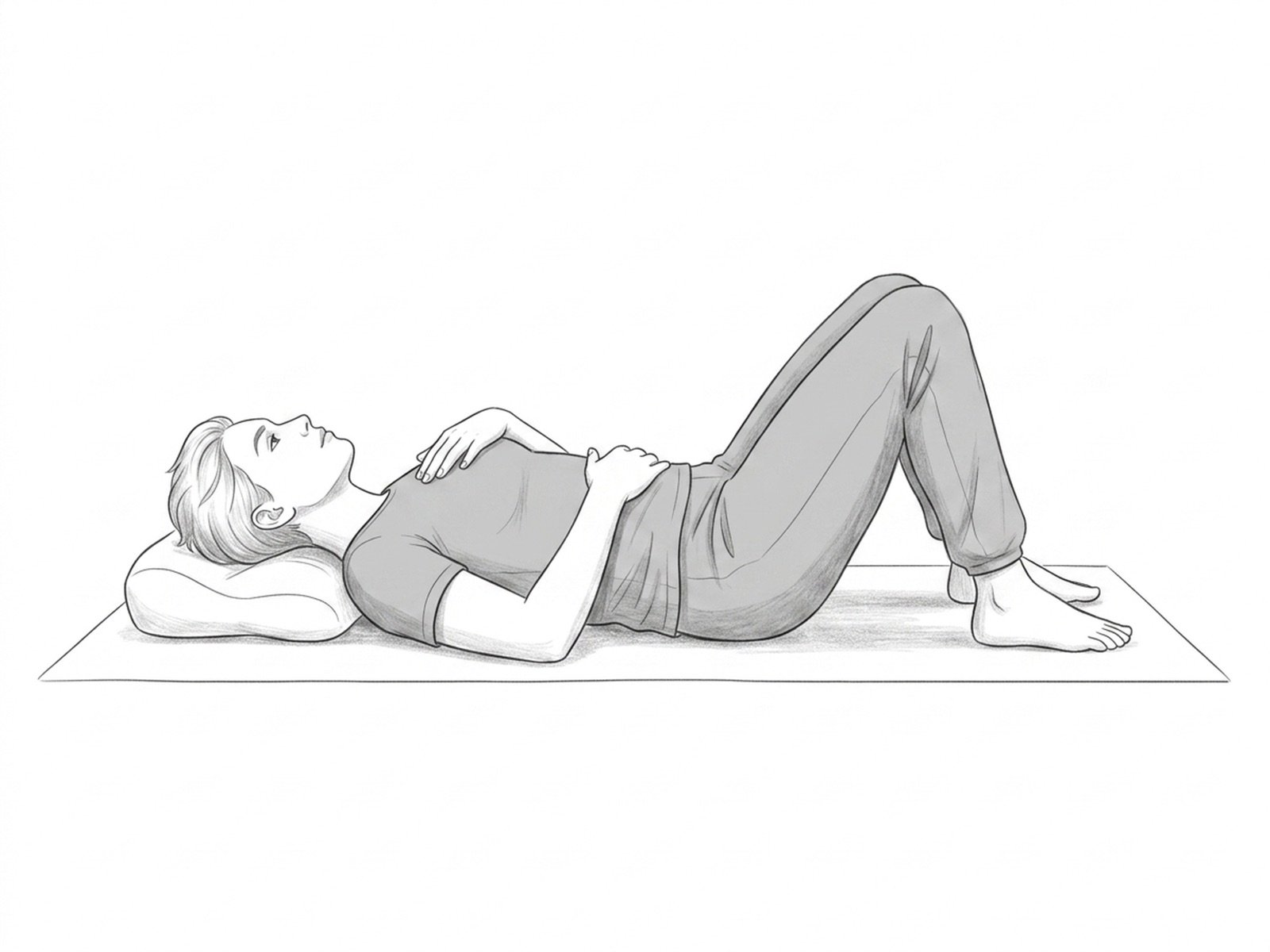
Diaphragmatic Breathing
Trains the diaphragm as the primary respiratory mover, reducing the overload on accessory cervical muscles. A key component in the treatment of cervicothoracic myofascial pain syndrome.
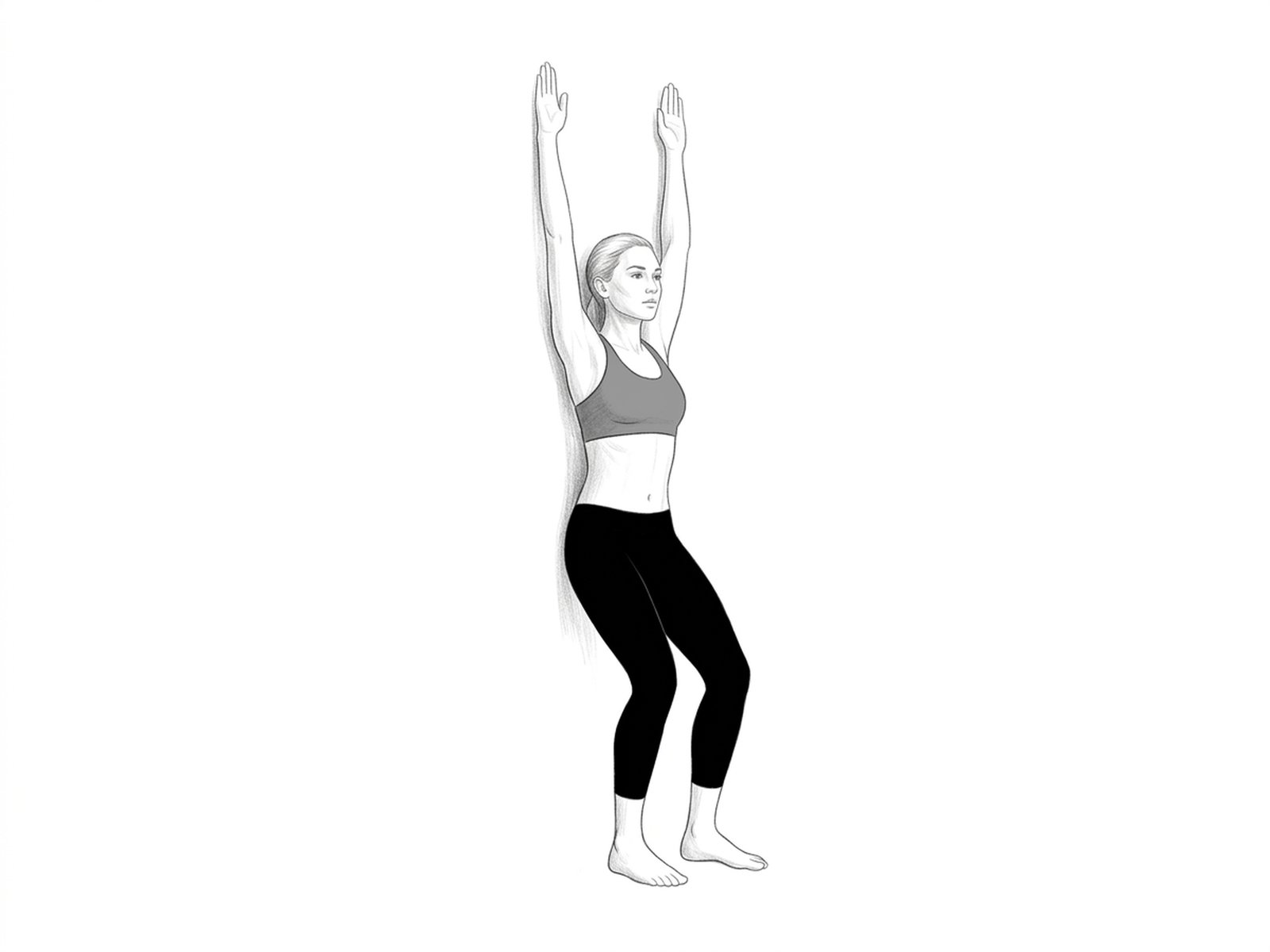
Wall Angels
Scapulothoracic mobilization in the posterior chain that corrects kyphotic posture. Indicated as an adjunct in cervical disc herniation to reduce compensatory overload.