Therapeutic exercise
Triceps Pulley with Eccentric Emphasis
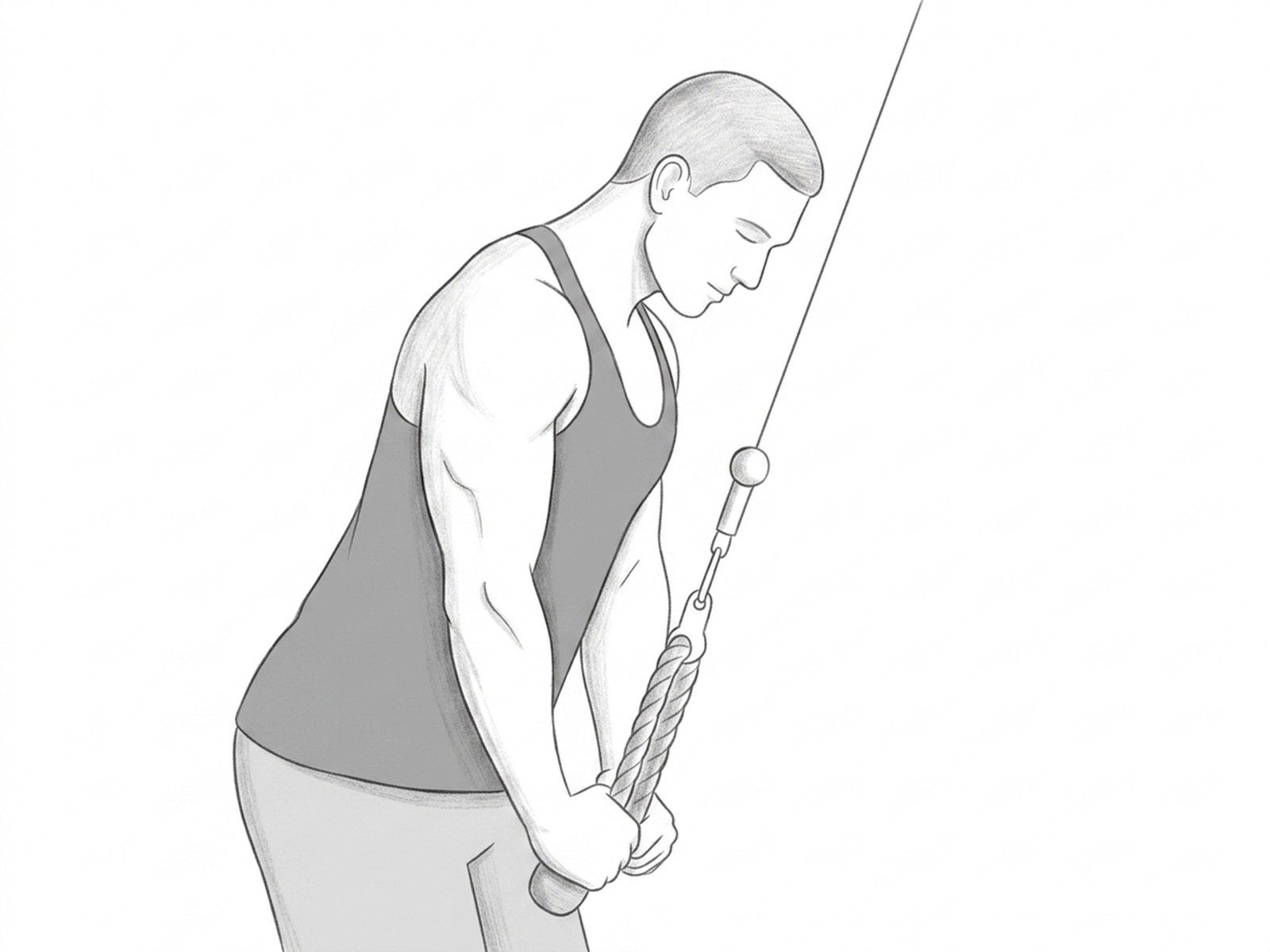
Resisted elbow extension with emphasis on the eccentric phase (controlled descent). In triceps tendinopathy, slow and heavy loading during descent is the main stimulus for tendon remodeling — following the same principle as the Alfredson protocol adapted to the triceps.
How to perform
- Starting position. Stand facing a pulley or a high band anchor point, holding the cable or band with both hands.
- Step 2. Keep the elbows tucked against the trunk and flexed at 90° — starting position with tension.
- Step 3. Push the cable downward with both hands, extending the elbows to full extension — assisted concentric phase (two hands).
- Step 4. Release the healthy hand and slowly return to the starting position with only the affected arm, over 4–5 seconds — isolated eccentric phase.
- Return. Use both hands again to return to extension. Repeat. The eccentric phase should be performed only with the affected arm.
When not to perform
- Triceps tendinopathy in an acute reactive phase (start with isometrics)
- Partial or complete triceps tendon rupture
- Acute olecranon bursitis
- Recent elbow surgery
- Cubital tunnel syndrome with paresis
- Pain that does not subside within 24 hours after the exercise
Medical disclaimer. These exercises are presented for informational purposes only. Always consult your physician before starting any exercise program, especially in case of acute pain, recent injury, or underlying clinical condition.
Related Exercises
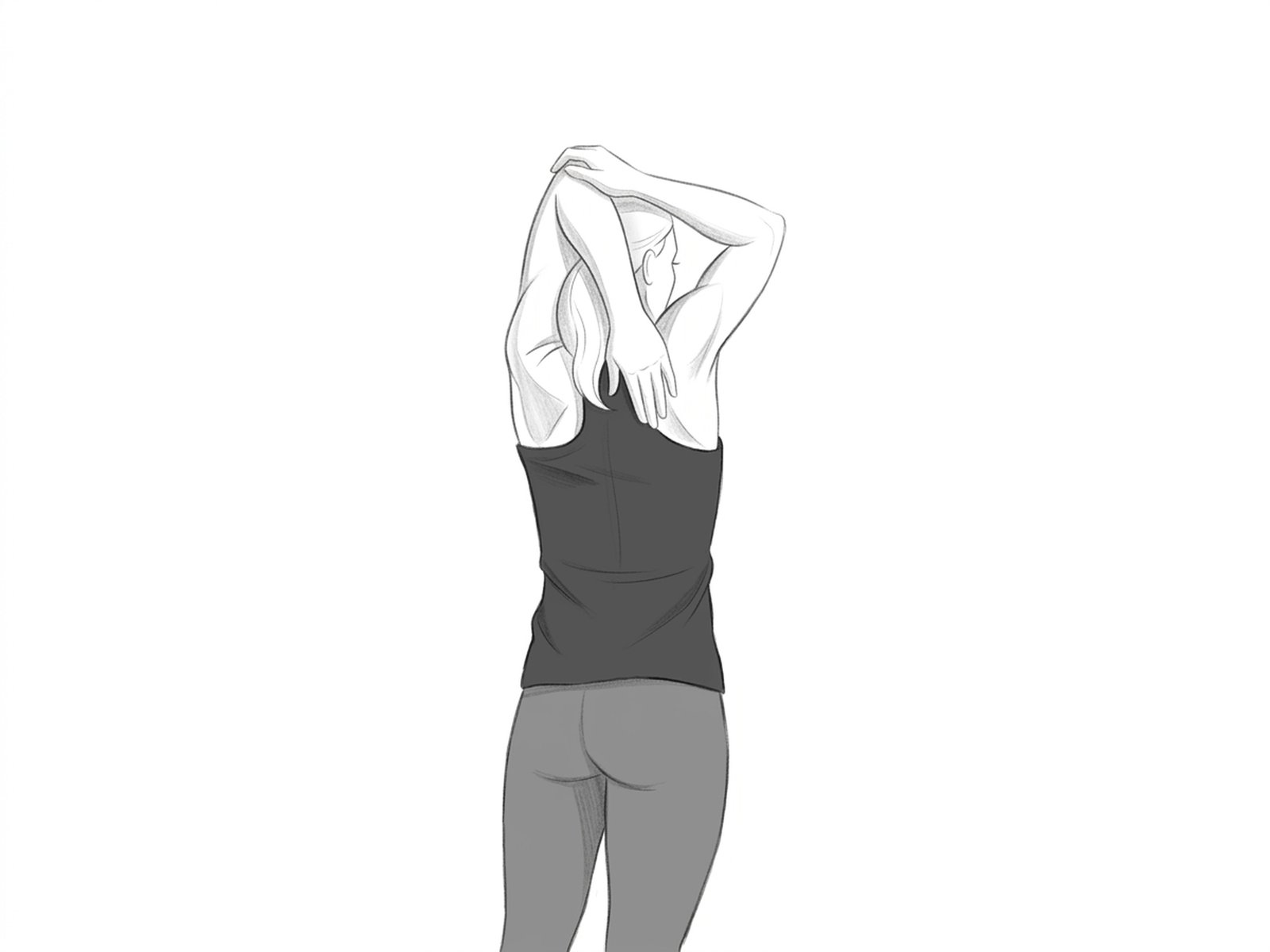
Overhead Triceps Stretch
Classic stretch of the triceps brachii in its proximal portion (long head). Fundamental in the treatment of triceps tendinopathy — maintains tendinous flexibility while eccentric loading remodels the tendon.
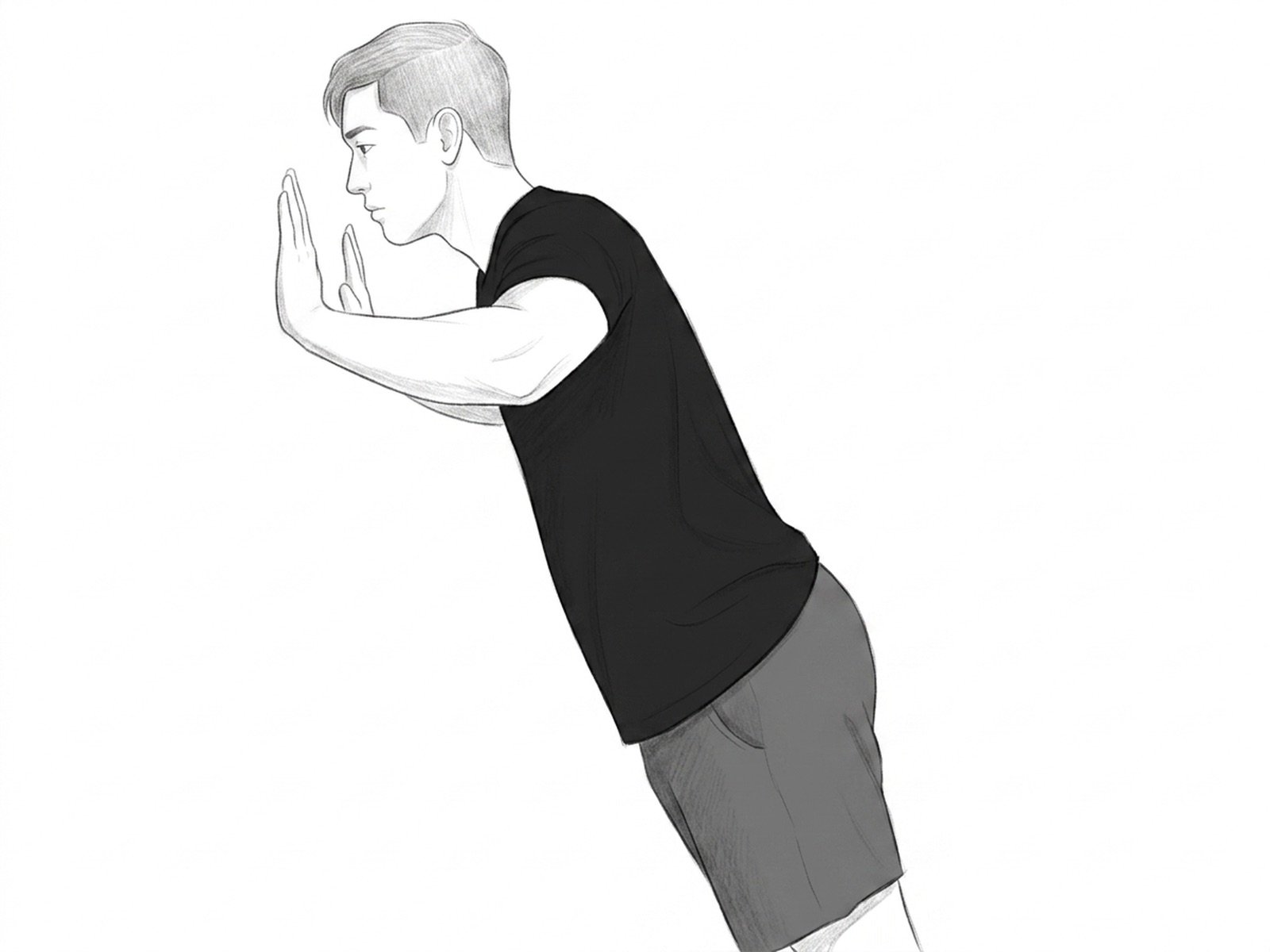
Triceps Isometric Wall Hold
Isometric contraction of the triceps brachii in elbow extension against a wall. The first stage of triceps tendinopathy treatment at the olecranon insertion — produces immediate analgesia without overloading the reactive tendon.
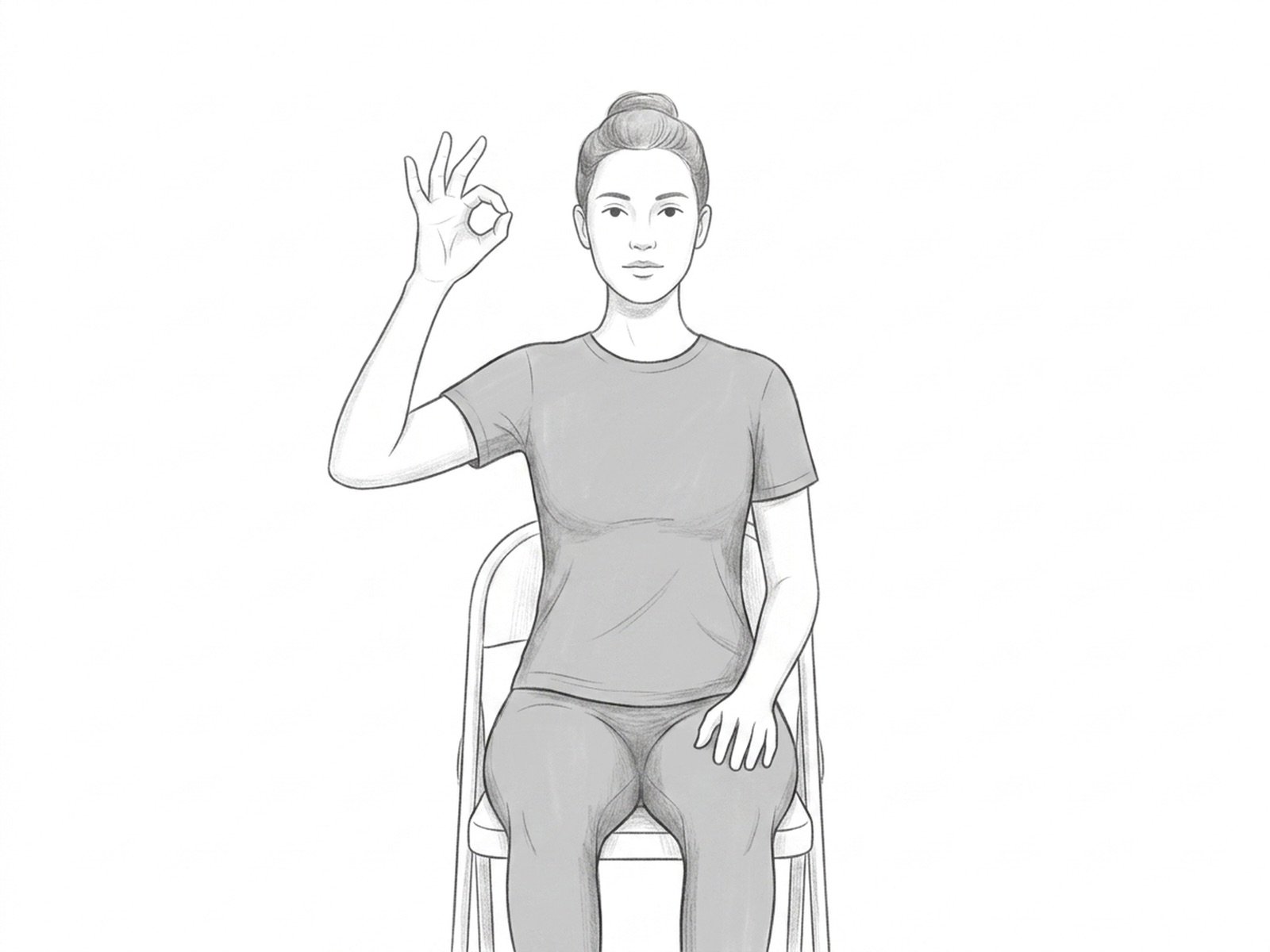
Ulnar Nerve Glide (Batman Mask)
Neural mobilization of the ulnar nerve along its path through the elbow (cubital tunnel) and wrist (Guyon's canal). Indicated for cubital tunnel syndrome, medial epicondylitis with a neural component, and triceps tendinopathy — the mask-shaped movement around the eyes releases the nerve from adhesions.