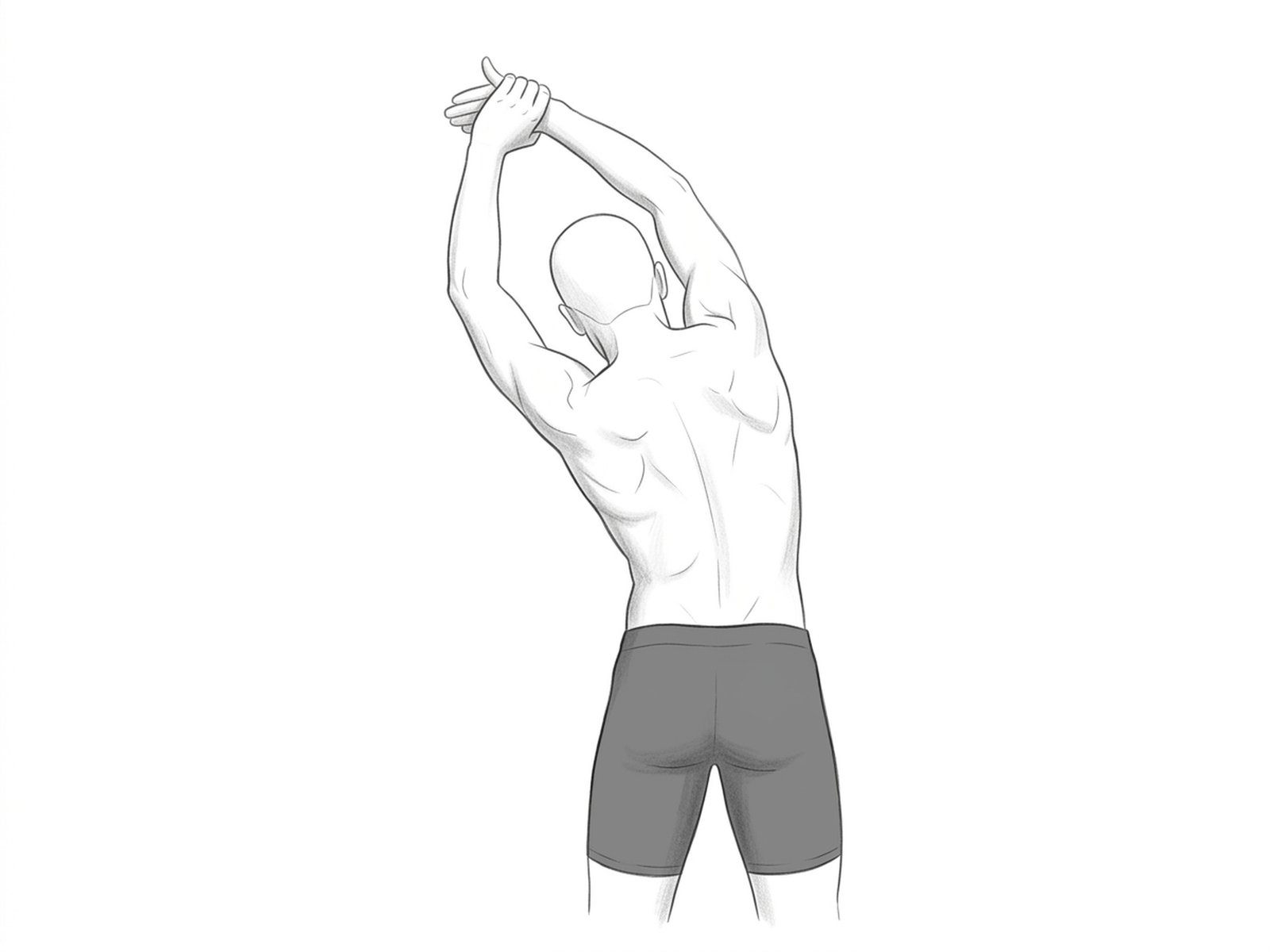
Therapeutic exercise
Latissimus Dorsi Stretch
Stretch of the latissimus dorsi, the largest muscle of the back. Its stiffness contributes to hyperkyphosis, lateral thoracic pain, and restricted arm elevation — being aware of it and stretching it regularly is a fundamental part of postural management.
How to perform
- Starting position. Stand or kneel, with the arms extended in front of the body at shoulder height.
- Step 2. Lean the trunk forward, resting the hands on a table, bar, or wall — the arms remain parallel to the floor.
- Step 3. Push the hips backward until you feel the back lengthen, with the spine in a neutral position and the head between the arms.
- Step 4. Allow the chest to gently sink toward the floor, deepening the stretch in the sides of the back.
- Return. Hold for 30 seconds, breathing deeply. To stretch laterally, slightly tilt the hip to one side, then the other.
When not to perform
- Acute rotator-cuff injury
- Acute low back pain in flexion
- Symptomatic lumbar disc herniation
- Recent shoulder surgery
- Uncontrolled arterial hypertension (the leaning position raises pressure)
- Severe vertebral osteoporosis
Medical disclaimer. These exercises are presented for informational purposes only. Always consult your physician before starting any exercise program, especially in case of acute pain, recent injury, or underlying clinical condition.
Related Exercises
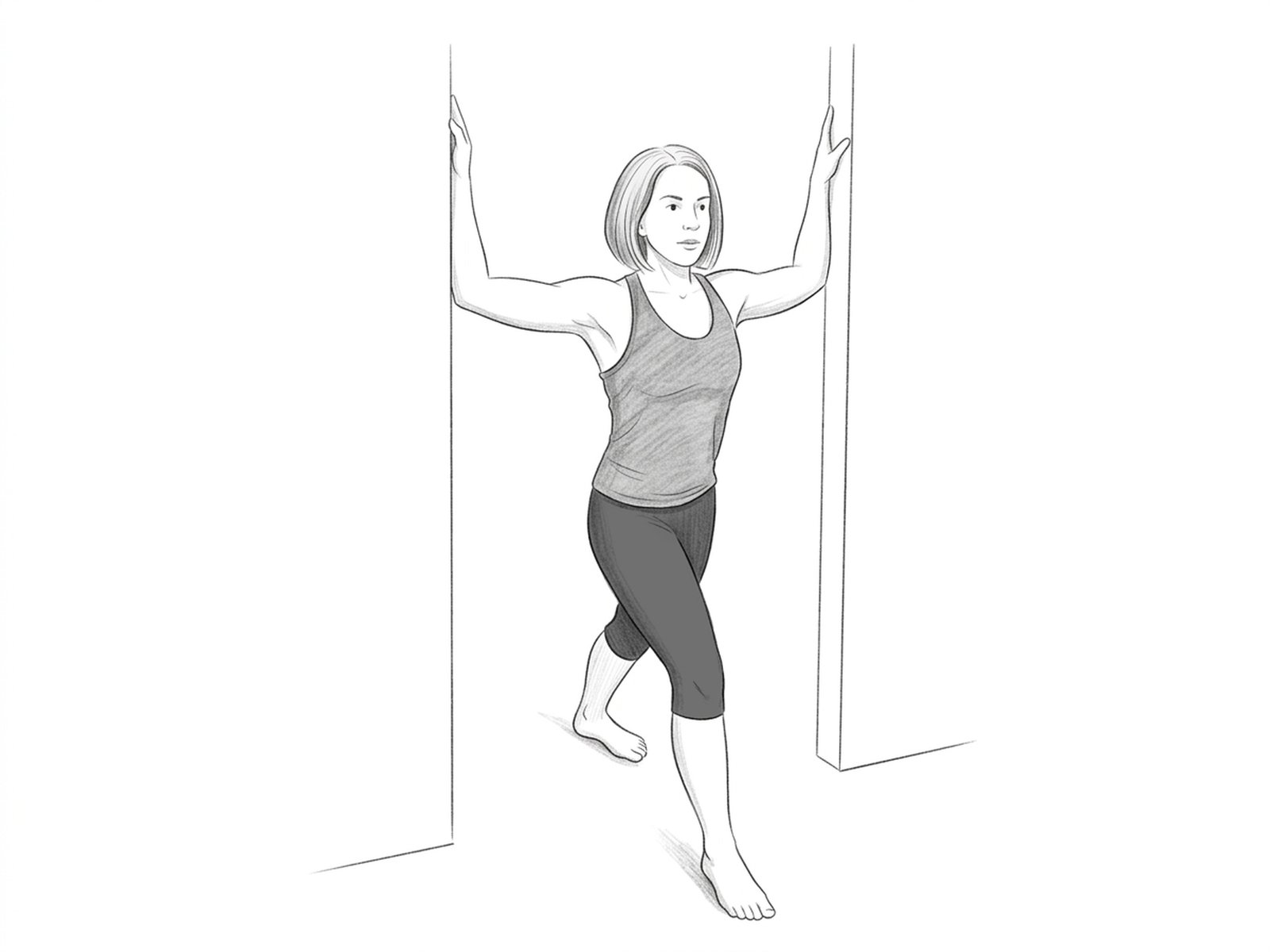
Doorway Pectoral Stretch
Stretches the pectoralis major and minor, muscles that are shortened in forward-head/rounded-shoulder posture. Reduces the passive scapular protraction that aggravates rotator-cuff tendinopathy.
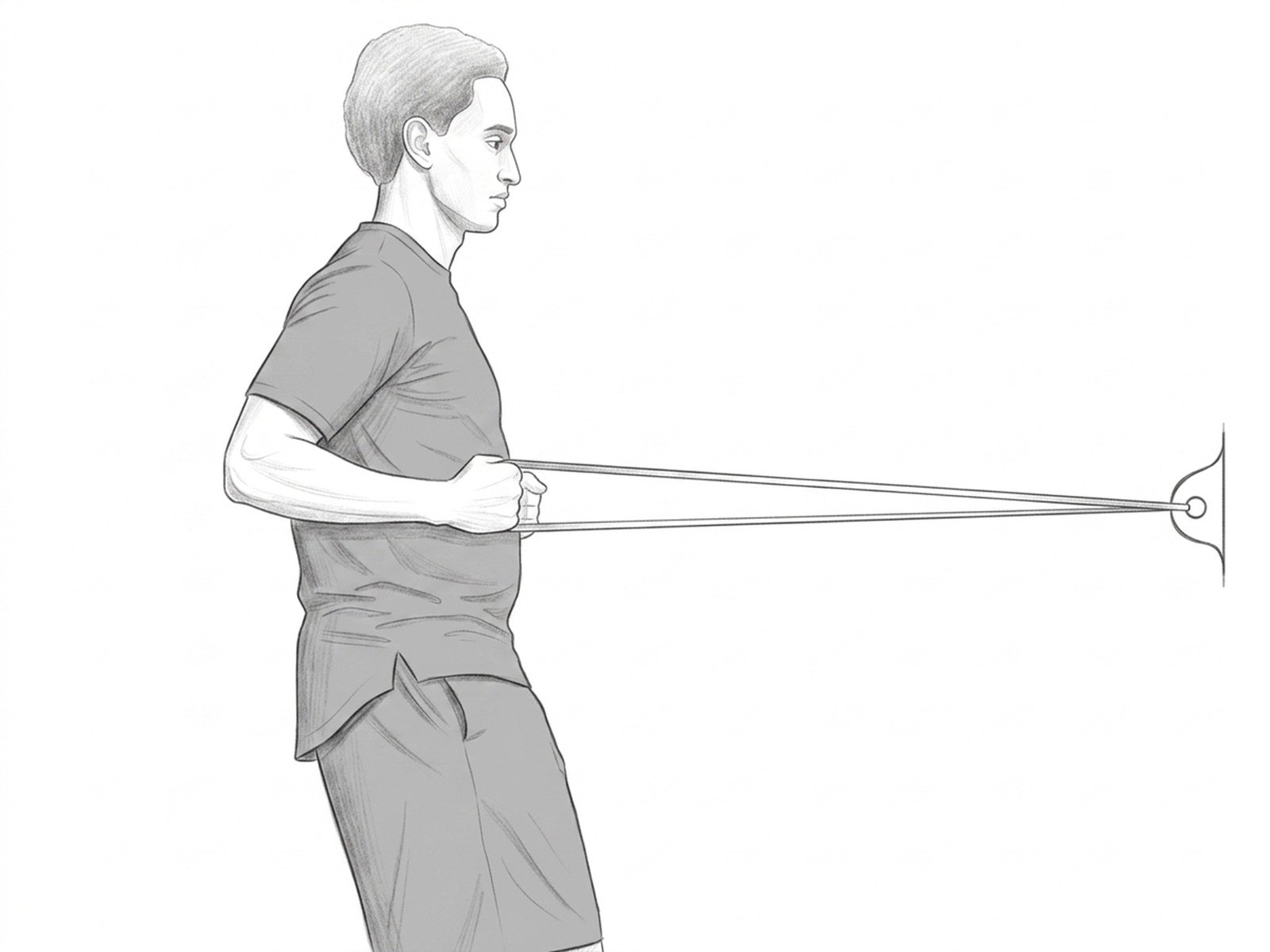
Banded Row
Horizontal pull with elastic resistance, recruiting the rhomboids, middle trapezius, and latissimus dorsi. The fundamental pulling exercise in shoulder-girdle rehabilitation — re-balances the pectoral/dorsal ratio in patients with upper-crossed syndrome.
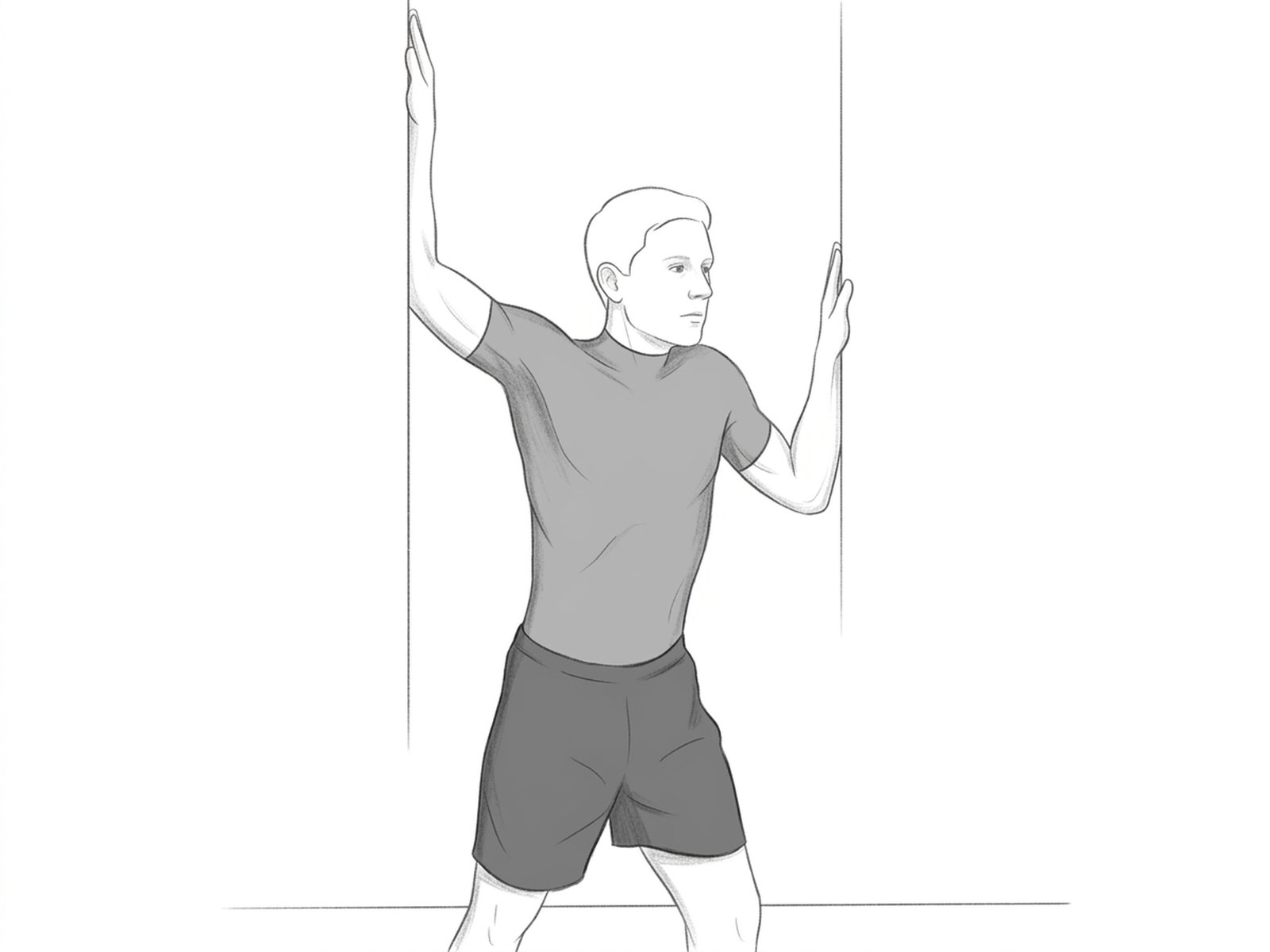
Pectoralis Minor Stretch
Specific stretch of the pectoralis minor — a muscle that inserts on the coracoid process of the scapula and is frequently shortened in patients with scapular dyskinesia, upper-crossed syndrome, and thoracic outlet syndrome. Unlike the pectoralis major stretch, it requires the arm to be positioned behind and below the body.