Therapeutic exercise
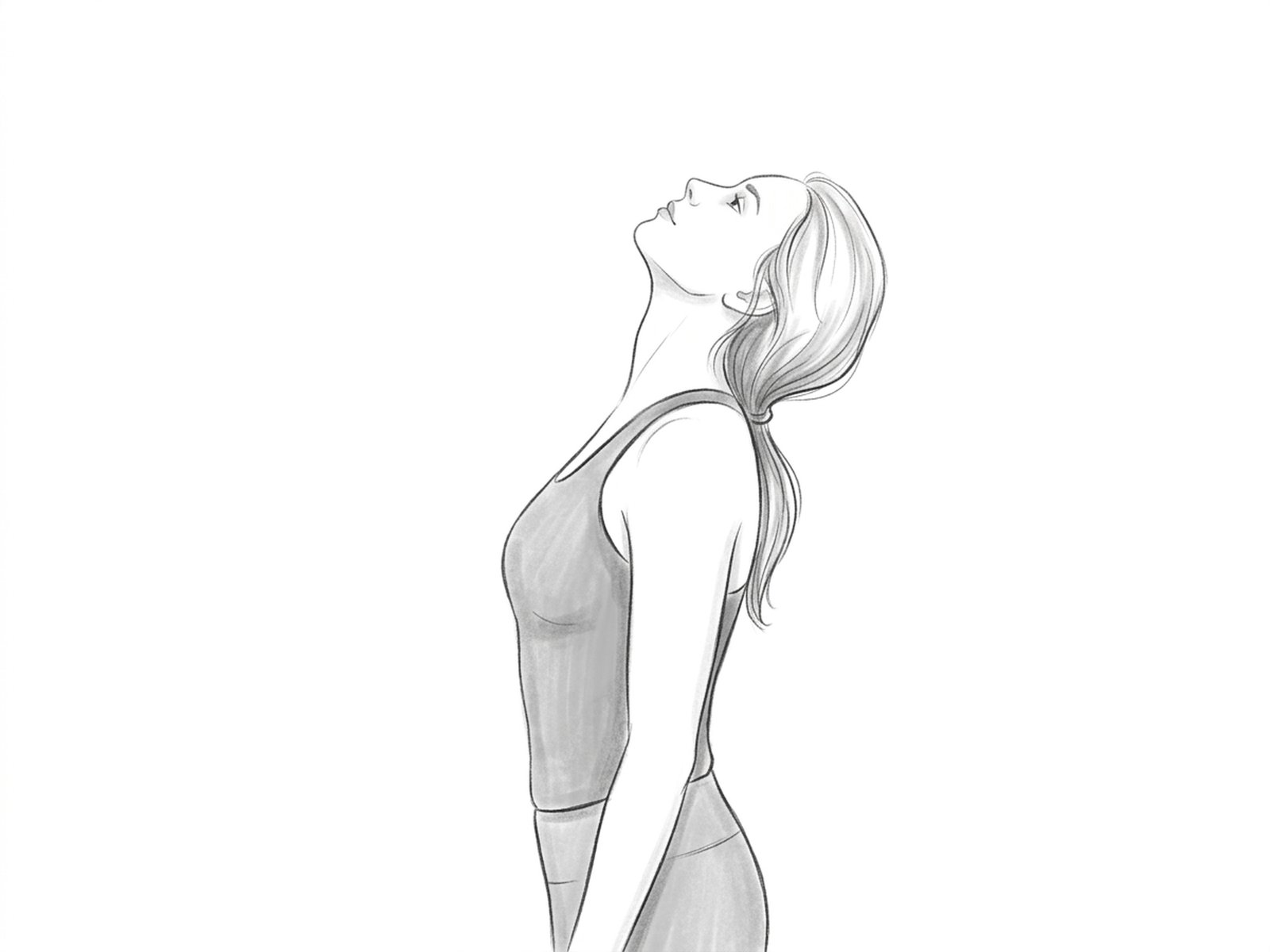
Seated Cervical Extension
Active cervical extension in sitting, specific to patients with a directional preference for extension (cervical discogenic). Different from chin tuck — here the goal is pure extension, not retraction.
How to perform
- Starting position. Sit upright in a firm-backed chair, feet flat on the floor.
- Step 2. Begin with the chin retracted (chin-tuck position) to protect the joint.
- Step 3. Maintaining the retraction, slowly take the head backward as if looking at the ceiling, until you feel a stretch in the anterior neck.
- Step 4. Hold the position for 2–3 seconds and return slowly to neutral.
- Return. The movement should relieve arm-radiating pain — if it worsens, reduce the range or stop the exercise.
When not to perform
- Upper cervical instability
- Positional vertigo
- Vertebrobasilar insufficiency
- Symptomatic cervical stenosis
- Recent cervical spine surgery
- Rheumatoid arthritis with atlantoaxial subluxation
Medical disclaimer. These exercises are presented for informational purposes only. Always consult your physician before starting any exercise program, especially in case of acute pain, recent injury, or underlying clinical condition.
Related Exercises
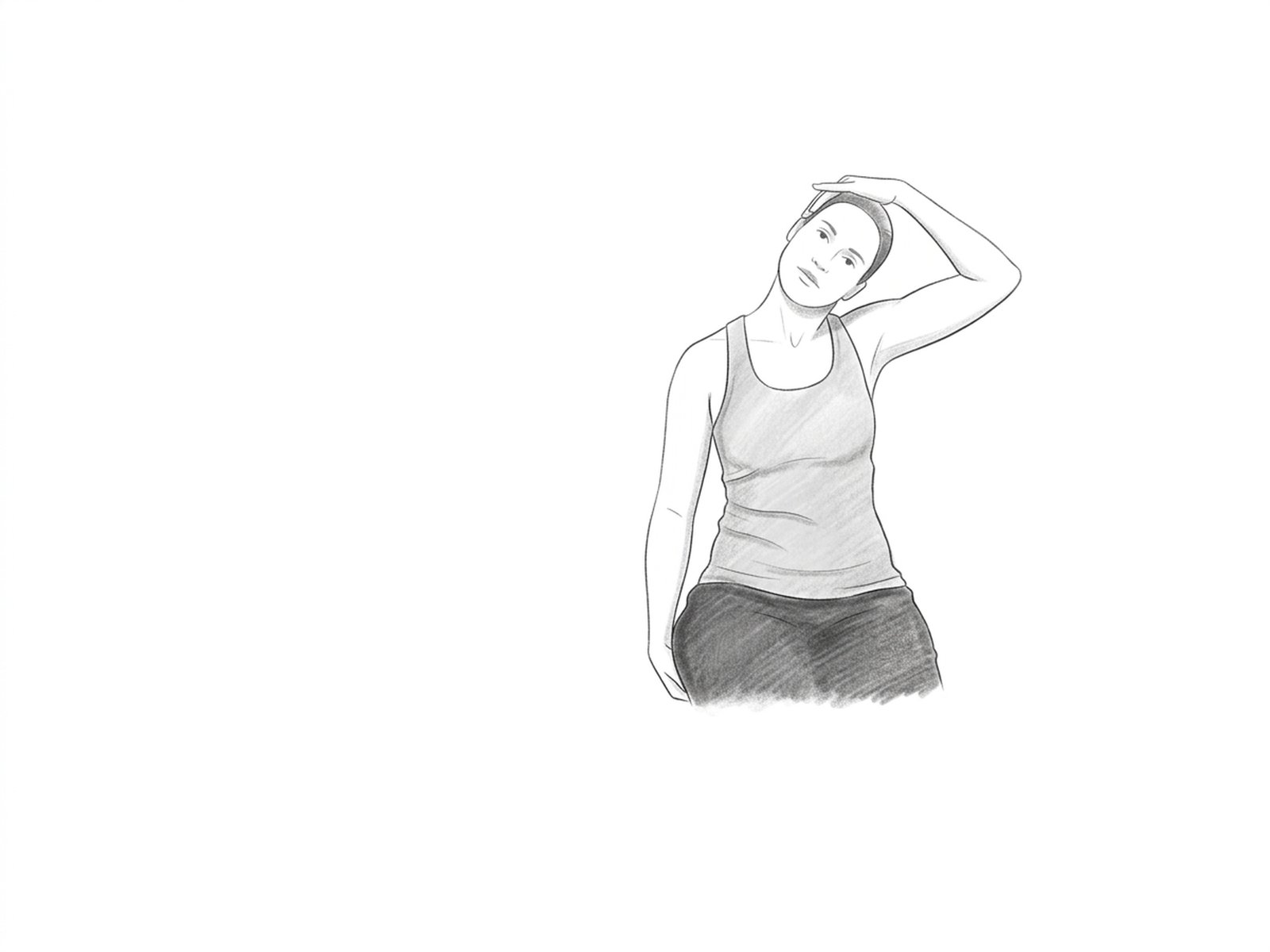
Upper-Trapezius Stretch
Stretches the upper trapezius — a muscle that is commonly hypertonic in patients with mechanical neck pain. Relieves the sensation of heaviness and tension in the neck and shoulders.
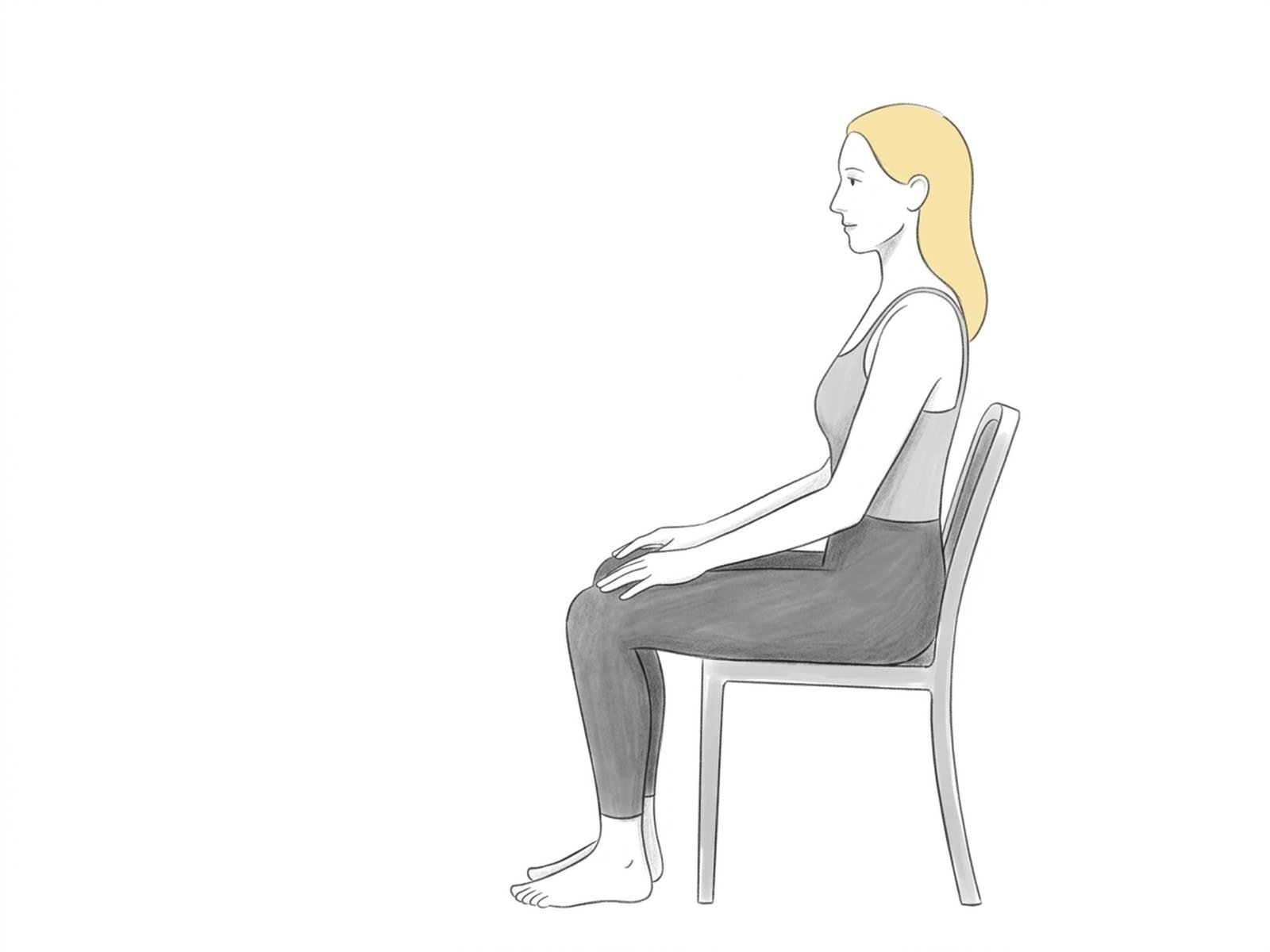
Deep Cervical Flexor Activation (Head Nod)
Isolated recruitment of the deep cervical flexors (longus colli and longus capitis) without activating the sternocleidomastoid. The foundation of cervical postural retraining — patients with upper-crossed syndrome almost always have these muscles inhibited.
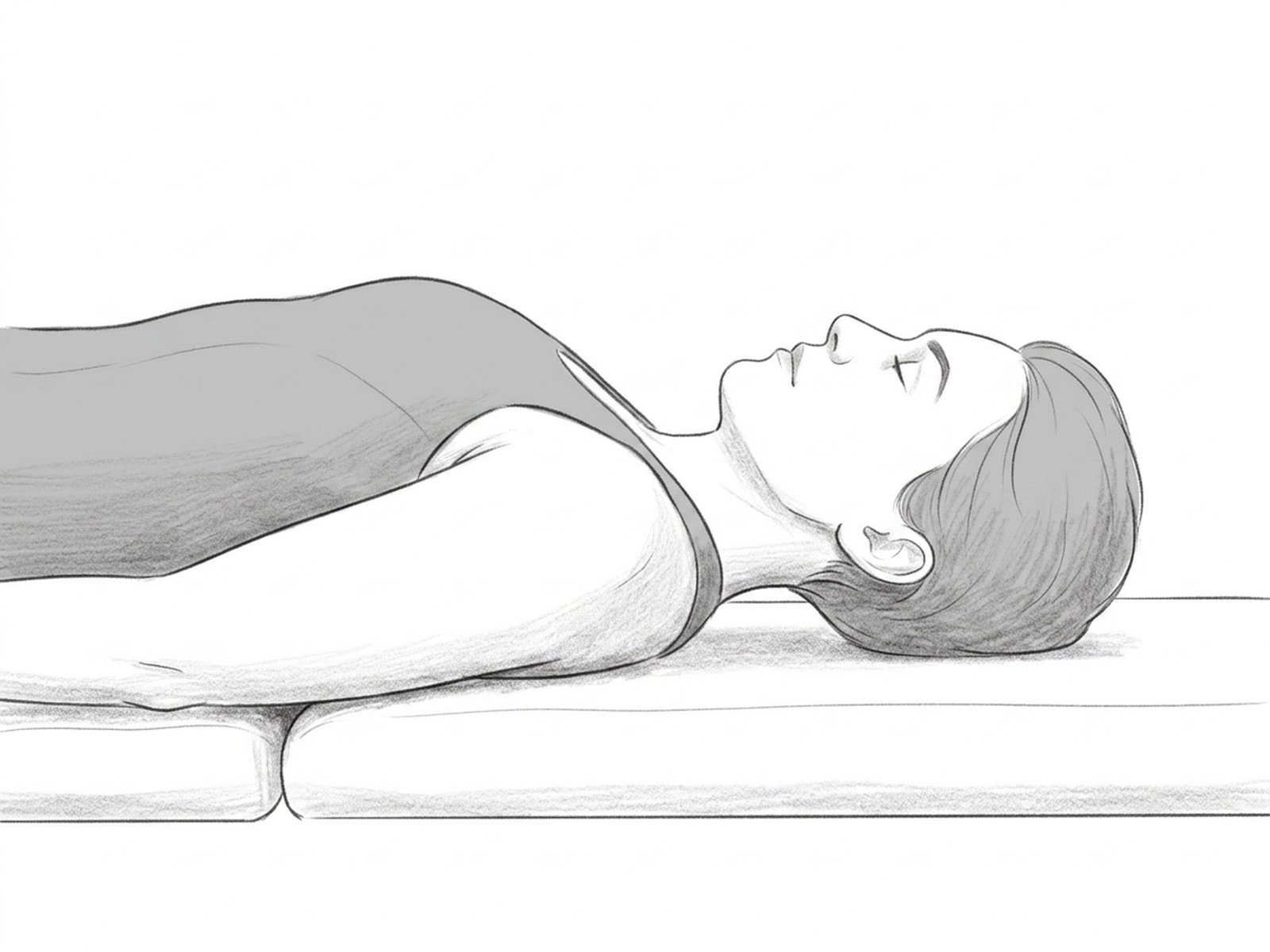
Supine Cervical Self-Traction
Self-traction technique that temporarily decompresses the cervical neural foramina. Useful in radiculopathy with arm radiation — the traction relieves root compression and promotes CSF flow.