Therapeutic exercise
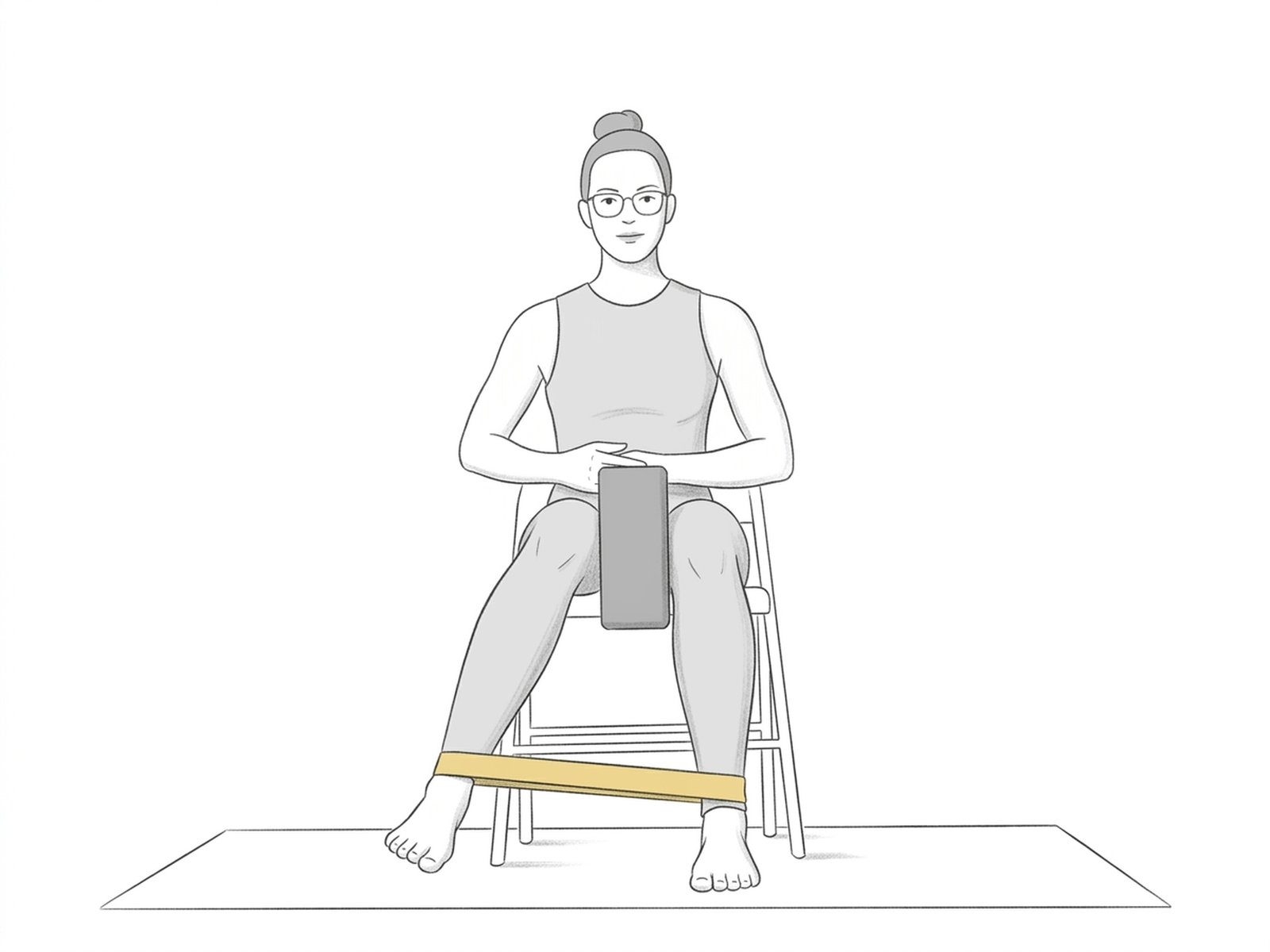
Seated Hip Rotation (AROM)
Active range of motion in internal and external hip rotation, in seated position. Preserves the rotational mobility of the coxofemoral joint — often the first range lost in hip osteoarthritis before the patient notices.
How to perform
- Starting position. Sit in a firm chair with the feet flat on the floor and the knees hip-width apart.
- Step 2. Keep the thigh fixed (without moving the knee) and slowly bring the foot inward, toward the other foot — this generates external hip rotation.
- Step 3. Return to neutral, then bring the foot outward, away from the body — internal hip rotation.
- Step 4. Hold each end-range position for 3 seconds, respecting the pain-free limit.
- Return. Alternate internal and external rotation. Perform with each leg separately to avoid compensation.
When not to perform
- Recent total hip arthroplasty before clearance
- Acute hip pain with severe range limitation
- Recent femoral neck fracture
- Recent hip dislocation
- Active joint infection
- Post-traumatic hip instability
Medical disclaimer. These exercises are presented for informational purposes only. Always consult your physician before starting any exercise program, especially in case of acute pain, recent injury, or underlying clinical condition.
Related Exercises
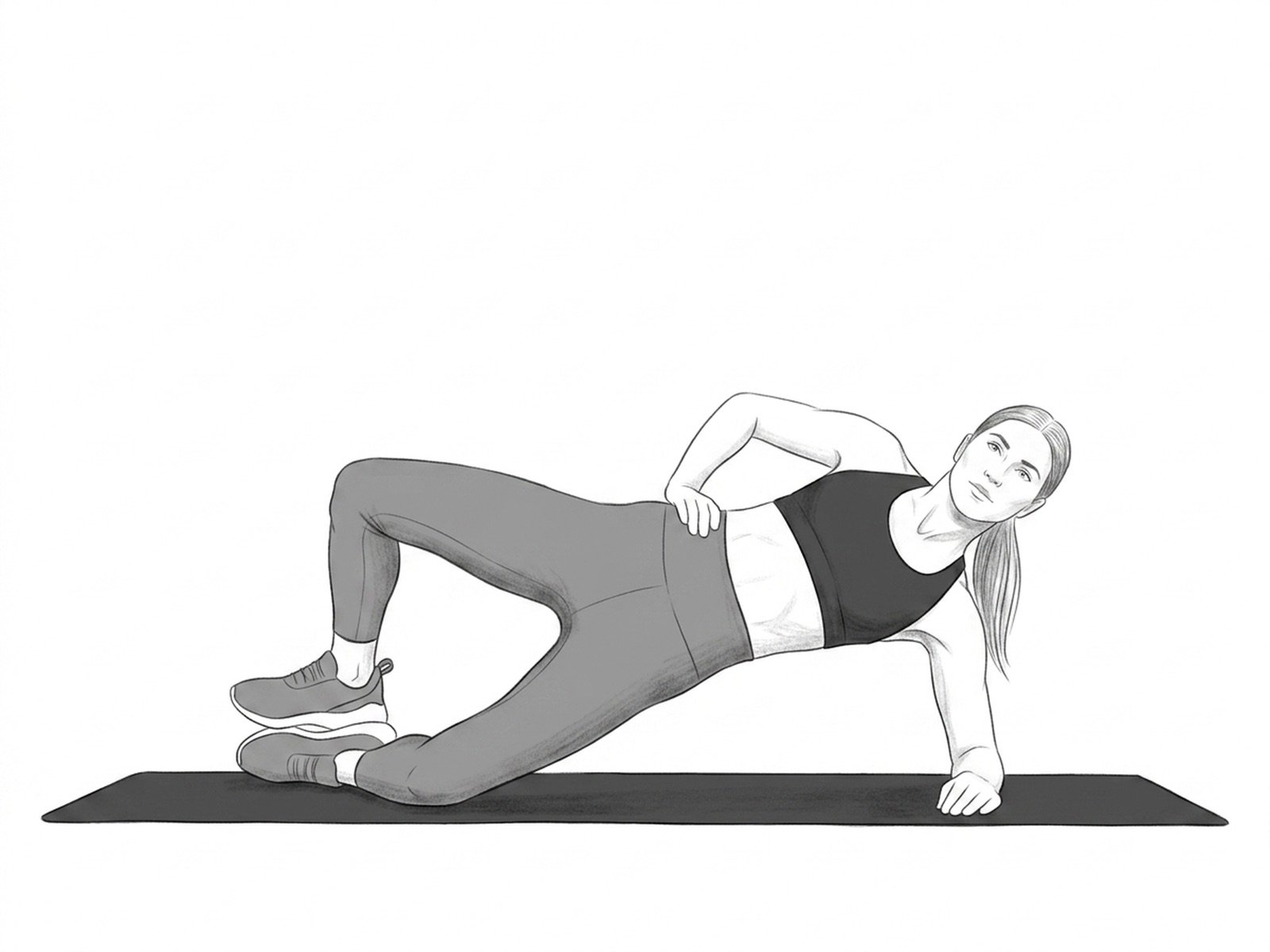
Clamshell
Strengthens the gluteus medius and the external hip rotators. Essential in hip osteoarthritis to reduce the compensatory Trendelenburg pattern during gait.
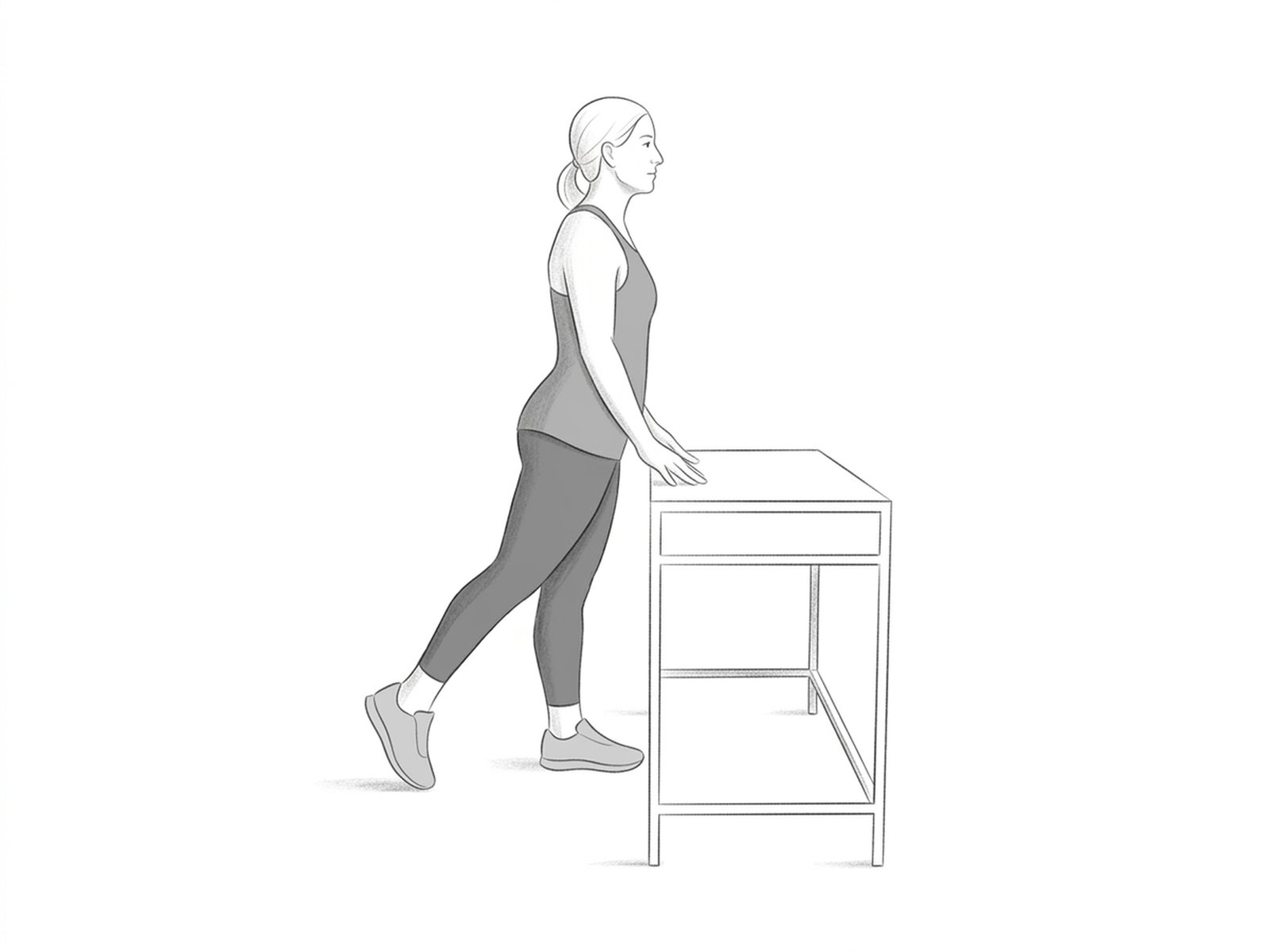
Standing Hip Extension
Strengthens the gluteus maximus in an open kinetic chain, with high target-muscle activation in a functional pattern. Essential in trochanteric bursitis associated with gluteal weakness.
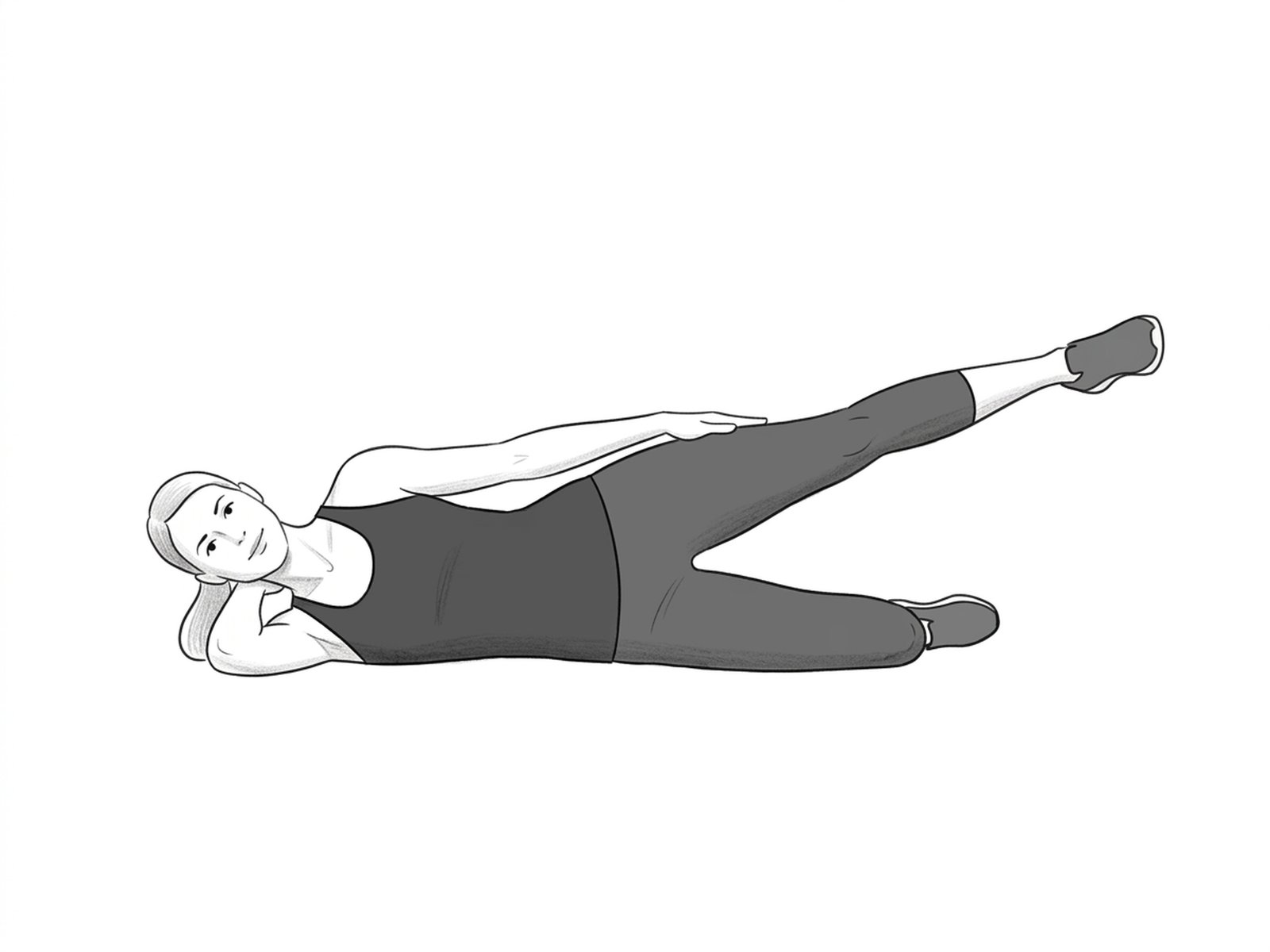
Side-Lying Hip Abduction
Strengthens the gluteus medius, a muscle frequently weakened in chronic sciatica. Improves pelvic stability during gait.