Therapeutic exercise
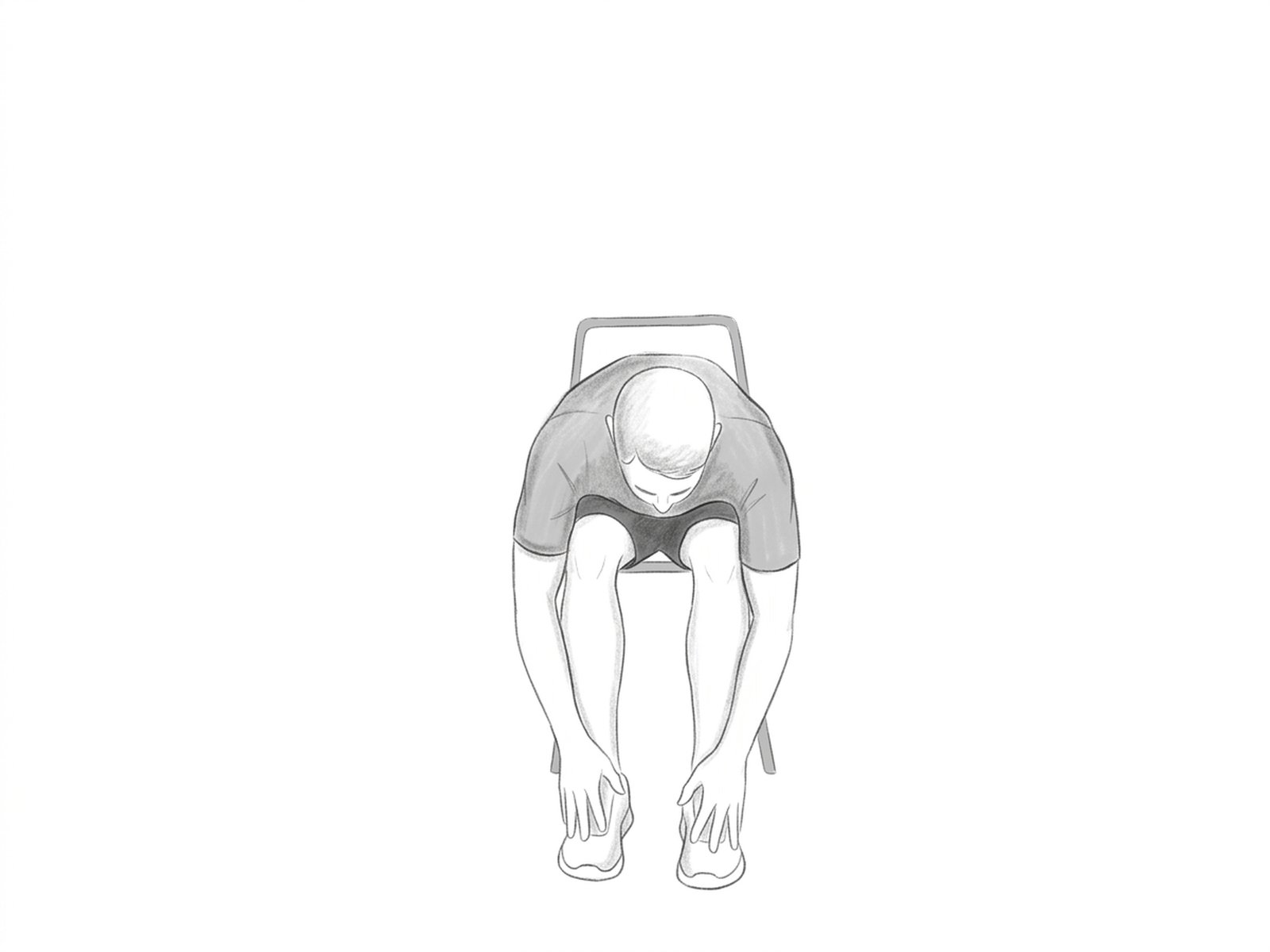
Seated Lumbar Flexion
Active lumbar flexion performed seated, accessible in the work environment. In patients with spinal stenosis who spend hours standing (retail, nursing, teaching), it interrupts the facet-compression pattern and relieves neurogenic claudication without the need to lie down.
How to perform
- Starting position. Sit in a firm chair with feet flat on the floor.
- Step 2. Slightly separate the knees and let the arms hang between them.
- Step 3. Slowly lean the trunk forward, letting the arms reach toward the floor or the feet.
- Step 4. Allow the lumbar spine to round completely (global flexion) and hold for 15–20 seconds, breathing deeply.
- Return. Return slowly to upright, one vertebra at a time. If you feel dizziness when rising, do it more slowly.
When not to perform
- Acute lumbar disc herniation
- Extension-preference low back pain
- Severe osteoporosis with vertebral fracture risk
- Third-trimester pregnancy
- Orthostatic hypotension (the leaning position can worsen it)
- Recent lumbar spine surgery
Medical disclaimer. These exercises are presented for informational purposes only. Always consult your physician before starting any exercise program, especially in case of acute pain, recent injury, or underlying clinical condition.
Related Exercises
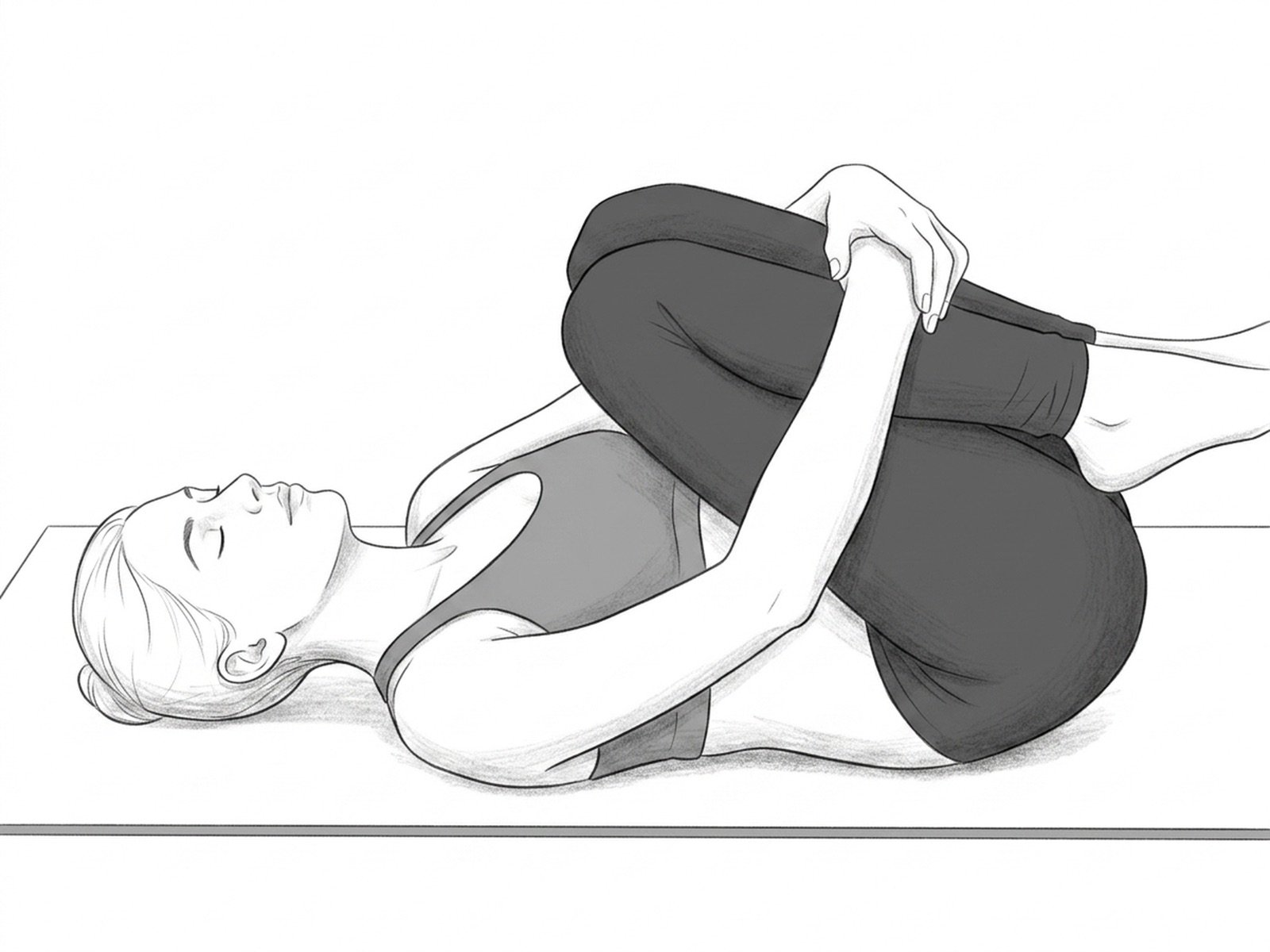
Double Knee-to-Chest
Bilateral variation of the knee-to-chest stretch, applying global lumbar spine flexion. More intense than the unilateral version, it is indicated in spinal stenosis and flexion-preference low back pain — opens the facet joints and relieves pressure on the neural roots.
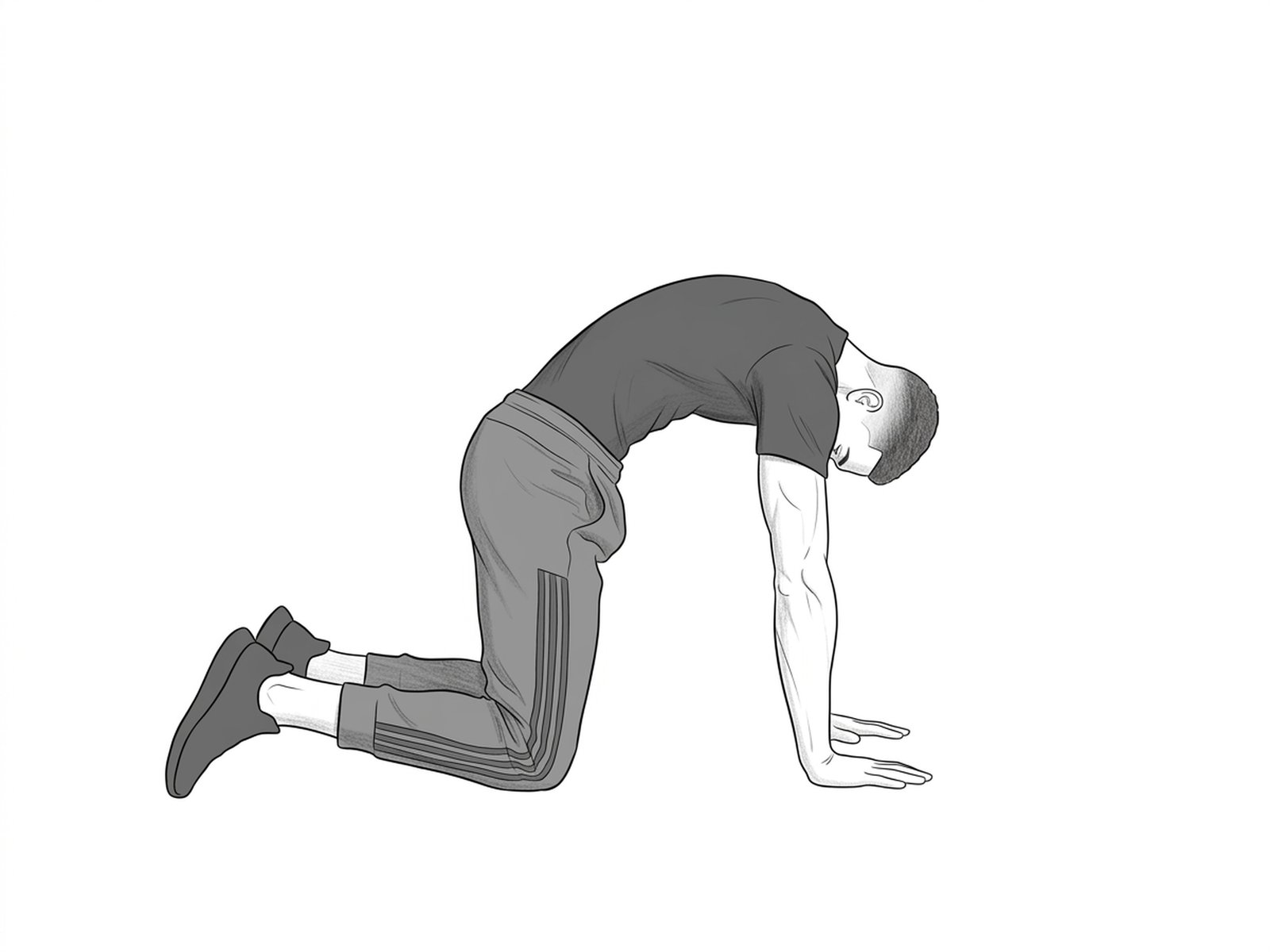
Cat-Cow
Segmental mobilization of the spine in flexion and extension. Improves vertebral mobility, helps lubricate the facet joints, and relieves the stiffness typical of prolonged static postures.
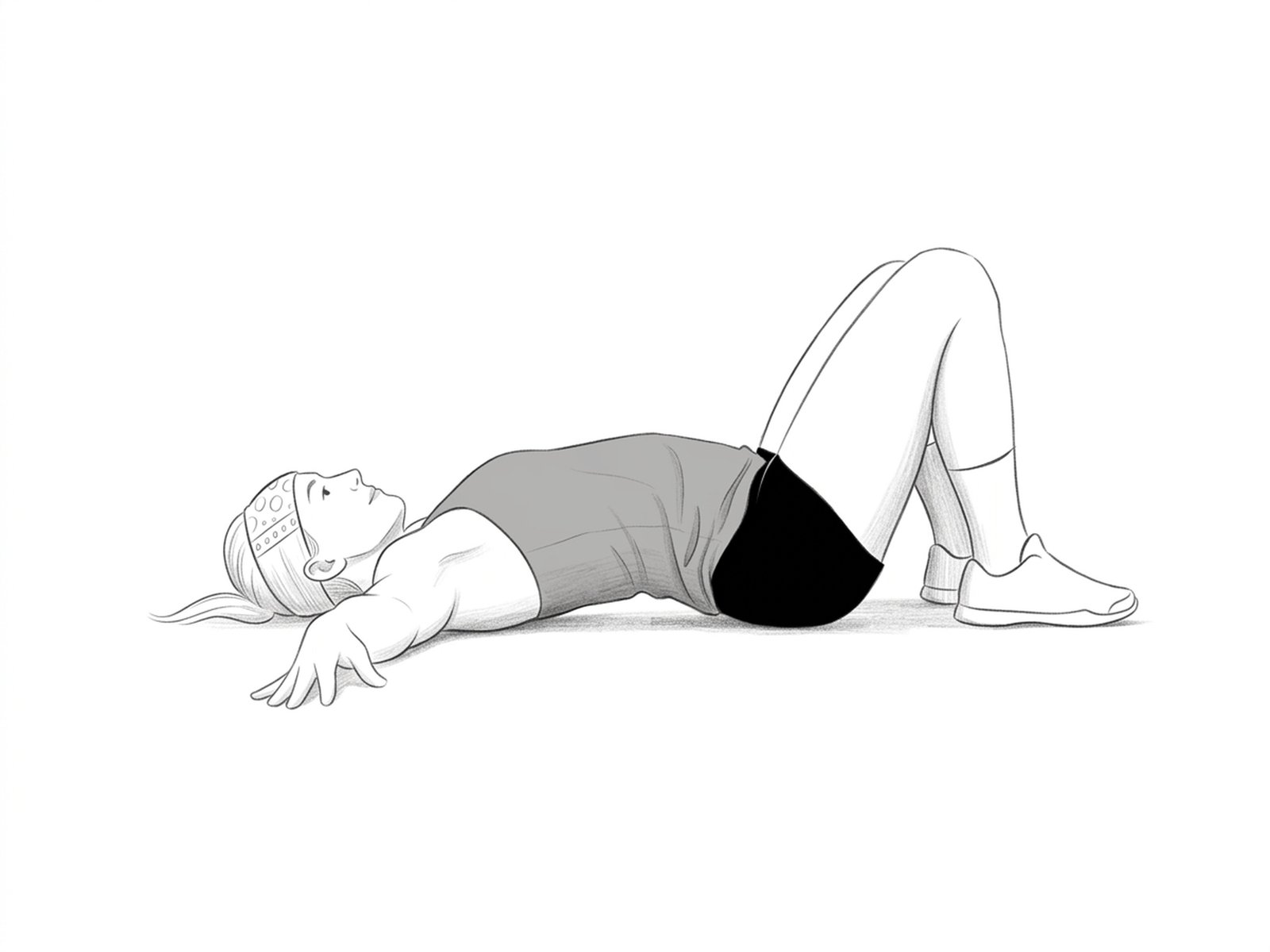
Pelvic Tilt
Gently activates the deep abdominal muscles through a pelvic tilt. Relieves low-back tension and retrains motor control of the deep stabilizers — one of the foundations of chronic mechanical low-back-pain rehabilitation.