Therapeutic exercise
Spanish Squat Isometric
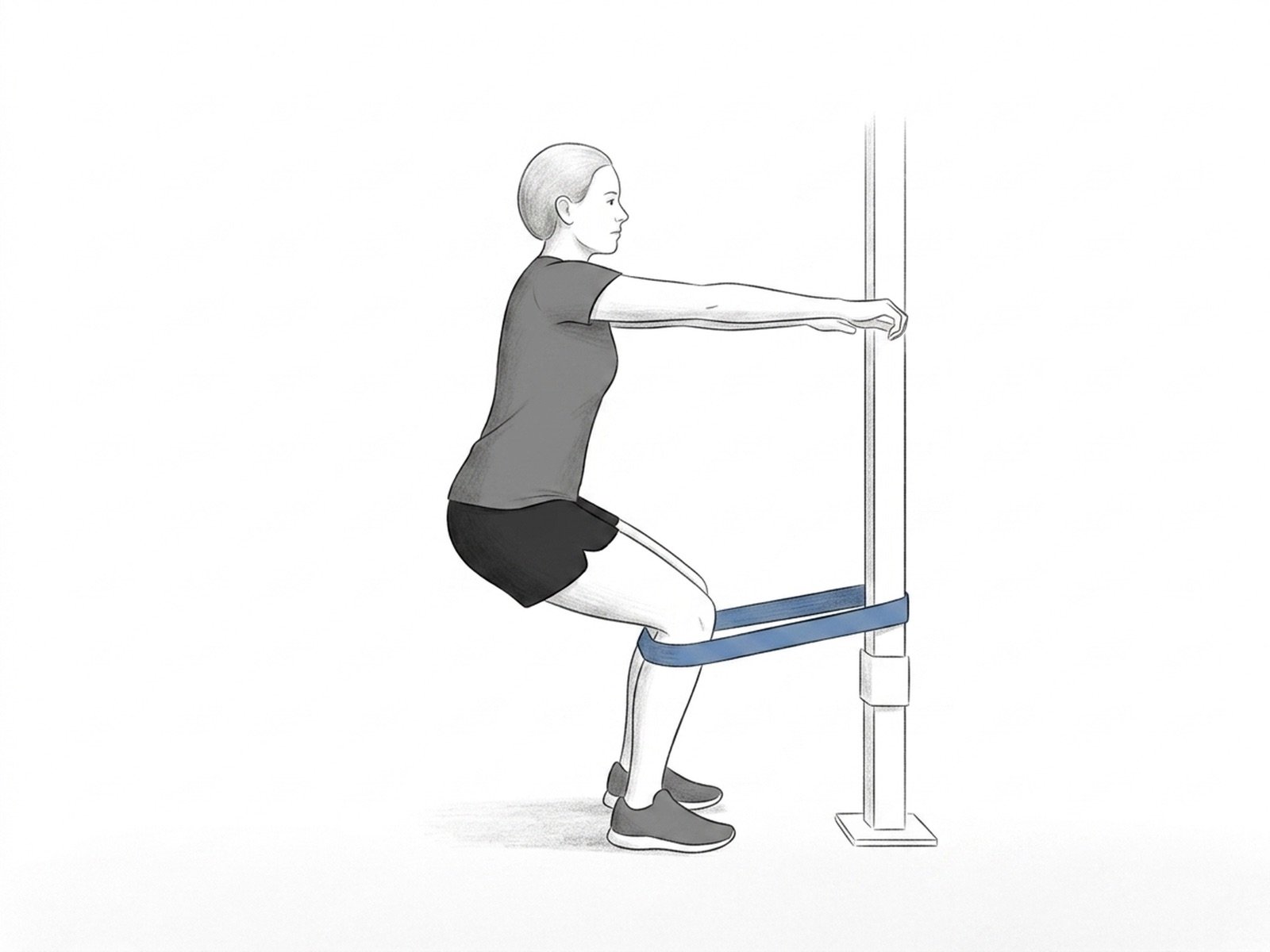
Partial isometric squat with the hip supported by an elastic band anchored behind. Protocol by Rio and colleagues for patellar tendinopathy — produces immediate analgesic effect on the patellar tendon without aggravating the reactive condition.
How to perform
- Starting position. Anchor a strong elastic band to a firm point at hip height, behind you (door handle, post).
- Step 2. Pass the band behind the knee (not below) and let it pull the knee backward while you stand.
- Step 3. Step forward until the band is tensioned, with the trunk upright.
- Step 4. Descend slowly into an isometric squat until about 60 degrees of knee flexion — the band prevents the knee from drifting far past the foot.
- Return. Hold the position for 45 seconds, sustaining the isometric contraction. Rest 2 minutes and repeat.
When not to perform
- Partial or complete patellar tendon rupture
- Recent post-operative knee surgery
- Patellar chondromalacia in severe inflammatory phase
- Advanced patellofemoral osteoarthritis
- Uncontrolled arterial hypertension (isometric work raises blood pressure)
- Recurrent patellar instability
Medical disclaimer. These exercises are presented for informational purposes only. Always consult your physician before starting any exercise program, especially in case of acute pain, recent injury, or underlying clinical condition.
Related Exercises
Decline Eccentric Squat
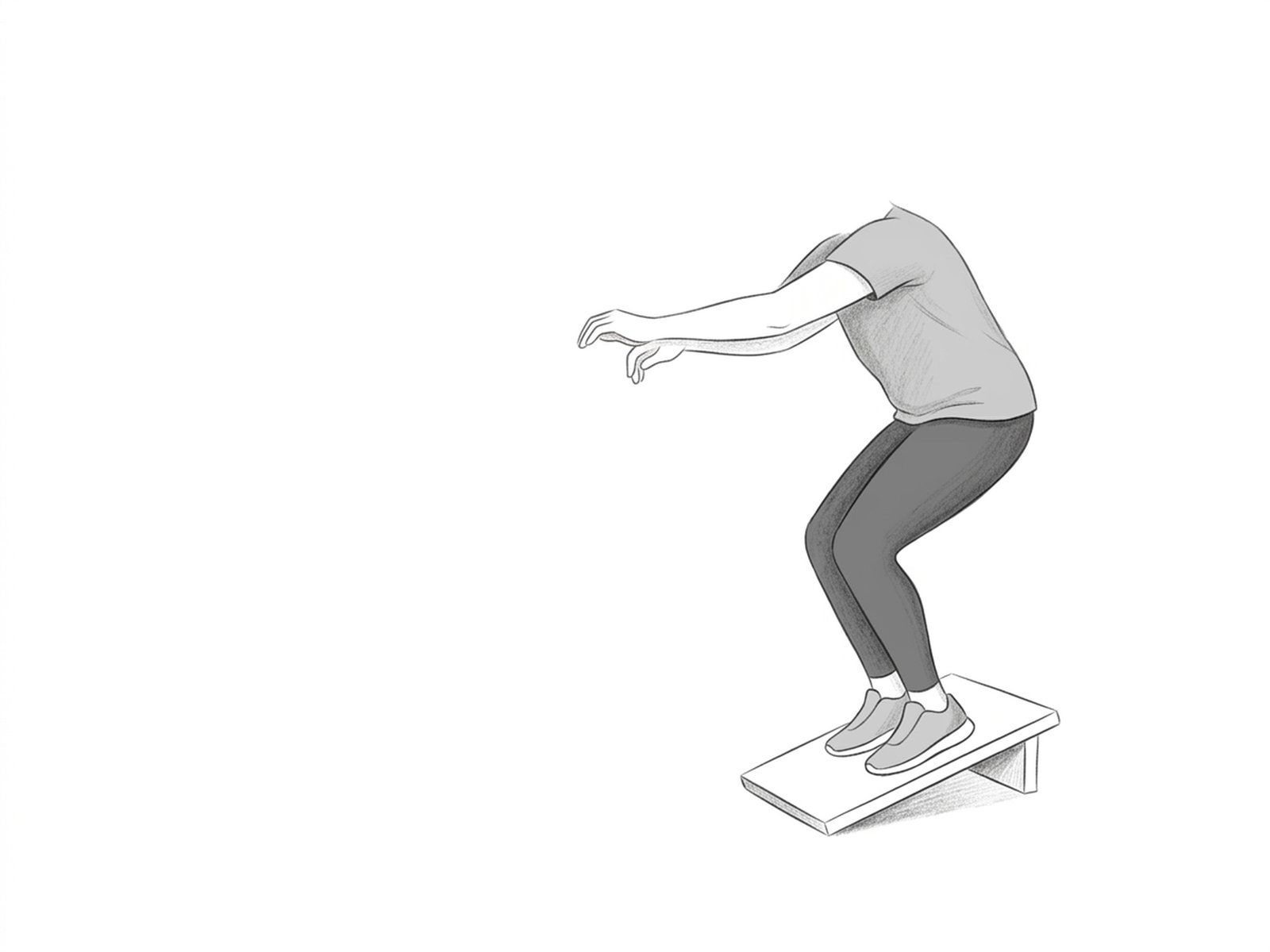
Unilateral squat with the heels on a declined surface (25-degree decline board), focused on the eccentric phase. Protocol by Purdam and Cook for patellar tendinopathy — the decline increases load on the patellar tendon during the descent phase.
Wall Sit
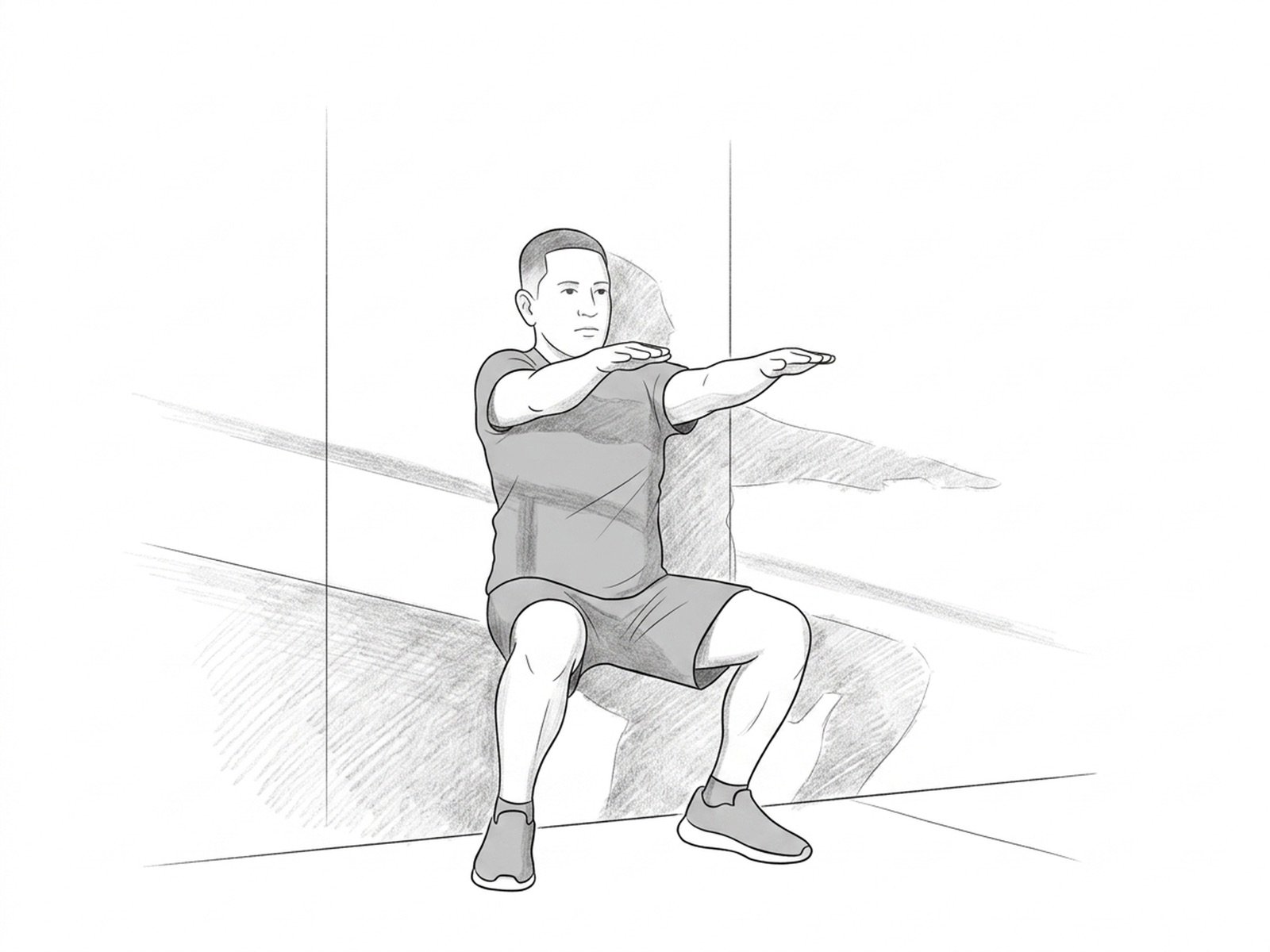
Isometric quadriceps strengthening in a closed kinetic chain. Provides controlled axial load while respecting the pain threshold in osteoarthritis.
Standing Quadriceps Stretch
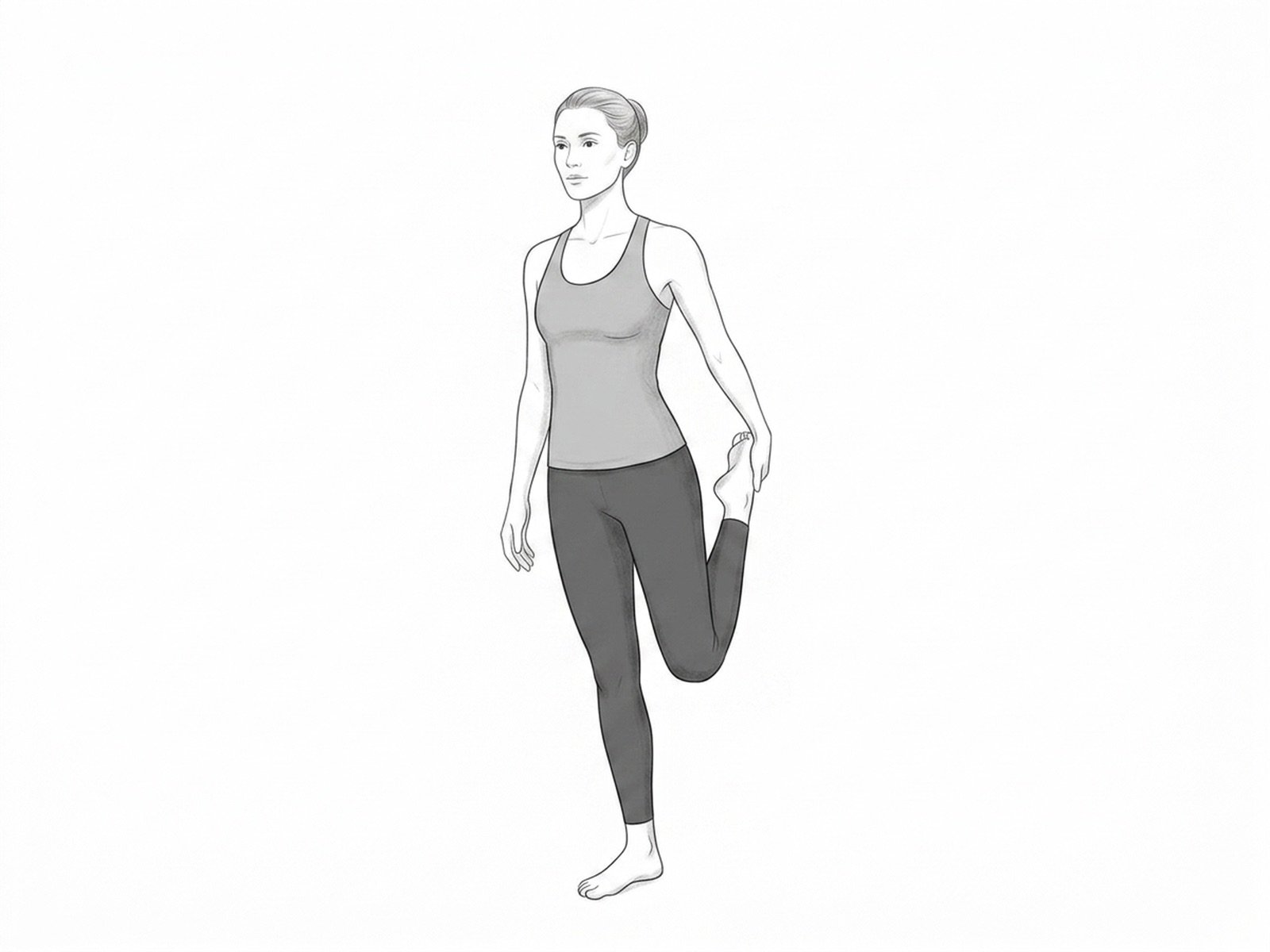
Stretches the quadriceps and rectus femoris, frequently shortened in patients with chondromalacia. Reduces traction on the patella.