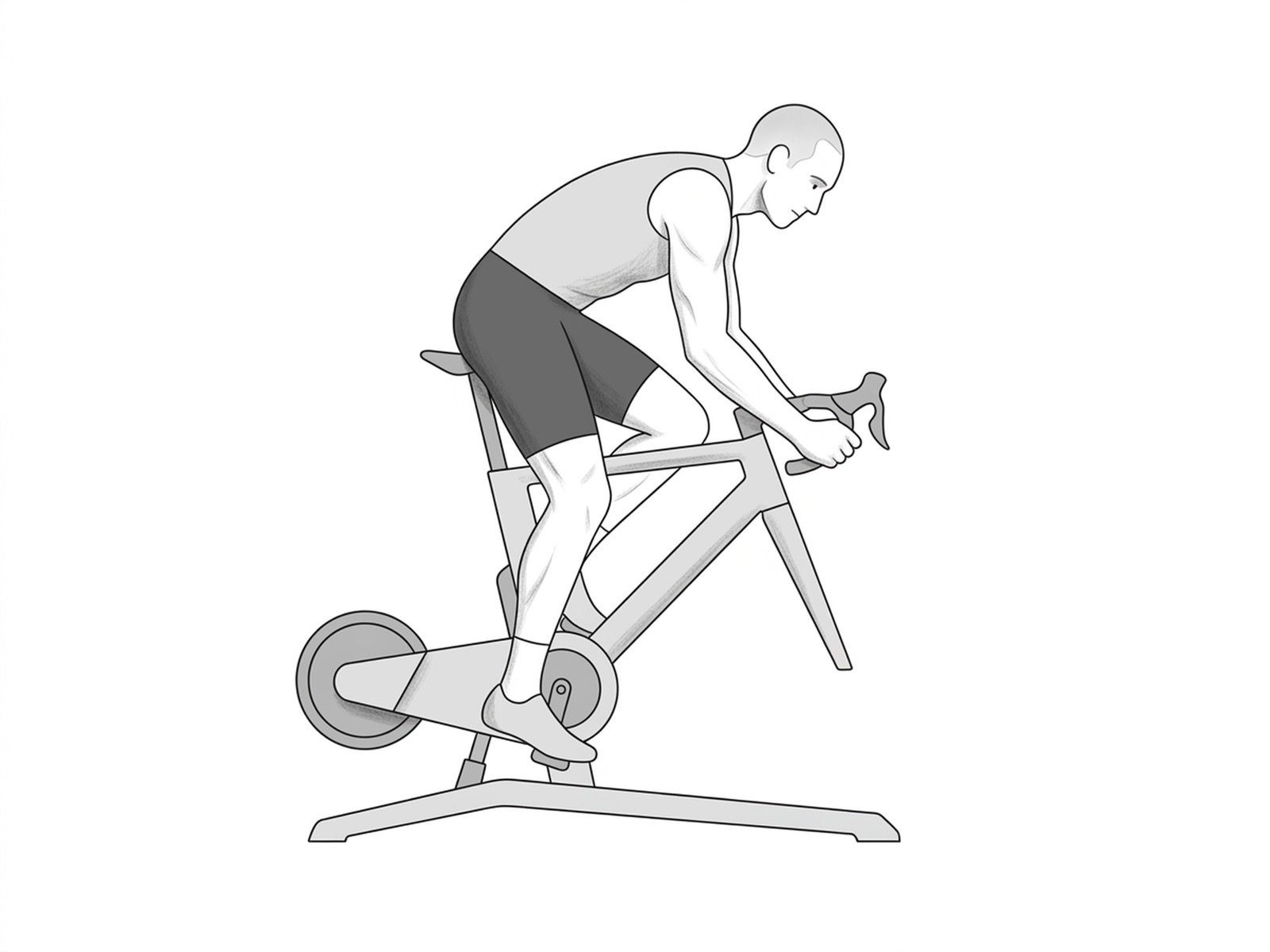
Therapeutic exercise
Stationary Cycling
Closed-kinetic-chain aerobic exercise on a stationary bike — cycling preserves the joints without impact while maintaining cardiovascular conditioning in patients with hip and knee osteoarthritis and spinal stenosis.
How to perform
- Starting position. Adjust the saddle height so that the knee remains slightly flexed (about 15 to 20 degrees) when the pedal is at the lowest point.
- Step 2. Set initial resistance to light-to-moderate — you should be able to cycle while holding a conversation (talk test).
- Step 3. Keep the trunk upright and supported on the handlebar grips, without locking the elbows.
- Step 4. Cycle at a steady cadence (60 to 75 rpm), keeping the knees aligned with the feet — do not let the knees collapse medially.
- Return. For advanced osteoarthritis, start with 5 to 10 minutes and progress gradually. For spinal stenosis, the slightly forward-leaning position (lumbar flexion) relieves claudication.
When not to perform
- Recent hip or knee arthroplasty before medical clearance
- Unstable angina or decompensated heart failure
- Uncontrolled hypertension
- Active joint infection
- Pressure ulcer in the perineal region
- Acute lower-limb thrombophlebitis
Medical disclaimer. These exercises are presented for informational purposes only. Always consult your physician before starting any exercise program, especially in case of acute pain, recent injury, or underlying clinical condition.
Related Exercises
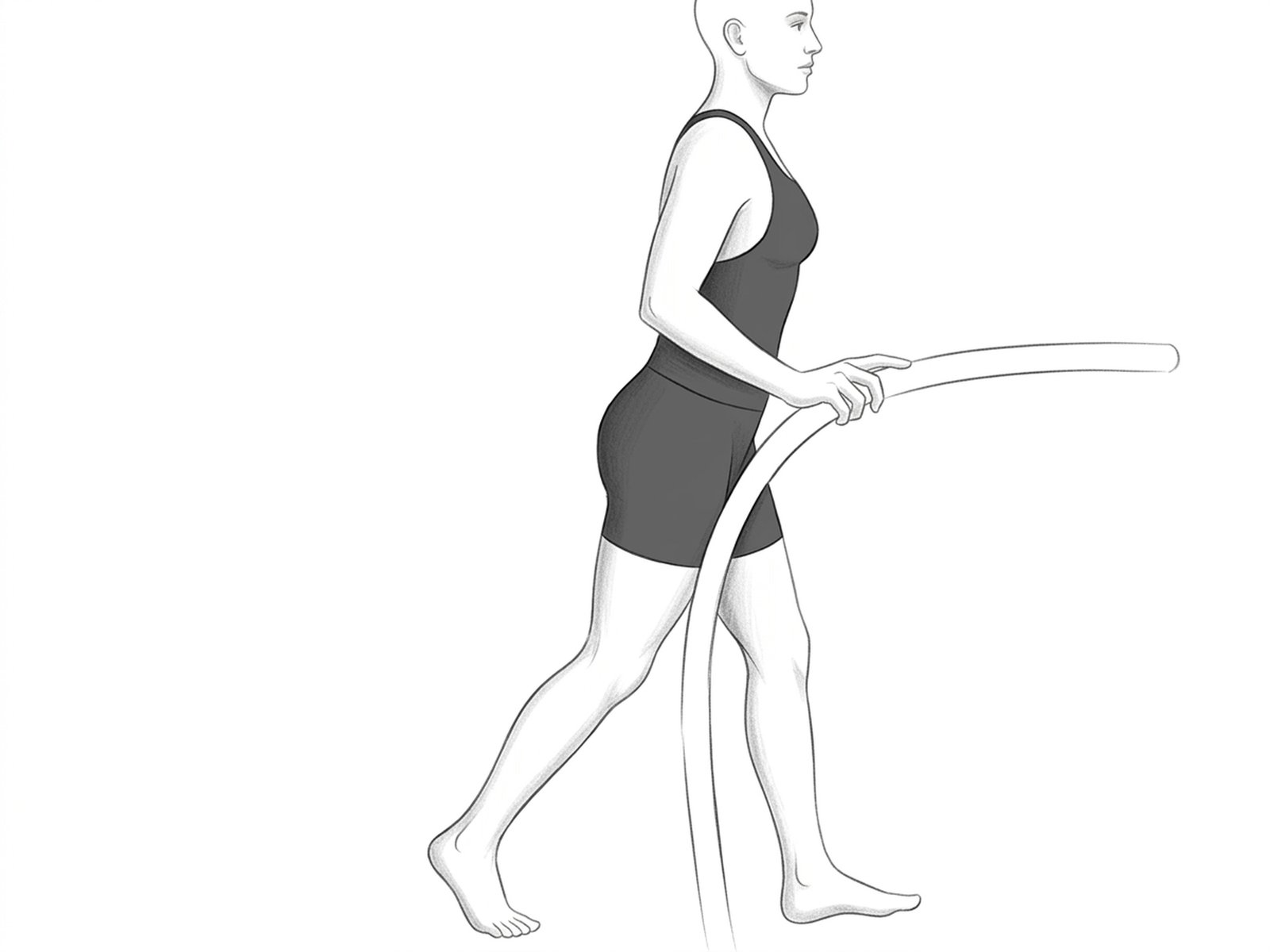
Aquatic Walking
Low-impact aerobic exercise in a pool. Buoyancy reduces the axial load on the hip and knee, making walking tolerable in advanced osteoarthritis.
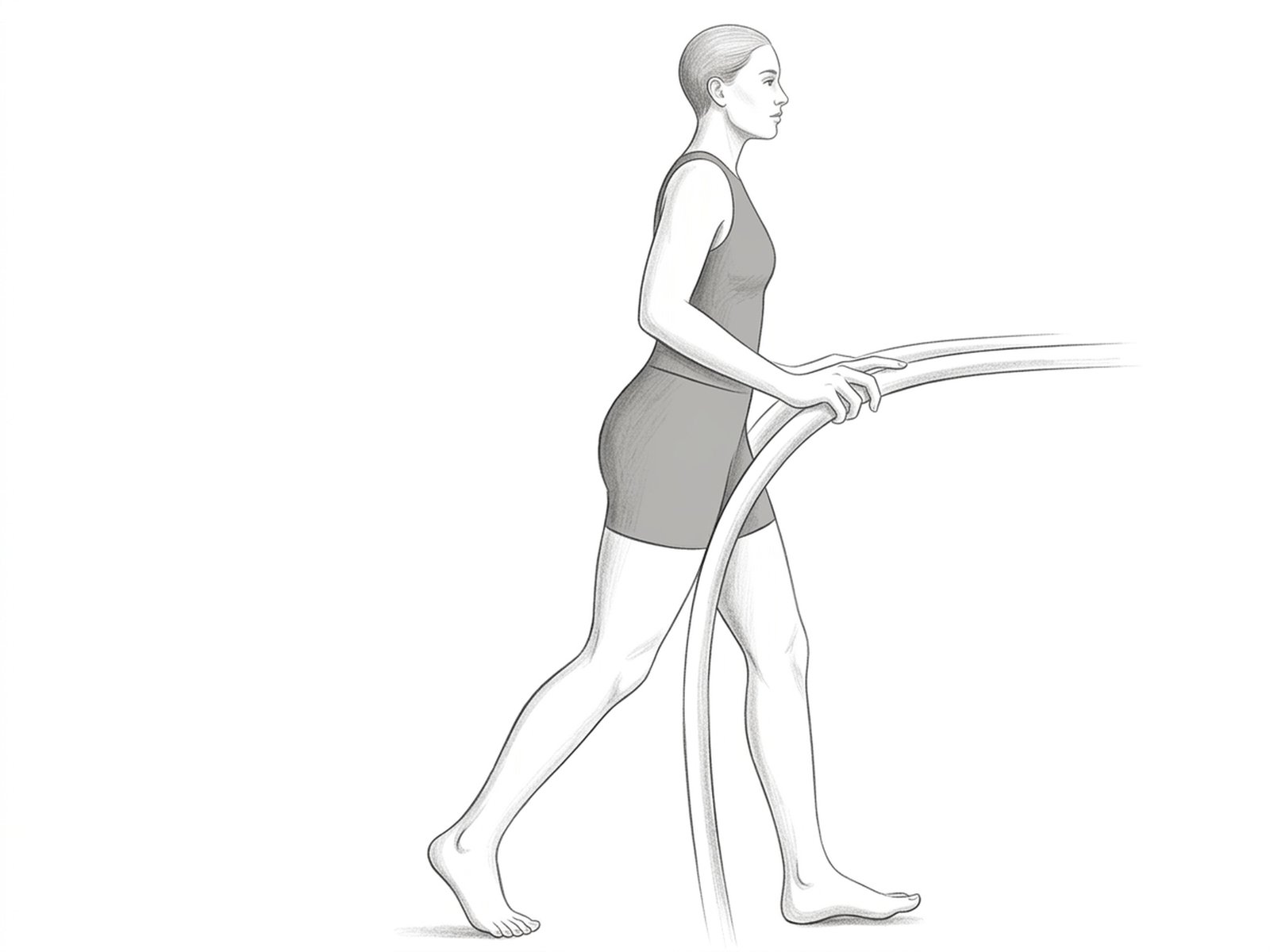
Supported Pool Walking
Aerobic exercise in a pool for fibromyalgia. Reduces joint load by up to 70% (chest-deep water) and promotes muscle relaxation — a superior alternative to land walking in a sensitized phase.
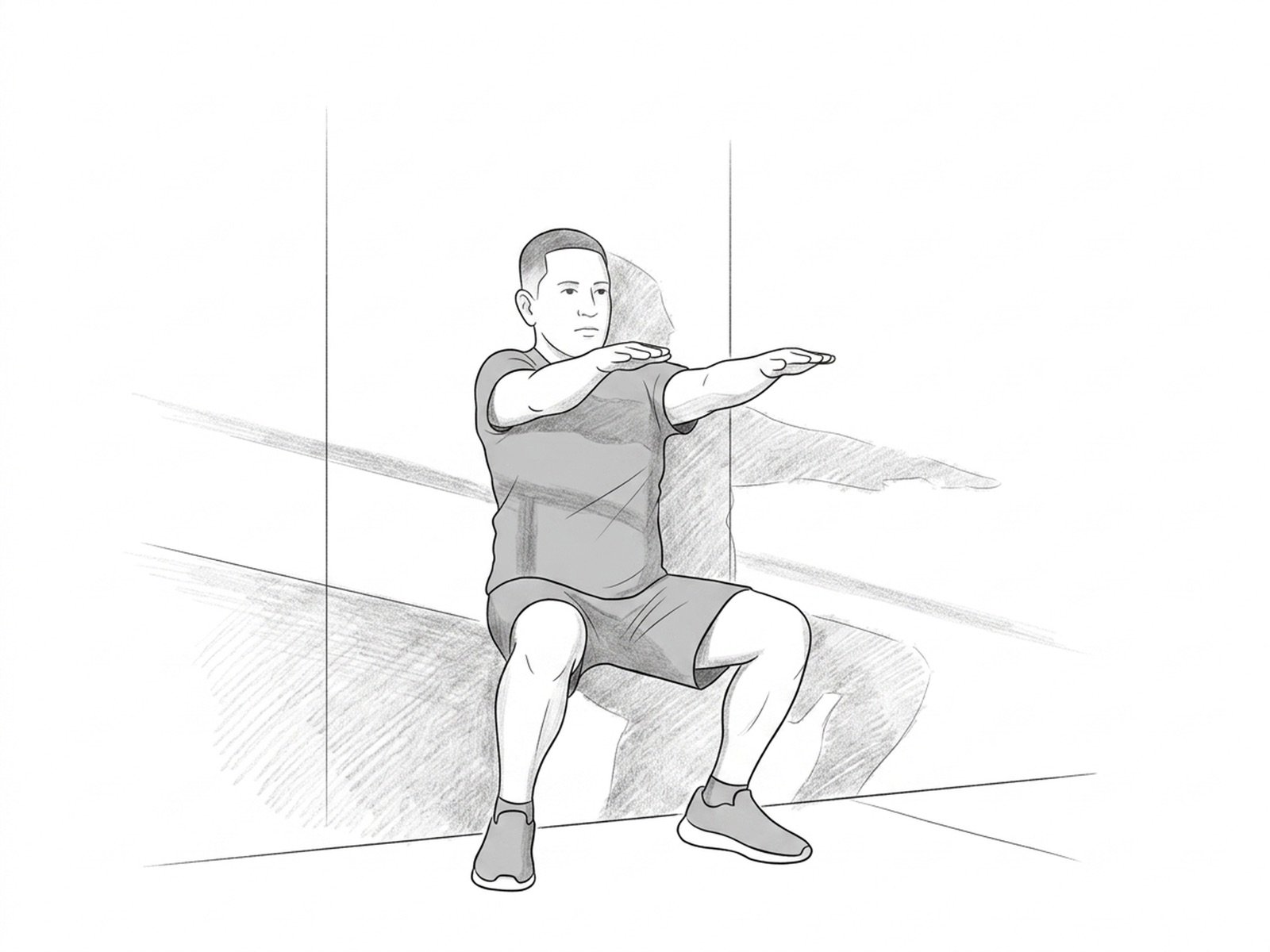
Wall Sit
Isometric quadriceps strengthening in a closed kinetic chain. Provides controlled axial load while respecting the pain threshold in osteoarthritis.