Therapeutic exercise
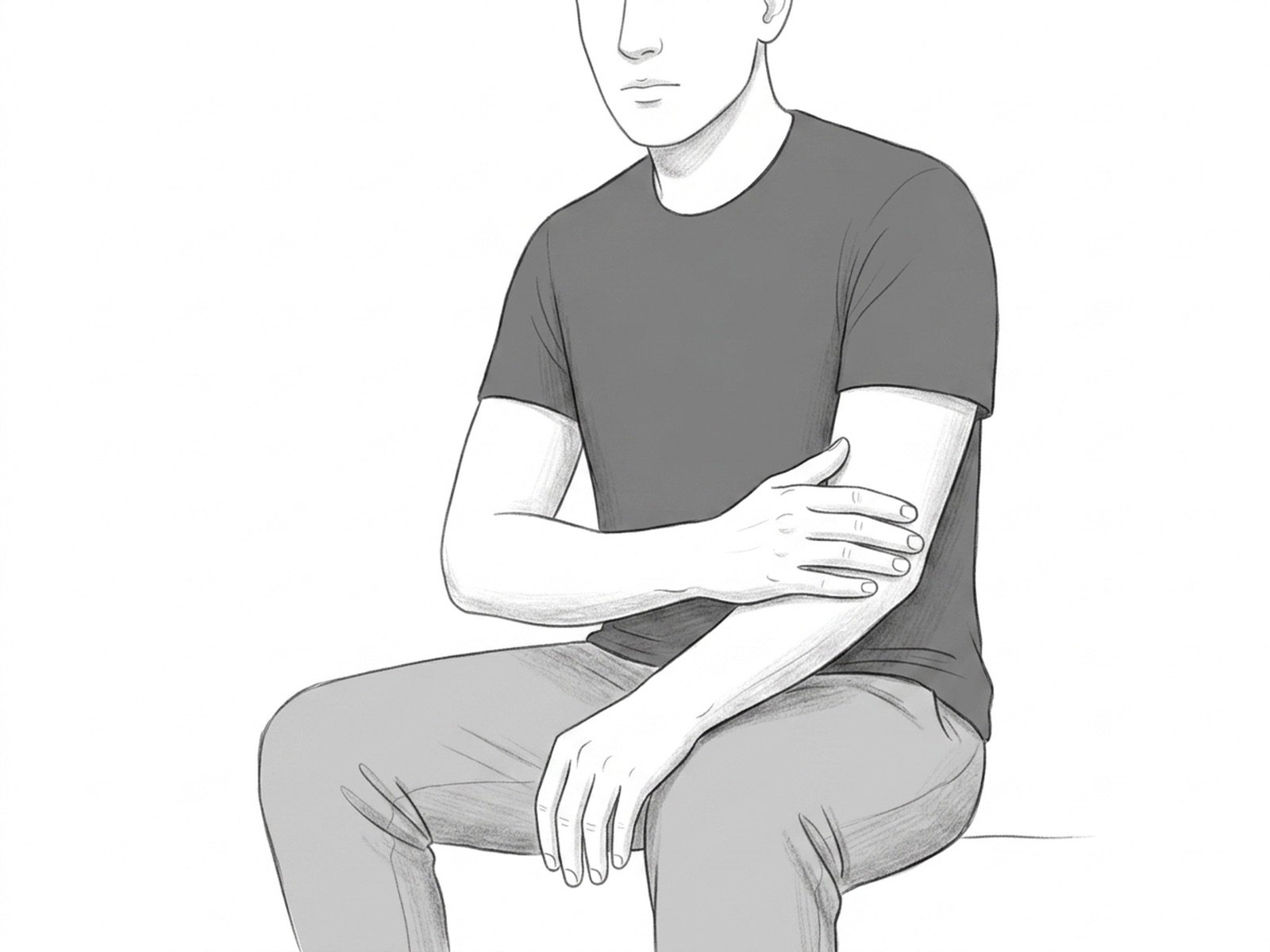
Active Supinator Release
Myofascial release of the supinator muscle combined with active pronation-supination movement. Specific for radial tunnel syndrome (compression of the deep branch of the radial nerve at the Arcade of Frohse) — releases the mechanical compression that generates the pain.
How to perform
- Starting position. Sit in a chair with the affected forearm resting on the thigh.
- Step 2. Palpate the supinator in the upper-lateral portion of the forearm (a few centimeters below the lateral epicondyle).
- Step 3. With the thumb of the contralateral hand, apply firm pressure over the supinator, searching for trigger points or tense areas.
- Step 4. Maintaining the pressure, actively perform slow supination and pronation movements of the affected forearm — 10 reps.
- Return. Glide the thumb longitudinally along the muscle, maintaining the compression and active movement. Finish with 1 minute of sustained pressure on the most tender point.
When not to perform
- Radial tunnel syndrome in an acute neurological phase with paresis
- Forearm deep vein thrombosis
- Local infection
- Recent hematoma or ecchymosis
- Recent forearm surgery
- Recent radial fracture
Medical disclaimer. These exercises are presented for informational purposes only. Always consult your physician before starting any exercise program, especially in case of acute pain, recent injury, or underlying clinical condition.
Related Exercises
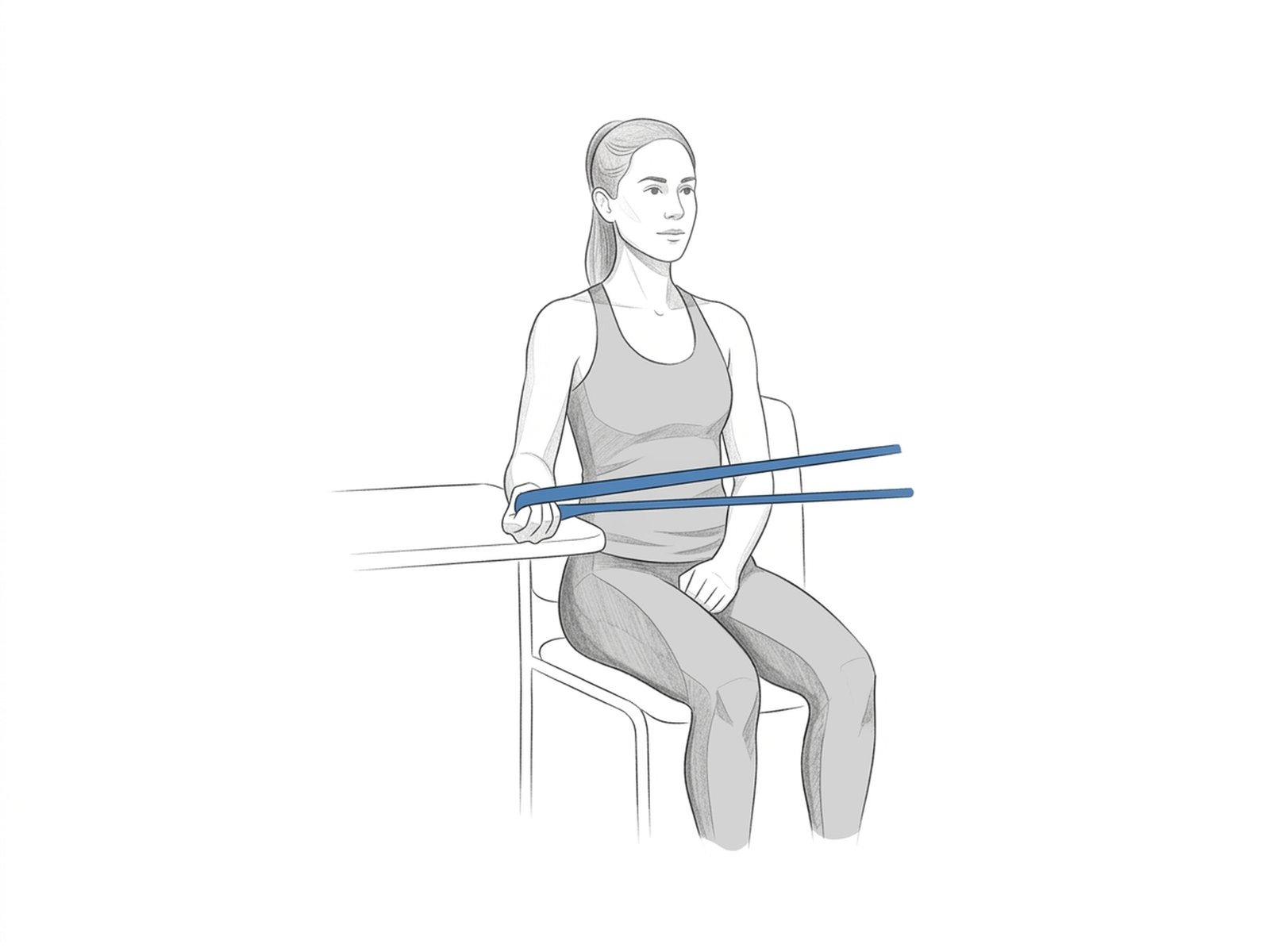
Banded Forearm Supination
Isolated strengthening of the supinator and biceps brachii through forearm rotation against elastic resistance. Useful in the combined treatment of bicipital tendinopathy and lateral epicondylitis — corrects imbalances between pronators and supinators.
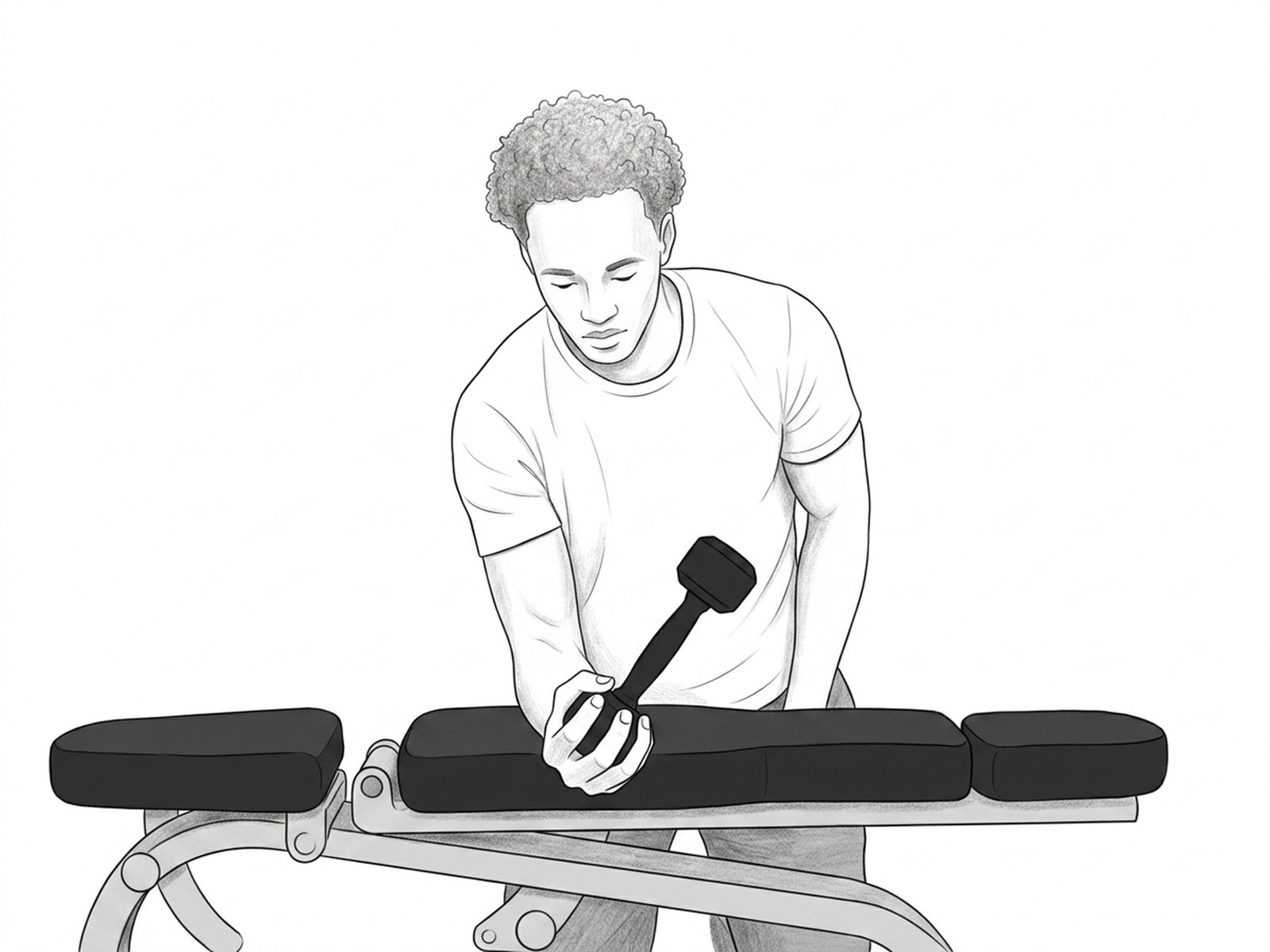
Eccentric Wrist Supination with a Hammer
Rotational eccentric loading of the supinator using a hammer as an asymmetric weight. In radial tunnel syndrome, supinator remodeling reduces neural compression on the deep radial nerve — complements active release with dynamic loading.
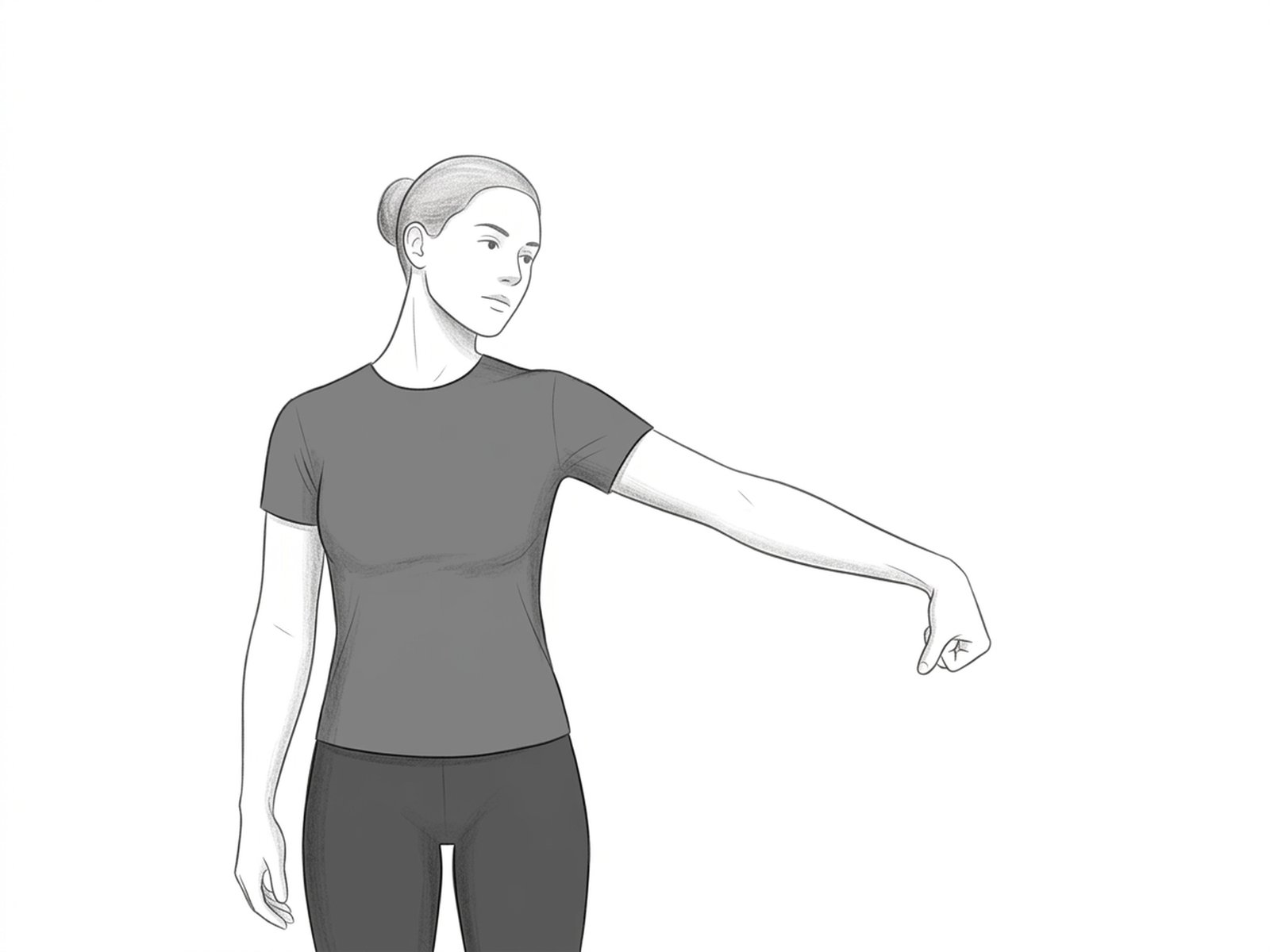
Radial Nerve Glide (Flossing)
Specific neural mobilization of the radial nerve along its path through the elbow and forearm. Indicated when there is a neurogenic component associated with lateral epicondylitis or radial-tunnel syndrome — pain radiates through the common extensor of the fingers, frequently masking the primary diagnosis.