Therapeutic exercise
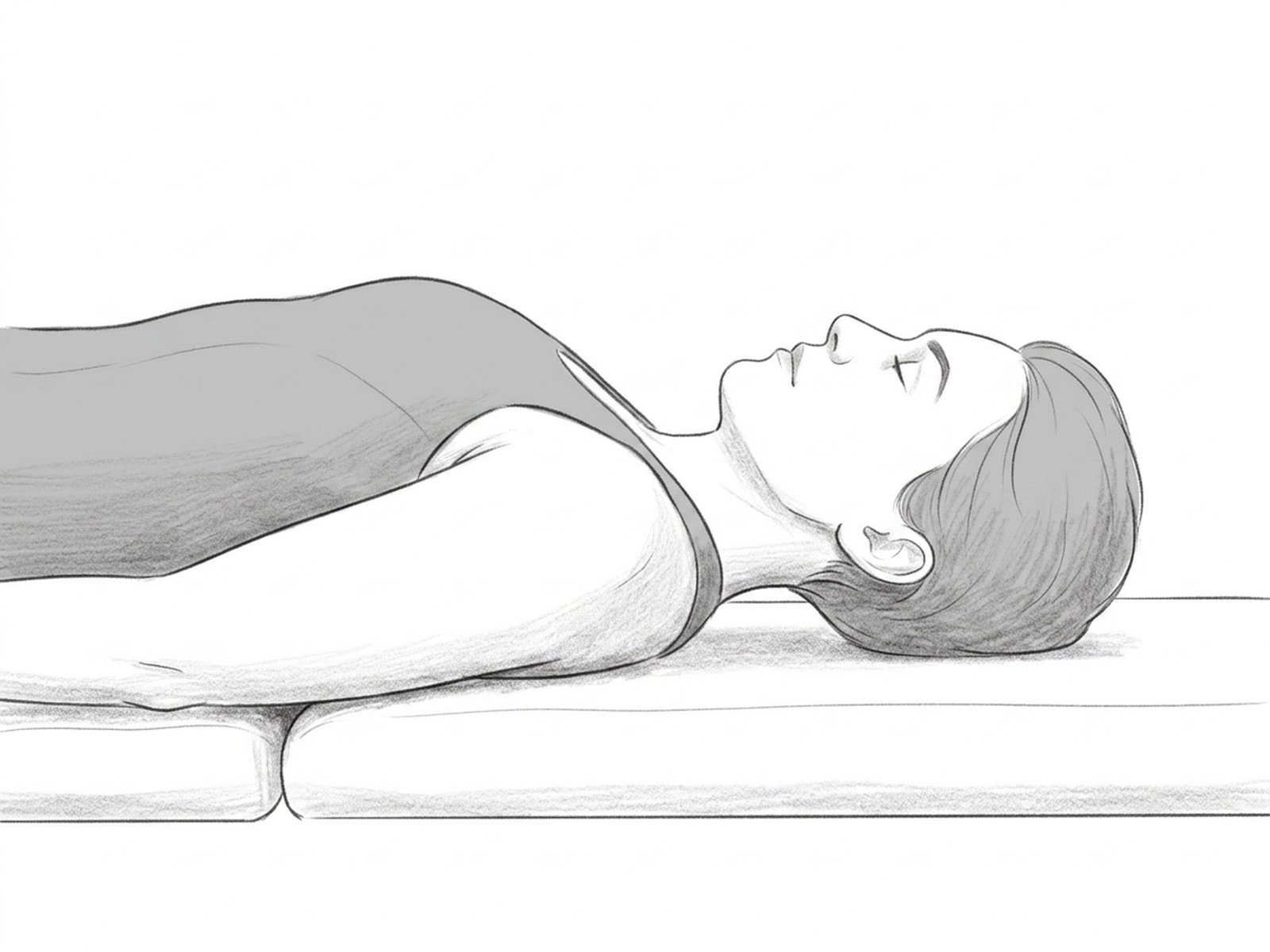
Supine Cervical Self-Traction
Self-traction technique that temporarily decompresses the cervical neural foramina. Useful in radiculopathy with arm radiation — the traction relieves root compression and promotes CSF flow.
How to perform
- Starting position. Lie face-up without a pillow, knees bent.
- Step 2. Place a folded towel under the occiput (base of the head), holding the ends with both hands.
- Step 3. Gently pull the towel backward and slightly upward, creating longitudinal traction on the cervical spine — the chin should drop slightly.
- Step 4. Hold the traction for 15–20 seconds, breathing calmly.
- Return. Release the traction for 10 seconds and repeat. Arm pain should reduce during the traction — if it increases, stop.
When not to perform
- Cervical instability
- Cervical myelopathy
- Recent cervical surgery
- Severe osteoporosis
- Recent cervical trauma
- Rheumatoid arthritis with atlantoaxial subluxation
Medical disclaimer. These exercises are presented for informational purposes only. Always consult your physician before starting any exercise program, especially in case of acute pain, recent injury, or underlying clinical condition.
Related Exercises
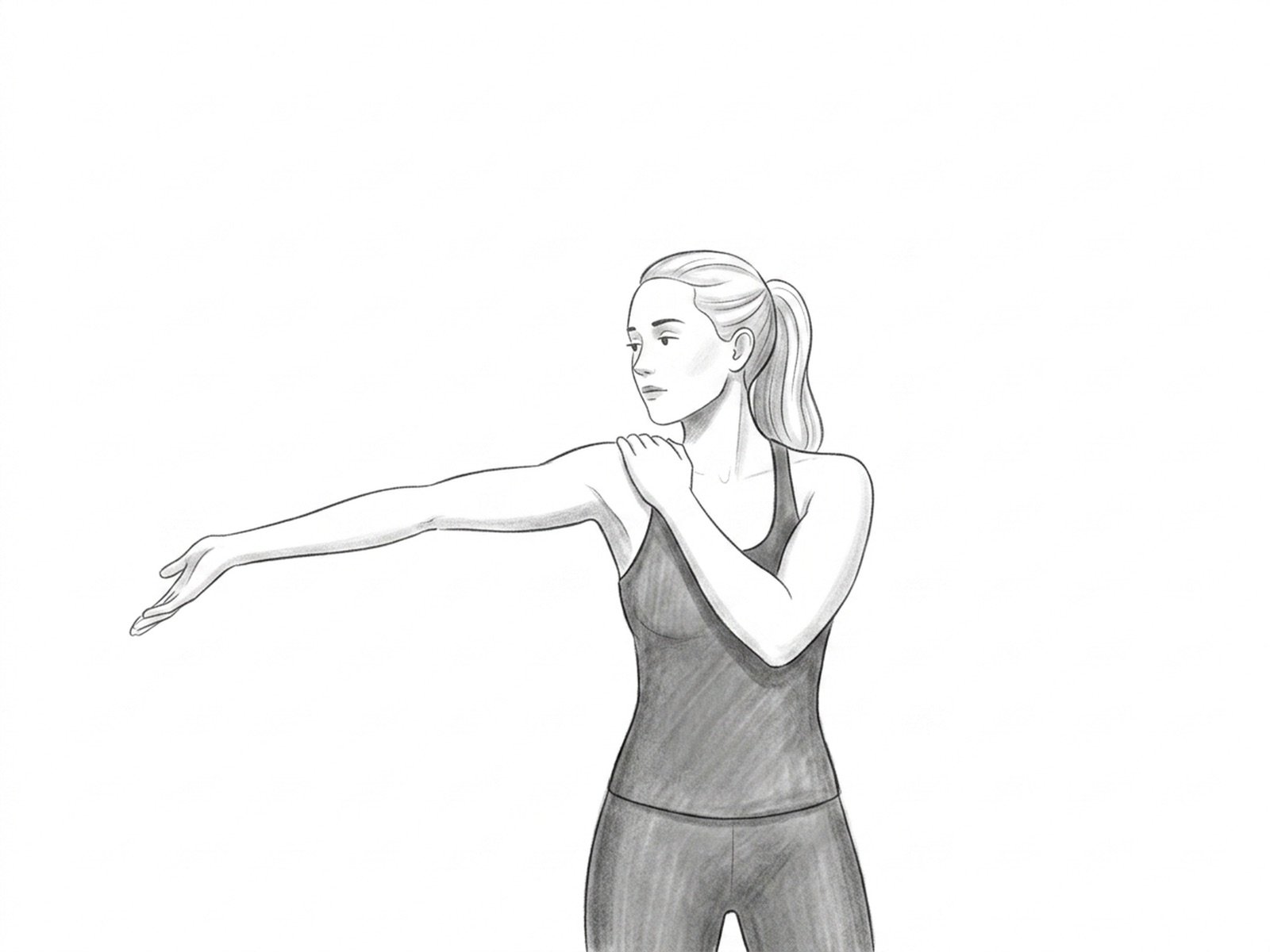
Cervical Lateral Glide (Cervical Nerve Flossing)
Specific neural mobilization for irritated cervical nerve roots. Unlike lumbar sciatic flossing, this movement combines a lateral cervical glide with contralateral trunk side-bend, mobilizing the nerve without tensioning it.
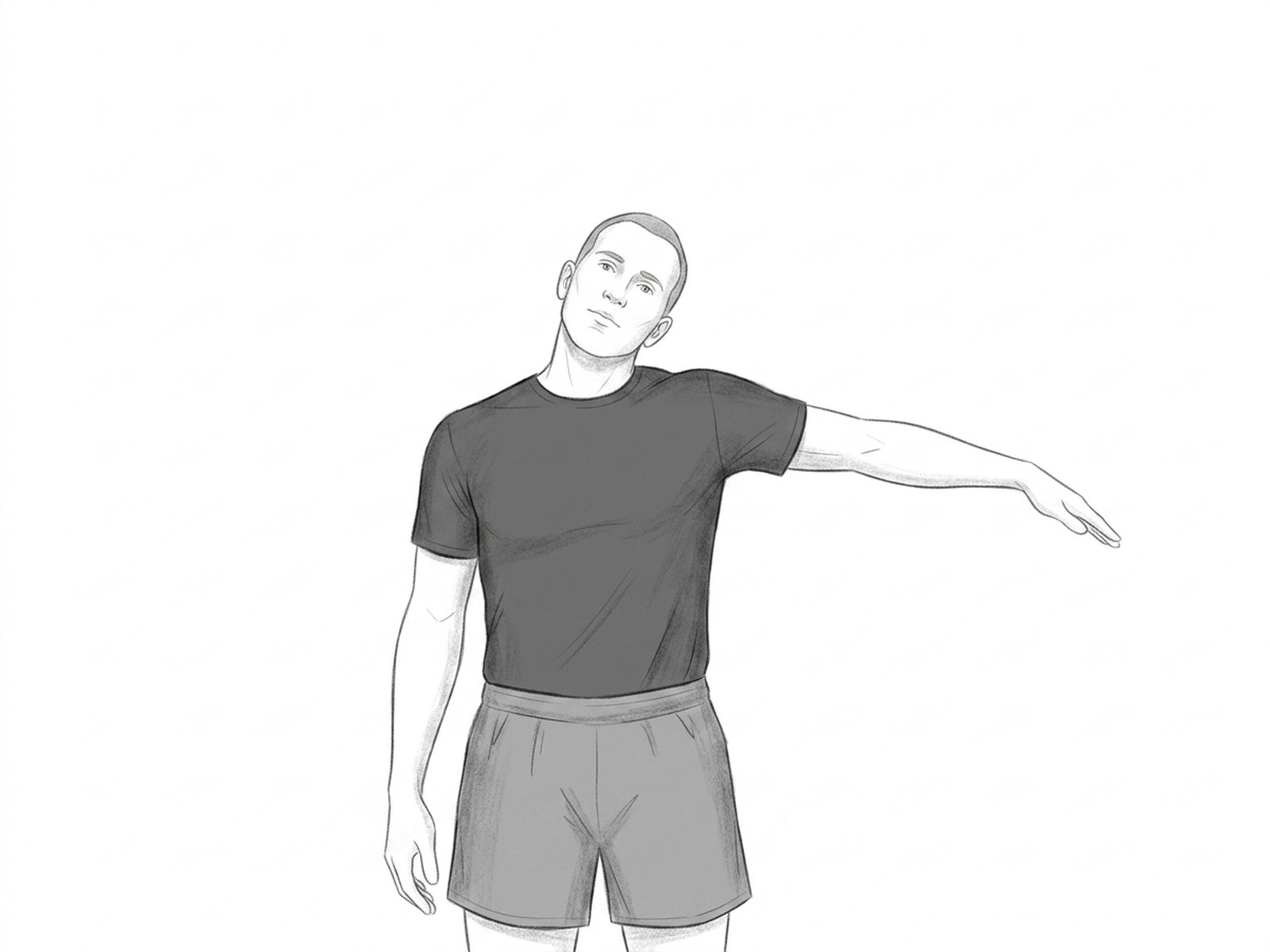
Brachial Plexus Glide (Upper-Limb Neural Flossing)
Global neural mobilization of the brachial plexus, combining cervical movements with upper-limb positioning under maximum tension. Broader than glides of individual nerves (median, ulnar, radial) — indicated in thoracic outlet syndrome and diffuse radicular symptoms.
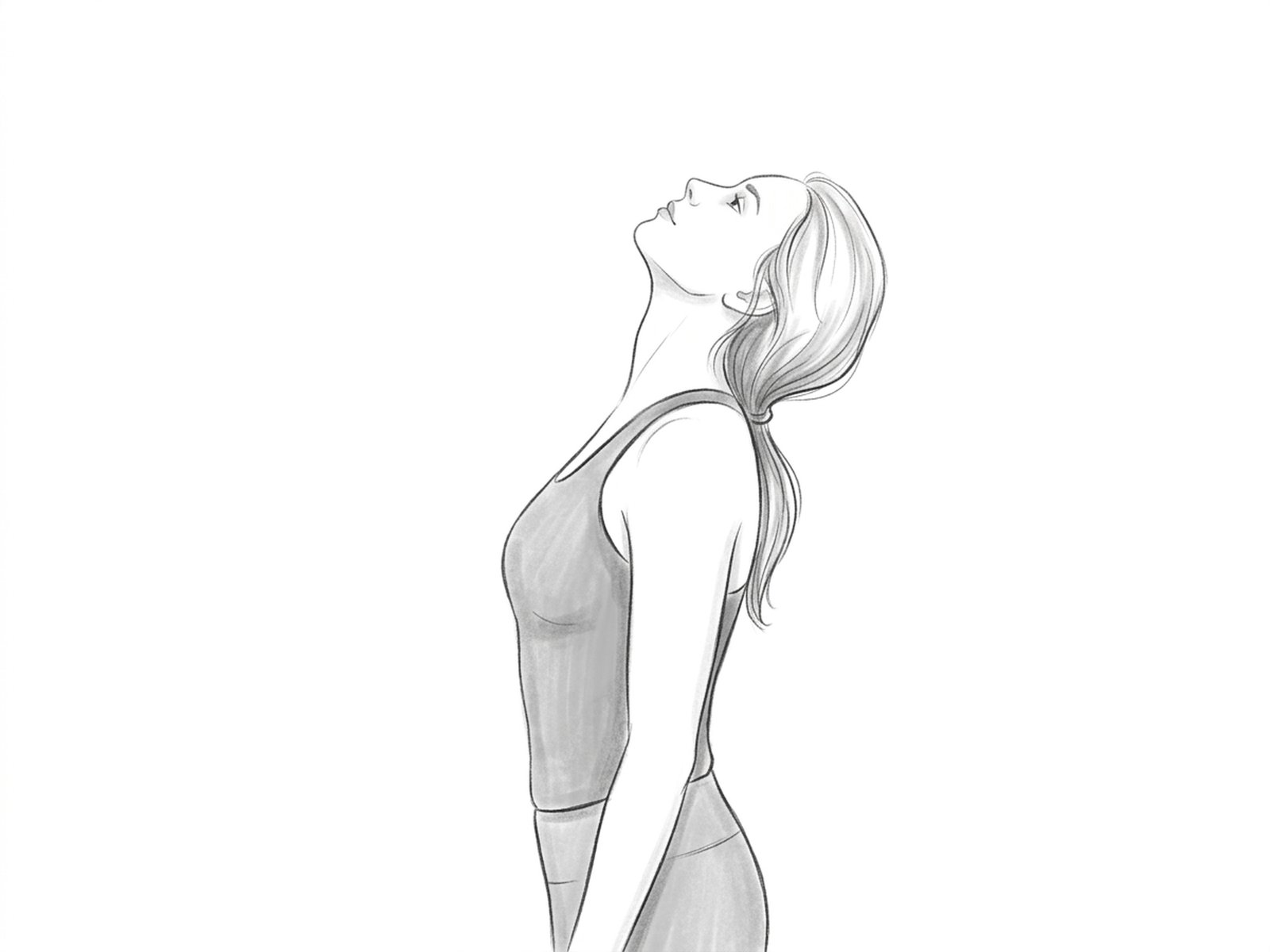
Seated Cervical Extension
Active cervical extension in sitting, specific to patients with a directional preference for extension (cervical discogenic). Different from chin tuck — here the goal is pure extension, not retraction.