Therapeutic exercise
Thoracic Mobilization on a Foam Roller
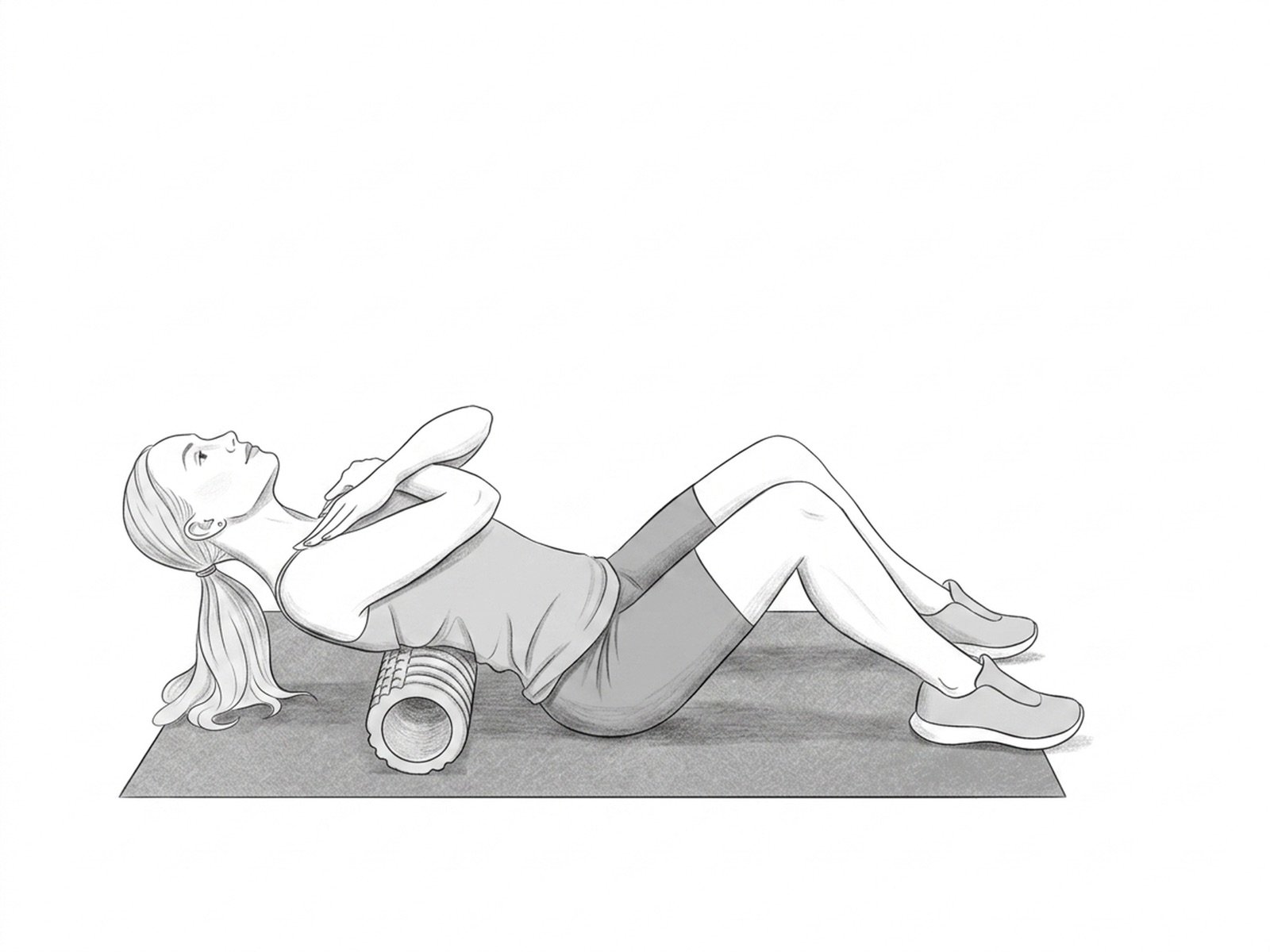
Mobilizes the thoracic spine into extension using a foam roller. Improves mobility of the thoracic kyphosis and reduces secondary cervical compensations driven by stiffness in this region — common in people who spend long hours at a computer.
How to perform
- Starting position. Lie down with the foam roller placed crosswise under the middle of your back.
- Step 2. Bring your hands behind your head to support your neck, with your knees bent and feet on the floor.
- Step 3. Relax your thoracic spine over the roller, letting it gently extend backward.
- Return. Hold for 15–20 seconds, reposition the roller a little higher or lower, and repeat.
When not to perform
- Advanced osteoporosis
- Acute thoracic pain
- Recent thoracic surgery
Medical disclaimer. These exercises are presented for informational purposes only. Always consult your physician before starting any exercise program, especially in case of acute pain, recent injury, or underlying clinical condition.
Related Exercises
Cervical Retraction (Chin Tuck)
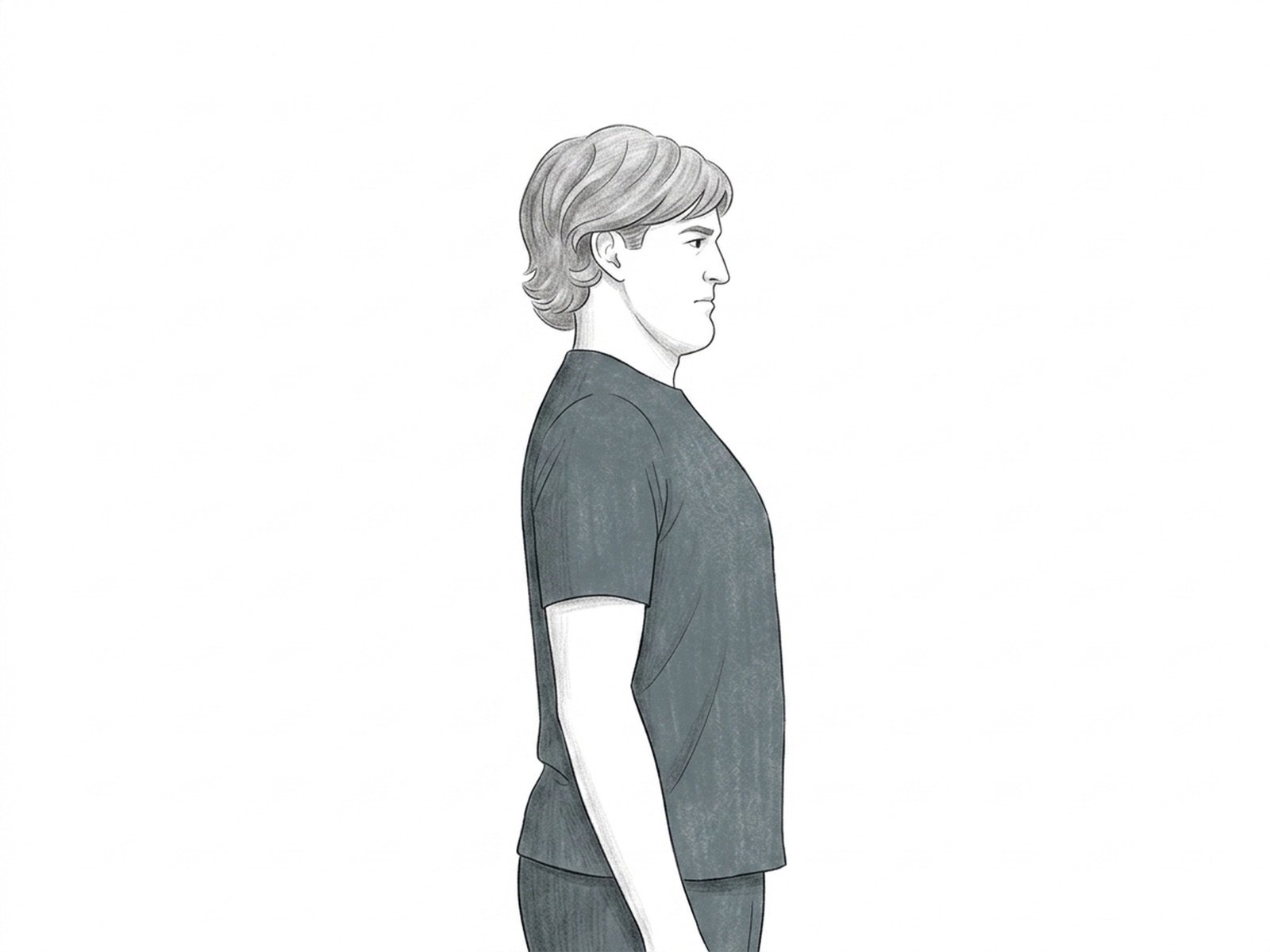
Activates the deep cervical flexors — longus colli and longus capitis — muscles essential for cervical stabilization and frequently inhibited in chronic neck-pain patterns.
Thread the Needle Thoracic Rotation
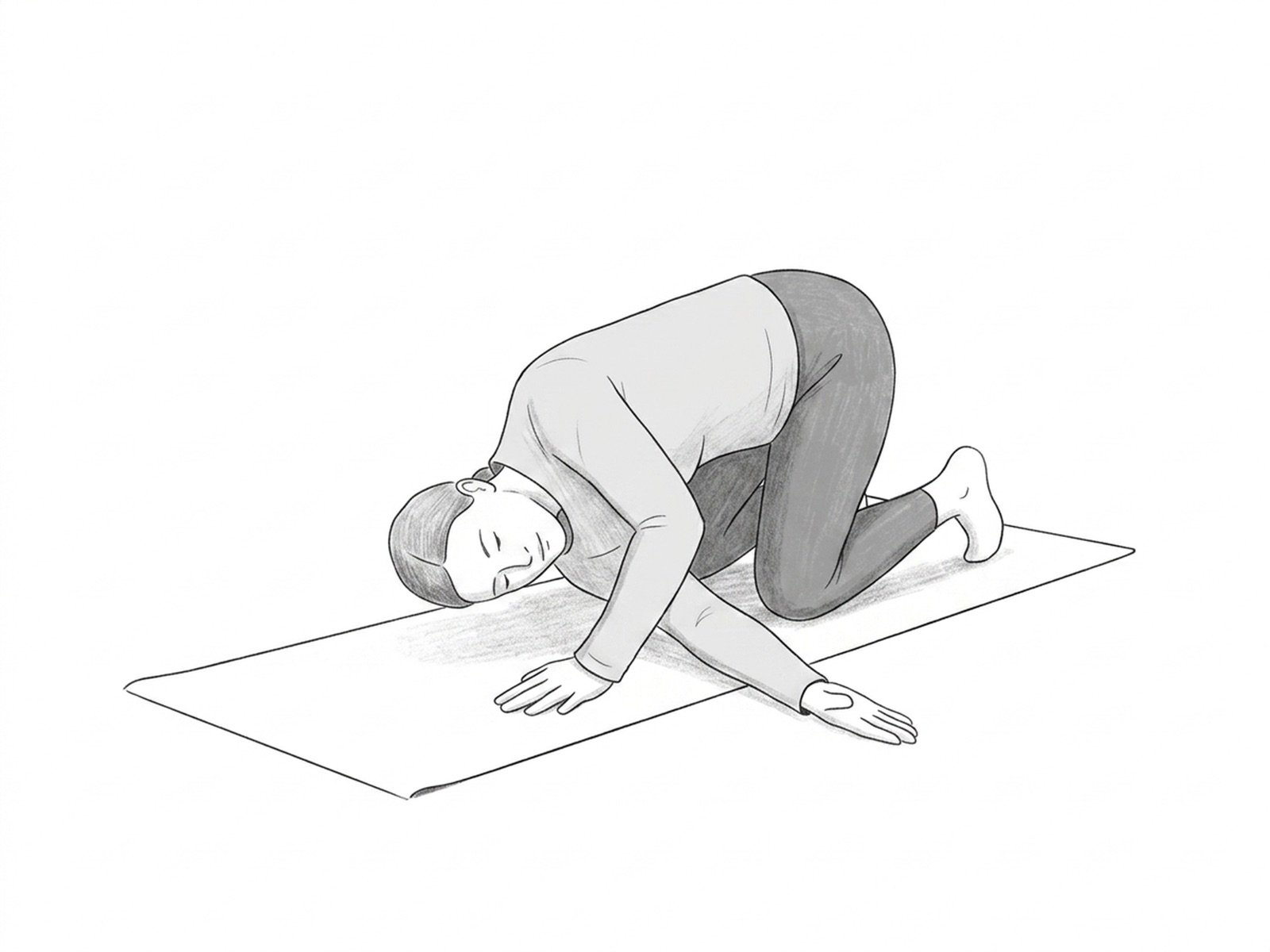
Rotational mobilization of the thoracic spine in quadruped. Restores the thoracic rotation frequently lost in office workers — and whose absence forces the cervical and lumbar regions to compensate, generating pain.
Wall Angels
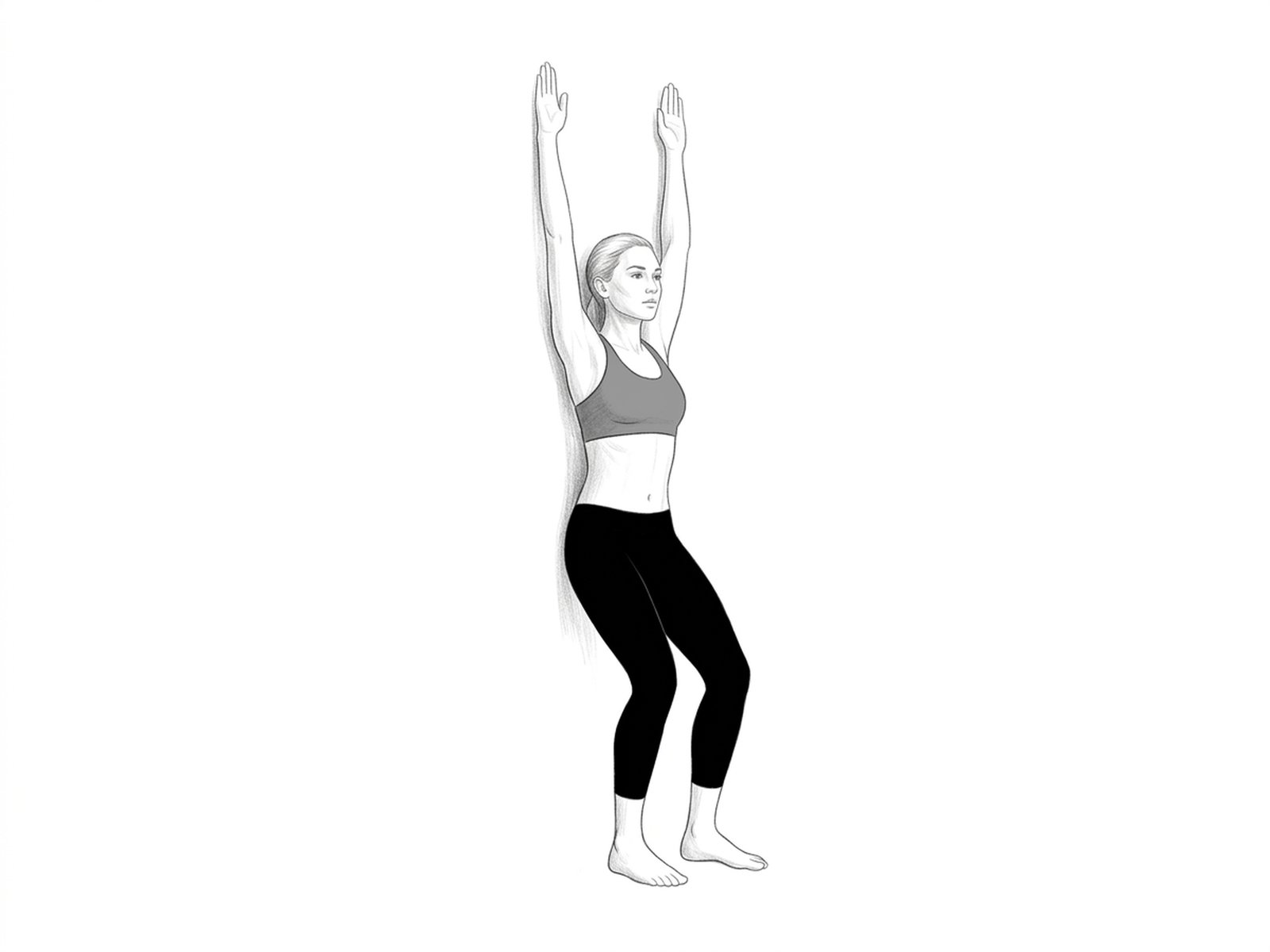
Scapulothoracic mobilization in the posterior chain that corrects kyphotic posture. Indicated as an adjunct in cervical disc herniation to reduce compensatory overload.