Therapeutic exercise
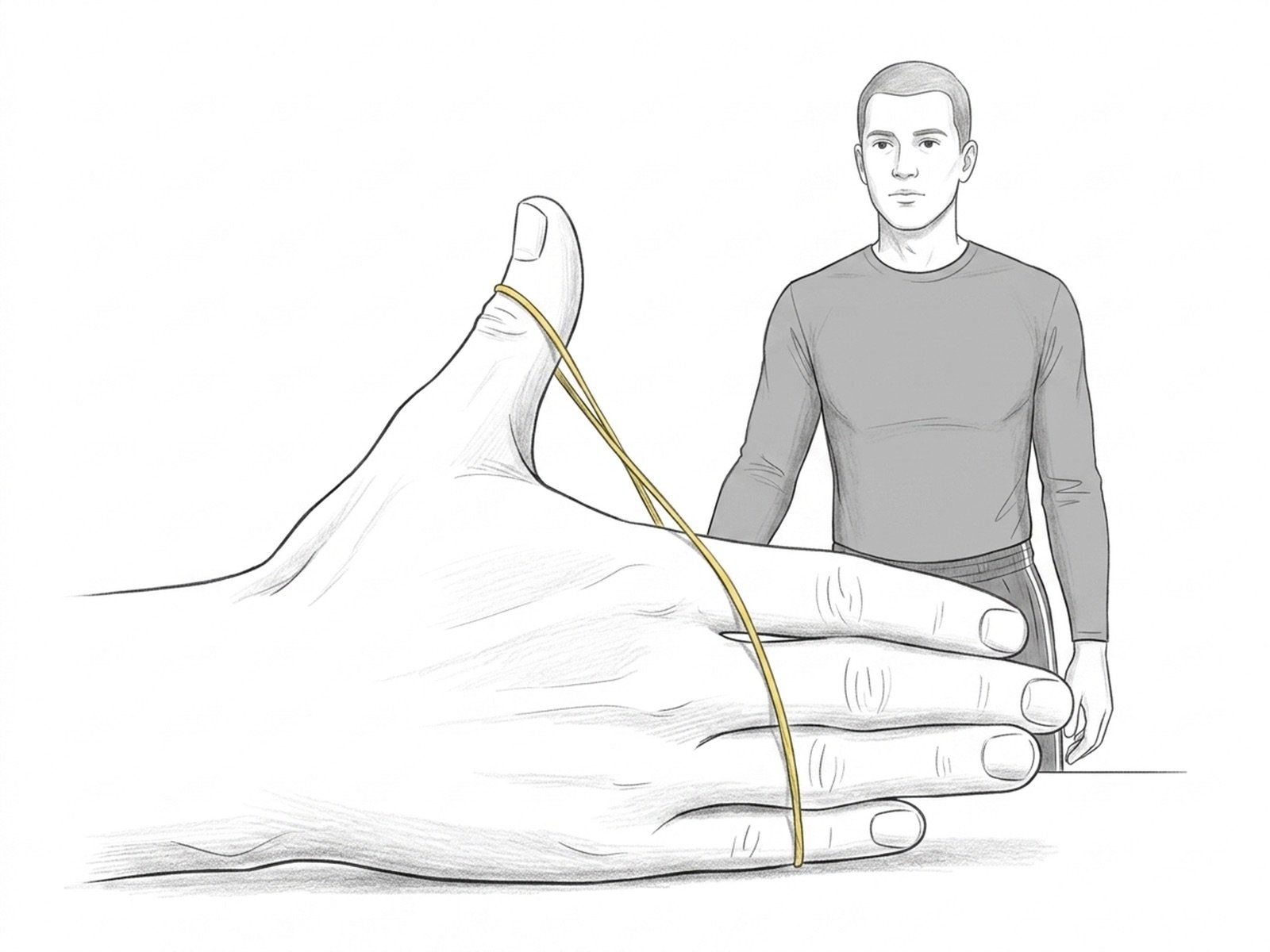
Thumb Abduction with a Rubber Band
Isolated strengthening of the abductor pollicis longus in a pure palmar abduction plane (not combined with extension). Complements thumb extension — together they form the biomechanical pair of the first-dorsal-compartment muscles.
How to perform
- Starting position. Rest the hand on a table with the palm up and the fingers extended.
- Step 2. Place a small rubber band between the thumb and index finger, with the thumb in a neutral position alongside the index.
- Step 3. Move the thumb away from the index finger toward the ceiling (pure palmar abduction), without rotation — the movement is only upward.
- Step 4. Hold maximum abduction for 2 seconds.
- Return. Return slowly over 3 seconds to the starting position. Perform the movement without wrist compensation.
When not to perform
- De Quervain's tenosynovitis in an acute inflammatory phase
- Active rhizarthrosis
- Injury of the radial collateral ligament of the thumb
- Recent thumb surgery
- Recent fracture of the first metacarpal
- Pain persisting more than 24 hours after the exercise
Medical disclaimer. These exercises are presented for informational purposes only. Always consult your physician before starting any exercise program, especially in case of acute pain, recent injury, or underlying clinical condition.
Related Exercises
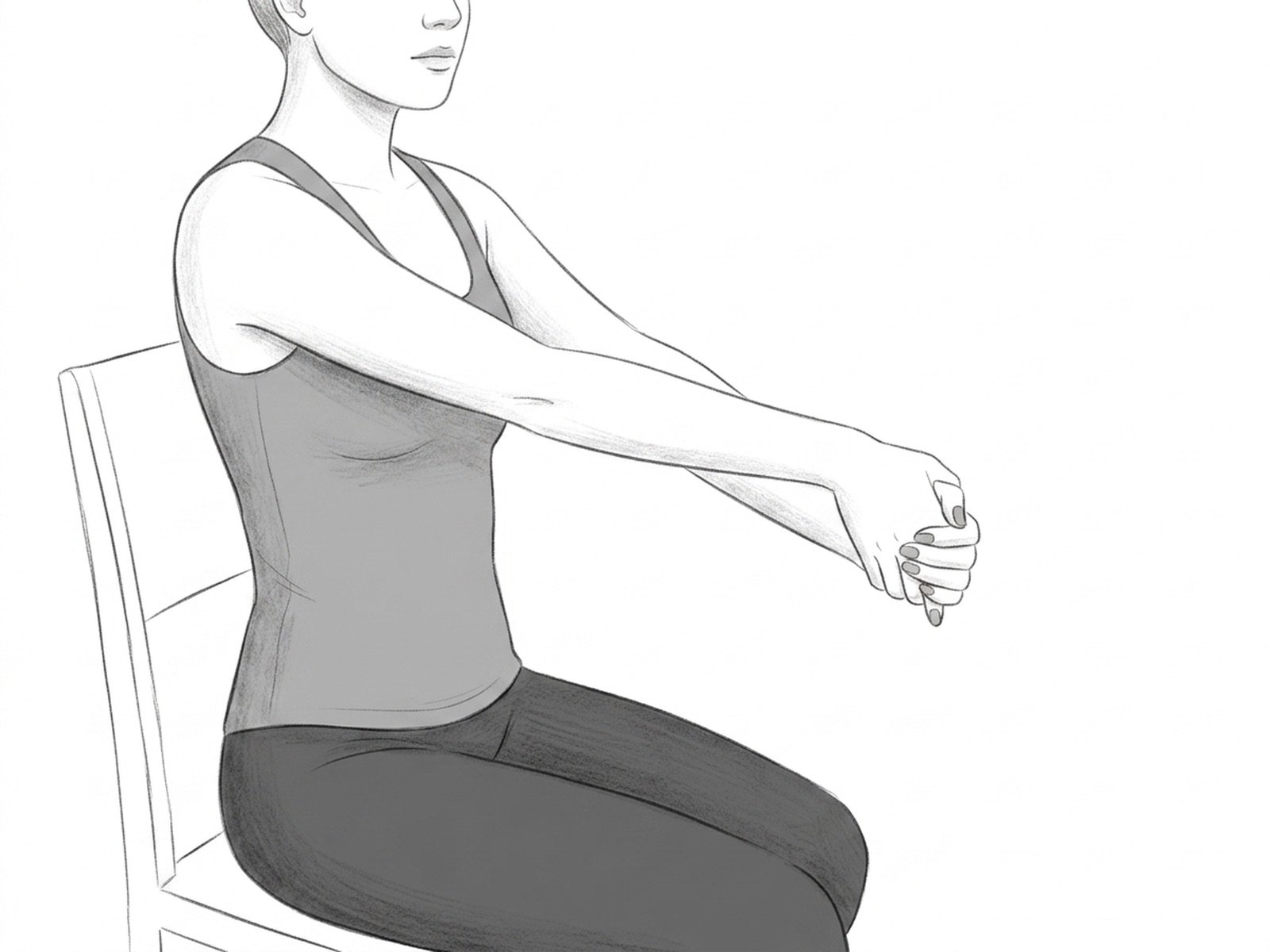
Finkelstein Stretch
Specific stretch of the tendons of the abductor pollicis longus and extensor pollicis brevis in the first dorsal compartment. It is the Finkelstein maneuver applied as a therapeutic stretch — essential in the conservative treatment of De Quervain's tenosynovitis.
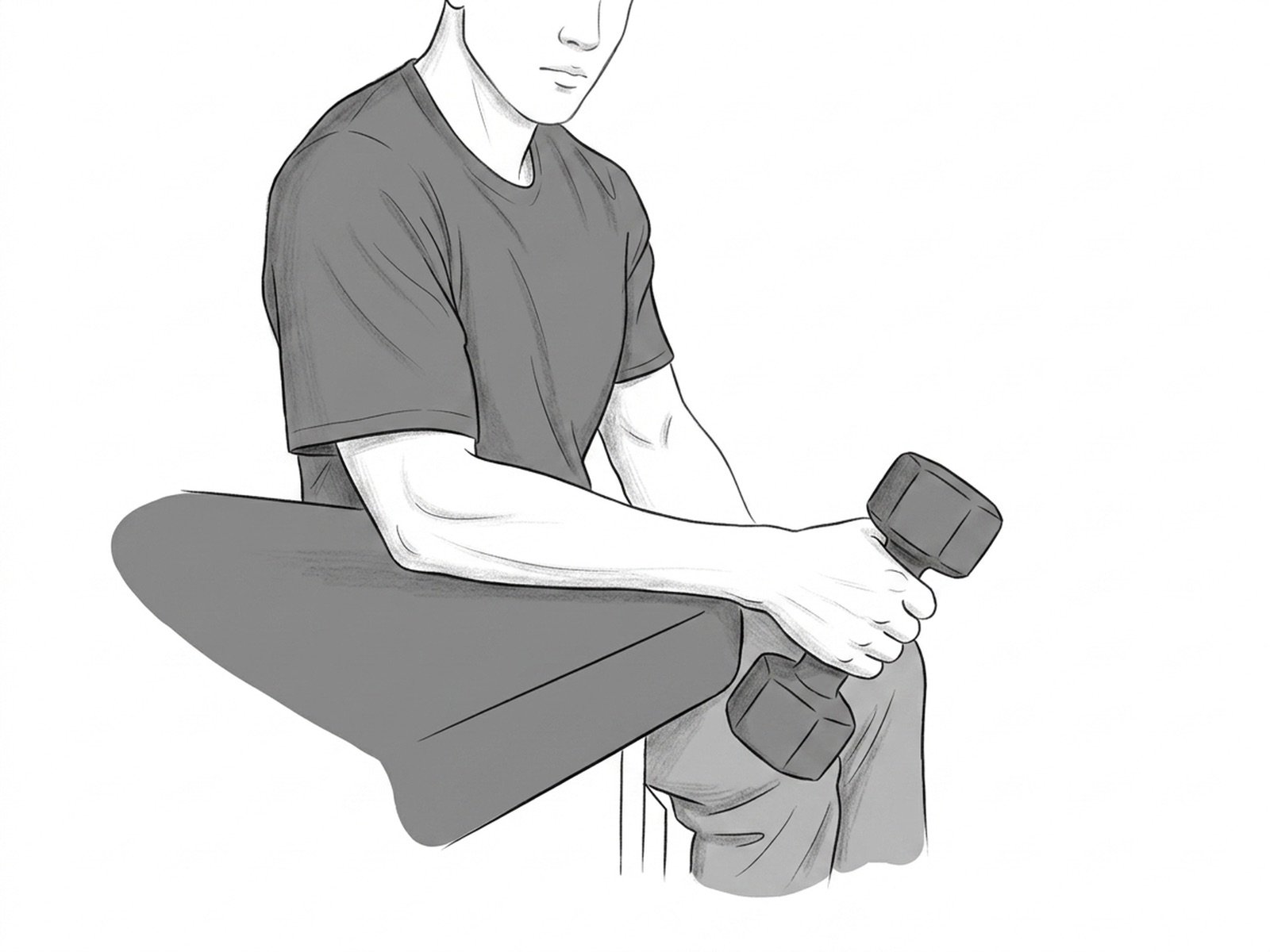
Eccentric Wrist Radial Deviation with a Hammer
Dynamic eccentric loading of the first dorsal compartment using a hammer as an asymmetric weight. In the advanced phase of De Quervain's tenosynovitis, it simulates the movements of picking up and setting down objects — remodels the tendon in a functional pattern.
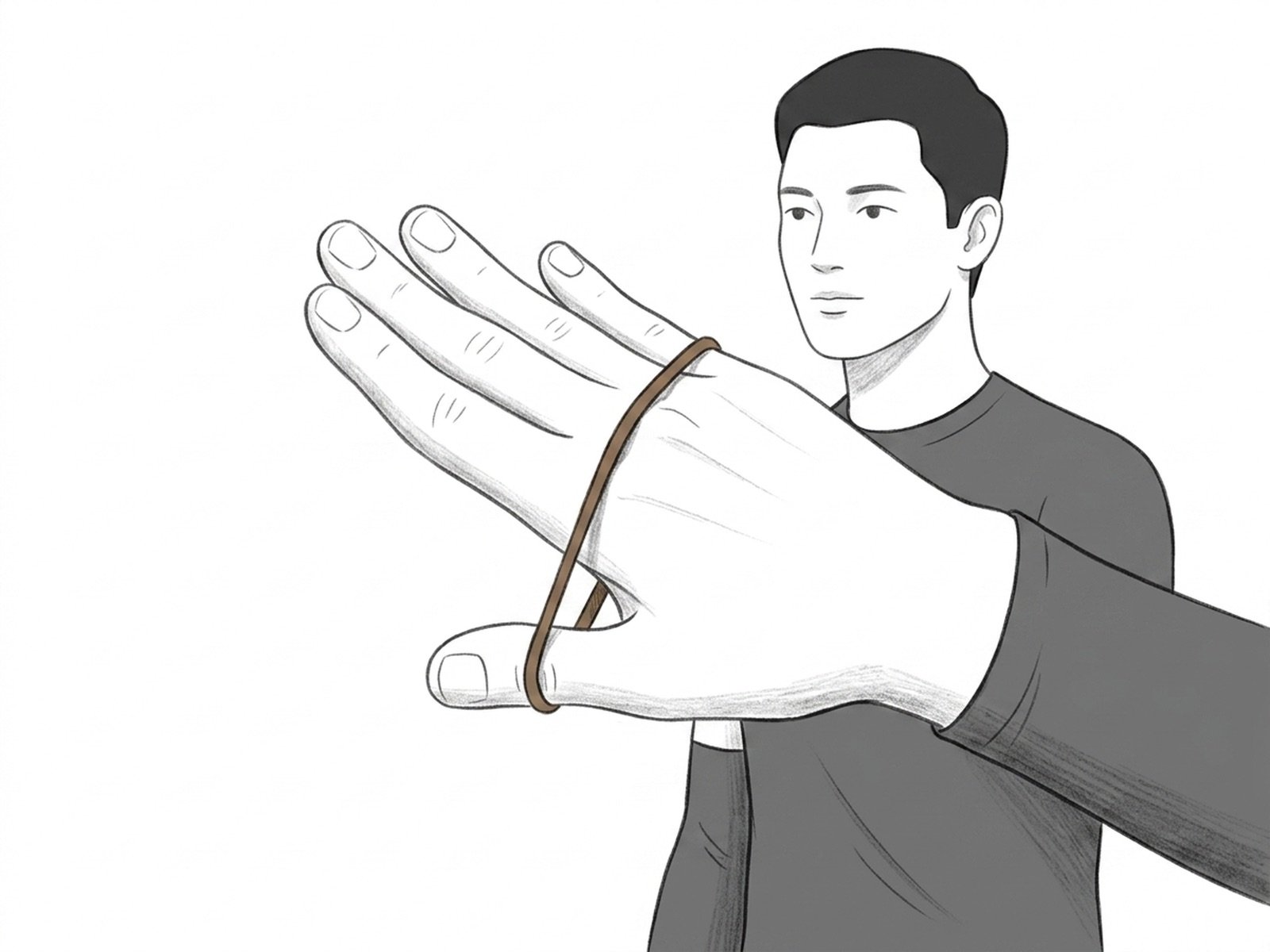
Thumb Extension with a Rubber Band
Isolated strengthening of the extensor pollicis brevis and abductor pollicis longus with a rubber band. In the recovery phase of De Quervain's tenosynovitis, controlled progressive loading promotes tendon remodeling and restores functional capacity.