Therapeutic exercise
Wall Straddle Stretch
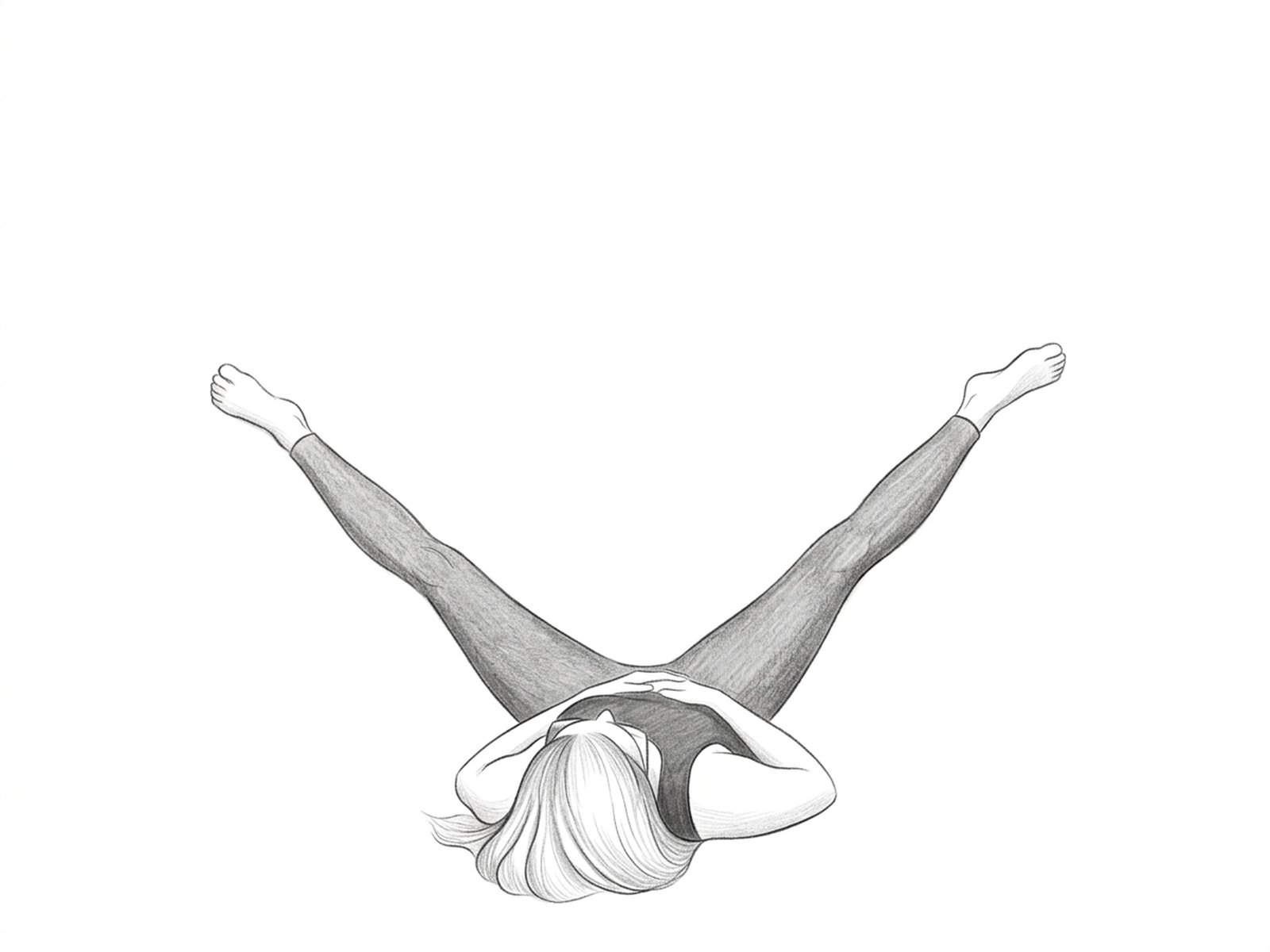
Deep passive stretch of the adductors in supine with the legs opened against a wall. Uses gravity as traction — a progression from the butterfly for cases with severe adductor shortening or the need for advanced range (dance, gymnastics).
How to perform
- Starting position. Lie face up with the hips close to a wall.
- Step 2. Raise the legs and rest them against the wall, forming an L with the body — initially with the legs together and extended.
- Step 3. Slowly let the legs fall to the sides by the weight of gravity, opening into a V.
- Step 4. Allow gravity to deepen the stretch gradually — do not force with the hands.
- Return. Hold for 2 to 3 minutes, breathing deeply. To exit the position, use the hands to guide the legs back together before lowering them.
When not to perform
- Adductor strain in acute inflammatory phase
- Active inguinal hernia
- Recent post-operative hip or pubic symphysis surgery
- Advanced pregnancy
- Post-traumatic hip instability
- Acute lumbar radiculopathy with lower-limb radiation
Medical disclaimer. These exercises are presented for informational purposes only. Always consult your physician before starting any exercise program, especially in case of acute pain, recent injury, or underlying clinical condition.
Related Exercises
Butterfly Stretch (Bilateral Adductors)
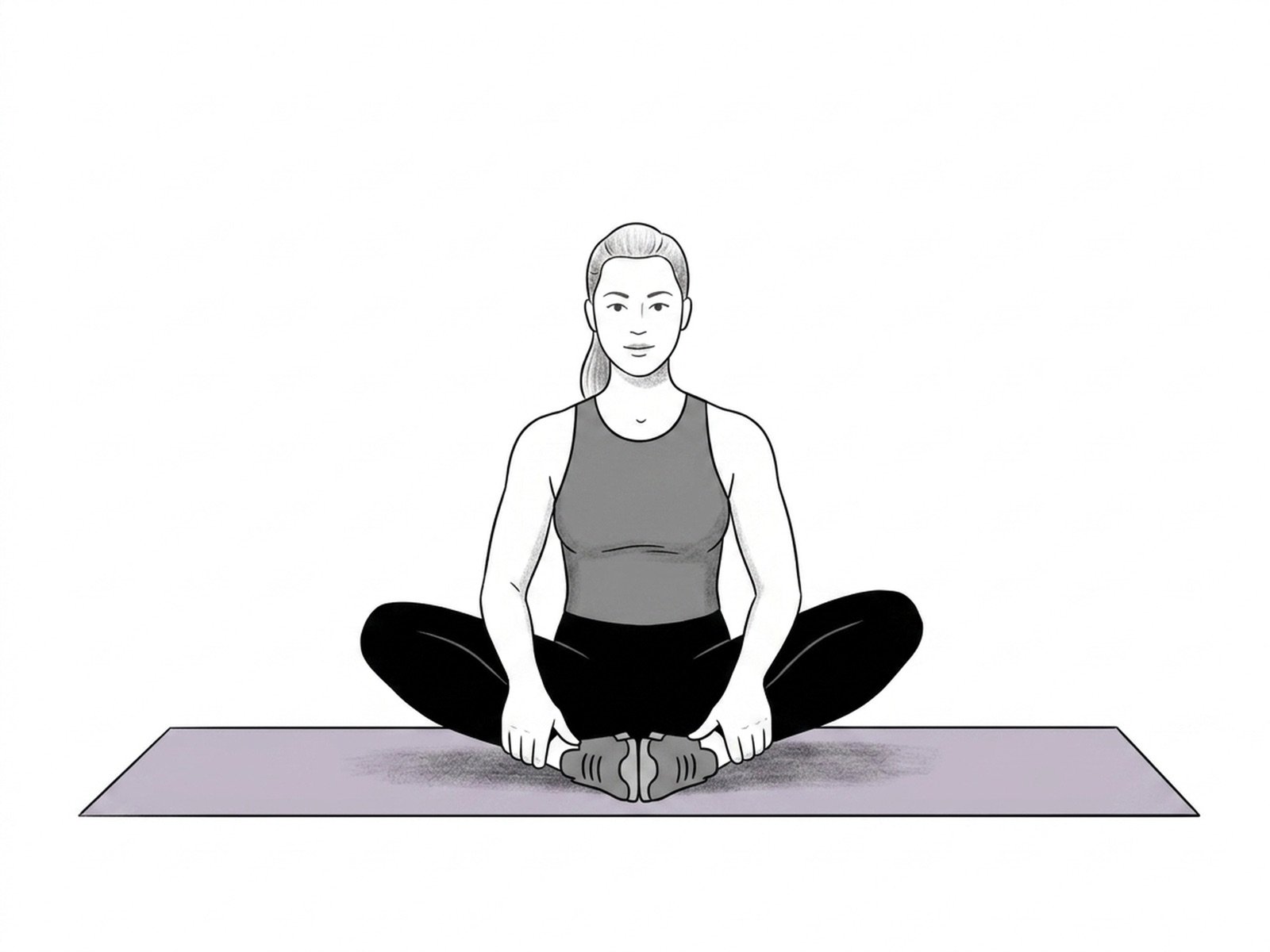
Passive bilateral stretch of the adductors in seated position with the soles of the feet touching. Symmetric adductor range is essential in strain rehab — the injured side tends to shorten, creating asymmetry that predisposes to recurrence.
Sliding Lateral Lunge
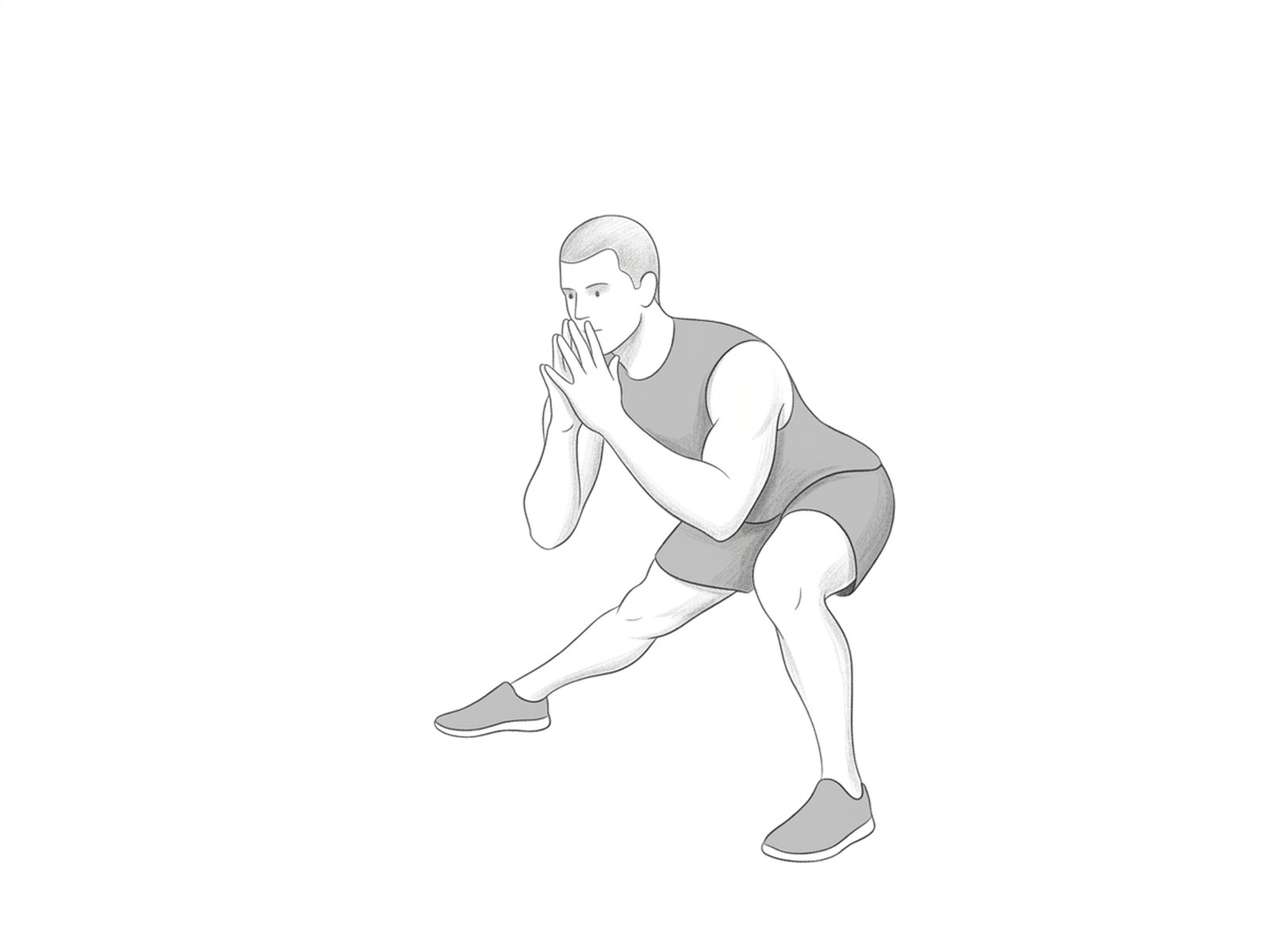
Lateral lunge in the frontal plane with sliding of the contralateral leg, creating dynamic stretching of the adductors combined with eccentric strengthening. In adductor strain rehab, it is the bridge exercise between isometric work and sporting function.
Isometric Hip Adduction with a Ball
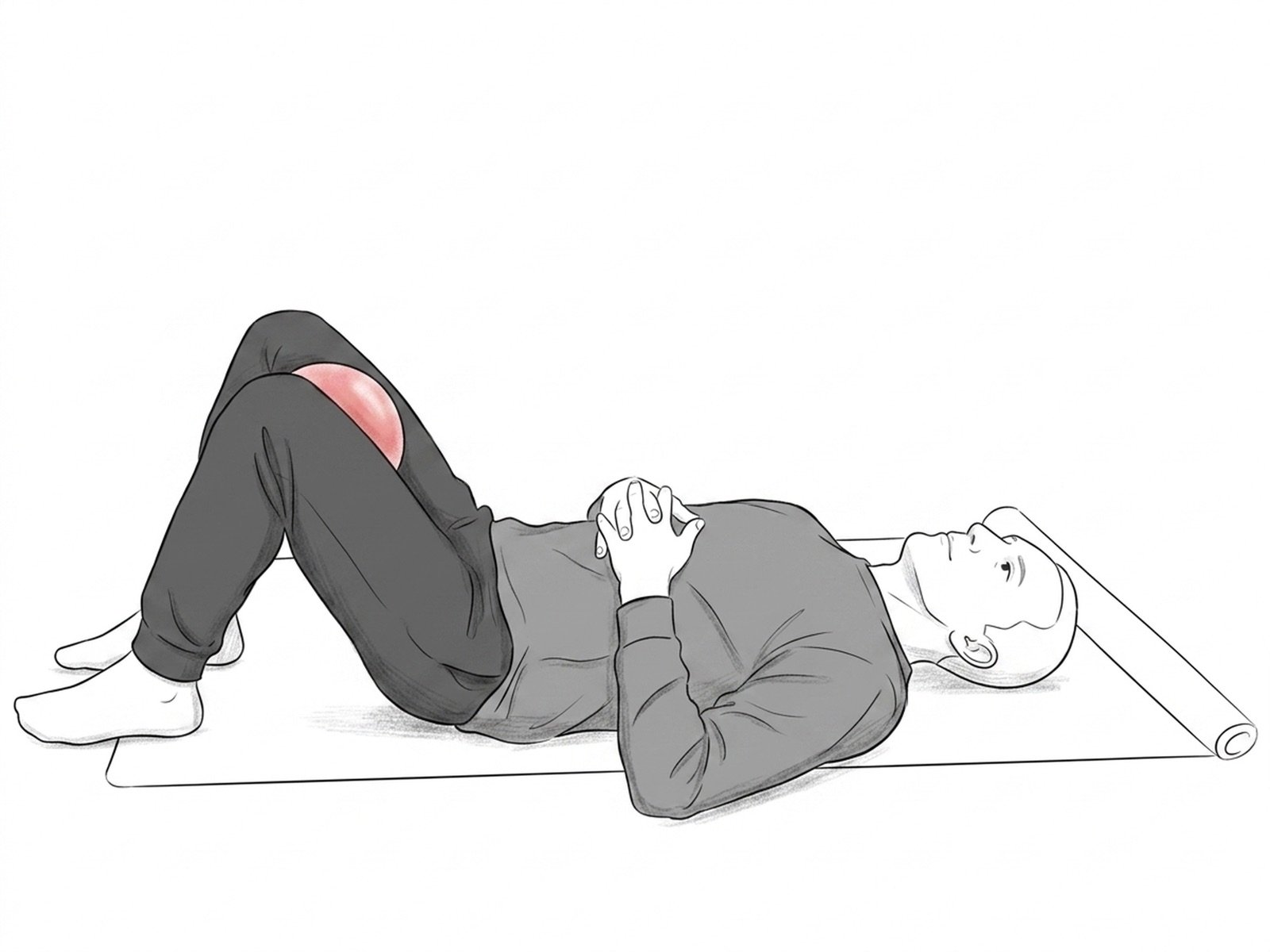
Isometric contraction of the hip adductors with a ball between the knees. Promotes active closure of the sacroiliac joint (form closure) and is a key element in the treatment of sacroiliac dysfunction and adductor strain.