Early history of laser acupuncture: who used it first?
Jang et al. · Integrative Medicine Research · 2019
Evidence Level
MODERATEOBJECTIVE
To investigate and clarify the historical origins of laser acupuncture and identify who used it first
WHO
Analysis of pioneering researchers in Germany, the USSR, China, and Asia
PERIOD
From the 1970s to the present
TECHNIQUES
HeNe, InGaAlP, CO2, and YAG lasers applied to acupuncture points
🔬 Study Design
Historical review
n=0
Analysis of literature on the origins of laser acupuncture
📊 Results in numbers
First documented use in the USSR
First systematic report (Plog)
First use in China
Coining of the term 'laser acupuncture'
📊 Outcome Comparison
Chronology of first uses
This historical study reveals that laser acupuncture, a painless technique that uses laser light instead of needles, was developed in the early 1970s. Although a German physician is traditionally credited as the pioneer, evidence shows that Soviet researchers may have been the first to use this technique.
Article summary
Plain-language narrative summary
This historical review article examines the contested origins of laser acupuncture, a therapeutic modality that combines the centuries-old principles of acupuncture with the laser technology developed in the 1960s. Laser acupuncture uses different types of laser, including InGaAlP (630-685 nm), HeNe (633 nm), GaAlAs, GaAs, CO2, and YAG, and is particularly valuable for pediatric patients and those with needle phobia due to its noninvasive and virtually painless nature.
Traditionally, the German-Canadian physician Friedrich M. W. Plog (1920-2009) was considered the pioneer of laser acupuncture, allegedly having begun its practice in 1973. Plog developed the first laser acupuncture device, called the 'akupLaser System Plog,' in 1975-1976 at the company Messerschmitt-Bolkow-Blohm GmbH (MBB).
In his 1980 publication, he described the procedures in detail, presented 17 therapeutic indications including headache, neck pain, low back pain, herpes zoster, and insomnia, and documented specific treatment methods.
However, a closer analysis of the literature reveals that Soviet researchers may have preceded Plog. Utemuratova and Sokolova reported in 1970 on the treatment of 118 hypertensive patients using a HeNe laser at acupuncture points. Ermukhambetor (1971) described the treatment of 31 hypertensive patients with a 12-mW HeNe laser, irradiating acupuncture points for 10-20 seconds daily over 10 days. Other Soviet researchers such as Shakirova and Inyushin (1971) attempted to treat infantile cerebral palsy, while Shchur (1972) reported treatments for hypertension and Voronina (1972) worked with bronchial asthma.
Although these Soviet studies are often presented as brief reports, they provided specific indications and treatment methods. An important limitation is that many did not clearly specify the acupuncture points used and sometimes mixed reflex zone therapy with true acupuncture, which should be considered distinct treatments.
In China, the first documented use of laser acupuncture occurred in 1976 for the treatment of leukopenia using a CO2 laser, preceding the better-known work of Yuecheng Zhou, who began using laser acupuncture in dental anesthesia in 1979. In Korea and Japan, the technique was implemented later, in 1980 and 1983, respectively.
Interestingly, Plog did not use the term 'laser acupuncture' in his early work. The term first appeared in the magazine 'Omni' in 1978, in an introduction to the AkupLas device manufactured by the German company MBB.
Despite controversies regarding skin penetration, the sensation of deqi, and noxious stimulation, the therapeutic effects and indications of laser acupuncture are now widely recognized. The technique offers a valuable alternative for patients who do not tolerate conventional needles, while maintaining the traditional therapeutic benefits of acupuncture.
The clinical implications of this historical review go beyond academic interest, highlighting the importance of recognizing scientific contributions from different cultures and research systems. The development of laser acupuncture illustrates how medical innovations often emerge simultaneously in different regions, reflecting universal clinical needs and global technological advances.
Strengths
- 1Comprehensive analysis of primary literature in multiple languages
- 2Detailed documentation of historical chronology
- 3Recognition of previously overlooked contributions from the USSR
- 4Technical contextualization of the different types of laser used
Limitations
- 1Many Soviet studies were brief reports without full detail
- 2Mixing of reflex zone therapy with true acupuncture
- 3Lack of specification of acupuncture points in some studies
- 4Limited access to some primary historical sources
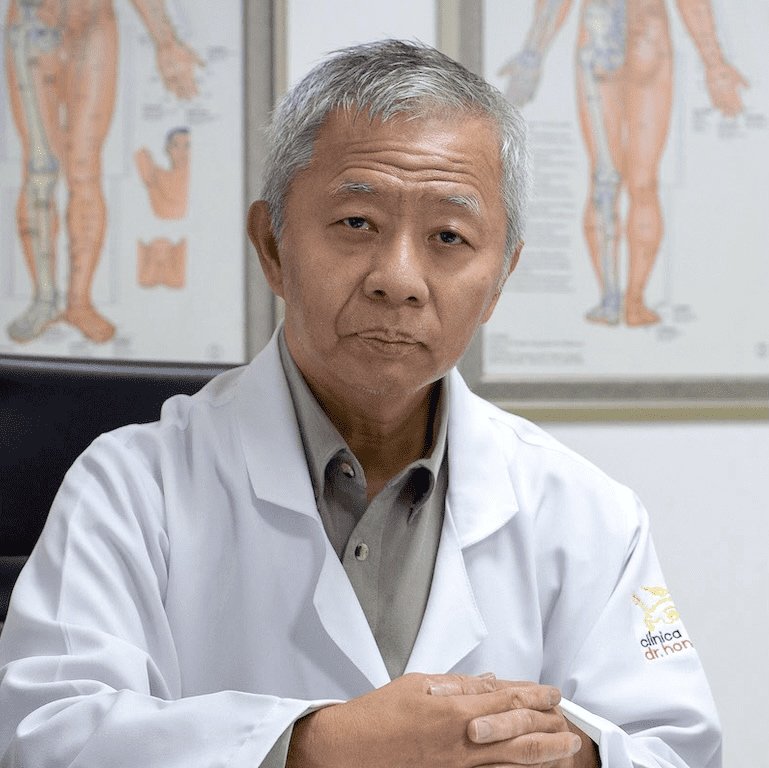
Expert Commentary
Prof. Dr. Hong Jin Pai
PhD in Sciences, University of São Paulo
▸ Clinical Relevance
Laser acupuncture today occupies a well-defined clinical space: pediatric patients, individuals with needle phobia, patients with coagulopathies, and those on full anticoagulation who need point stimulation without bleeding risk. This historical work, by documenting that the technique was already being applied to hypertension, bronchial asthma, headache, neck pain, low back pain, and herpes zoster as early as the early 1970s, reaffirms the robustness of its indication profile — practically overlapping with what we use today. Knowing this lineage matters to the practicing physician because it consolidates the legitimacy of the modality in the face of institutional and audit scrutiny. Knowing that different centers, in distinct technological contexts, independently arrived at the same clinical indications gives epidemiological weight to the consistency of the observed effects, far beyond what any isolated trial could offer.
▸ Notable Findings
The central finding — and a surprising one for anyone who has followed the literature consolidated around Plog — is that Soviet researchers documented the use of HeNe laser at acupuncture points as early as 1970, three years before the German-Canadian systematic report. The Utemuratova and Sokolova group treated 118 hypertensive patients in that year; Ermukhambetor, in 1971, described a protocol with specification of irradiation power and duration. This Soviet precedence remained overlooked for decades, probably because of the language barrier and the scientific isolation of the Cold War. Equally revealing is the fact that Plog himself did not coin the term 'laser acupuncture': the expression appeared in 1978, in Omni magazine, to describe the AkupLas device by MBB. This illustrates how clinical nomenclatures often become dissociated from the trajectories of their creators.
▸ From My Experience
At the Pain Center of HC-FMUSP, laser acupuncture is part of our routine mainly in two scenarios: children referred by neuropediatrics, and adults presenting with a history of fainting during invasive procedures. I have observed that the speed of response is slightly slower than with conventional needling — I usually see a perceptible clinical sign between the fourth and sixth sessions, whereas with needles feedback tends to appear by the second or third. For maintenance, I usually work with cycles of eight to twelve sessions, progressively spaced apart. I frequently combine it with kinesiotherapy and, in chronic musculoskeletal pain, with conventional electrostimulation in alternating sessions. The patient profile that responds best, in my experience, is the anxious patient with good autonomic sensitivity — curiously, the same who report intense deqi with fine needles. I avoid the technique as monotherapy in acute conditions with prominent inflammatory components, where deep needling seems to me physiologically more appropriate.
Full original article
Read the full scientific study
Integrative Medicine Research · 2019
DOI: 10.1016/j.imr.2019.04.009
Access original articleScientific Review

Marcus Yu Bin Pai, MD, PhD
CRM-SP: 158074 | RQE: 65523 · 65524 · 655241
PhD in Health Sciences, University of São Paulo. Board-certified in Pain Medicine, Physical Medicine and Rehabilitation, and Medical Acupuncture. Scientific review and curation of every entry in this library.
Learn more about the author →Medical disclaimer: This content is for educational purposes only and does not replace consultation, diagnosis, or treatment by a qualified professional. Some information may be assisted by artificial intelligence and is subject to inaccuracies. Always consult a physician.
Content reviewed by the medical team at CEIMEC — Integrated Centre for Chinese Medicine Studies, a reference in Medical Acupuncture for over 30 years.
Related articles
Based on this article’s categories