Acupuncture, Connective Tissue, and Peripheral Sensory Modulation
Langevin · Critical Reviews in Eukaryotic Gene Expression · 2014
Evidence Level
MODERATEOBJECTIVE
To propose a new explanatory model of acupuncture mechanisms based on connective tissue mechanotransduction and purinergic signaling
FOCUS
Fibroblasts and adenosine release in connective tissues
DURATION
Effects studied from 5 minutes to several weeks
POINTS
Emphasizes intermuscular connective tissue planes, not specific traditional points
🔬 Study Design
Literature Review
n=0
Analysis of studies on mechanotransduction and purinergic signaling
📊 Results in numbers
Needle rotation required for mechanical coupling
Duration of immediate analgesic effect
Range of tissue deformation
Minimum manipulation time studied
📊 Outcome Comparison
Fibroblast response
This study proposes that acupuncture works through a physical mechanism: when the needle is rotated, it "grips" and stretches the connective tissue, activating special cells (fibroblasts) that release natural analgesic substances such as adenosine. This may explain both the immediate pain relief and the long-lasting effects of acupuncture.
Article summary
Plain-language narrative summary
This critical review presents a new perspective on the mechanisms of action of acupuncture, focusing on the mechanical interaction between needles and connective tissue. Author Helene Langevin proposes an innovative model that combines connective tissue mechanotransduction with peripheral sensory modulation, offering a plausible scientific explanation for the therapeutic effects of acupuncture. The study reviews evidence that acupuncture needles, due to their extremely thin diameter and lack of a cutting bevel, can penetrate tissues with minimal trauma. A crucial feature is that loose areolar connective tissue readily wraps around the inserted needle during manual manipulation.
With only 180 degrees of rotation, the connective tissue that has been drawn around the needle adheres to itself, establishing a mechanical coupling between needle and tissue. This "needle grasp" strengthens with additional manipulation and produces immediate analgesic effects in humans and animals. The proposed model suggests that acupuncture needle manipulation results in sustained release of adenosine triphosphate, adenosine diphosphate, and adenosine in local subcutaneous tissues. This adenosine release activates A1 adenosine receptors, producing antinociceptive effects.
Notably, this peripheral analgesic effect was observed in the foot in response to acupuncture administered at the knee in mice, suggesting that adenosine may be released along connective tissue planes connecting different anatomical regions. The remodeling of the fibroblast cytoskeleton in response to sustained tissue stretching involves Rho-dependent purinergic signaling with extracellular ATP release. This process may be responsible for adenosine release along a connective tissue plane some distance from the needle. The article also addresses implications for chronic pain conditions, particularly chronic low back pain, in which patients have increased thickness and decreased mobility of connective tissue.
The model suggests that fibrosis and chronic inflammation of connective tissue may contribute to chronic musculoskeletal pain, and that gentle, static stretching of connective tissue for 10 minutes has antifibrotic effects distinct from repetitive or long-duration stretching. An interesting finding is that many acupuncture "meridians" described in traditional texts follow longitudinal connective tissue planes that separate muscles. Dynamic ultrasound studies during manipulation of acupuncture needles in humans demonstrate measurable connective tissue deformation at least 10 cm away from the needle, potentially extending further along intermuscular connective tissue planes. The proposed model does not require needles to be inserted at specific "acupuncture points," but suggests that acupuncture points may have a slightly enhanced response due to the possibility of needle insertion into slightly deeper connective tissue at these locations.
Clinical implications include both short-term analgesia and potential long-term connective tissue healing, with synergistic effects that may encourage patients to move more and increase their range of motion.
Strengths
- 1Mechanistic model based on solid scientific evidence
- 2Innovative integration of cellular and physiological mechanisms
- 3Plausible explanation for local and distant effects of acupuncture
- 4Relevance to understanding chronic pain
Limitations
- 1Model still hypothetical, requiring experimental validation
- 2Distances of effect transmission in humans not determined
- 3Optimal manipulation parameters not yet established
Expert Commentary
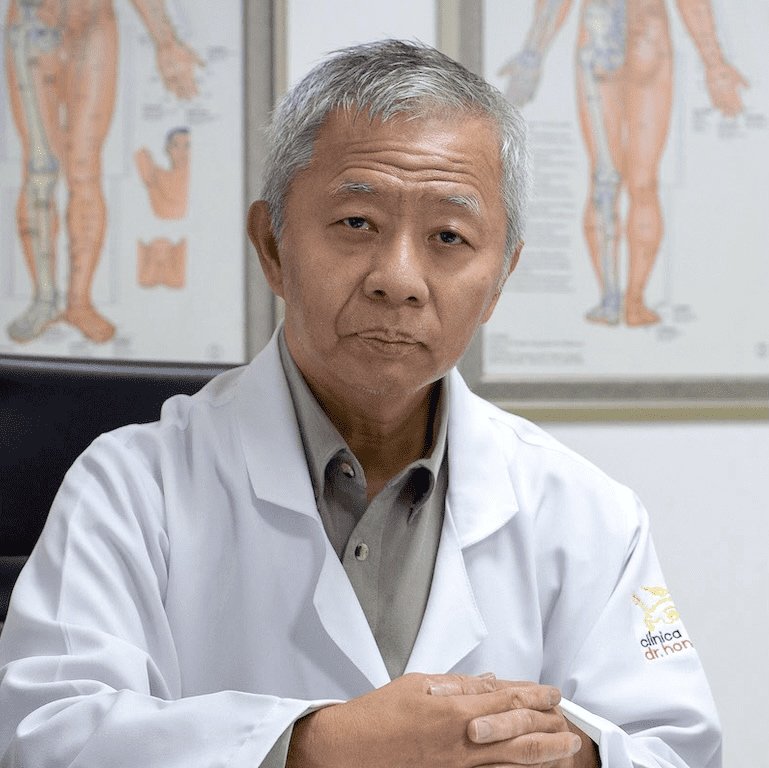
Prof. Dr. Hong Jin Pai
PhD in Sciences, University of São Paulo
▸ Clinical Relevance
Langevin's work offers a concrete pathophysiological anchor for what we observe daily in clinical practice: the needle is not merely a pointwise electrical or biochemical stimulus, but an instrument of mechanotransduction that dialogues with the architecture of connective tissue. For the physician treating chronic musculoskeletal pain, this perspective is directly useful. Patients with chronic low back pain, myofascial syndrome, or post-immobilization mobility restriction present precisely the pattern of connective tissue thickening and hypomobility described in the article. The release of adenosine via A1 receptors, demonstrated both locally and at a distance — in the foot in response to a needle at the knee — provides a substrate for understanding effects that go beyond the insertion point. The observation that intermuscular connective tissue planes coincide with traditional meridians also allows the classical vocabulary to be integrated with modern anatomical reasoning, facilitating communication between physicians from different backgrounds.
▸ Notable Findings
Two findings deserve particular attention. The first is the mechanical precision of the grasping phenomenon: with only 180 degrees of rotation, areolar connective tissue wraps around the needle and adheres to itself, establishing a mechanical coupling that amplifies with additional manipulation. It is not trivial that such a specific angle is sufficient to trigger sustained purinergic signaling. The second, even more clinically relevant, is the spatial extent of tissue deformation documented by dynamic ultrasound: more than 10 cm from the insertion point, potentially propagating along intermuscular planes. Added to this is the distinction between types of stretching — gentle, static stretching for 10 minutes produces an antifibrotic effect distinct from repetitive or prolonged stretching — which has direct implications for the choice of manipulation technique during a session.
▸ From My Experience
In my practice at the Acupuncture Group of the Pain Center of HC-FMUSP, the needle rotation technique has never been arbitrarily standardized — and Langevin's work helps to understand why certain manipulations generate more consistent responses. I have observed that patients with chronic low back pain and significant myofascial restriction respond with noticeable improvement starting at the third or fourth session, especially when we combine acupuncture with supervised stretching by a partner physical therapist. I usually reserve more vigorous rotation techniques for initial phases, when the goal is immediate analgesia, migrating to gentler manipulation in the maintenance phases, which aligns with the model proposed here. The profile that responds best, in my experience, is the patient with diffuse myofascial pain and a history of immobility — precisely the one most likely to have connective tissue fibrosis. Patients with hypermobility or Ehlers-Danlos syndrome warrant caution regarding manipulation intensity.
Indexed scientific article
This study is indexed in an international scientific database. Check your institutional access to obtain the full article.
Scientific Review

Marcus Yu Bin Pai, MD, PhD
CRM-SP: 158074 | RQE: 65523 · 65524 · 655241
PhD in Health Sciences, University of São Paulo. Board-certified in Pain Medicine, Physical Medicine and Rehabilitation, and Medical Acupuncture. Scientific review and curation of every entry in this library.
Learn more about the author →Medical disclaimer: This content is for educational purposes only and does not replace consultation, diagnosis, or treatment by a qualified professional. Some information may be assisted by artificial intelligence and is subject to inaccuracies. Always consult a physician.
Content reviewed by the medical team at CEIMEC — Integrated Centre for Chinese Medicine Studies, a reference in Medical Acupuncture for over 30 years.
Related articles
Based on this article’s categories