Acupuncture in ancient China: How important was it really?
Lehmann H · Journal of Integrative Medicine · 2013
Evidence Level
MODERATEOBJECTIVE
Investigate the real clinical importance of acupuncture in ancient China versus its theoretical representation
WHO
Chinese emperors, court physicians, and general population over 2,000 years of history
DURATION
Historical analysis from 81 BC to 1954
POINTS
Qimen (LR-14) mentioned 5 times in the Shanghanlun; main modern points not cited
🔬 Study Design
Chinese Emperors
n=400
Analysis of historical records of medical treatments
Classical Texts
n=398
Analysis of the 398 sentences of the Shanghanlun
📊 Results in numbers
Emperors treated with acupuncture
Mentions of acupuncture in the Shanghanlun
Ban at the Imperial Medical Academy
Reports of the dangers of acupuncture since
Percentage highlights
📊 Outcome Comparison
Historical use of therapies
This study shows that, contrary to what many believe, acupuncture had limited use in ancient China, being rarely applied even to emperors. The modern acupuncture we know today is very different and safer than ancient practices.
Article summary
Plain-language narrative summary
This historical study revolutionizes our understanding of the role of acupuncture in traditional Chinese medicine, questioning the widely accepted belief that needle therapy has always been central to Chinese medical practice. The author Hanjo Lehmann conducted a meticulous analysis of historical records, classical texts, and imperial documents spanning more than two millennia of Chinese history. The investigation reveals a surprising reality: although acupuncture theory is fundamental in the Huangdi Neijing, its clinical application in ancient China was consistently limited and marginalized. The analysis of 400 Chinese emperors throughout history shows that fewer than five were treated with acupuncture, a statistically insignificant number considering that emperors had access to the best physicians and treatments available.
Even in the case of Emperor Renzong of the Song Dynasty, who supposedly valued acupuncture, the reports are questionable and may be legendary. The study of the Shanghanlun, a classical work by Zhang Zhongjing, reveals that among its 398 sentences, only 9 directly recommend the use of normal acupuncture, while many others warn about its dangers. Curiously, none of the three main points of modern acupuncture (ST-36 Zusanli, LI-4 Hegu, and SP-6 Sanyinjiao) is mentioned in the text, with LR-14 Qimen being the most frequently recommended point. Since 81 BC, there are consistent records of warnings about the dangers of acupuncture.
Wang Tao, in the 8th century, wrote that 'acupuncture can kill healthy people and cannot revive those who are dead.' These concerns were justified by the lack of anatomical knowledge and the absence of disinfection techniques, making the procedure risky for both patients and practitioners. The legal situation also discouraged the use of acupuncture: physicians were held responsible for patients' deaths, and with acupuncture, the responsibility fell entirely on those who handled the needles. The definitive milestone occurred in 1822, when Emperor Daoguang permanently banned acupuncture and moxibustion from the Imperial Medical Academy, declaring that they were 'inappropriate to be applied to the Emperor.' This decision, made by respected physicians and scholars after centuries of experience, faced no significant protests, suggesting consensus on the therapeutic limitation of the technique. Xu Dachun had called acupuncture a 'lost tradition' in 1757, indicating its decline long before the official ban.
After 1822, acupuncture became extremely rare in China, being used only in emergencies. During the years in Yan'an (1936-1945), it was practically not used, and there are no records of President Mao having received acupuncture treatment. The 'New Acupuncture' developed after 1954 by Zhu Lian and others essentially represents a complete reinvention of the practice. This modern version incorporates scientific anatomical knowledge, sterilization techniques, stainless steel needles, standardized protocols, and different point selections.
The study concludes that the best era of acupuncture was not during the ancient Song or Yuan dynasties, but rather is now, with practices grounded in scientific evidence and modern safety protocols.
Strengths
- 1Comprehensive analysis of primary historical sources over 2,000 years
- 2Well-founded questioning of widely accepted beliefs
- 3Correlation between safety and historical clinical use
- 4Detailed documentation of important historical milestones
Limitations
- 1Analysis based primarily on records of upper classes (emperors, court)
- 2Possible documentary preservation bias
- 3Lack of quantitative data on popular use
- 4Limitations in sources on practices in different regions
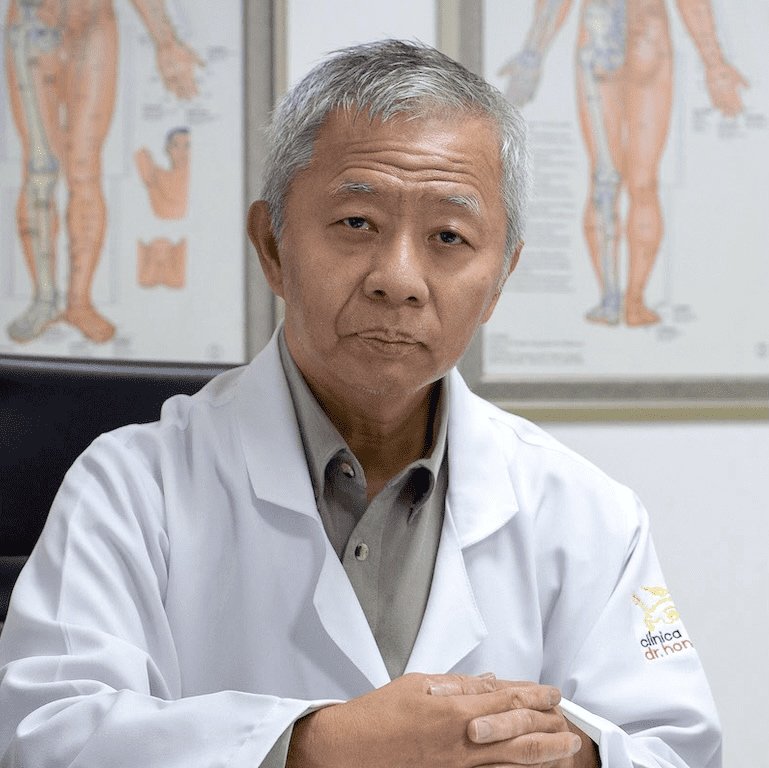
Expert Commentary
Prof. Dr. Hong Jin Pai
PhD in Sciences, University of São Paulo
▸ Clinical Relevance
The historical perspective presented by Lehmann has a direct impact on how we communicate acupuncture to our peers and patients. Physicians who practice acupuncture frequently encounter the narrative that it is an uninterrupted millennia-old tradition, which can generate resistance both from skeptical colleagues and from patients overly reverent of a supposed original purity. Knowing that the Shanghanlun — a reference text that every scholar of classical medicine knows — dedicates only 9 of its 398 sentences to acupuncture, and that fewer than five of the 400 recorded emperors received this treatment, recontextualizes the practice: what we have today is not the preservation of a dominant tradition, but the flourishing of a technique that modernity has refined with anatomy, antisepsis, and evidence-based protocols. This strengthens the position of the acupuncture physician, who can confidently affirm that contemporary acupuncture is genuinely superior to its historical versions.
▸ Notable Findings
The most thought-provoking finding is not the isolated datum, but the convergence of evidence: the imperial ban of 1822, Xu Dachun's warning in 1757 about a 'lost tradition,' the absence of the three most used points in modern acupuncture — ST-36, LI-4, and SP-6 — in the Shanghanlun, and the records of warnings about the dangers of the technique dating back to 81 BC. This entire body of evidence suggests that the historical marginalization of acupuncture was not arbitrary, but reflected real safety limitations in a pre-scientific context. Particularly revealing is the silence of the medical elite in the face of the 1822 ban — an absence of protests that, in any medical system with established and effective practice, would be improbable. The 'New Acupuncture' post-1954 emerges, then, not as the recovery of a suppressed legacy, but as the deliberate construction of a new discipline on contemporary scientific foundations.
▸ From My Experience
At the Pain Center of HC-FMUSP, I frequently receive patients and residents who arrive imbued with the idea that acupuncture 'has always worked this way for thousands of years.' This article offers me a solid historical argument to explain that what we practice today — with disposable stainless steel needles, neuroanatomical knowledge, diagnostic criteria integrated into evidence-based medicine — is qualitatively distinct from anything practiced in the imperial courts. In my practice, I usually observe measurable clinical response from the third or fourth session in chronic pain conditions, with usual cycles of eight to twelve sessions before defining maintenance or discharge. Combination with physical therapy and supervised exercise consistently enhances results. The patient profile that responds best is the one who is motivated, has realistic expectations, and is willing to integrate acupuncture into a multimodal therapeutic plan — exactly the opposite of the search for a magical ancestral cure that this misguided historical myth often feeds.
Full original article
Read the full scientific study
Journal of Integrative Medicine · 2013
DOI: 10.3736/jintegrmed2013008
Access original articleScientific Review

Marcus Yu Bin Pai, MD, PhD
CRM-SP: 158074 | RQE: 65523 · 65524 · 655241
PhD in Health Sciences, University of São Paulo. Board-certified in Pain Medicine, Physical Medicine and Rehabilitation, and Medical Acupuncture. Scientific review and curation of every entry in this library.
Learn more about the author →Medical disclaimer: This content is for educational purposes only and does not replace consultation, diagnosis, or treatment by a qualified professional. Some information may be assisted by artificial intelligence and is subject to inaccuracies. Always consult a physician.
Content reviewed by the medical team at CEIMEC — Integrated Centre for Chinese Medicine Studies, a reference in Medical Acupuncture for over 30 years.
Related articles
Based on this article’s categories