WHO Standard Acupuncture Point Locations
Lim S · Evidence-based Complementary and Alternative Medicine · 2010
Evidence Level
STRONGOBJECTIVE
Establish an international standard for acupuncture point locations under the WHO
WHO
Experts from China, Japan, and South Korea convened by the WHO
DURATION
2003-2008 (7 informal consultations and 4 meetings)
POINTS
86 of 92 controversial points were standardized out of 361 total points
🔬 Study Design
International Experts
n=0
Consensus on acupoint location
📊 Results in numbers
Points successfully standardized
Total acupoints evaluated
Consensus rate
Points still controversial
Percentage highlights
📊 Outcome Comparison
Status of Acupuncture Points
This work represents a historic milestone for acupuncture worldwide. The WHO succeeded in bringing experts from China, Japan, and Korea to agree on the precise locations of 86 of the 92 most controversial acupuncture points. This means there is now an international standard for locating the points, making treatment more precise and reliable anywhere in the world.
Article summary
Plain-language narrative summary
Acupuncture, one of the oldest practices of traditional Chinese medicine, has expanded worldwide as an important component of complementary and alternative medicine. As clinical acceptance and use grow, there is a fundamental need to establish rigorous scientific standards to understand its mechanisms and validate its efficacy. One of the greatest challenges faced by researchers and practitioners has been the lack of uniformity in the location of acupuncture points across different countries and traditions, a problem that compromises research quality and hinders comparisons across scientific studies.
This article presents a historic milestone in acupuncture standardization: the creation of the document "WHO Standard Acupuncture Point Locations in the Western Pacific Region," released by the World Health Organization in 2008. The primary objective was to establish international consensus on the precise location of acupuncture points, overcoming the differences traditionally existing among the Chinese, Japanese, and Korean schools. The project employed an extensive collaborative methodology, including seven informal consultations and four task force meetings, bringing together experts from various countries in the Western Pacific Region. Initially, 92 controversial points were identified among the 361 recognized acupuncture points, and through this collaborative process, agreement was reached on 86 of these points, leaving only six points still in discussion for future research.
The results obtained represent a significant advance for traditional medicine. Of the 361 existing acupuncture point locations, 355 were successfully standardized. The final document includes general guidelines for point location and uses modern anatomical terminology combined with the traditional Chinese measurement method called "cun." An important innovation was the separation between B-cun (bone-proportional cun) and F-cun (finger cun), providing greater precision in point location. The guide includes clear and precise illustrations, as well as explanatory sections that help clinicians understand the relationships among adjacent points and the individual variations that may occur.
For patients receiving acupuncture treatment, this standardization brings concrete benefits. First, it ensures that different practitioners locate and stimulate the same points in the same manner, regardless of where they were trained or which tradition they follow. This means greater consistency in treatment and more predictable outcomes. For health professionals, standardization facilitates scientific communication, allows more accurate comparisons across research studies, and improves the quality of scientific evidence on acupuncture efficacy.
Many specialized acupuncture journals have already adopted these guidelines as a publication requirement, raising the scientific standard of the field.
The clinical impact extends beyond simple uniformity. With standardized locations, it becomes possible to conduct more reliable meta-analyses, which combine results from multiple studies to generate more robust conclusions about acupuncture efficacy for different health conditions. This is particularly important for patients and physicians seeking solid scientific evidence when considering acupuncture as a therapeutic option. Standardization also facilitates the training of new professionals and improves the quality of care delivered.
However, certain limitations must be considered. Six acupuncture points remain controversial, indicating that work remains to be done. In addition, standardization focuses on point location, but other aspects of acupuncture practice, such as needle insertion technique, depth, angle, and stimulation methods, may still vary among different practitioners and traditions. Global implementation of these guidelines also depends on voluntary acceptance and adoption by professionals and educational institutions.
This work represents a notable example of successful international collaboration, overcoming deeply rooted cultural and traditional differences. The success of the project demonstrates that it is possible to unite different schools of thought for the benefit of scientific advancement and improved patient care. Going forward, this standardization is expected to contribute to a deeper understanding of acupuncture mechanisms and to the optimization of clinical efficacy in treating various diseases and syndromes. Traditional Eastern medicine, historically divided into regional groups, now has a more solid foundation for integration and joint development, promising to make acupuncture more accessible and valuable for human health care on a global scale.
Strengths
- 1International consensus across distinct traditions
- 2Rigorous methodology with multiple consultations
- 3Foundation for more reliable future research
- 4Adoption of modern anatomical terminology
Limitations
- 16 points still remain controversial
- 2Limited to the Western Pacific Region
- 3Implementation depends on voluntary adoption
- 4Requires continued clinical validation
Expert Commentary
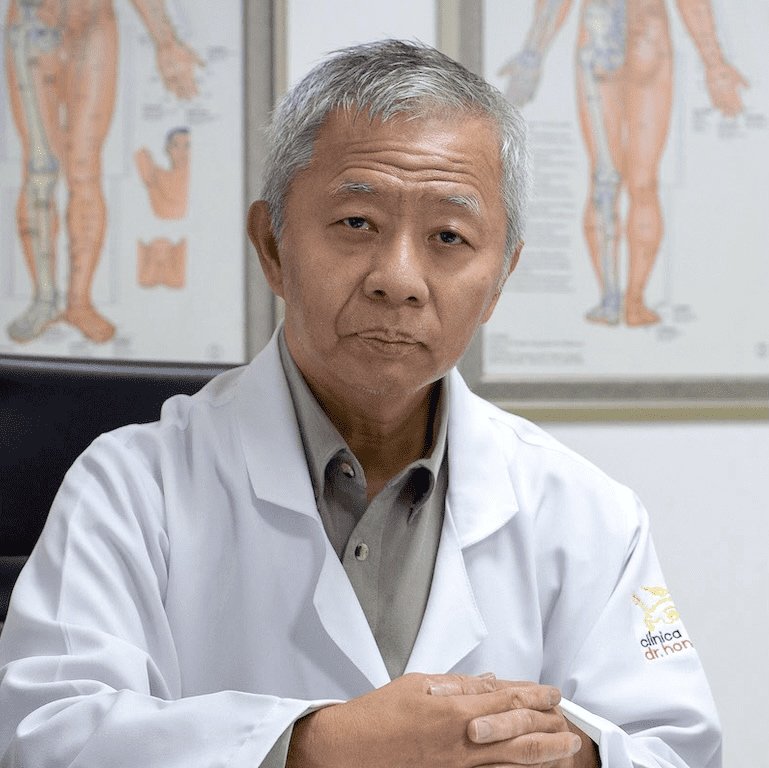
Prof. Dr. Hong Jin Pai
PhD in Sciences, University of São Paulo
▸ Clinical Relevance
The publication of the WHO standard locations for acupuncture points represents a real inflection in the quality of evidence underpinning our practice. Before this consensus, the same point described in a Chinese clinical trial and in a Japanese one could correspond to anatomically distinct locations, undermining any attempt to synthesize the literature. With 355 of the 361 recognized points now formally standardized, the medical acupuncturist has a common clinical language that travels across schools and borders. This is particularly relevant when selecting protocols for pain syndromes, oncologic nausea, or functional disorders—contexts in which the weight of meta-analyses guides therapeutic decisions. Services that integrate acupuncture into the multimodal armamentarium—such as pain centers, rheumatology, and supportive oncology—can now communicate protocols with precision, facilitating internal replicability and outcome auditing.
▸ Notable Findings
The most striking finding of this process is the 93.5% consensus rate achieved after five years of work, bringing together historically divergent traditions from China, Japan, and Korea. Of the 92 initially controversial locations, 86 were resolved, demonstrating that differences among schools, while real, are mostly reconcilable through objective anatomical criteria. The formal distinction between B-cun and F-cun—separating the bone-proportional cun from the finger cun—deserves special mention, as it eliminates a chronic source of technical imprecision that primarily affected limb points. The adoption of modern anatomical terminology as the primary reference, while preserving cun as an auxiliary method, signals the methodological maturity of the field. The six points that remained controversial, far from representing failure, honestly delimit where the debate still needs to advance.
▸ From My Experience
At the Pain Center of HC-FMUSP, we have adopted the WHO guidelines since their publication as a mandatory curricular reference and as a standardization criterion in our research protocols. In daily practice, the distinction between B-cun and F-cun has resolved discussions that once consumed precious time in clinical supervisions, especially in locating points along the bladder channel on the back and the distal points of the kidney and liver meridians. I have observed that physicians trained under this standard communicate with much greater precision when discussing cases in team settings or comparing clinical responses among patients. For those entering the specialty, I recommend direct consultation of the WHO atlas before any protocol published in journals prior to 2008. The physician profile that benefits most from this reference is precisely the one navigating between classical training and evidence-based practice—the WHO standard offers anatomical anchoring without abandoning the traditional clinical reasoning that guides point selection.
Full original article
Read the full scientific study
Evidence-based Complementary and Alternative Medicine · 2010
DOI: 10.1093/ecam/nep006
Access original articleScientific Review

Marcus Yu Bin Pai, MD, PhD
CRM-SP: 158074 | RQE: 65523 · 65524 · 655241
PhD in Health Sciences, University of São Paulo. Board-certified in Pain Medicine, Physical Medicine and Rehabilitation, and Medical Acupuncture. Scientific review and curation of every entry in this library.
Learn more about the author →Medical disclaimer: This content is for educational purposes only and does not replace consultation, diagnosis, or treatment by a qualified professional. Some information may be assisted by artificial intelligence and is subject to inaccuracies. Always consult a physician.
Content reviewed by the medical team at CEIMEC — Integrated Centre for Chinese Medicine Studies, a reference in Medical Acupuncture for over 30 years.
Related articles
Based on this article’s categories