Auricular Acupuncture at the ''Shenmen'' and ''Point Zero'' Points Induced Parasympathetic Activation
Arai et al. · Evidence-Based Complementary and Alternative Medicine · 2013
Evidence Level
MODERATEOBJECTIVE
To investigate the effect of auricular acupuncture at the Shenmen and Point Zero points on autonomic nervous system activity following surgery
WHO
26 patients undergoing hemicolectomy (colon surgery)
DURATION
12 hours of postoperative monitoring
POINTS
Shenmen and Point Zero in both ears
🔬 Study Design
Control
n=13
No additional treatment
Auricular acupuncture
n=13
Indwelling needles at the Shenmen and Point Zero points
📊 Results in numbers
Increase in LF/HF ratio in the control group
LF/HF ratio remained stable in the auricular acupuncture group
Greater parasympathetic activity (HF) with auricular acupuncture
📊 Outcome Comparison
Parasympathetic Activity (HF)
This study shows that auricular acupuncture with indwelling needles at specific points on the ear can help keep the nervous system more relaxed after surgery. Patients who received the treatment maintained greater activation of the parasympathetic nervous system, which is responsible for relaxation and recovery.
Article summary
Plain-language narrative summary
Auricular acupuncture, a technique that uses specific points on the ear to treat various conditions, has been widely studied for its ability to promote pain relief, relaxation, and improvements in overall well-being. This form of acupuncture is based on the principle of normalizing bodily dysfunctions through stimulation of specific points on the ear, which connect with different organs and body systems. Researchers believe that these therapeutic effects occur through modulation of the autonomic nervous system, which is responsible for controlling involuntary body functions such as heartbeat, respiration, and digestion. Previous studies have already demonstrated benefits of auricular acupuncture in relieving postoperative pain, improving neurological rehabilitation, and treating insomnia, suggesting its potential to positively influence the nervous system.
This study aimed specifically to investigate how auricular acupuncture at the "Shenmen" and "Point Zero" points affects autonomic nervous system activity in patients after surgery. To this end, the researchers conducted a randomized controlled trial with 26 patients who underwent hemicolectomy, a surgical procedure for removal of part of the large intestine, under general anesthesia. The patients were randomly divided into two groups: a control group that received no additional treatment, and an acupuncture group that received small adhesive needles at specific auricular points after surgery. To assess autonomic nervous system activity, the researchers used a sophisticated technique called heart rate variability analysis, which measures the small variations in intervals between heartbeats.
This analysis can identify when the sympathetic nervous system (responsible for the "fight-or-flight" response) or the parasympathetic nervous system (responsible for relaxation and recovery) is more active.
The study results revealed significant differences between the two groups during the postoperative period. In the control group, there was a progressive increase in the ratio between low-frequency and high-frequency components of heart rate variability, indicating greater activation of the sympathetic nervous system and lower activation of the parasympathetic. By contrast, the group that received auricular acupuncture maintained this ratio stable at lower levels, suggesting better autonomic nervous system balance. More specifically, patients in the acupuncture group showed significantly higher high-frequency values, a marker of parasympathetic activity, at 3, 4, and 5 hours after surgery.
These findings indicate that auricular acupuncture at the "Shenmen" and "Point Zero" points promoted sustained parasympathetic activation during the postoperative recovery period.
For patients and health professionals, these results have important clinical implications. Parasympathetic activation is associated with states of relaxation, better recovery, and stress reduction, which can be particularly beneficial in the postoperative period when the body needs to recover from surgical trauma. The study suggests that auricular acupuncture can be a simple, non-invasive intervention to promote a state more favorable to recovery after surgery. The points used in the study, "Shenmen" and "Point Zero," are known in auricular acupuncture for their tranquilizing effects and their effects on overall body balance.
For health professionals, this represents a complementary tool that can be easily integrated into standard postoperative care, potentially contributing to better patient comfort and more efficient recovery.
It is important to recognize the limitations of this study when interpreting its results. The relatively small number of participants (26 patients) requires that the findings be confirmed in larger studies before they can be broadly generalized. In addition, the study focused specifically on patients undergoing a particular type of intestinal surgery, so the results may not apply to other types of surgical procedures. The researchers also used a specific form of auricular acupuncture with adhesive needles, and it is unclear whether other methods of auricular stimulation would produce similar effects.
Despite these limitations, the study provides objective scientific evidence that auricular acupuncture can positively influence the autonomic nervous system in the postoperative period. This research contributes to the growing body of evidence on the mechanisms by which acupuncture exerts its therapeutic effects, offering a sound scientific basis for its clinical application as a complementary therapy in postoperative care.
Strengths
- 1Well-designed randomized controlled trial
- 2Objective measurement of autonomic nervous system activity
- 3Application during real surgery with clinical relevance
- 4Continuous 12-hour monitoring
Limitations
- 1Small sample of only 26 patients
- 2Limited to a specific type of surgery
- 3Did not assess clinical outcomes such as pain or recovery
- 4Lacks long-term follow-up data
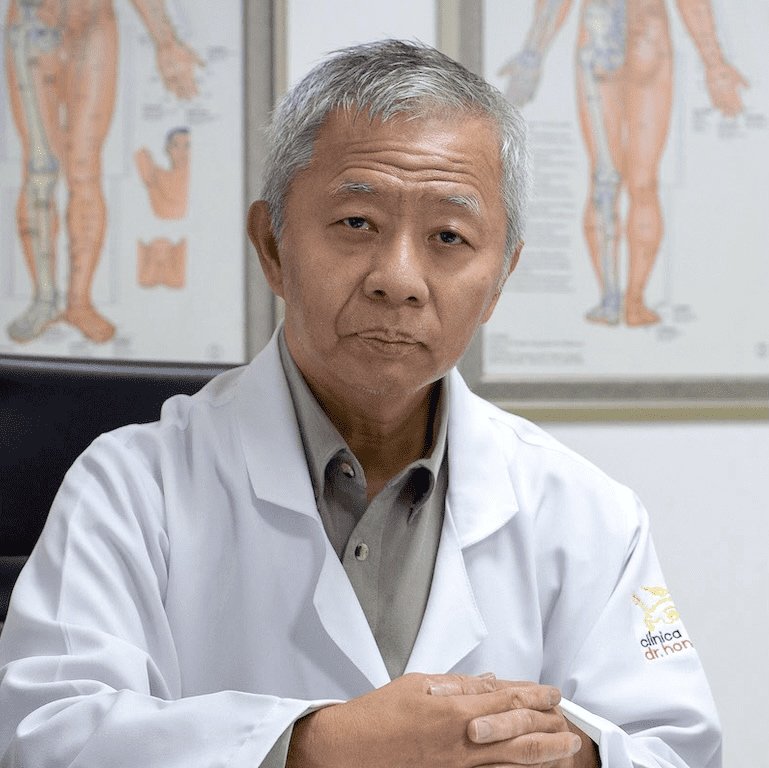
Expert Commentary
Prof. Dr. Hong Jin Pai
PhD in Sciences, University of São Paulo
▸ Clinical Relevance
The immediate postoperative period represents a window of high autonomic vulnerability: surgical trauma, general anesthesia, and emerging pain converge to elevate sympathetic tone in a sustained manner, delaying recovery and increasing the risk of cardiovascular and digestive complications. This work by Arai et al. demonstrates, with objective measurement via heart rate variability, that simple insertion of semi-permanent needles at Shenmen and Point Zero is capable of modulating this autonomic imbalance for at least five hours after surgery. For the physician working in post-anesthesia recovery units or following patients postoperatively after abdominal procedures, this means having access to a very low-cost, minimal-risk intervention capable of favoring the return to parasympathetic balance. Populations with greater pre-existing autonomic instability — such as the elderly, hypertensive patients, and patients with anxiety-depressive syndrome — tend to benefit in a particularly pronounced way from this type of support.
▸ Notable Findings
The most striking result of the study lies in the dissociation between the two groups over the 12 hours of monitoring: while the LF/HF ratio rose progressively in the control group, reaching robust statistical significance (p=0.0007), the treated group maintained this ratio stable (p=0.8489), suggesting that auricular acupuncture actively interrupted the postsurgical sympathoexcitatory cascade rather than merely attenuating it. Equally relevant is the timing of the parasympathetic response measured by the HF component: the effect appeared in the three-, four-, and five-hour windows, exactly the period of greatest analgesic demand and risk of postoperative nausea and vomiting. This suggests that the Shenmen and Point Zero points exert influence on vagal circuits relatively quickly after insertion, which is consistent with what is known about the dense auricular innervation by branches of the vagus nerve.
▸ From My Experience
In my practice with the Acupuncture Group of the Pain Center of HC-FMUSP, we use auricular acupuncture with semi-permanent needles as a routine adjuvant in postoperative multimodal analgesia protocols, and what the Arai et al. study documents objectively reflects what we have observed clinically for years: patients treated at Shenmen and Point Zero arrive on the ward calmer, with lower opioid demand in the early hours, and with intestinal transit that is restored earlier — something particularly valuable in colorectal surgery. I tend to insert the needles while still in the operating room or in the immediate recovery room, and I notice perceptible clinical response within the first hour. For patients who combine marked preoperative anxiety with pain sensitivity, I systematically associate the auricular protocol with preferred systemic points such as ST-36 and LI-4, potentiating the autonomic effect. In non-surgical outpatient settings, such as management of chronic pain with predominant sympathetic component, I use a similar configuration for four to six consecutive days before transitioning to weekly maintenance sessions.
Full original article
Read the full scientific study
Evidence-Based Complementary and Alternative Medicine · 2013
DOI: 10.1155/2013/945063
Access original articleScientific Review

Marcus Yu Bin Pai, MD, PhD
CRM-SP: 158074 | RQE: 65523 · 65524 · 655241
PhD in Health Sciences, University of São Paulo. Board-certified in Pain Medicine, Physical Medicine and Rehabilitation, and Medical Acupuncture. Scientific review and curation of every entry in this library.
Learn more about the author →Medical disclaimer: This content is for educational purposes only and does not replace consultation, diagnosis, or treatment by a qualified professional. Some information may be assisted by artificial intelligence and is subject to inaccuracies. Always consult a physician.
Content reviewed by the medical team at CEIMEC — Integrated Centre for Chinese Medicine Studies, a reference in Medical Acupuncture for over 30 years.
Related articles
Based on this article’s categories