How Does Moxibustion Possibly Work?
Chiu · Evidence-Based Complementary and Alternative Medicine · 2013
Evidence Level
MODERATEOBJECTIVE
To investigate the possible mechanisms of action of moxibustion through a scientific review
WHO
Analysis of multiple experimental and clinical studies
DURATION
Comprehensive review of research through 2013
POINTS
PC-6, LR-14, GB-24, BL-36, BL-40, BL-37, and other specific acupoints
🔬 Study Design
LSTS studies
n=0
Local somatothermal stimulation
Traditional moxibustion studies
n=0
Classical moxibustion
📊 Results in numbers
Critical temperature for neural effects
HSP70 expression induced
Protection against I/R injury
Nitric oxide release
Percentage highlights
📊 Outcome Comparison
Identified mechanisms of action
This study explains how moxibustion works in the body through two main mechanisms: heat effects (which activate protective proteins and release beneficial substances) and non-thermal effects (such as smoke, herbs, and infrared radiation). The research shows that heat applied at specific points can protect internal organs against injury.
Article summary
Plain-language narrative summary
Moxibustion is a millennia-old technique of traditional Chinese medicine that, like acupuncture, uses specific points on the body to promote healing. While acupuncture inserts needles into the skin, moxibustion applies heat by burning medicinal herbs over or near acupuncture points. Although it has been widely practiced for more than two thousand years, this technique remains less known in the West compared with acupuncture, mainly due to the scarcity of scientific studies explaining how it works. Understanding the mechanisms of action of moxibustion is fundamental for it to be accepted by Western medicine and able to benefit a greater number of patients.
This study aimed to investigate the possible mechanisms by which moxibustion produces its therapeutic effects. The researcher conducted a comprehensive review of the scientific literature, analyzing both experimental and clinical studies. To facilitate the understanding of the effects of moxibustion, the author developed a technique called local somatothermal stimulation, which reproduces only the heat effect of traditional moxibustion, eliminating other factors such as smoke and herbal substances. This technique applies controlled heat at approximately 42 degrees Celsius (107.6°F) over specific points on the body, without direct contact with the skin, thereby avoiding burns or injuries.
The methodology included experiments in laboratory animals and biochemical analyses to understand how heat applied to specific points on the skin can affect distant internal organs.
The results revealed that moxibustion works through temperature-related and non-temperature-related mechanisms. When heat is applied to specific points on the skin, it triggers an impressive cascade of biological events. The study demonstrated that thermal stimulation of certain points can relax internal muscles, such as the sphincter that controls bile flow in the liver, through the release of nitric oxide, a substance that acts as a neural messenger. More surprisingly, it was discovered that the application of heat to specific points on the skin induces the production of protective proteins called heat shock proteins in the corresponding organs.
For example, when heat is applied to point LR-14, located in the territory of the seventh intercostal nerve, the liver produces these protective proteins, but the heart does not. Conversely, when heat is applied to point PC-6, innervated by the median nerve, the heart produces protective proteins, but the liver does not. This finding suggests that there is specific communication between skin points and internal organs, following the meridian concepts of traditional Chinese medicine. Furthermore, the study showed that this prior heat stimulation protects organs against severe injury caused by lack of oxygenation followed by reoxygenation, a common phenomenon in heart attacks and other serious medical conditions.
For patients, these findings suggest that moxibustion may have important therapeutic applications, especially in protecting vital organs against injury. The technique could potentially be used as a way of preparing the body for medical procedures that involve a risk of injury from lack of oxygenation, such as cardiac surgery or transplants. For health professionals, the study offers a solid scientific basis for understanding how moxibustion works, which can facilitate its integration with conventional treatments. The finding that different points on the skin communicate specifically with different internal organs validates aspects of the traditional Chinese medicine theory of meridians and opens possibilities for the development of more precise and effective treatment protocols.
The non-temperature-related mechanisms, including the effects of herbal smoke and infrared radiation, also deserve consideration in therapeutic planning.
It is important to recognize some important limitations of this study and safety considerations. The research was conducted primarily in laboratory animals, and although it provides valuable insights into the biological mechanisms, more rigorous clinical studies in humans are needed to confirm the efficacy and safety of moxibustion. The study also revealed that thermal stimulation can cause mild oxidative stress and small cellular damage in the corresponding organs, which, although it may be beneficial as a form of "preconditioning," requires special caution in patients with chronic liver or heart diseases. In addition, traditional moxibustion is not without risks, and may cause burns, allergic reactions, and infections if not performed properly.
The author concludes that, although the mechanisms of moxibustion are beginning to be scientifically understood, large-scale controlled clinical trials are needed to definitively establish its efficacy and safety, thus allowing this millennia-old technique to be fully accepted and integrated into modern Western medicine.
Strengths
- 1Comprehensive review of multiple mechanisms of action
- 2Integration of experimental and clinical evidence
- 3Proposal of a well-grounded theoretical model
- 4Critical analysis of the limitations of the technique
Limitations
- 1Need for more controlled clinical trials
- 2Limited safety studies
- 3Standardization of techniques needed
- 4Validation in humans still insufficient
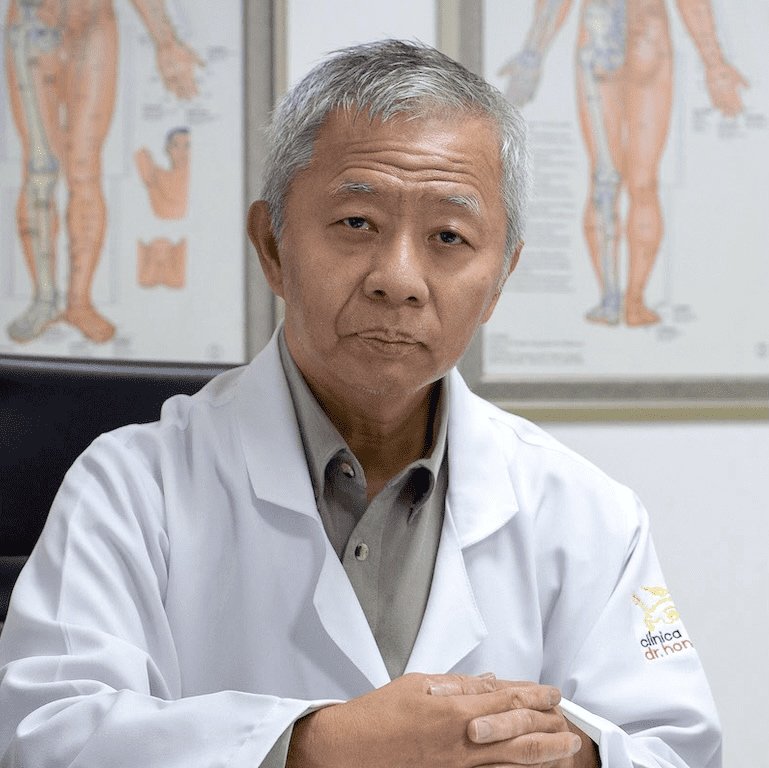
Expert Commentary
Prof. Dr. Hong Jin Pai
PhD in Sciences, University of São Paulo
▸ Clinical Relevance
Moxibustion remains underused in Western medical practice less due to lack of efficacy and more due to the absence of plausible mechanistic models — a gap that this review work addresses with rigor. By identifying 42°C as the critical temperature for activation of protective neural pathways and demonstrating that thermal stimulation of specific points induces selective expression of HSP70 in corresponding target organs, the author provides a framework that justifies the careful selection of points in concrete clinical contexts. For the physician who already uses acupuncture in the management of hepatobiliary dysfunctions, functional cardiac rhythm disorders, or preoperative preparation of high surgical risk patients, understanding this dermatome-viscera axis mediated by nitric oxide and heat shock proteins transforms the choice of point from an empirical act into a decision with measurable pathophysiologic substrate.
▸ Notable Findings
The most intriguing finding of this review is the organ-specific selectivity of the HSP70 response: heat applied over LR-14 — territory of the seventh intercostal nerve — induces significant HSP70 expression in the liver, but not in the heart; conversely, stimulation of PC-6 — innervated by the median nerve — protects the myocardium without an equivalent hepatic effect. This finding resonates directly with the concept of the meridian as a somatovisceral organization, endowing it with an objective neurochemical correlate. Equally relevant is the demonstration of protection against ischemia-reperfusion injury mediated by this pathway, which suggests a mechanism of thermal preconditioning with real translational potential. The release of nitric oxide as a mediator of visceral muscle relaxation adds another layer to the understanding of the modulatory effects of moxibustion on hollow organs.
▸ From My Experience
In my practice at the Acupuncture Group of the Pain Center of HC-FMUSP (Hospital das Clínicas, Faculdade de Medicina da Universidade de São Paulo), moxibustion is part of the therapeutic arsenal mainly in two scenarios: cold syndromes due to yang deficiency 陽虛 — chronic low back pain, cold-pattern irritable bowel syndrome, and dysmenorrhea — and as an adjuvant in the preparation of older adult patients with reduced immune reserve before invasive procedures. I usually observe subjective response to heat in the first two or three sessions, with perceptible clinical stabilization between the sixth and tenth session. I routinely combine indirect moxibustion with needling at ST-36 and SP-6 in oncology patients undergoing chemotherapy with fatigue and mild neutropenia, a protocol that has shown good tolerability. The concept of thermal preconditioning described in this work validates something we observe empirically: patients undergoing perioperative moxibustion report a calmer post-anesthetic recovery, a finding consistent with what Chiu describes for the animal model of ischemia-reperfusion.
Full original article
Read the full scientific study
Evidence-Based Complementary and Alternative Medicine · 2013
DOI: 10.1155/2013/198584
Access original articleScientific Review

Marcus Yu Bin Pai, MD, PhD
CRM-SP: 158074 | RQE: 65523 · 65524 · 655241
PhD in Health Sciences, University of São Paulo. Board-certified in Pain Medicine, Physical Medicine and Rehabilitation, and Medical Acupuncture. Scientific review and curation of every entry in this library.
Learn more about the author →Medical disclaimer: This content is for educational purposes only and does not replace consultation, diagnosis, or treatment by a qualified professional. Some information may be assisted by artificial intelligence and is subject to inaccuracies. Always consult a physician.
Content reviewed by the medical team at CEIMEC — Integrated Centre for Chinese Medicine Studies, a reference in Medical Acupuncture for over 30 years.
Related articles
Based on this article’s categories