Exploration of Acupoint Compatibility Patterns in Acupuncture Treatment for Infertility Based on Data Mining
Liu et al. · International Journal of Women's Health · 2026
Evidence Level
MODERATEOBJECTIVE
To explore compatibility patterns among acupuncture points in the treatment of infertility using data mining
WHO
596 randomized controlled trials focusing on infertility related to PCOS, diminished ovarian reserve, and unexplained infertility
DURATION
Literature analysis through September 2024
POINTS
92 points identified, with the most frequently used being: Guanyuan (CV-4), Sanyinjiao (SP-6), Zigong (EX-CA1)
🔬 Study Design
Prescriptions analyzed
n=220
Analysis of point patterns through data mining
📊 Results in numbers
Acupuncture points identified
Total frequency of point use
Confidence of SP-6 / CV-4 combination
Association rules identified
Percentage highlights
📊 Outcome Comparison
Use frequency of main points
This study analyzed hundreds of investigations to discover which acupuncture points are most used in the treatment of infertility. The results show that there is a consistent pattern in point selection, which may help standardize and improve acupuncture treatments for women with difficulty conceiving.
Article summary
Plain-language narrative summary
This innovative study used advanced data mining techniques to analyze patterns of acupuncture point selection in the treatment of female infertility. Investigators systematically examined eight major scientific databases, including PubMed, Embase, and Web of Science, collecting information from 596 randomized controlled trials on acupuncture for infertility. The research focused specifically on three main types of infertility: polycystic ovary syndrome (PCOS), diminished ovarian reserve, and unexplained infertility, which accounted for 220 high-quality studies. The rigorous methodology included quality assessment using the modified Jadad scale and weighting of prescriptions according to the level of the scientific journals in which they were published.
The analysis revealed 92 different acupuncture points, used a total of 3,653 times across the studied prescriptions. The three most frequently used points were Guanyuan (CV-4), used in 367 prescriptions, Sanyinjiao (SP-6) in 344 prescriptions, and Zigong (EX-CA1) in 275 prescriptions. These points belong primarily to the Conception Vessel, Spleen meridian, and extraordinary points, respectively. The study identified that the most frequently involved meridians are the Conception Vessel (23.71% of uses), the Spleen meridian (15.16%), and the Stomach meridian (14.54%).
Among specific points, the anterior Mu points were most used (26.56%), followed by Five Element points (23.78%) and Yuan points (13.51%). Association rule analysis, using the Apriori algorithm, identified 24 point combinations with high reliability. The most significant combination was between SP-6 and CV-4, with 92.09% confidence, indicating that when SP-6 is selected, there is a very high probability that CV-4 will also be chosen. Network analysis identified a central core of 15 fundamental points for infertility treatment: CV-4, SP-6, ST-36, EX-CA1, CV-6, GV-20, SP-10, BL-23, BL-18, ST-29, CV-3, LR-3, KI-3, CV-12, and ST-25.
The results demonstrate that acupuncture treatment for infertility follows consistent therapeutic principles based on Traditional Chinese Medicine theory, focusing on regulating the Penetrating and Conception Vessels, harmonizing qi and blood, and strengthening kidney and spleen functions. For different types of infertility, specific points are added: in PCOS, BL-20, ST-40, and GV-4 are frequently used; in diminished ovarian reserve, LI-4, BL-32, and KI-12 are used; and in unexplained infertility, PC-6, LI-4, and BL-20 are combined. Limitations of the study include the predominance of Asian research in the sample and the lack of standardization in clinical acupuncture studies. Despite this, the findings provide robust evidence to guide point selection in clinical practice, especially for beginner practitioners, and establish a solid scientific foundation for future research on comparative efficacy of different point combinations.
Strengths
- 1Rigorous methodology with analysis of eight major databases
- 2Use of advanced data mining and network analysis techniques
- 3Weighting by quality of scientific journals
- 4Identification of consistent treatment patterns
Limitations
- 1Predominance of Asian studies in the sample
- 2Lack of standardization in acupuncture protocols
- 3Need for prospective validation of findings
- 4Limited etiological classification in assisted reproduction studies
Expert Commentary
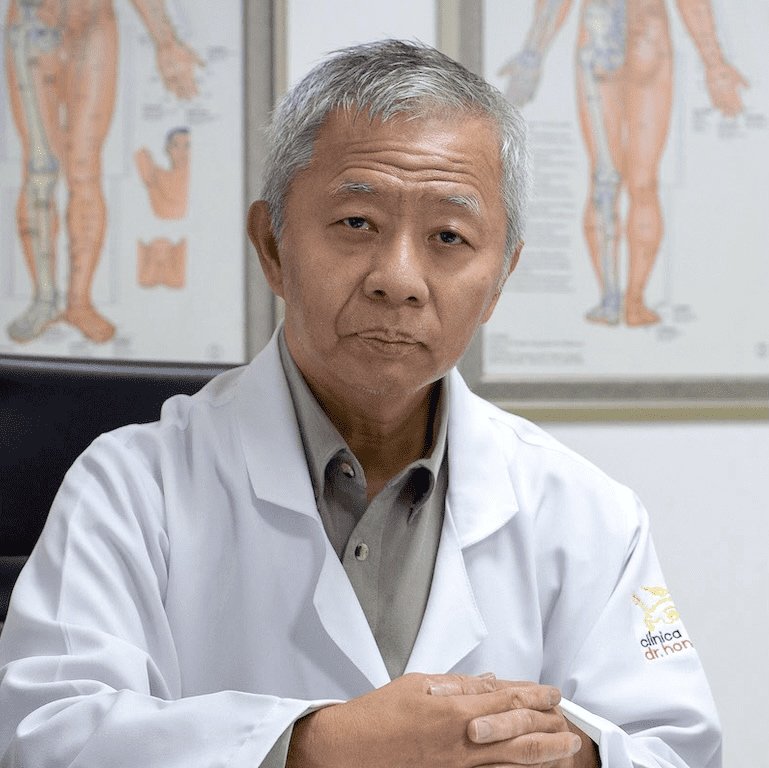
Prof. Dr. Hong Jin Pai
PhD in Sciences, University of São Paulo
▸ Clinical Relevance
Female infertility represents one of the fields in which the integration of acupuncture into conventional assisted reproduction protocols has grown most consistently. This work offers the acupuncturist a structured basis for point selection, derived from 220 high-quality prescriptions extracted from randomized controlled trials. The core of 15 points identified — with emphasis on CV-4, SP-6, ST-36, and EX-CA1 — corresponds to combinations applicable both in spontaneous cycles and as an adjuvant to controlled ovarian stimulation. Differentiation by etiology is particularly useful in practice: patients with PCOS, diminished ovarian reserve, or unexplained infertility present distinct profiles of energetic dysfunction and respond to specific additions to the central treatment core, allowing individualized protocols without sacrificing therapeutic consistency.
▸ Notable Findings
The most striking finding of the study is the 92.09% confidence in the SP-6 / CV-4 combination, derived from robust algorithmic analysis using the Apriori method applied to 3,653 records of point use. This statistical confidence empirically ratifies what the theory of the Penetrating and Conception Vessels already advocates — the regulation of the Chong-Ren axis as the central axis for treating female infertility. The predominance of anterior Mu points (26.56% of uses) reinforces the diagnostic and therapeutic relevance of accessing the organs via the ventral aspect of the trunk. Equally notable is the identification of GV-20 in the central core: its inclusion in a gynecological protocol reflects the clinical priority of raising Yang and supporting the ascending function of the Spleen, a dimension frequently overlooked in simplified protocols focused only on the lower abdomen.
▸ From My Experience
In my practice at the Pain Center of HC-FMUSP, I have been following patients referred from human reproduction services with progressive regularity over the last two decades. I typically observe the first signs of response — improved sleep quality, reduced anticipatory anxiety, and cycle regulation — between the third and fifth sessions. For supporting in vitro fertilization cycles, I structure consultations in three phases: ovarian stimulation, implantation window, and luteal support, adapting the CV-4 / SP-6 / ST-36 / EX-CA1 core according to the phase and the patient's energetic pattern. Patients with a Kidney Yin Deficiency pattern — often those with diminished ovarian reserve — respond more gradually, and I usually incorporate KI-3 and BL-23 from the first session. In patients with PCOS of Dampness-Phlegm pattern, the addition of ST-40 and BL-20 yields faster responses in cycle regulation. I do not indicate acupuncture as a sole resource when there is bilateral occlusive tubal factor or severe untreated male factor.
Full original article
Read the full scientific study
International Journal of Women's Health · 2026
DOI: 10.2147/IJWH.S578082
Access original articleScientific Review

Marcus Yu Bin Pai, MD, PhD
CRM-SP: 158074 | RQE: 65523 · 65524 · 655241
PhD in Health Sciences, University of São Paulo. Board-certified in Pain Medicine, Physical Medicine and Rehabilitation, and Medical Acupuncture. Scientific review and curation of every entry in this library.
Learn more about the author →Medical disclaimer: This content is for educational purposes only and does not replace consultation, diagnosis, or treatment by a qualified professional. Some information may be assisted by artificial intelligence and is subject to inaccuracies. Always consult a physician.
Content reviewed by the medical team at CEIMEC — Integrated Centre for Chinese Medicine Studies, a reference in Medical Acupuncture for over 30 years.
Related articles
Based on this article’s categories