Neural Control of Cerebral Blood Flow: Scientific Basis of Scalp Acupuncture in Treating Brain Diseases
Jin et al. · Frontiers in Neuroscience · 2023
Evidence Level
MODERATEOBJECTIVE
Explore a new perspective on the mechanisms of scalp acupuncture in the treatment of brain diseases based on its effects on cerebral blood flow
WHO
Review of studies involving patients with stroke, neurodegenerative diseases, and other cerebral conditions
DURATION
Analysis of 50 years of clinical evidence on scalp acupuncture
POINTS
Baihui (GV-20, 百會), Fengchi (GB-20, 風池), Shenting (GV-24, 神庭), Sishencong (EX-HN1, 四神聰), motor areas of the scalp
🔬 Study Design
Systematic review
n=
Analysis of multiple studies on scalp acupuncture and cerebral blood flow
📊 Results in numbers
Improvement in cerebral blood flow
Immediate effect in stroke
Trigeminal nerve stimulation
Percentage highlights
📊 Outcome Comparison
Efficacy of scalp acupuncture vs. conventional medicine
This study reveals how scalp acupuncture works by increasing blood flow to the brain. The technique stimulates specific nerves of the scalp, especially the trigeminal nerve, that control cerebral blood vessels, providing rapid improvement in conditions such as stroke and neurodegenerative diseases.
Article summary
Plain-language narrative summary
Scalp acupuncture emerged in the 1970s as a modern acupuncture therapy widely used in the treatment of brain diseases, especially acute ischemic stroke. Despite decades of successful clinical experience, the proposed mechanisms to explain its efficacy still lack significant scientific validation, limiting its integration into conventional medicine. This study presents a new perspective on the mechanisms of scalp acupuncture based on its effects on cerebral blood flow (CBF). Abundant evidence demonstrates that CBF significantly increases when specific scalp acupuncture points, areas, or nerves innervating the scalp are stimulated, correlating with immediate or long-term improvements in symptoms of brain diseases.
The neural pathways that improve CBF through stimulation of the trigeminal, facial, and cervical nerves have been gradually elucidated. The presence of scalp acupuncture points or core areas frequently used for brain diseases can be rationally explained by the characteristics of nerve distribution, including nerve overlap or convergence in certain parts of the scalp. These characteristics also suggest that the role of these scalp acupuncture points or areas is relatively specific, not due to a direct correspondence between the current hypothetical scalp acupuncture points and areas and the functional zones of the cerebral cortex. Scalp acupuncture demonstrates notable instantaneous effects, with up to 60.71% of patients with intracerebral hemorrhage showing immediate improvement, while no similar effect was observed in the medication and surgical hematoma aspiration groups.
Many brain diseases are associated with reduced CBF, including Huntington disease, Alzheimer disease, Parkinson disease, and post-stroke sequelae. Stimulation of the trigeminal nerve, which innervates most cerebral arteries, has at least three effects on cerebral vasculature, all leading to increased CBF: antidromic pathway, trigeminal parasympathetic pathway, and central pathway. The facial nerve, through its parasympathetic fibers, rapidly dilates cerebral arteries via the sphenopalatine ganglion. The cervical nerves affect CBF through connections with the trigeminal and facial nerves, or through the superior cervical ganglion.
The relative specificity of scalp acupuncture in regulating CBF manifests in several ways: scalp stimulation shows significant improvement in CBF compared to stimulation of other body parts; there is regional specificity, with different scalp areas affecting different cerebral vascular territories; unilateral stimulation may have bilateral effects; and the degree of improvement relates to stimulation parameters. Clinical implications include clarification of indications (all patients with brain diseases and reduced CBF would be candidates), point selection based on solid scientific foundations (locations innervated by overlapping nerves), and the use of CBF changes as a rapid objective marker to evaluate therapeutic effects.
Strengths
- 1Comprehensive review of 50 years of evidence
- 2Proposal of a solid scientific mechanism
- 3Integration of anatomical and clinical knowledge
- 4Explanation for instantaneous effects of scalp acupuncture
Limitations
- 1Narrative review without meta-analysis
- 2Need for more controlled studies
- 3Mechanisms may be multifaceted
- 4Stimulation parameters not yet standardized
Expert Commentary
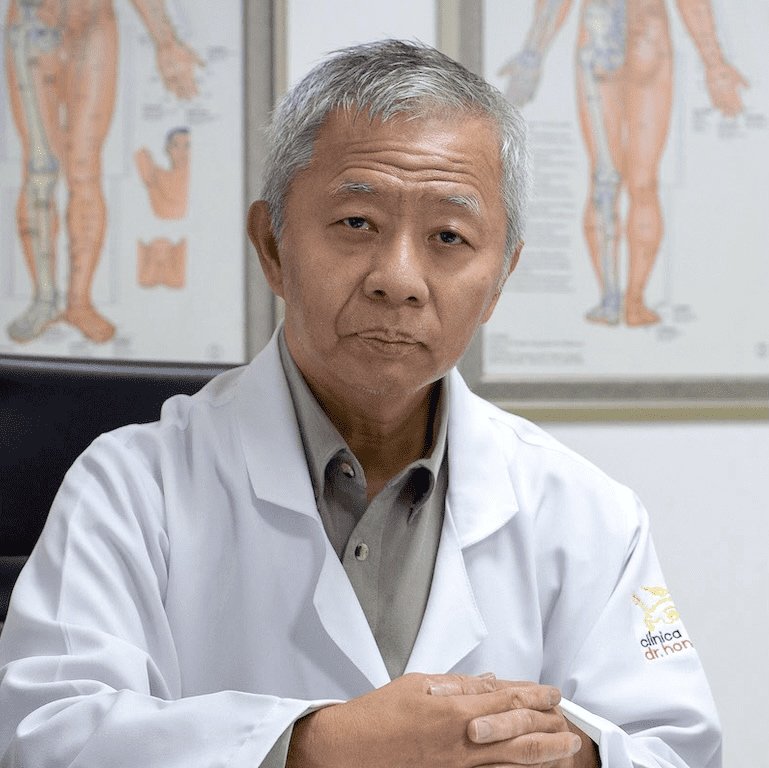
Prof. Dr. Hong Jin Pai
PhD in Sciences, University of São Paulo
▸ Clinical Relevance
Scalp acupuncture occupies a singular position in the therapeutic arsenal for neurological diseases, and this work consolidates five decades of evidence around an anatomically coherent mechanism: modulation of cerebral blood flow via stimulation of the trigeminal, facial, and cervical nerves. For the physician treating patients with acute ischemic stroke, Alzheimer disease, Parkinson disease, or Huntington disease — conditions in which cerebral hypoperfusion is a central pathophysiological component — the proposal that scalp acupuncture acts by increasing cerebral blood flow through well-defined neural pathways transforms the indication from an empirical choice into a rationally grounded decision. The demonstrated regional specificity, in which different scalp zones influence distinct vascular territories, guides point selection based on anatomical criteria, and the possibility of monitoring therapeutic response through objective perfusion markers opens a perspective for formal integration with hospital neurology protocols.
▸ Notable Findings
The most striking finding of this review is the immediate improvement rate of 60.71% in patients with intracerebral hemorrhage undergoing scalp acupuncture, without equivalent in the medication or surgical hematoma aspiration groups — a finding that challenges the expectation that percutaneous interventions on the scalp would lack relevant speed of action in neurological emergencies. The elucidation of the three pathways through which trigeminal stimulation increases cerebral blood flow — antidromic, trigeminal parasympathetic, and central — provides mechanistic substrate that justifies both the speed and breadth of effects. Equally noteworthy is the refutation of direct correspondence between scalp acupuncture areas and cortical functional zones: efficacy seems to depend on the density and overlap of cutaneous innervation, not on a topographic cortex–scalp mapping, which recontextualizes decades of clinical reasoning about point selection.
▸ From My Experience
In my practice at the Pain Center of HC-FMUSP, I have incorporated scalp acupuncture for many years in the management of neurological sequelae and hypoperfusion syndromes, and what the article describes about instantaneous effects resonates directly with what we observe in session: patients with post-stroke hemiplegia often report a sense of lightness and motor gain even during the procedure, before getting off the table. I typically see measurable response in two to four sessions for motor sequelae and usually work with cycles of ten to twelve sessions before reassessing the plan. I regularly combine scalp acupuncture with neurological physical therapy and, in Parkinson cases with a cognitive component, with structured cognitive stimulation. The patient profile that best responds, in my experience, is one with a deficit established less than six months ago and partial preservation of function — precisely where restoration of perfusion can still reverse tissue in functional penumbra. The mechanistic systematization proposed by Jin et al. confirms what clinical practice suggested and provides scientific language to dialogue with still-skeptical neurologists.
Full original article
Read the full scientific study
Frontiers in Neuroscience · 2023
DOI: 10.3389/fnins.2023.1210537
Access original articleScientific Review

Marcus Yu Bin Pai, MD, PhD
CRM-SP: 158074 | RQE: 65523 · 65524 · 655241
PhD in Health Sciences, University of São Paulo. Board-certified in Pain Medicine, Physical Medicine and Rehabilitation, and Medical Acupuncture. Scientific review and curation of every entry in this library.
Learn more about the author →Medical disclaimer: This content is for educational purposes only and does not replace consultation, diagnosis, or treatment by a qualified professional. Some information may be assisted by artificial intelligence and is subject to inaccuracies. Always consult a physician.
Content reviewed by the medical team at CEIMEC — Integrated Centre for Chinese Medicine Studies, a reference in Medical Acupuncture for over 30 years.
Related articles
Based on this article’s categories