Acupuncture: Past, Present, and Future
Hao et al. · Global Advances in Health and Medicine · 2014
Evidence Level
MODERATEOBJECTIVE
To review the historical evolution of acupuncture and discuss future developments
WHO
Historical analysis and data from millions of patients in the United States
DURATION
Historical perspective spanning 3,000 years up to 2014
POINTS
PC-6 (Neiguan) and scalp acupuncture points specifically mentioned
🔬 Study Design
Historical data
n=18000
Meta-analysis of studies on acupuncture for pain
US users
n=3700000
2007 NIH survey on acupuncture use
📊 Results in numbers
Improvement in paralysis with scalp acupuncture
Reduction of postoperative nausea
Annual treatments in the United States
American adult users (2006)
Percentage highlights
📊 Outcome Comparison
Efficacy of scalp acupuncture in neurological disorders
This article shows how acupuncture evolved from an ancient Chinese practice into a scientifically validated therapy. The authors highlight that new techniques such as scalp acupuncture can help people with neurological problems, and that acupuncture is becoming more accepted and accessible within the American health care system.
Article summary
Plain-language narrative summary
This editorial offers a comprehensive perspective on the evolution of acupuncture, from its origins in China 3,000 years ago to its current status as one of the leading complementary therapies in the United States. The authors, Jason Jishun Hao and Michele Mittelman, trace a fascinating historical overview that demonstrates how a centuries-old practice has been transformed into a scientifically validated medical intervention. The article highlights that more than 10 million acupuncture treatments are performed annually in the United States alone, reflecting its growing acceptance and use. An important milestone in the history of Western acupuncture was its first documentation by a European physician in 1680, followed by alternating periods of interest and skepticism.
The modern revival of acupuncture in the West began in the 1970s, when a member of the American press received treatment after an emergency appendectomy in Beijing. The authors emphasize how the integration of Western and Eastern medicine has led to the development of innovative techniques. The most notable example is scalp acupuncture, which the authors consider the most significant advance in Chinese acupuncture over the past 60 years. This technique combines Western neurological knowledge with traditional needling practices, allowing direct influence on the central nervous system.
The results are impressive: 80% to 90% of patients show improvement in paralysis, aphasia, and ataxia, with some cases of complete recovery. The article also addresses other innovations such as electroacupuncture and laser acupuncture, demonstrating how modern technology can enhance ancient practices. Electroacupuncture combines traditional techniques with electrical pulses, while laser acupuncture replaces needles with focused light, being particularly useful in pediatrics. From a regulatory standpoint, the authors highlight the importance of the non-discrimination language in the Affordable Care Act (ACA), which prohibits discrimination against acupuncture professionals and, in some states such as California, includes acupuncture as an essential health benefit.
The 1997 NIH consensus represented an important milestone by recognizing positive evidence for the efficacy of acupuncture. Subsequent studies involving nearly 18,000 patients demonstrated that acupuncture is more effective than standard care and sham treatments for chronic pain. Specific research has shown efficacy in treating postoperative nausea, with reductions of 29% in the incidence of vomiting and 28% in the sensation of nausea. The authors also discuss emerging applications in oncology, where studies suggest that acupuncture can strengthen the immune system during chemotherapy and reduce side effects.
In neurology, acupuncture has shown efficacy in treating post-traumatic stress disorder, multiple sclerosis, Parkinson's disease, and traumatic brain injuries. The integration of modern technologies such as functional magnetic resonance imaging is providing valuable insights into the mechanisms of action of acupuncture. Studies from 2010 at the University of York demonstrated that acupuncture has a significant impact on specific neural structures, helping to deactivate brain areas associated with pain processing. The authors conclude by emphasizing the need for interdisciplinary collaboration among acupuncturists, physicians, physical therapists, researchers, and neurologists to advance the field.
They envision a promising future in which acupuncture, especially in conjunction with other care systems, can help alleviate many health conditions and should be embraced by both the public and the medical community.
Strengths
- 1Comprehensive 3,000-year historical perspective
- 2Highlighting of innovations such as scalp acupuncture with impressive results (80-90% improvement)
- 3Robust data from studies involving nearly 18,000 patients
- 4Analysis of the regulatory impact of the Affordable Care Act
- 5Integration of neuroimaging to understand mechanisms of action
Limitations
- 1Editorial format without a systematic review methodology
- 2Lack of critical analysis of the limitations of the cited studies
- 3Potential author bias as advocates of scalp acupuncture
- 4Lack of discussion of adverse events or contraindications
- 5Efficacy data for scalp acupuncture without specific references to primary studies
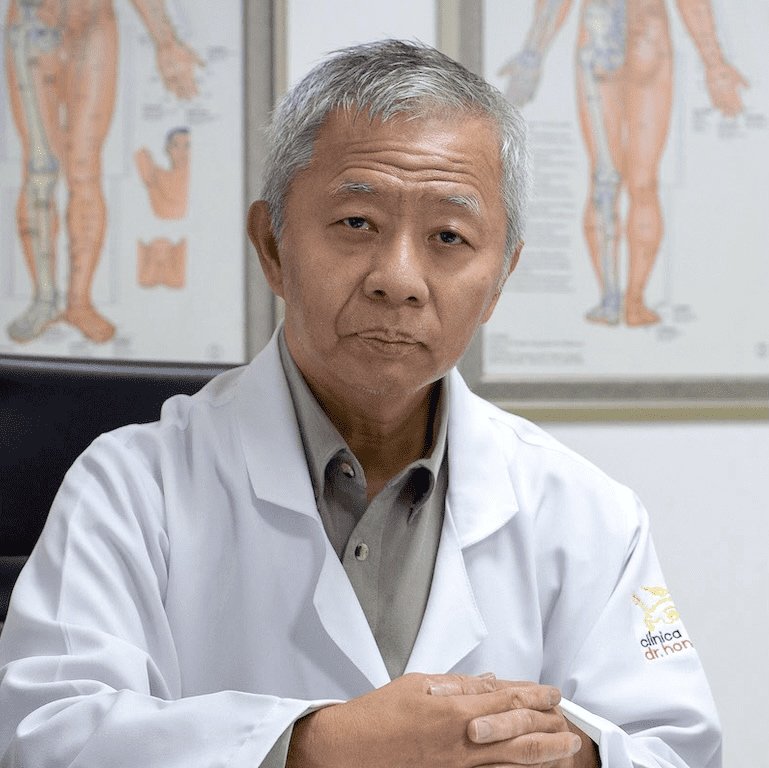
Expert Commentary
Prof. Dr. Hong Jin Pai
PhD in Sciences, University of São Paulo
▸ Clinical Relevance
A panoramic review spanning three millennia offers the clinician something that isolated controlled trials rarely provide: the ability to situate each technical advance within a coherent trajectory of development. For the physician integrating acupuncture into practice, this work documents how regulatory recognition — from the 1997 NIH consensus to the antidiscrimination language of the Affordable Care Act — has created concrete conditions of access for patients who previously would not have reached the office. The aggregated data from nearly 18,000 patients confirming the superiority of acupuncture over standard care and sham treatment for chronic pain reinforces the indication in settings where conventional pharmacotherapy is limited by comorbidities, polypharmacy, or patient refusal. The recorded 29% reduction in the incidence of postoperative vomiting opens an objective indication for anesthesiology and surgery services, especially in populations with nausea that is difficult to control with antiemetics.
▸ Notable Findings
The numbers associated with scalp acupuncture deserve special attention: 80% to 90% improvement in paralysis, aphasia, and ataxia represents a magnitude of effect that rarely appears in any modality of neurological rehabilitation. The rationale of this technique — overlaying the Western cortical somatotopic map onto the classical meridian system and directly stimulating functional representations on the scalp — clearly exemplifies how the synthesis of neuroscience and traditional Chinese medicine can generate genuine innovation, not mere syncretism. Equally relevant is the finding from neuroimaging studies at the University of York (2010) showing deactivation of neural regions associated with pain processing during acupuncture, which transforms the mechanistic debate from philosophical speculation into observable findings. The substantial population base — 3.7 million American adult users in 2006 and 10 million annual treatments — indicates that acupuncture already operates at robust clinical scale, regardless of academic controversies.
▸ From My Experience
In my practice at the Pain Center of HC-FMUSP, scalp acupuncture occupies a consolidated place in the management of neurological sequelae, particularly in post-stroke patients with motor and language deficits who arrive at the clinic after exhausting conventional rehabilitation options. I have observed that the most marked responders are those treated in the subacute window — up to six months after the event — although chronic cases also show measurable functional gains. I usually start with series of ten sessions, evaluating motor and coordination response at the end of each series; subsequent monthly maintenance is often needed to consolidate the gain. For nausea in oncology and the postoperative setting, the PC-6 point is now part of a formal protocol at the service, combined with electroacupuncture at a frequency of 2 Hz. The patient profile that responds best to systemic acupuncture for chronic pain, in my experience, is the one with a predominantly central component of sensitization — exactly the subgroup in which the descending modulation mediated by acupuncture's effect on limbic structures makes the most pathophysiological sense.
Full original article
Read the full scientific study
Global Advances in Health and Medicine · 2014
DOI: 10.7453/gahmj.2014.042
Access original articleScientific Review

Marcus Yu Bin Pai, MD, PhD
CRM-SP: 158074 | RQE: 65523 · 65524 · 655241
PhD in Health Sciences, University of São Paulo. Board-certified in Pain Medicine, Physical Medicine and Rehabilitation, and Medical Acupuncture. Scientific review and curation of every entry in this library.
Learn more about the author →Medical disclaimer: This content is for educational purposes only and does not replace consultation, diagnosis, or treatment by a qualified professional. Some information may be assisted by artificial intelligence and is subject to inaccuracies. Always consult a physician.
Content reviewed by the medical team at CEIMEC — Integrated Centre for Chinese Medicine Studies, a reference in Medical Acupuncture for over 30 years.
Related articles
Based on this article’s categories