Acupuncture for irritable bowel syndrome: 2-year follow-up of a randomised controlled trial
MacPherson et al. · Acupuncture in Medicine · 2017
Evidence Level
STRONGOBJECTIVE
Evaluate the effects of acupuncture on irritable bowel syndrome after 24 months
WHO
233 adults with IBS of mean 13-year duration, recruited from primary care
DURATION
24-month follow-up post-randomization
POINTS
Individualized traditional acupuncture (specific points not detailed)
🔬 Study Design
Acupuncture + Usual Care
n=116
Up to 10 weekly sessions of individualized acupuncture
Usual Care
n=117
Continuation with usual medical care only
📊 Results in numbers
Difference in symptoms at 24 months
Response rate at 24 months
Significant difference at 12 months
Mean sessions completed
Percentage highlights
📊 Outcome Comparison
IBS-SSS at 24 months
This study followed patients with irritable bowel syndrome for 2 years after acupuncture treatment. Although the benefits of acupuncture were evident in the first 12 months, by 24 months the difference was no longer statistically significant, suggesting that the effects may diminish over time.
Article summary
Plain-language narrative summary
This study represents an extended follow-up of a randomized clinical trial that evaluated the efficacy of acupuncture in the treatment of irritable bowel syndrome (IBS). The primary objective was to determine whether the clinical benefits previously observed were maintained 24 months after randomization. The research was motivated by the need to understand the durability of acupuncture effects, especially considering that previous studies had suggested sustained benefits in other conditions such as low back pain. The original study recruited 233 adults with IBS from primary care between November 2008 and June 2009.
Participants had persistent symptoms for a mean of 13 years and a minimum score of 100 on the IBS Symptom Severity Scale (IBS-SSS). They were randomized into two groups: 116 patients received up to 10 weekly sessions of individualized traditional acupuncture in addition to usual care, while 117 continued with usual medical care only. Acupuncture was provided by qualified practitioners who performed traditional Chinese diagnosis and offered diagnosis-related lifestyle advice in 68% of cases. Sessions were predominantly weekly during the first 3 months, with patients who attended at least one session completing a mean of 9 of the 10 sessions offered.
The primary outcome was the IBS-SSS score at 24 months, measured on a 0-500 point scale, where lower values indicate less severe symptoms. Secondary outcomes included non-colonic IBS symptoms and quality of life measured by the SF-12. Statistical analysis used an unstructured multivariate linear model, a more robust method for handling missing data compared with traditional analysis of covariance. This model treats follow-up and baseline measurements as correlated outcomes, allowing simultaneous estimation of treatment differences at all time points.
Results showed a 61% response rate at 24 months, with greater loss to follow-up in the control group (47%) compared with the acupuncture group (32%). The adjusted difference in IBS-SSS score at 24 months was -18.28 points (95% CI -40.95 to 4.40) favoring acupuncture but was not statistically significant. This difference represented approximately 80% of the magnitude of the significant effects observed at 6, 9, and 12 months. Interestingly, reanalysis with the multivariate model revealed a significant difference at 12 months (-23.06 points, p = 0.035), which had been only marginally significant in the original analysis.
No significant differences were found in secondary outcomes, except for non-colonic symptoms at 3 months. The clinical implications suggest that, although acupuncture demonstrates sustained benefits up to 12 months, these may gradually diminish after that period. The authors propose that long-term benefits may be related to specific components of acupuncture beyond needling, including traditional Chinese diagnosis and lifestyle advice. The progressive improvement observed in the control group between 12 and 24 months may also have contributed to the reduction in the between-group difference.
The study suggests that the observed effects probably exceed simple placebo responses, given that previous reviews have not demonstrated a sustained placebo response at 12 months in IBS trials. The physiological mechanisms underlying the long-term effects require further investigation. For future research, the authors recommend active controls that provide structural equivalence in non-specific treatment components, such as hypnotherapy or cognitive-behavioral therapy.
Strengths
- 1Long-term follow-up uncommon in IBS studies
- 2Use of a robust statistical method for missing data
- 3Intention-to-treat analysis
- 4Prospective trial registration
Limitations
- 1High loss to follow-up at 24 months (39%)
- 2Differential loss between groups
- 3Possible selection bias among long-term responders
- 4Lack of control for additional treatments after 12 months
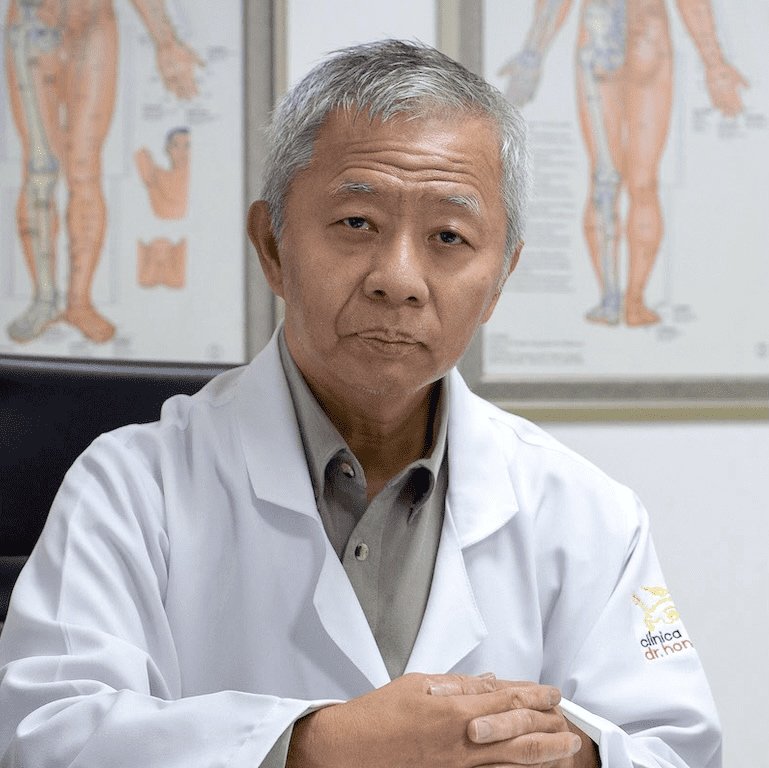
Expert Commentary
Prof. Dr. Hong Jin Pai
PhD in Sciences, University of São Paulo
▸ Clinical Relevance
Irritable bowel syndrome represents one of the greatest outpatient challenges in gastroenterology and internal medicine: patients with median symptom duration of 13 years, refractory to the conventional pharmacological arsenal, who arrive at the office exhausted and often dismissed. This work directly informs therapeutic decision-making by demonstrating that a course of up to 10 sessions of individualized acupuncture produces clinically measurable benefit at least up to 12 months, with partial maintenance around 24 months. For the physician caring for patients with moderate-to-severe IBS — minimum IBS-SSS score of 100 as the entry criterion — acupuncture ceases to be a last-resort alternative and becomes a structured intervention with a defined time horizon. The primary care population in the study faithfully reflects the profile we routinely see, making extrapolation of the findings quite straightforward.
▸ Notable Findings
Two findings deserve special attention. First, the reanalysis with the unstructured multivariate model revealed a significant difference at 12 months of -23.06 points on the IBS-SSS — a result that had escaped the original analysis due to methodological limitations. This reinforces that the choice of statistical model is not a technical detail; it can determine whether or not an effective treatment receives evidence-based endorsement. Second, the 61% response rate at 24 months in the acupuncture group, even without active intervention during that period, supports the hypothesis that treatment effects transcend simple needling. The fact that 68% of patients received lifestyle guidance integrated with the traditional Chinese diagnosis points to a broader therapeutic model — which has relevant implications for how we structure acupuncture care in chronic functional conditions.
▸ From My Experience
In my practice at the Pain Center of HC-FMUSP, I have observed that IBS patients respond heterogeneously, but those with a predominantly tension-related component and a clearly activated gut-brain axis tend to show perceptible improvement between the third and fifth session — reduced urgency, decreased frequency of painful episodes, improvement in associated sleep patterns. The study finding regarding partial maintenance of effect at 24 months without additional sessions is consistent with what I see: some patients remain stable after the initial cycle, while another group requests maintenance sessions every three or four months. I usually propose 8 to 10 sessions in the initial cycle and reassessment with IBS-SSS at the end; patients who achieve a reduction greater than 50 points tend to adhere better to follow-up. The combination with cognitive-behavioral psychotherapy or mindfulness has potentiated results in relapse situations, especially in those with a history of stressful events as triggers of flares.
Full original article
Read the full scientific study
Acupuncture in Medicine · 2017
DOI: 10.1136/acupmed-2015-010854
Access original articleScientific Review

Marcus Yu Bin Pai, MD, PhD
CRM-SP: 158074 | RQE: 65523 · 65524 · 655241
PhD in Health Sciences, University of São Paulo. Board-certified in Pain Medicine, Physical Medicine and Rehabilitation, and Medical Acupuncture. Scientific review and curation of every entry in this library.
Learn more about the author →Medical disclaimer: This content is for educational purposes only and does not replace consultation, diagnosis, or treatment by a qualified professional. Some information may be assisted by artificial intelligence and is subject to inaccuracies. Always consult a physician.
Content reviewed by the medical team at CEIMEC — Integrated Centre for Chinese Medicine Studies, a reference in Medical Acupuncture for over 30 years.
Related articles
Based on this article’s categories