HT-9 Shaochong (少沖) — Lesser Surge
Anatomical location
On the inner (dorsal) aspect of the little finger, at the junction of the lines drawn along the radial border of the nail and the base of the nail, approximately 0.1 cun from the corner of the nail.
Practical palpation guide
With the hand slightly closed, the palm facing up, and the little finger extended, locate the point at the intersection of the lines between the radial border of the nail of the little finger and its base.
Anatomical plane & innervation
Skin, subcutaneous tissue, branches of the proper palmar digital nerve and distal branches of the proper palmar digital arteries, dorsal digital veins, distal phalanx.
Needling technique
0.1 cun perpendicularly or obliquely in a proximal direction. For acute conditions (pain, inflammation), prick to bleed with a needle, lancet, or three-edged needle.
Medical application & myofascial correlation
Clinical synthesis
All Jing (Well) points have the function of eliminating heat, calming the mind, and inducing resuscitation. Shao Chong (HT-9) is efficient for mental disorders and disorders of the sense organs. It may be used with other Jing points alternately or in combination.
Clinical practice indications
- 01First aid for syncope (fainting)
- 02Coma
- 03Stroke (apoplexy)
- 04Acute episodes of angina
- 05High fever
- 06Hysteria
Presenting symptoms & complaints
Classical tradition, channel actions & source
Classical therapeutic actions
- Restores consciousness
- Clears Heat
- Calms the spirit
- Benefits the tongue and the eyes
- Clears Heat at the opposite end of the channel
- Regulates Qi in the chest and clears Heat in the Heart
- Opens the channel
Traditional indications (TCM)
Functional classification
Character etymology
Shao (少), of Shao Yin; Chong (沖), surge. The point lies on the little finger of the Hand Shao Yin Meridian, where the Qi of the meridian originates and moves upward along the meridian.
Layered tissue anatomy & needle biomechanics at HT 9
Cross-sectional technical schematic of superficial micro-prick (1–2 mm) (0.1 cun): superficial connective collagen coupling, intramuscular myofascial transduction, and deep neurovascular protection.
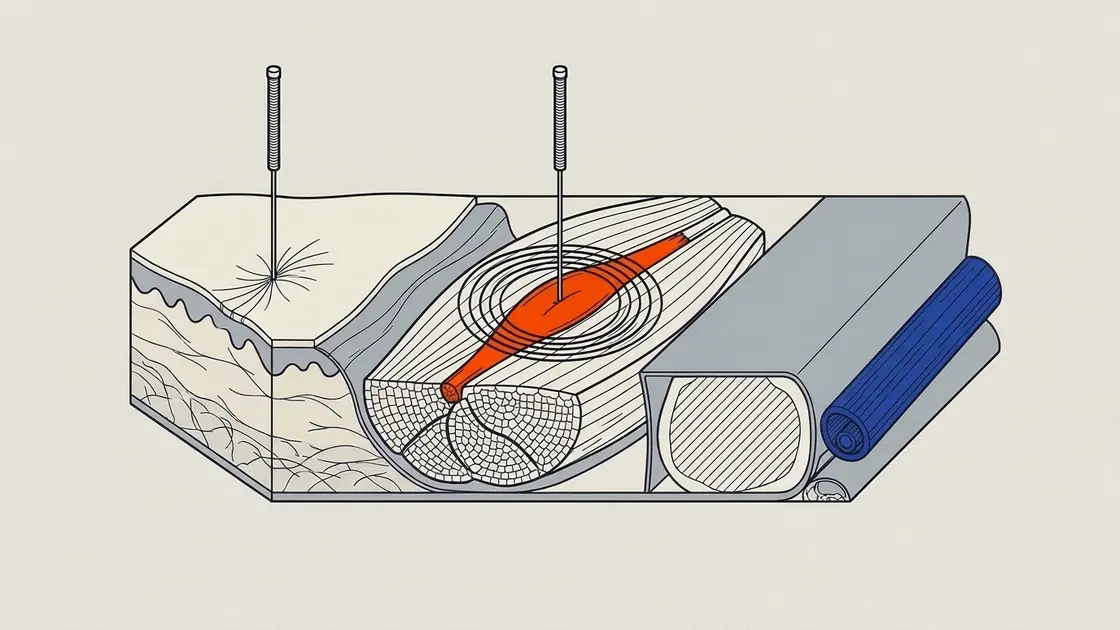
Dermal & fascial collagen coupling
A solid non-cutting filiform needle (0.25 mm rounded tip) enters via superficial micro-prick (1–2 mm), gently tenting loose areolar collagen fibers without slicing dermal vessels.
Myofascial spindle & Aδ / C transduction
Within the 0.1 cun target window at HT 9, mechanical coupling recruits intramuscular mechanoreceptors, increasing local micro-perfusion and releasing taut bands.
Strict anatomical safety floor
The deep fascial septum, bone cortex, and underlying neurovascular bundle or cavity define the strict anatomical boundary observed during physician needling at HT 9.
Clinical relations & channel protocols
Immediate neighbors on the meridian
Related clinical reading
5Understand GAD — one of the most common anxiety disorders, its neurobiological mechanisms, diagnosis, and evidence-based treatment options.
Understand major depression — one of the most prevalent medical conditions in the world, its neurobiologic mechanisms, diagnosis, and evidence-based treatments.
Understand chronic insomnia — the most prevalent sleep disorder, its neurobiologic mechanisms, diagnosis, and evidence-based treatments.
Understand benign palpitations — the conscious perception of heartbeats that affects up to 16% of the population, their electrophysiologic mechanisms, how to distinguish them from dangerous arrhythmias, and evidence-based treatments.
Understand the motor sequelae of stroke — hemiparesis, spasticity, and movement dysfunctions, their recovery mechanisms, and the fundamental role of rehabilitation.