Pain Modalities,Head to Head.
Tissue depth in millimeters, onset speed, durability curves, and combination scenarios — direct biophysical telemetry showing what each modality delivers.
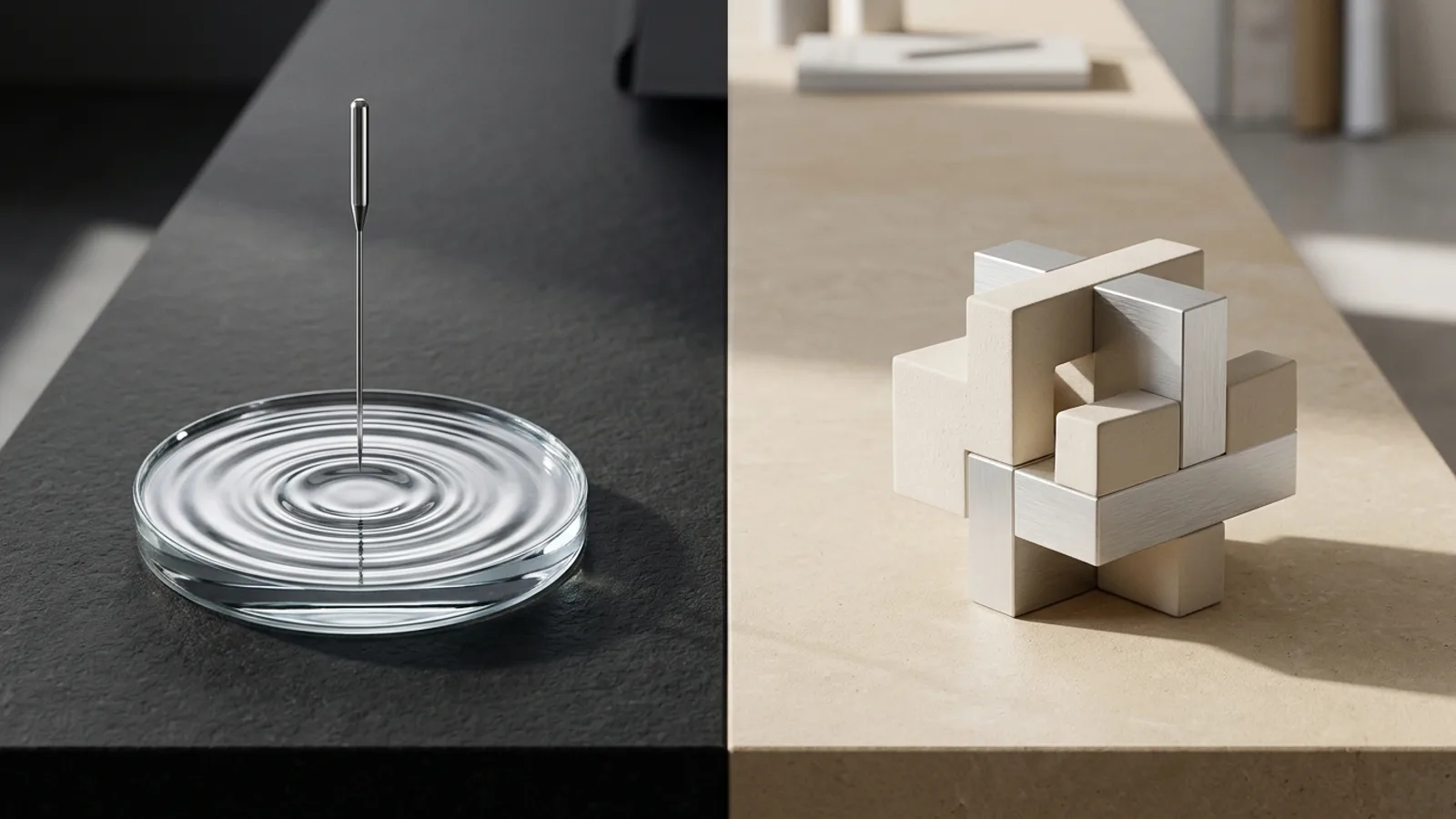
Systemic Medical Acupuncture vs. Myofascial Dry Needling
Same filiform needle, distinct physiological targets: segmental-autonomic modulation versus mechanical trigger-point deactivation.
A — CNS + Autonomic Modulation
Systemic Medical Acupuncture
Fascial and neurovascular stimulation activating descending inhibitory pathways, local adenosine, and autonomic balance.
B — Focal Trigger-Point Target
Myofascial Dry Needling
Direct penetration of the taut muscular band to elicit a local twitch response and release focal contracture.
Gentle ache (Deqi); minimal post-session soreness
Brief local twitch; muscle soreness for 12–48 h
Anatomical & Biophysical Cutaway
MILLIMETER TELEMETRYTissue cross-section comparing needle depth: fascial/segmental plane vs. intramuscular trigger-point core.
Clinical Profile: Functional Relief vs. Post-Needling Window (Days 0–28)
Illustrative comfort & functional improvement index (0–100) after starting the medical protocol
Clinical takeaway: On day 1, dry needling can cause transient post-needling soreness (12–48 h) before a day-3 mobility jump; medical acupuncture builds steady cumulative gains.
When to prioritize Medical Acupuncture
- Chronic pain with central sensitization (e.g., fibromyalgia, migraine)
- Sleep disruption, autonomic overload, or widespread hyperalgesia
When to prioritize Dry Needling
- Active trigger points with palpation-reproducible referred pain
- Mechanical range-of-motion restriction in shoulder, trapezius, glute, or low back
Clinical Synergy (A + B)
Medical acupuncturists frequently combine both in the same visit: focal trigger-point release paired with distal and segmental points to calm central sensitization and reduce post-needling soreness.
In 15 seconds: what targets what
Direct clinical summary of the 5 most common pain-clinic dilemmas.
| Matchup | Depth / Focus | Practical decision rule | Open |
|---|---|---|---|
| 01Acupuncture vs Dry Needling | 5–25 mm vs. 15–60 mm | Widespread or centrally sensitized pain → Medical Acupuncture. Localized muscle knot → Dry Needling. Mixed pattern → Combine in one visit. | |
| 02Electroacupuncture vs TENS | 15–50 mm vs. 2–8 mm | Deep or neuropathic pain needing multi-day carryover → Electroacupuncture. Quick needle-free home relief → TENS. | |
| 03Shockwave vs Steroid Injection | 10–65 mm vs. 15–45 mm | Chronic tendinopathy aiming for 1-year durability → ESWT + Needling. Acute severe synovitis → Medical evaluation for targeted injection. | |
| 04Acupuncture vs Daily NSAIDs | 5–25 mm vs. Sistêmico (oral) | Recurring pain > 8 days/mo or GI/renal risk → Prophylactic Acupuncture. Brief acute flare → Targeted physician-guided analgesic. | |
| 05Radicular vs Myofascial Sciatica | Raiz L5–S1 vs. 30–60 mm (glúteo) | Foot shock + positive straight-leg raise → Evaluate L5/S1 root. Gluteal palpation reproduces pain with normal neuro exam → Myofascial Gluteal Pain. |
Clinical Guides, Research Library & Tools
Research Library
Over one thousand clinical trials and systematic reviews summarized with evidence appraisal.
Clinical Guides
In-depth protocols for electroacupuncture, pain medicine, and multimodal care.
Clinical Tools
Interactive Pain Map, Trial Protocol Explorer, Referred Pain Tracker, and Triage.