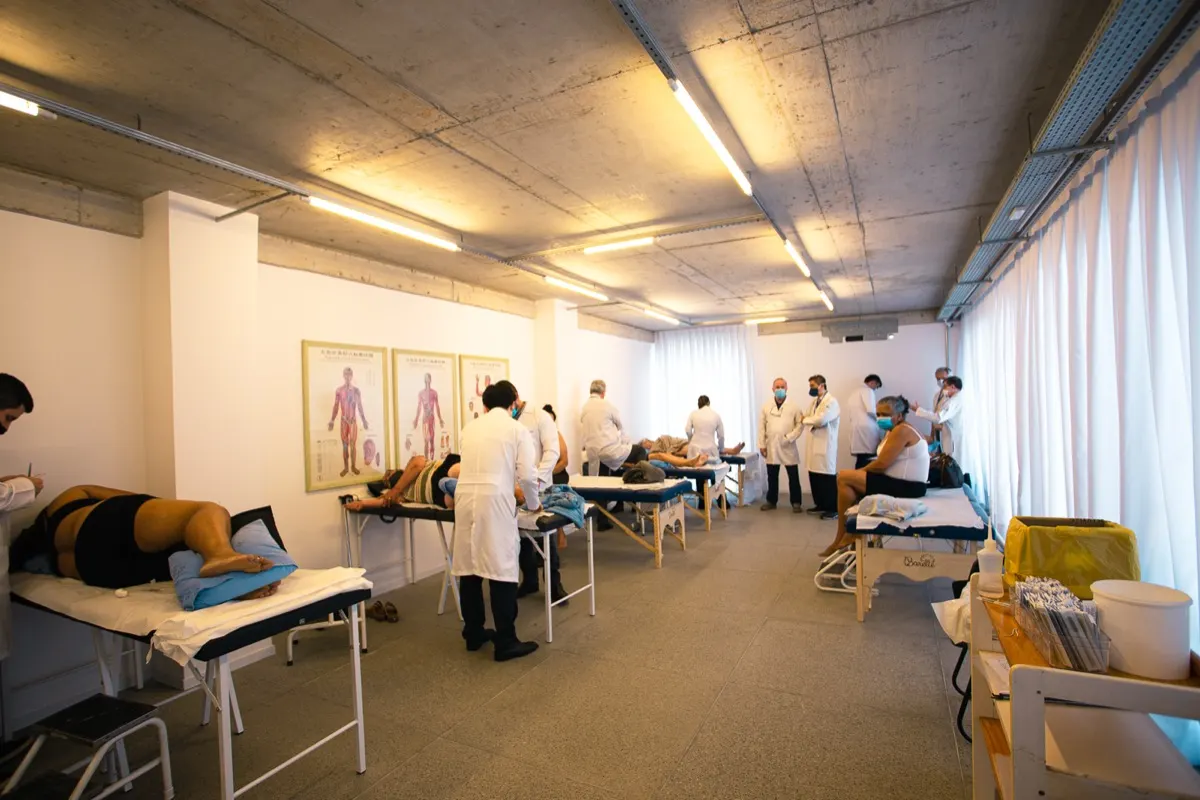
- Strong
See the numbers: What this page rests on
| Year | Study type | Verdict | Study |
|---|---|---|---|
| 2014 | Meta-analysis | Strong | Acupuncture for chronic pain |
| 2025 | Meta-analysis | Strong | Efficacy and safety of laser acupuncture on osteoarthritis: a systematic review and meta-analysis |
Evidence behind this recommendation.
Selected studies from our library that inform the recommendations on this page. Evidence grade shown when available.
Acupuncture for chronic pain
“This meta-analysis represents a milestone in research on acupuncture for chronic pain, being one of the largest and most rigorous scientific evaluations ever conducted on the subject. Published in the prestigious journal JAMA in 2014, the study analyzed individual data...”
Efficacy and safety of laser acupuncture on osteoarthritis: a systematic review and meta-analysis
“Osteoarthritis is one of the leading causes of pain and disability in older adults, affecting millions of people worldwide. This degenerative disease compromises the joints, especially the knees, causing persistent pain, stiffness, and l...”
What Is Hip Osteoarthritis?
Hip osteoarthritis (coxarthrosis) is a degenerative disease of the coxofemoral joint characterized by progressive deterioration of the hyaline cartilage that covers the femoral head and the acetabulum. With cartilaginous loss, bone-on-bone friction occurs, with osteophyte formation and reactive synovitis, resulting in pain, stiffness, and severe functional limitation.
The hip joint is the largest joint in the human body and supports forces of up to 3 times body weight during gait. As a result, the functional impact of coxarthrosis is especially significant: patients report difficulty walking, climbing stairs, putting on shoes, and getting in and out of the car.
When conventional analgesics become insufficient or contraindicated, medical acupuncture represents an alternative with a growing scientific basis for pain control and maintenance of function.
High Disease Burden
Coxarthrosis affects 10% of the population over 60 and is the leading indication for total hip arthroplasty worldwide.
Impact on Gait
Pain and stiffness alter the gait pattern, overloading the knees, lumbar spine, and contralateral joint.
Complementary Option
Medical acupuncture can delay the need for surgery and improve quality of life in moderate cases.
Why Are Conventional Treatments Not Always Sufficient?
Nonsteroidal anti-inflammatory drugs (NSAIDs) and analgesics are the pillars of conservative treatment for coxarthrosis, but they have important limitations in chronic use — especially in older patients with renal, cardiovascular, or gastrointestinal comorbidities.
Intra-articular corticosteroid injections offer short-term relief, but access to the hip joint space requires fluoroscopic or ultrasound guidance, increasing cost and complexity. In addition, repeated injections can deteriorate the residual cartilage.
Conventional Treatment vs. Acupuncture in Coxarthrosis
| Aspect | NSAIDs and Injections | Medical Acupuncture |
|---|---|---|
| Pain relief | Effective short term | Moderate and potentially sustained (weeks) |
| Side effects | Renal, GI, cardiovascular | Generally mild (local hematoma, discomfort; rarely syncope or infection) |
| Joint access | Injection requires image guidance | Periarticular needling is simple |
| Muscle function | Does not address musculature | Can act on trigger points of the gluteals, piriformis, and iliopsoas |
| Continuous use | Cumulative risk | Favorable long-term safety profile when performed by a medical acupuncturist |
Joint preservation and pain modulation: cartilage interface, patellar track, and muscle load sharing
In osteoarthritis and patellofemoral overload, calming synovial and periarticular pain lifts arthrogenic muscle inhibition so quadriceps and hip strength can unload the joint.
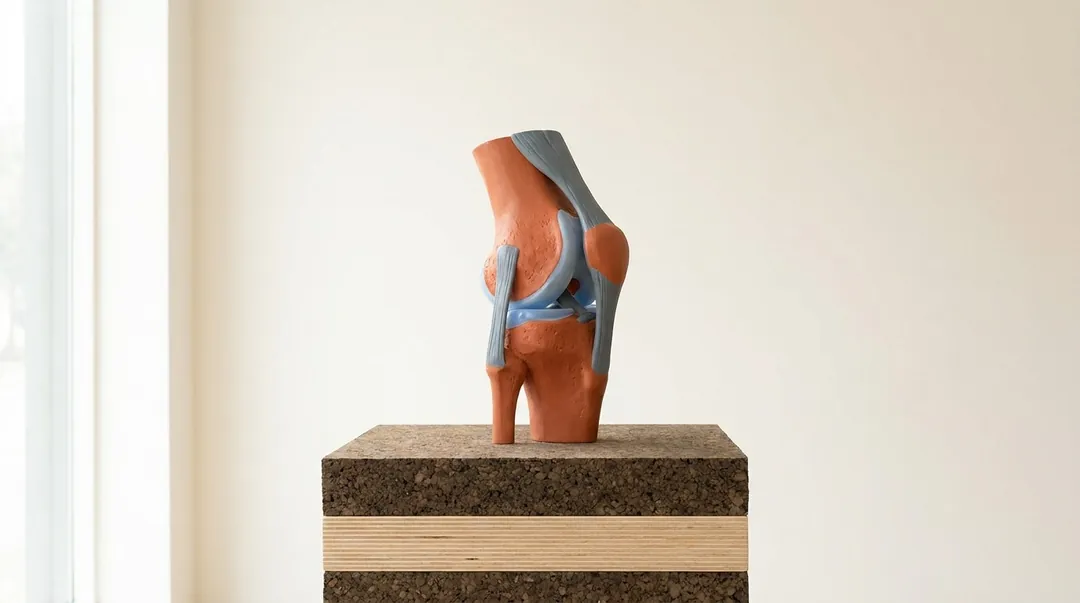
1. Joint line & meniscal cushion
Brief morning stiffness (< 30 min) and load-dependent ache during prolonged standing or walking.
2. Patellofemoral anterior track
Triggered when descending stairs, squatting, or rising after prolonged flexed sitting.
3. Dynamic muscular shock absorber
Targeted analgesia reduces pain-driven inhibition so progressive strengthening protects remaining cartilage.
How Does Medical Acupuncture Work in Hip Osteoarthritis?
Medical acupuncture acts on coxarthrosis through neuromodulation of articular afferent pathways that conduct the nociceptive signal from the joint to the dorsal horn of the spinal cord at segments L2–S1. Periarticular needling and needling of adjacent muscles trigger a neurochemical cascade that reduces pain perception and improves motor control.
A particularly relevant mechanism is needling of the piriformis muscle, often hypertonic in coxarthrosis, which compresses the sciatic nerve and contributes to radiating pain. Deactivation of this trigger point simultaneously relieves anterior (inguinal) and posterior (gluteal) hip pain.
Mechanism of Action of Acupuncture in Coxarthrosis
Periarticular and myofascial needling
Points around the hip and in the gluteal, piriformis, and iliopsoas muscles activate A-delta and C nociceptive fibers.
Segmental spinal inhibition (L2–S1)
Inhibitory interneurons in the dorsal horn release enkephalins, blocking the transmission of joint pain.
Reduction of inflammatory mediators
Drop in IL-1beta and TNF-alpha levels in the joint space, reducing synovitis and chemical pain.
Release of endogenous opioids
Production of beta-endorphins and dynorphins in the central nervous system provides sustained analgesia.
Normalization of muscle trophism
Improvement in activation of the gluteus medius and maximus, restoring gait biomechanics and reducing joint overload.
What Does the Research Show?
The volume of studies in coxarthrosis is smaller than in knee osteoarthritis, with more heterogeneous evidence. Some systematic reviews suggest symptomatic benefit from acupuncture, while others (and guidelines such as NICE NG226, 2022) are more reserved regarding routine recommendation. Acupuncture may be considered case by case as an option among non-pharmacological approaches.
What Is Different About the Modern Approach?
The contemporary approach to coxarthrosis through medical acupuncture combines deep dry needling of the periarticular muscles (gluteals, piriformis, iliopsoas) with low-frequency electroacupuncture to enhance the release of endogenous opioids.
An effective protocol includes segmental points (L2–S1) for central neuromodulation, local periarticular points for reduction of synovitis, and distal points based on neurophysiological evidence. The medical acupuncturist integrates this approach into the global therapeutic plan, which may include guidance on aquatic exercise, weight control, and, when necessary, orthopedic evaluation for surgical timing.
When to See a Physician?
If you feel pain in the groin, the lateral hip, or the buttocks when walking, climbing stairs, or rising from a chair, these may be signs of coxarthrosis. Diagnosis requires medical evaluation with physical examination and a hip radiograph.
Frequently Asked Questions
The standard protocol is 8 to 12 sessions, performed once or twice a week. Initial improvements usually appear after the fourth or fifth session. In moderate to severe cases, monthly or bimonthly maintenance sessions help sustain the benefit.
No. In severe arthritis with joint collapse, total arthroplasty is the definitive treatment. Acupuncture can delay the need for surgery in moderate cases, improve quality of life while the patient awaits surgery, and optimize postoperative recovery.
Not necessarily. Groin pain can have multiple causes: hip osteoarthritis, inguinal hernia, adductor tendinopathy, pubic osteitis, iliopectineal bursitis, or even lumbar radiculopathy. For this reason, medical evaluation with physical examination and imaging is fundamental before starting any treatment.
Yes, with caution. Patients with total hip arthroplasty can benefit from acupuncture for residual pain, muscle spasms, and functional rehabilitation. The medical acupuncturist will avoid needling directly over the prosthetic joint and will focus on the periarticular tissues and musculature.
Yes. In bilateral arthritis, the protocol can address both hips in the same session or in alternating sessions, depending on the intensity of symptoms on each side. The central neuromodulation produced by acupuncture has a systemic effect that simultaneously benefits both sides.