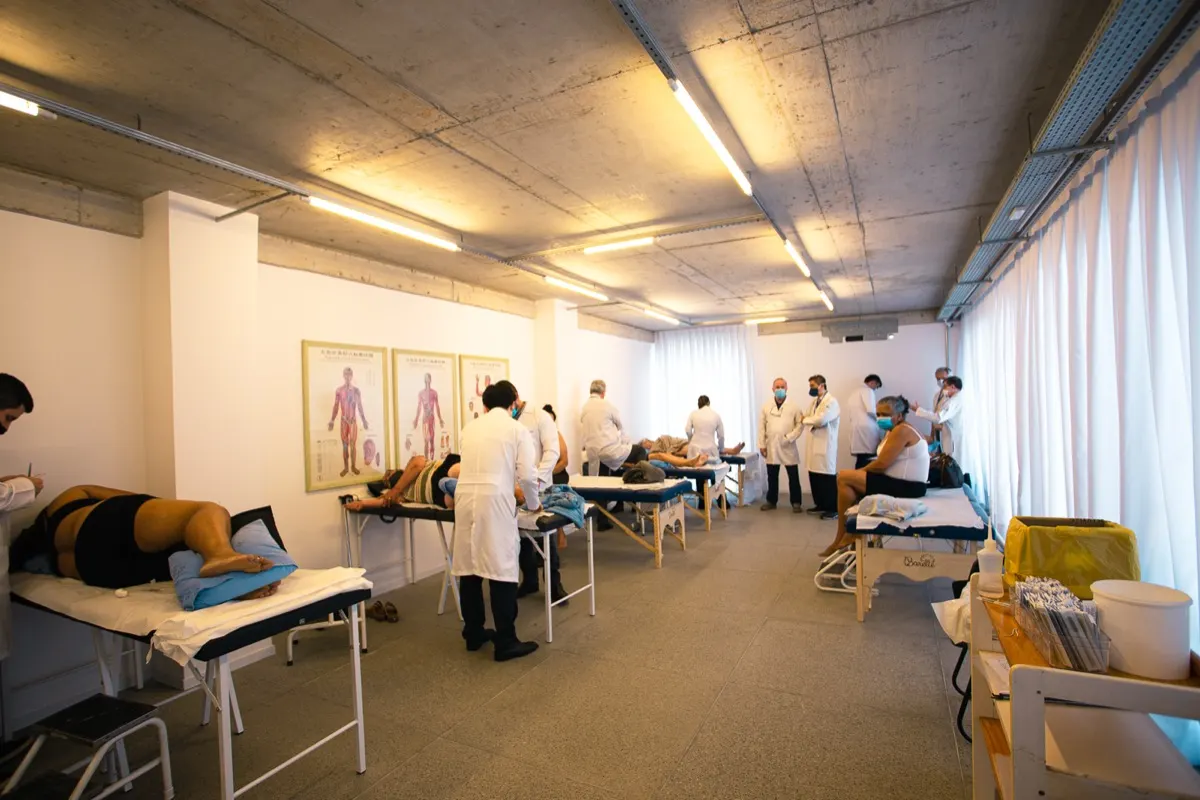
- Strong
See the numbers: What this page rests on
| Year | Study type | Verdict | Study |
|---|---|---|---|
| 2005 | RCT | Strong | Acupuncture in patients with osteoarthritis of the knee: a randomised trial |
| 2007 | RCT | Strong | Acupuncture as an adjunct to exercise based physiotherapy for osteoarthritis of the knee: randomised controlled trial |
Evidence behind this recommendation.
Selected studies from our library that inform the recommendations on this page. Evidence grade shown when available.
Acupuncture in patients with osteoarthritis of the knee: a randomised trial
“Acupuncture has been used for thousands of years for the treatment of pain, but its efficacy for knee osteoarthritis still raised questions in the medical community. Knee osteoarthritis is one of the most common conditions affecting the joints, causing...”
Acupuncture as an adjunct to exercise based physiotherapy for osteoarthritis of the knee: randomised controlled trial
“This randomized controlled clinical trial, published in the prestigious British Medical Journal, investigated an important practical question for the treatment of knee osteoarthritis: whether the addition of acupuncture to a physiotherapy program based on...”
What Is Knee Osteoarthritis?
Knee osteoarthritis (also called arthrosis or gonarthrosis) is a degenerative joint disease characterized by progressive deterioration of the cartilage that covers the bony surfaces of the knee joint. As the cartilage wears down, the bones begin to rub directly against each other, causing pain, stiffness, and loss of function.
This condition predominantly affects people over 50 years of age and is one of the most common causes of functional disability in adults. The process involves not only the cartilage, but the entire joint tissue: subchondral bone, synovial membrane, ligaments, and periarticular musculature.
When conventional pharmacological treatments become insufficient or produce significant side effects, medical acupuncture may be considered as a complementary therapeutic option, with growing scientific evidence.
High Prevalence
Affects about 250 million people worldwide, being the leading cause of chronic pain in older adults.
Progressive
Without adequate treatment, joint degeneration worsens over the years, limiting mobility.
Manageable
Medical acupuncture can help with pain relief and functional improvement as part of conservative treatment.
Why Are Conventional Treatments Not Always Sufficient?
Non-steroidal anti-inflammatory drugs (NSAIDs) are the mainstay of pharmacological treatment for osteoarthritis, but they have significant limitations. Chronic use is associated with gastrointestinal, renal, and cardiovascular complications — especially concerning in the elderly population that suffers most from the disease.
In addition, analgesics treat only the symptom (pain), without modifying the underlying biological mechanisms. Intra-articular injection with corticosteroids, although effective in the short term, can accelerate cartilage degeneration with repeated applications.
Comparison: Conventional Treatment vs. Acupuncture
| Aspect | Conventional (NSAIDs) | Medical Acupuncture |
|---|---|---|
| Pain relief | Symptomatic, with pharmacological mechanism | Symptomatic relief proposed via central and peripheral modulation |
| Side effects | Gastrointestinal, renal, cardiovascular | Typically mild (local hematoma); serious events rare |
| Chronic use | Relevant cumulative risk in older adults | Favorable safety profile when performed by a physician |
| Anti-inflammatory action | Pharmacological (COX-1/COX-2) | Proposed neuroimmune modulation (partly hypothetical) |
| Muscle function | Does not act directly | May help with periarticular muscle relaxation |
How Does Medical Acupuncture Work in Knee Osteoarthritis?
Medical acupuncture acts on knee osteoarthritis through multiple scientifically documented neurophysiological mechanisms. Unlike a simple "analgesic with needles", acupuncture modulates the local inflammatory response, alters central pain processing, and restores the balance of the periarticular musculature.
The main mechanisms involve nociceptive inhibition in the dorsal horn of the spinal cord, the reduction of pro-inflammatory cytokines in the synovial fluid (IL-1beta, TNF-alpha, IL-6), and improved biomechanical function through the release of trigger points in the quadriceps and hamstrings.
Mechanism of Action of Acupuncture in Knee Osteoarthritis
Insertion of the needle into periarticular points
Stimulation of A-delta and C fibers in the tissues around the knee, activating spinal afferent pathways.
Segmental nociceptive inhibition
In the dorsal horn of the spinal cord (L3-L4), inhibitory interneurons release enkephalins, blocking pain transmission (Gate Control Theory).
Reduction of inflammatory cytokines
Decrease in IL-1beta, TNF-alpha, and IL-6 in the synovial fluid, reducing active joint inflammation.
Release of endogenous opioids
Endorphins and enkephalins are released centrally, providing sustained analgesia beyond the segmental effect.
Periarticular myofascial relaxation
Deactivation of trigger points in the quadriceps (vastus lateralis/medialis) and hamstrings, improving knee biomechanics.
What Do the Scientific Studies Say?
Knee osteoarthritis is one of the conditions with the largest volume of evidence favorable to acupuncture. Meta-analyses published in high-impact journals demonstrate clinically relevant benefits in pain reduction and functional improvement, superior to placebo and comparable to conventional medications — but with a significantly better safety profile.
What Is Different About the Modern Approach?
Contemporary medical acupuncture goes far beyond traditional needling. The medical acupuncturist uses technological resources that enhance therapeutic effects, such as electroacupuncture and low-level laser therapy (LLLT).
Electroacupuncture allows precise control of the frequency and intensity of nerve stimulation. Low frequencies (2 Hz) preferentially activate the endorphinergic system, while high frequencies (100 Hz) recruit the dynorphinergic system — and alternating between the two (dense-disperse mode) provides optimized analgesia. Therapeutic laser, in turn, is a valuable non-invasive option for patients with needle phobia or specific conditions.
When to See a Physician?
If you feel knee pain when climbing stairs, walking, or standing up, or if you notice morning stiffness that improves after a few minutes of movement, these may be signs of osteoarthritis. Consult a specialist physician for proper evaluation.
Frequently Asked Questions
The standard protocol involves 8 to 12 sessions, performed once or twice a week. Most patients perceive significant improvement starting from the fourth session. After the initial protocol, monthly maintenance sessions may prolong the benefit.
No. Acupuncture is a complementary therapy that may delay the need for surgery and improve quality of life. In cases of severe osteoarthritis (Kellgren-Lawrence grade IV) with complete joint loss, arthroplasty may be necessary. The medical acupuncturist evaluates each case individually.
Insertion of the needles causes minimal sensation — very different from an injection. In knee osteoarthritis, the needles are placed in the periarticular points and in the muscles involved (quadriceps, hamstrings). The session lasts 20 to 30 minutes, and most patients report relaxation during the procedure.
Yes, acupuncture is safe and compatible with virtually all medications used in osteoarthritis (NSAIDs, paracetamol, chondroitin, glucosamine). In fact, many patients are able to reduce the dose of analgesics over the course of acupuncture treatment, always under physician guidance.
Studies suggest that low-frequency electroacupuncture (2 Hz) may have an analgesic effect superior to manual acupuncture in knee osteoarthritis, since it enhances the release of beta-endorphins and improves the reduction of inflammatory cytokines in the synovial fluid. However, both modalities are effective.
There is no evidence that acupuncture regenerates already-destroyed cartilage. However, by reducing synovial inflammation and mechanical stress on the joint, acupuncture may contribute to slowing the progression of degeneration and preserving the remaining cartilage.