Therapeutic exercise
Banded Face Pull
Horizontal pull toward the face with an elastic band, recruiting rhomboids, posterior deltoid, teres minor, and infraspinatus. Specifically corrects the pattern of anteriorly tilted scapula in patients with rhomboid and interscapular pain — one of the exercises with the best functional transfer to pulling activities.
How to perform
- Starting position. Anchor an elastic band to a firm point at eye level (above the head if standing).
- Step 2. Stand with the arms extended forward, holding one end of the band in each hand.
- Step 3. Pull the band toward the face, taking the elbows out laterally and back — the hands pass close to the ears.
- Step 4. At the point of maximum retraction, squeeze the scapulae and hold for 2 seconds.
- Return. Return slowly over 3 seconds to the starting position. Keep the trunk upright throughout the movement, without leaning back.
When not to perform
- Acute rotator cuff injury
- Recent post-operative shoulder surgery
- Acute cervical pain with radiation
- Symptomatic glenohumeral instability
- Cervical disc herniation in acute phase
- Acute medial epicondylitis (grip can aggravate)
Medical disclaimer. These exercises are presented for informational purposes only. Always consult your physician before starting any exercise program, especially in case of acute pain, recent injury, or underlying clinical condition.
Related Exercises
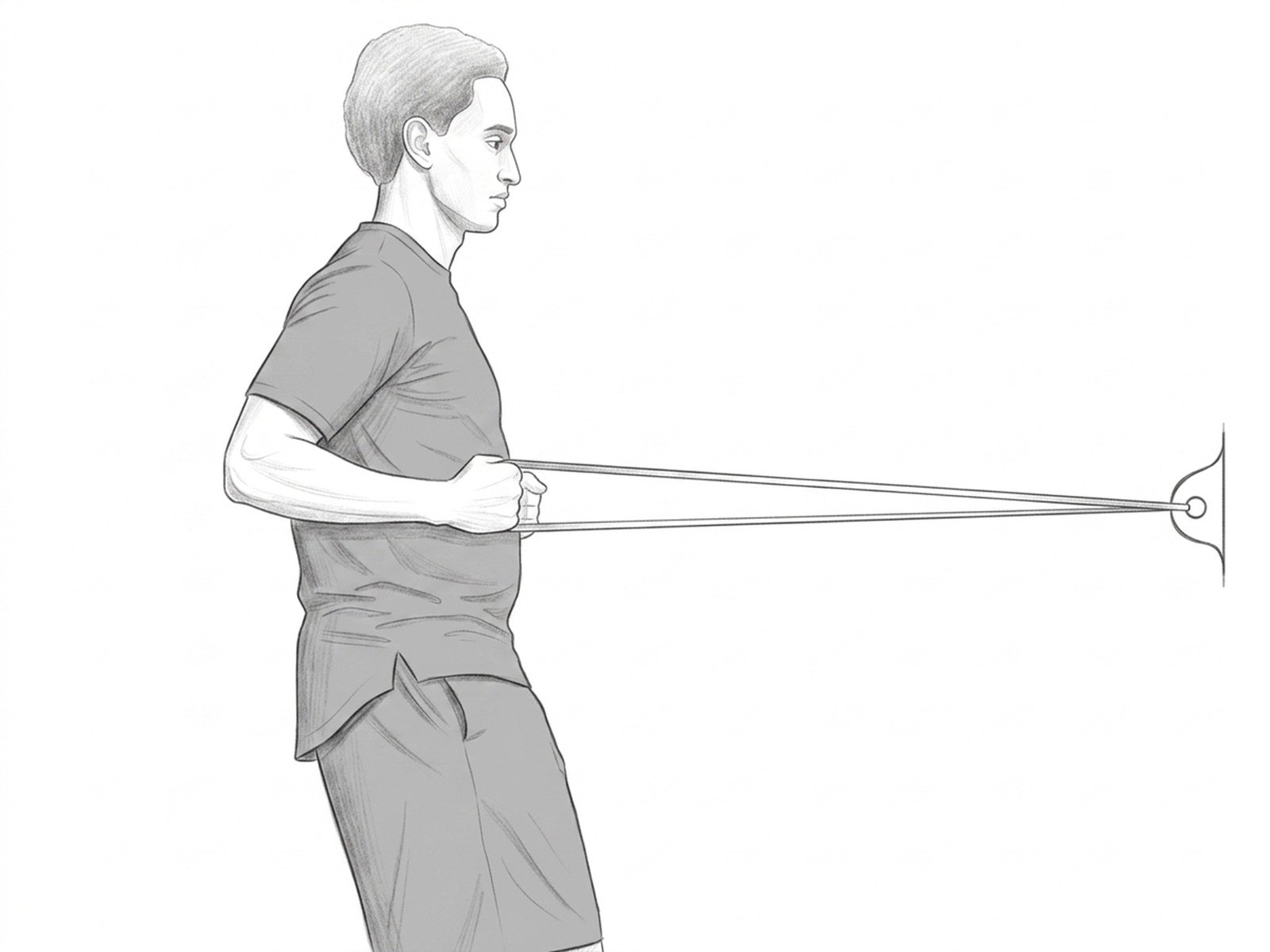
Banded Row
Horizontal pull with elastic resistance, recruiting the rhomboids, middle trapezius, and latissimus dorsi. The fundamental pulling exercise in shoulder-girdle rehabilitation — re-balances the pectoral/dorsal ratio in patients with upper-crossed syndrome.
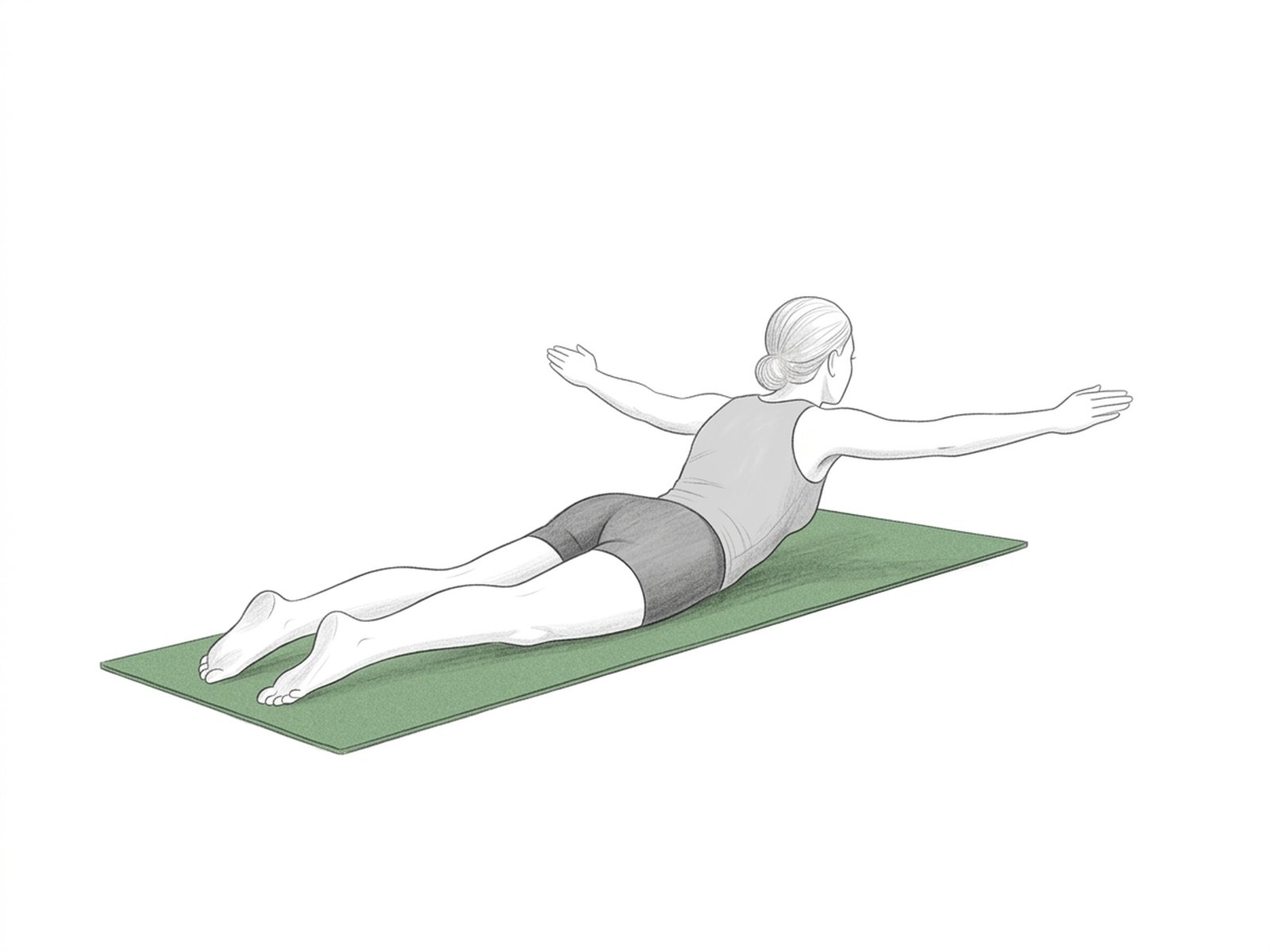
Prone T-Raise
Isolation of the middle trapezius and posterior deltoid in a prone position. Component of the Prone I/T/Y/W series — essential for re-balancing the shoulder girdle in patients with upper-crossed syndrome and scapular dyskinesia.
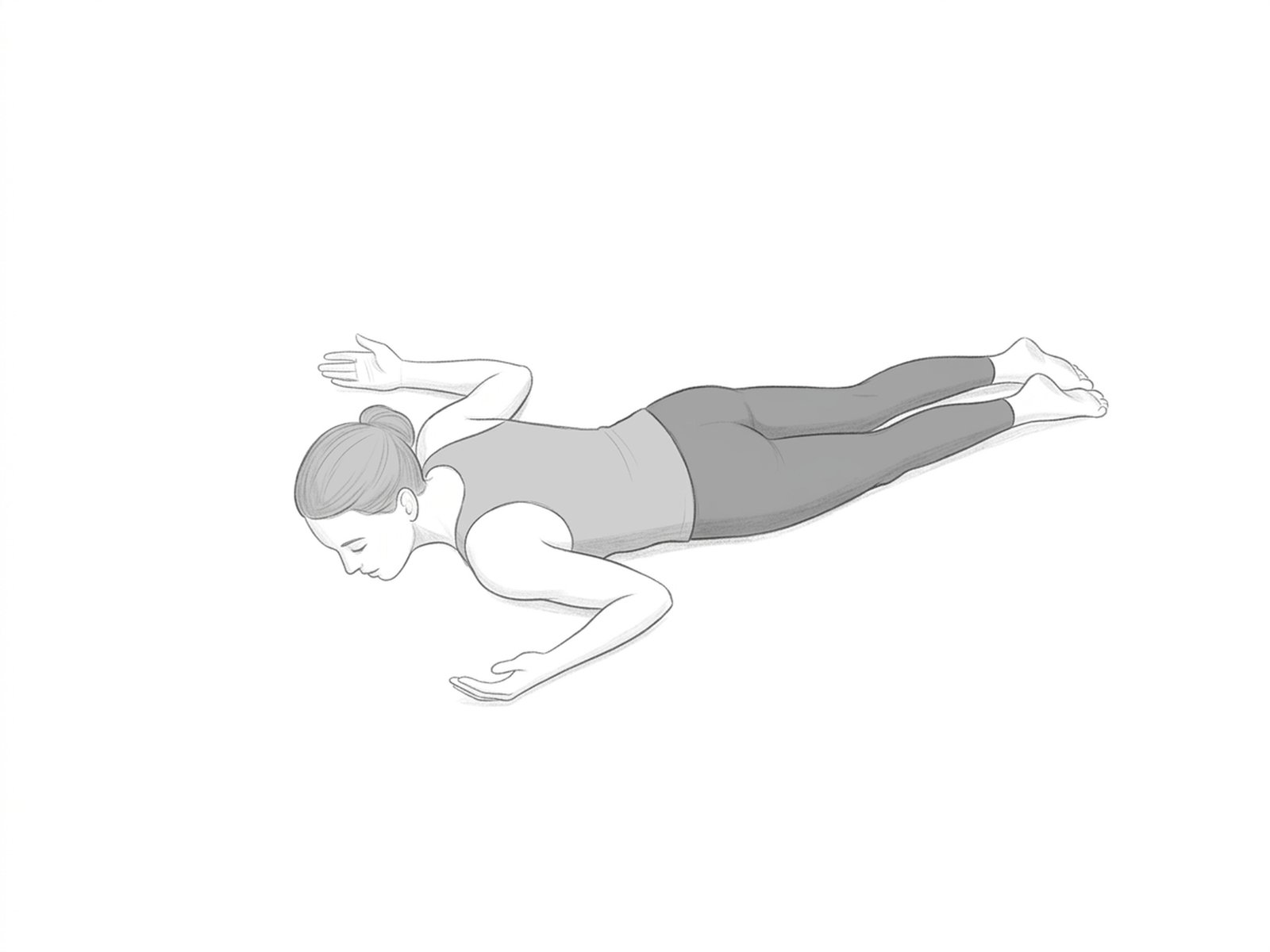
Prone W-Raise
Combines glenohumeral external rotation with scapular retraction in a prone position, forming a W with the body. Simultaneously recruits the posterior rotator cuff and scapular stabilizers — ideal for advanced progression of the Prone series.