Therapeutic exercise
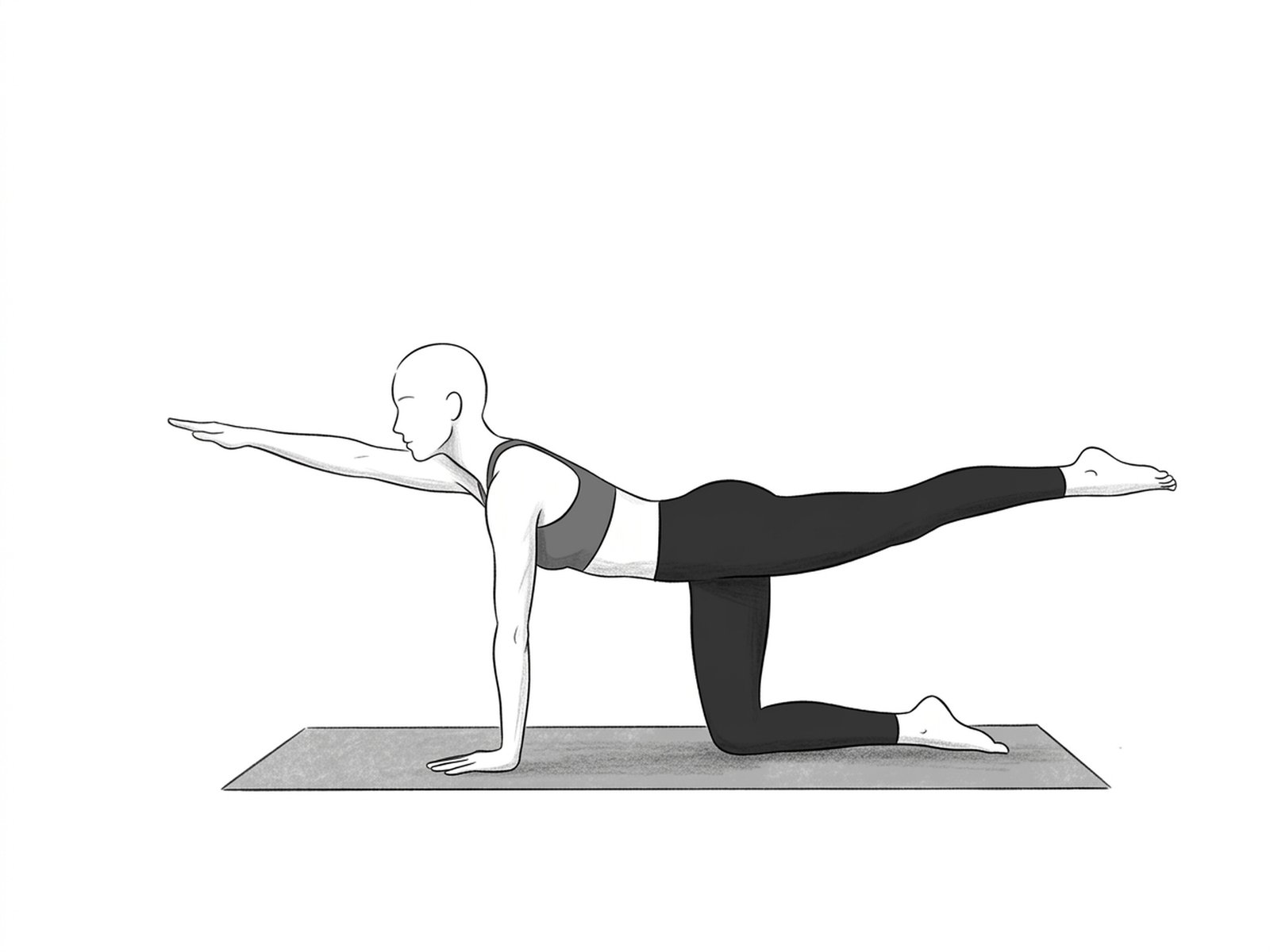
Bird Dog (Quadruped Cross-Pattern)
A core-stabilization exercise that trains neuromuscular control of the spine during limb movement. Widely used in the rehabilitation of chronic non-specific low back pain.
How to perform
- Starting position. Get onto all fours with your spine in a neutral position and gently engage your abdomen.
- Step 2. Extend one arm forward and the opposite leg backward, keeping your trunk stable.
- Step 3. Hold the position for 3–5 seconds without letting your pelvis rotate to either side.
- Return. Return to the starting position with control and repeat on the other side.
When not to perform
- Acute wrist pain
- Inability to maintain a neutral spine without discomfort
Medical disclaimer. These exercises are presented for informational purposes only. Always consult your physician before starting any exercise program, especially in case of acute pain, recent injury, or underlying clinical condition.
Related Exercises
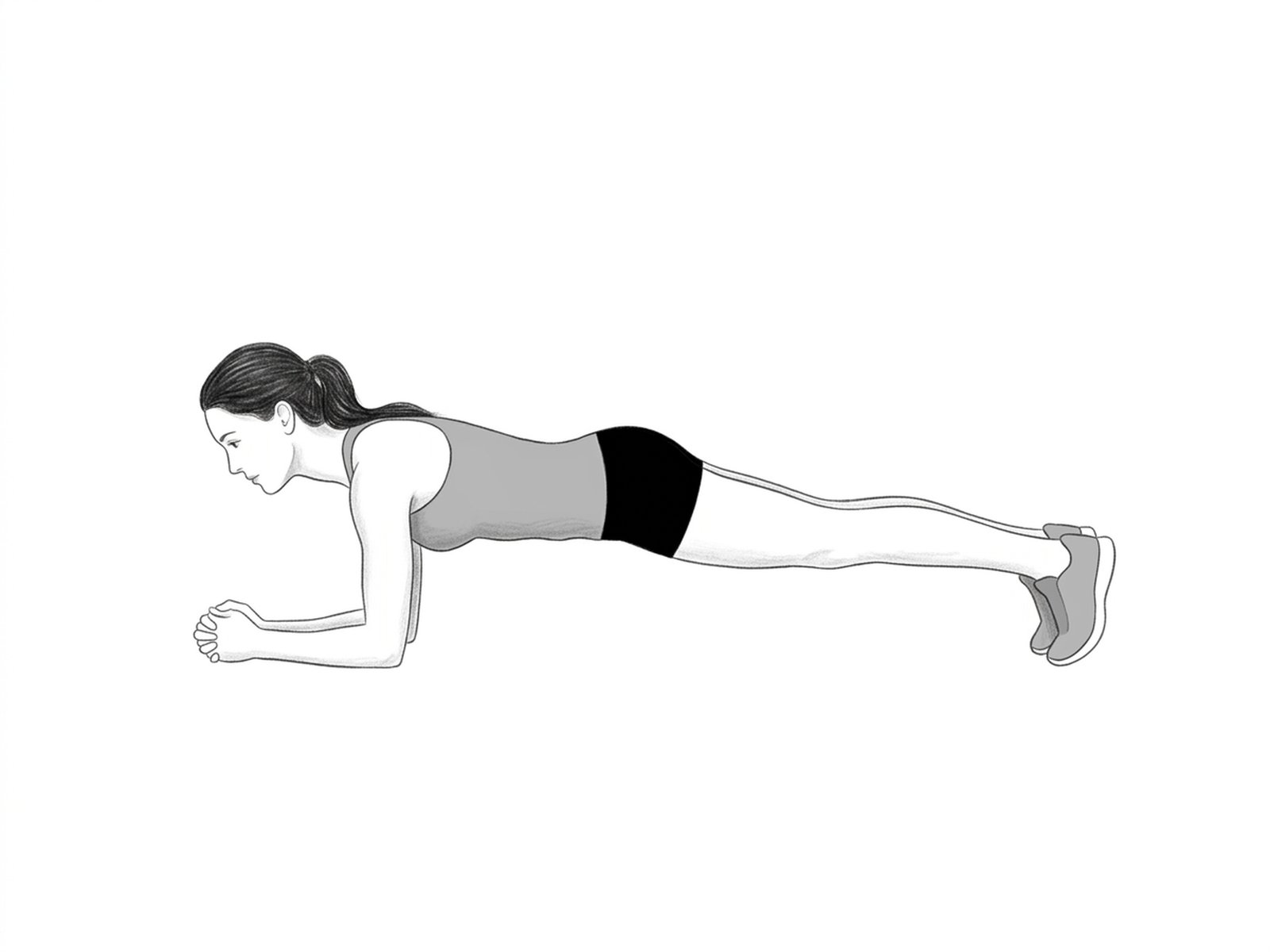
Front Plank (Regular and Modified)
Integrated isometric contraction of the spinal stabilizers in a closed kinetic chain, in a prone position on the forearms. A key exercise in core instability rehabilitation — trains anti-gravity co-contraction that transfers to functional activities.
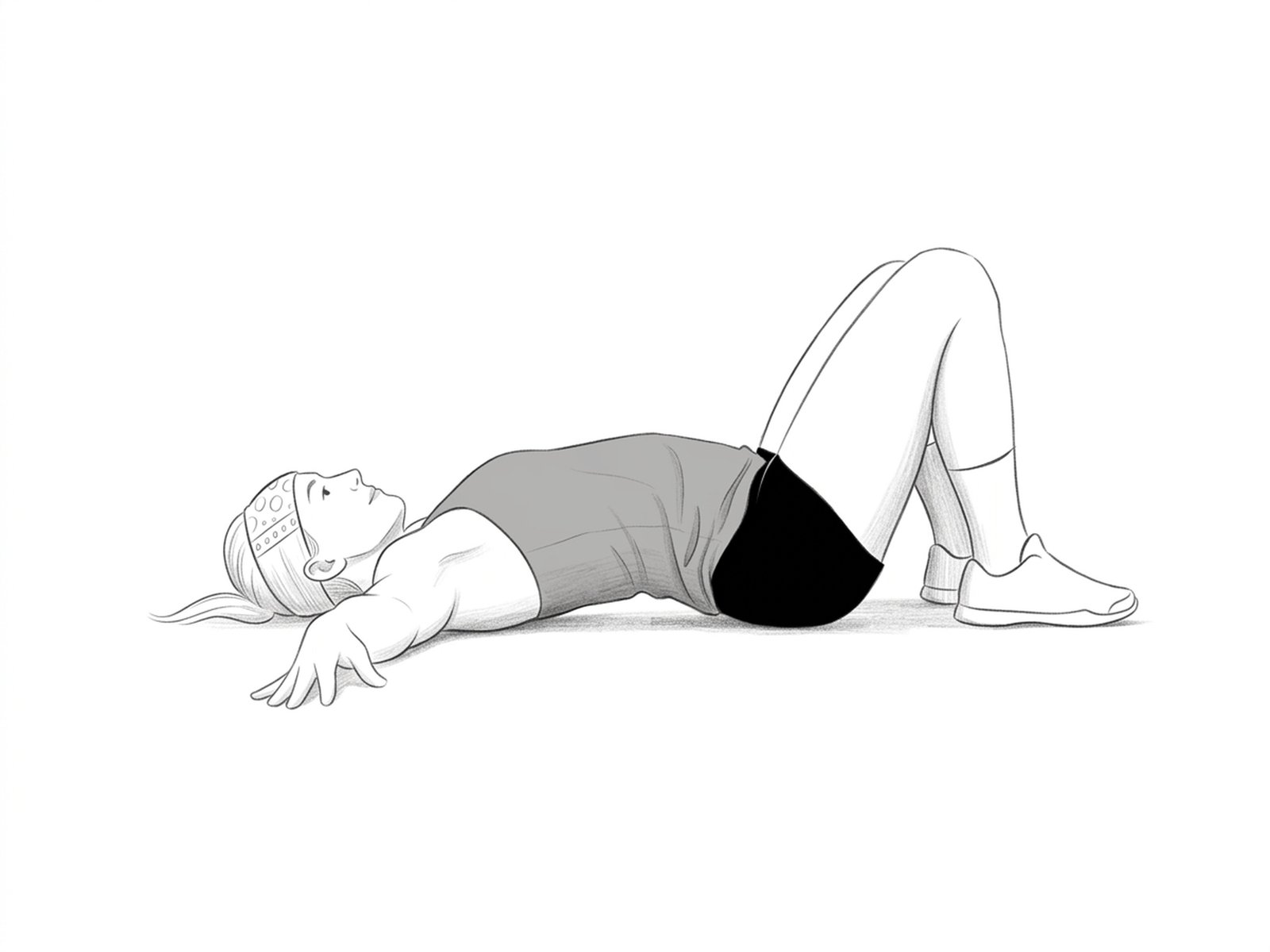
Pelvic Tilt
Gently activates the deep abdominal muscles through a pelvic tilt. Relieves low-back tension and retrains motor control of the deep stabilizers — one of the foundations of chronic mechanical low-back-pain rehabilitation.
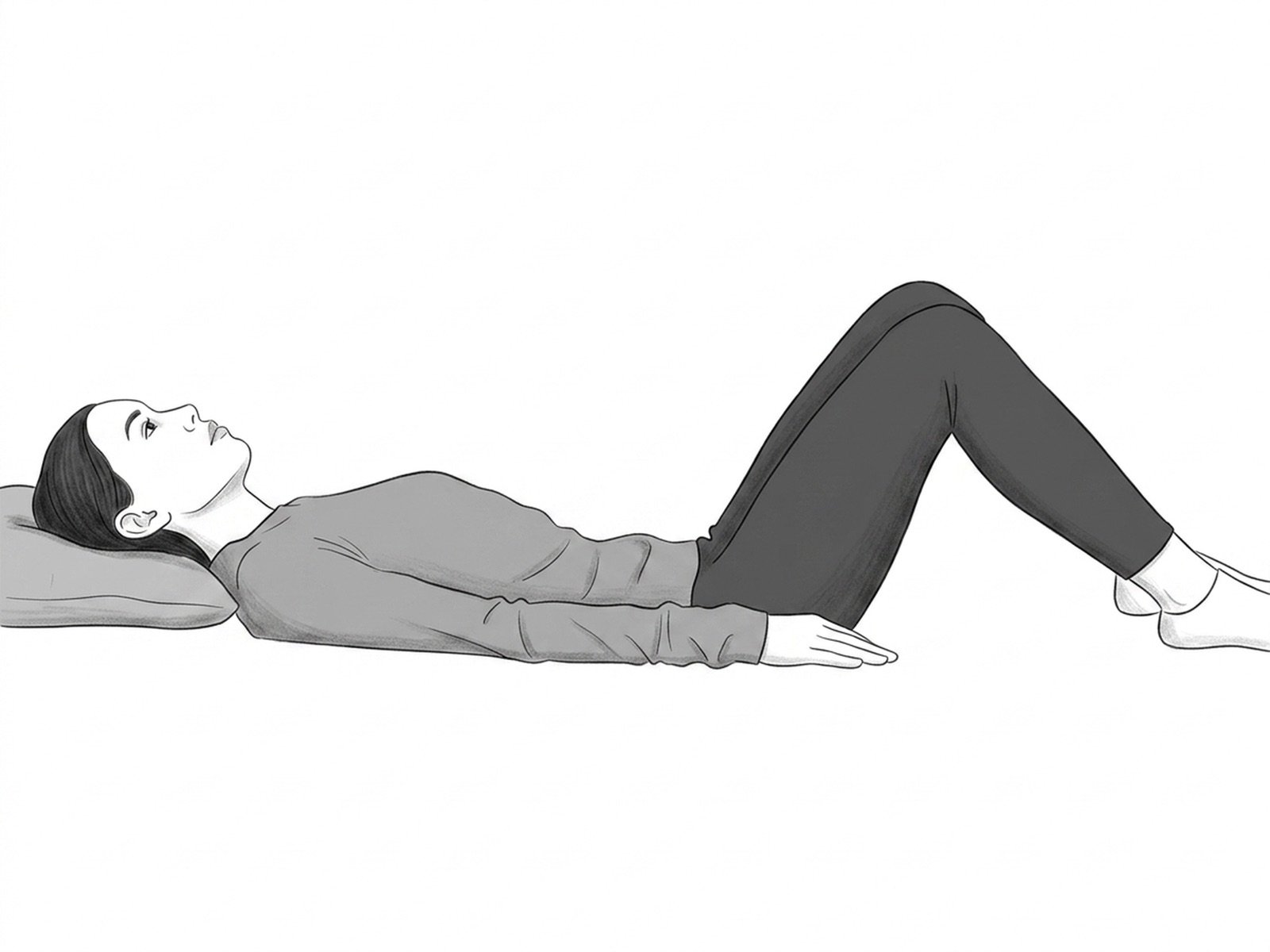
Supine Abdominal Bracing
360° isometric contraction of the entire abdominal musculature (transversus, obliques, and rectus abdominis) in supine — different from drawing-in (which isolates only the transversus). This is the dynamic stabilization pattern for high loads, essential in spondylolisthesis and in preparation for lifting activities.