Calf stretching
Calf stretching reduces tension in the gastrocnemius-soleus complex, addressing the equinus contracture frequently seen in patients with Posterior Tibial Tendon Dysfunction. By improving ankle dorsiflexion, this stretch decreases compensatory overpronation at the midfoot, which may help reduce mechanical strain on the posterior tibial tendon during stance.
Muscles worked
Illustration demonstrating the position of the Calf stretching exercise.
Biomechanical Execution Sequence
05 phases- Starting position
Stand facing a wall with your hands resting on it for support, placing the affected leg behind you.
- Phase 2
Keep your back knee straight, your heel flat on the floor, and your toes pointing directly forward.
- Phase 3
Gently bend your front knee and lean toward the wall until you feel a stretch in the calf of the back leg.
- Phase 4
Maintain a neutral arch in the back foot, ensuring the ankle does not roll inward during the stretch.
- Return
Hold the stretch steadily without bouncing.
Prescribed in Clinical Guides
Medical disclaimer. These exercises are presented for informational purposes only. Always consult your physician before starting any exercise program, especially in case of acute pain, recent injury, or underlying clinical condition.
Related Exercises
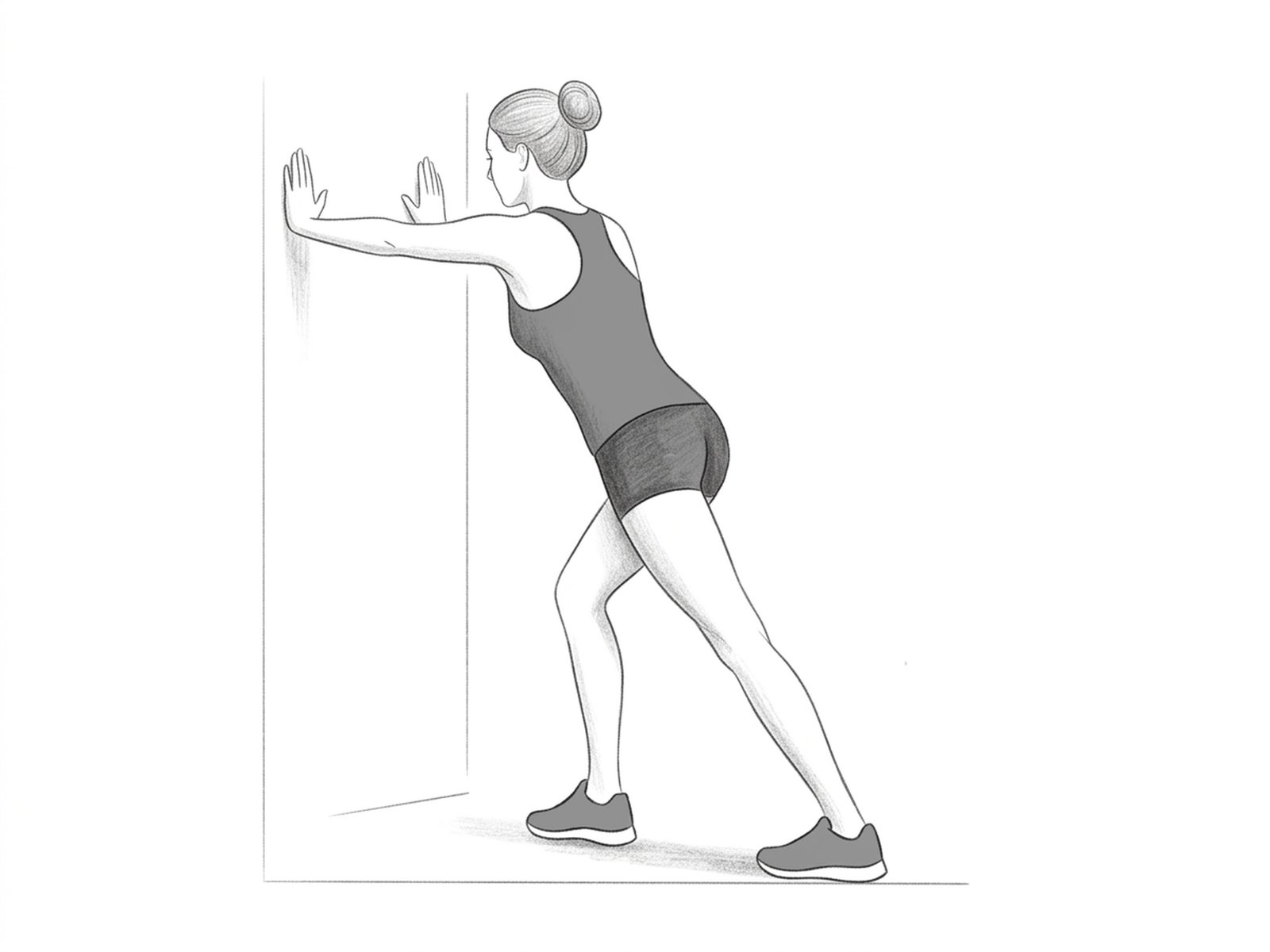
Gastrocnemius Wall Stretch
Calf stretch with the knee straight. Restores flexibility of the posterior chain and reduces traction on the Achilles tendon.
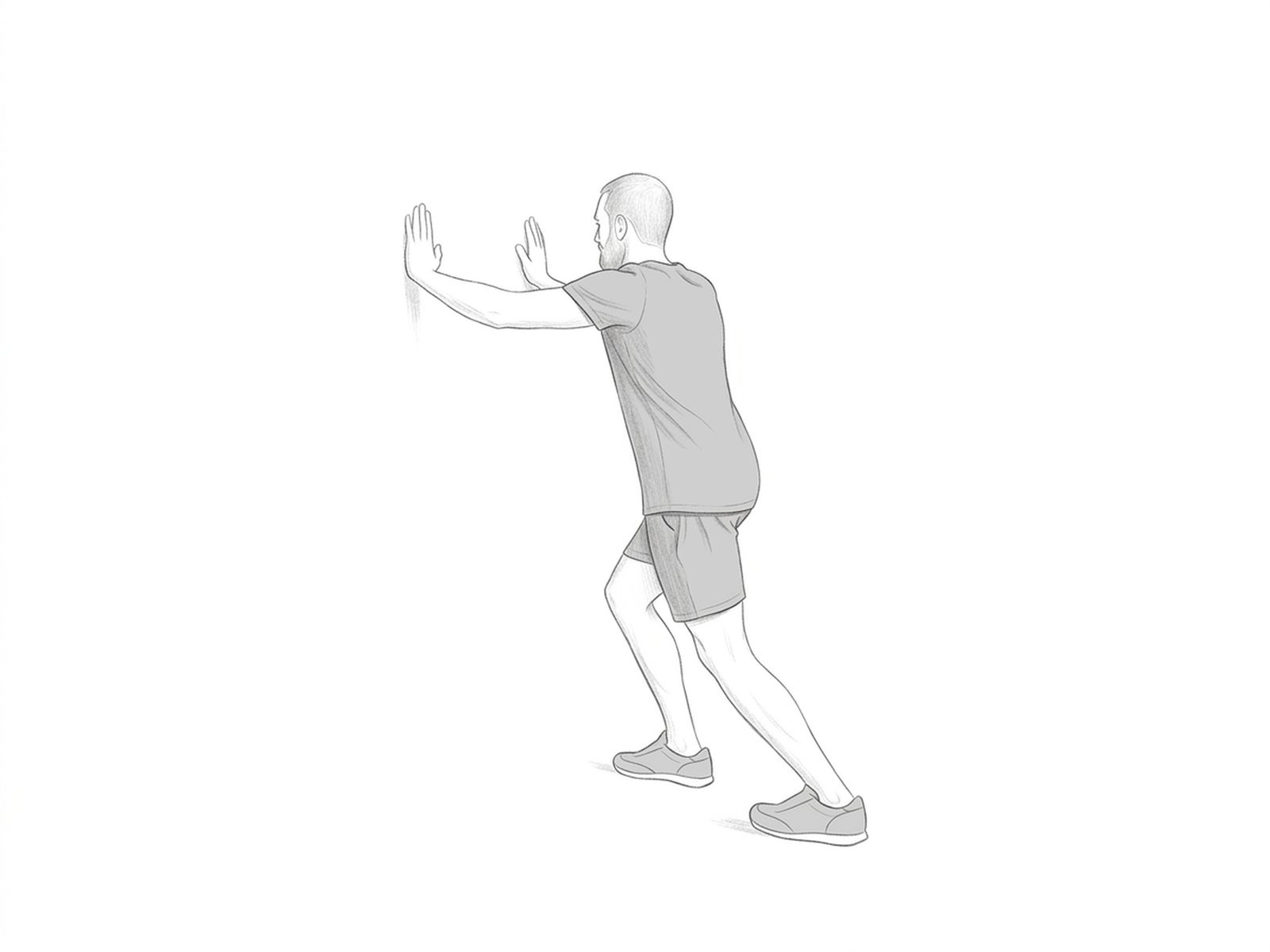
Soleus Stretch (Bent-Knee)
Stretches the soleus — the deep calf muscle that is only isolated with the knee bent. Complements the gastrocnemius stretch (knee straight) for complete flexibility of the calf complex.
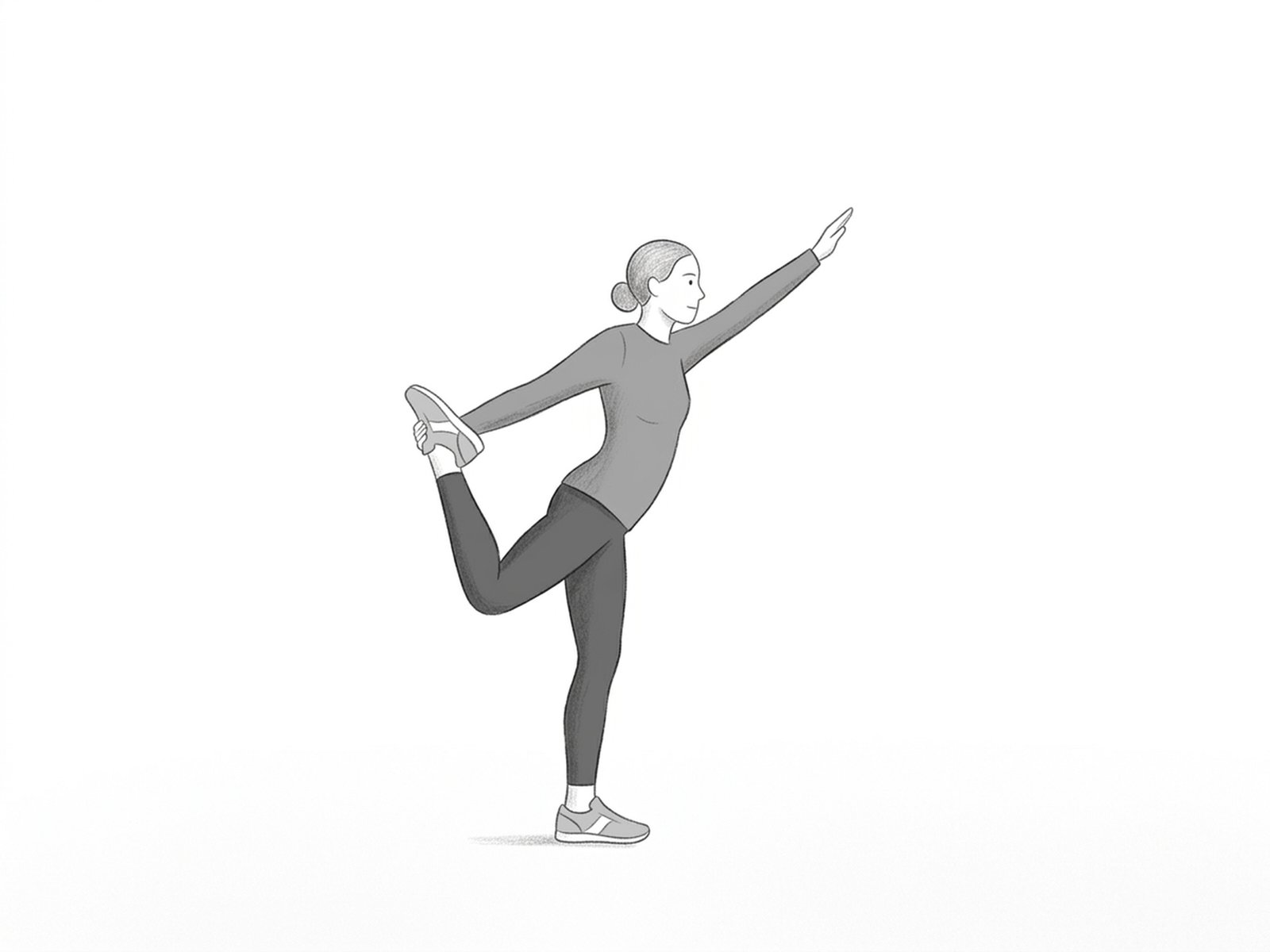
Single-Leg Balance
Essential proprioceptive training after an ankle sprain. Restores postural control and reduces recurrence risk by up to 50% (Hupperets et al. studies).