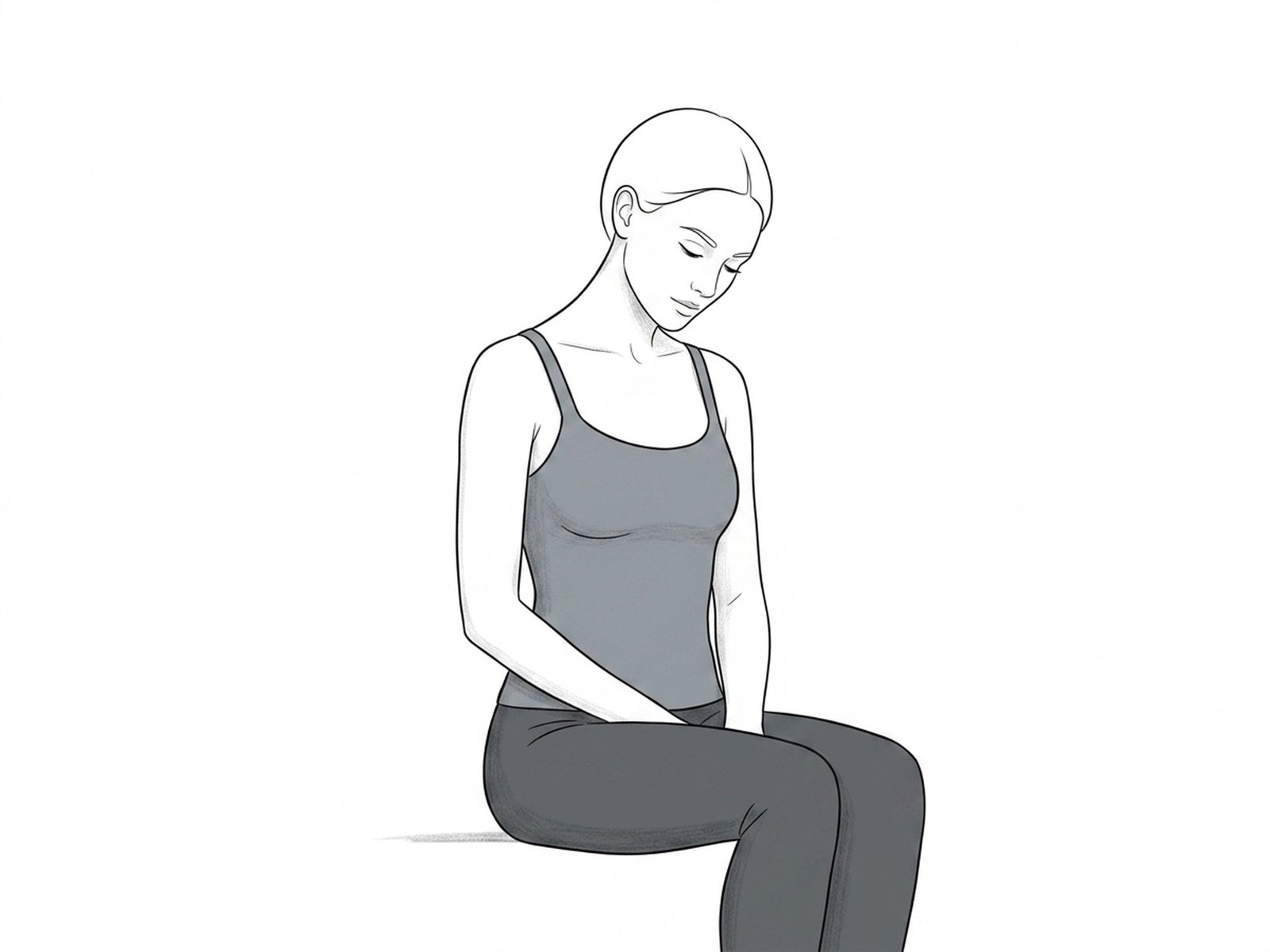
Therapeutic exercise
Active Cervical Flexion-Rotation
Active mobilization of the upper cervical region (C1–C2) in rotation with the lower cervical in flexion. Improves mobility of the segment most involved in cervicogenic headache.
How to perform
- Starting position. Lie on your back and flex your head, bringing your chin to your chest (you can use a pillow to maintain flexion).
- Step 2. Maintaining the flexion, slowly rotate your head to one side to the maximum pain-free range.
- Step 3. Return to the center and rotate to the other side.
- Return. Move slowly and without forcing.
When not to perform
- Dizziness during the movement
- Instability of the craniocervical junction
Medical disclaimer. These exercises are presented for informational purposes only. Always consult your physician before starting any exercise program, especially in case of acute pain, recent injury, or underlying clinical condition.
Related Exercises
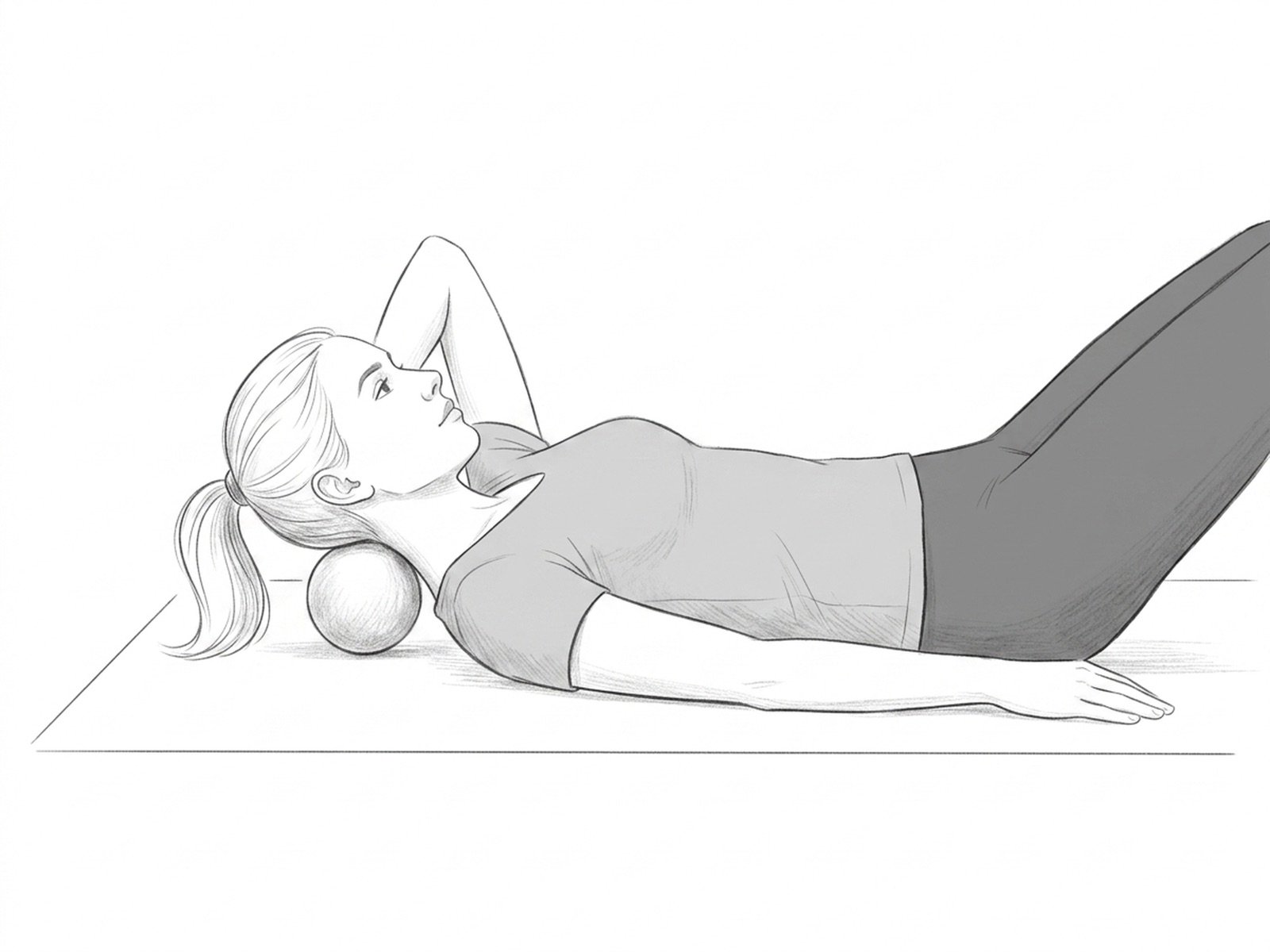
Suboccipital Release
Sustained compression over the suboccipital muscles using two tennis balls. Highly effective in cervicogenic headache of suboccipital origin — the most common pattern.
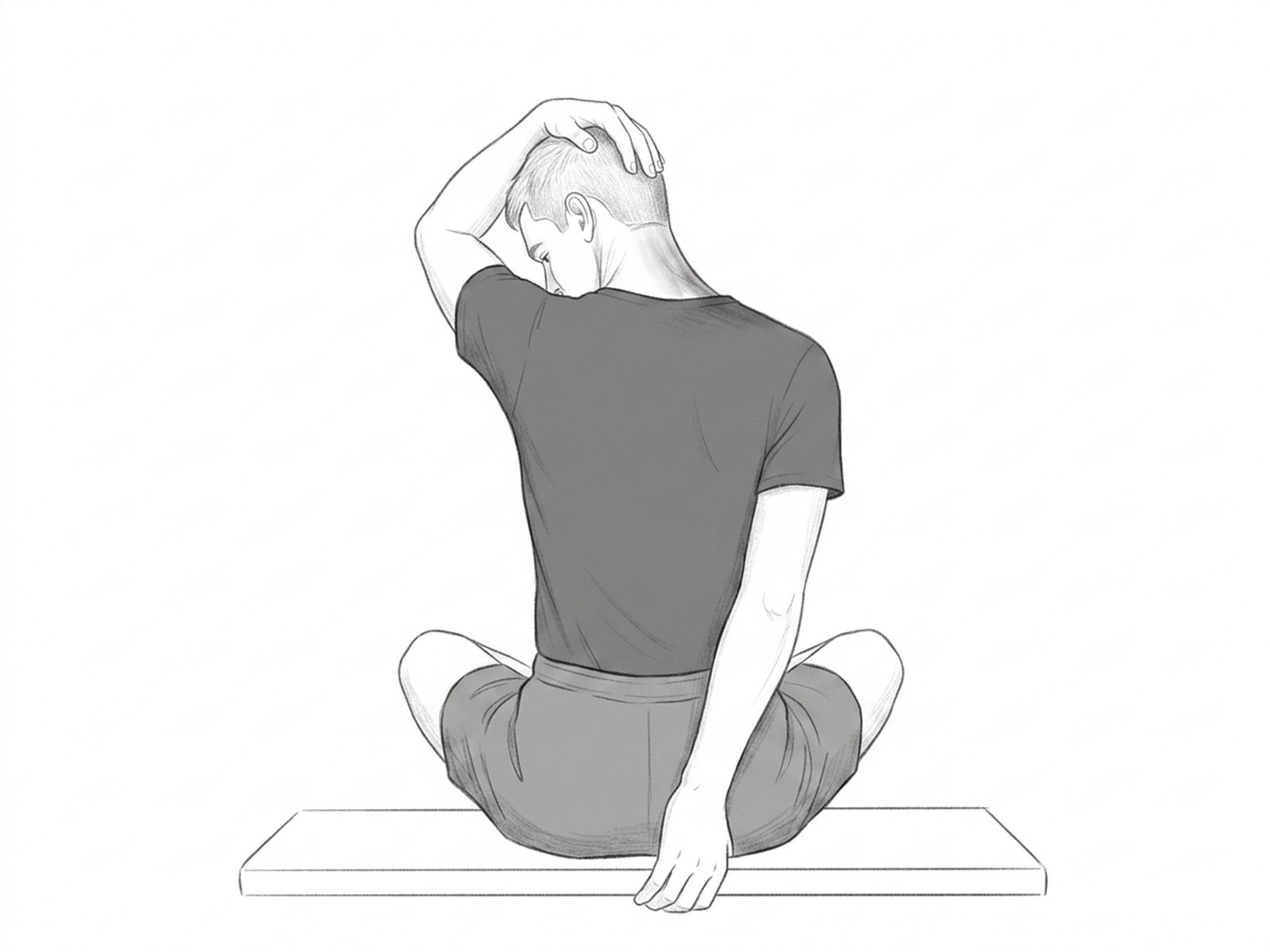
Levator Scapulae Stretch
Stretches the levator scapulae — a classic culprit in posterolateral neck pain and that sensation of heaviness around the neck, typical of people who spend long hours with the head forward in front of screens.
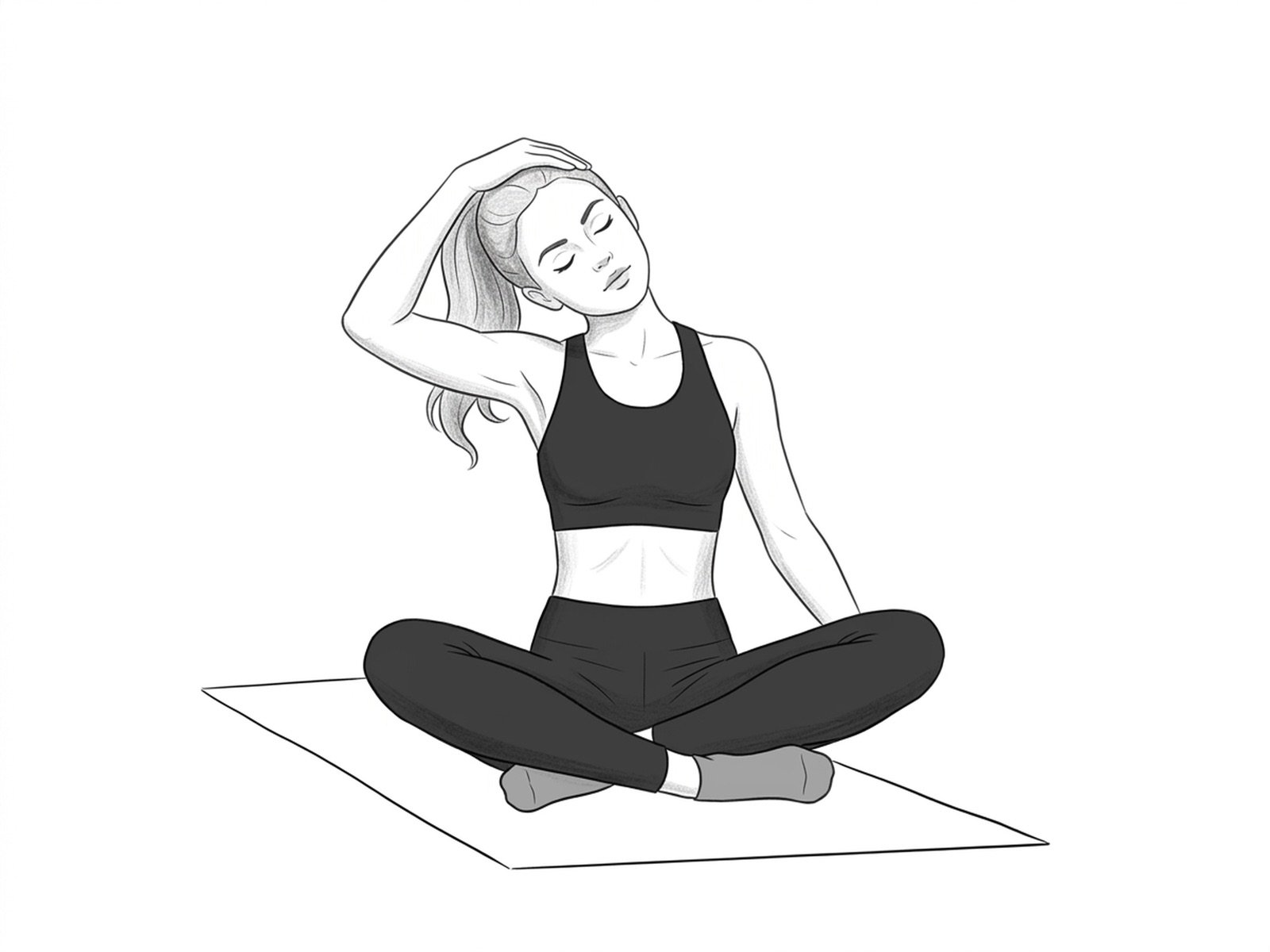
Sternocleidomastoid (SCM) Stretch
Selective stretch of the sternocleidomastoid — a muscle frequently shortened in patients with tension-type headache, cervicogenic headache, and forward-head posture. The position combines extension, rotation, and contralateral lateral flexion.