Therapeutic exercise
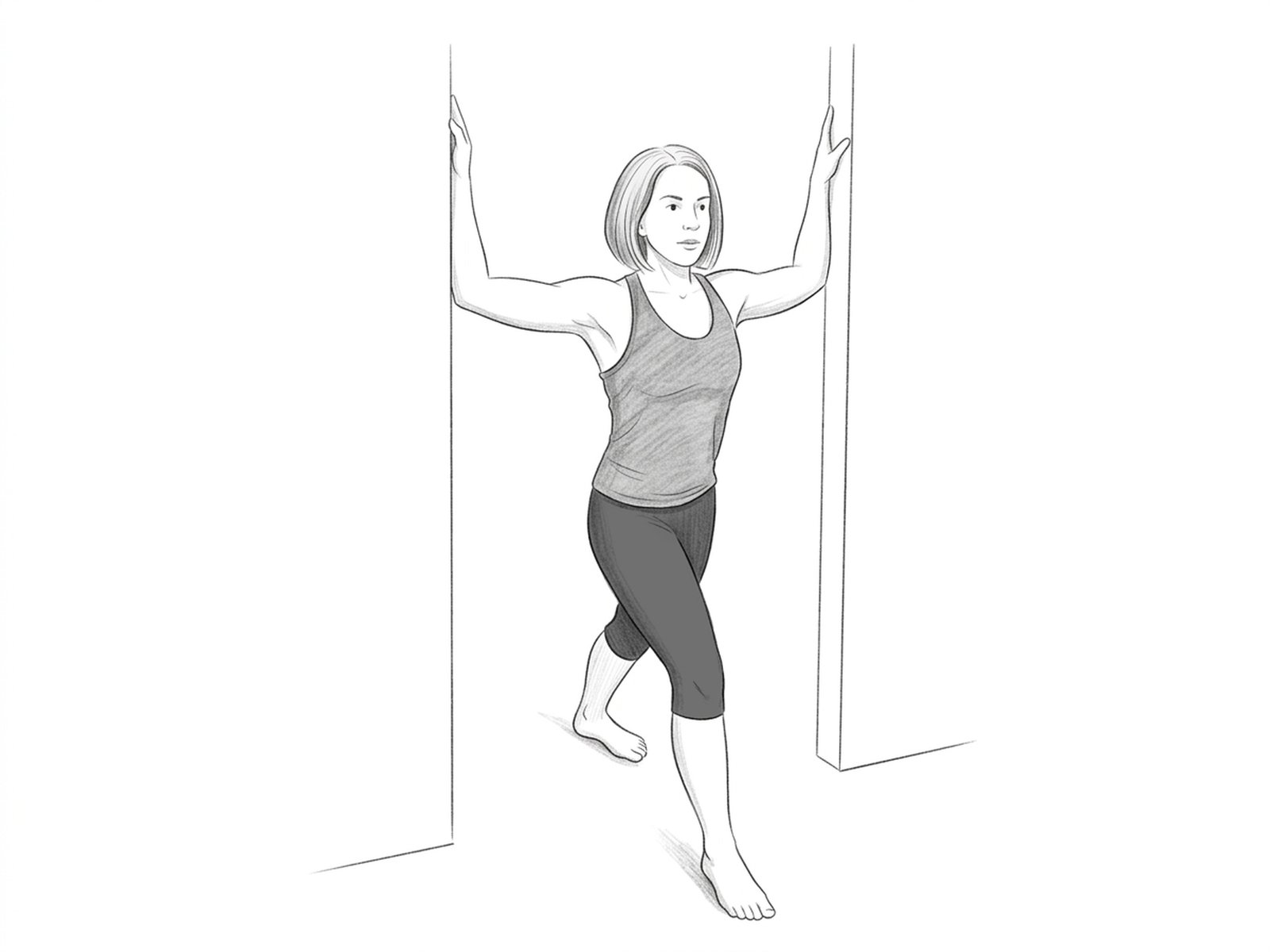
Doorway Pectoral Stretch
Stretches the pectoralis major and minor, muscles that are shortened in forward-head/rounded-shoulder posture. Reduces the passive scapular protraction that aggravates rotator-cuff tendinopathy.
How to perform
- Starting position. Stand in a doorway with your forearms resting on the sides, elbows at 90°.
- Step 2. Step one foot forward, keeping your trunk upright.
- Step 3. Feel the stretch across the front of the chest and shoulders.
- Return. Hold for 30 seconds.
When not to perform
- Acute anterior shoulder pain
- Anterior instability
Medical disclaimer. These exercises are presented for informational purposes only. Always consult your physician before starting any exercise program, especially in case of acute pain, recent injury, or underlying clinical condition.
Related Exercises
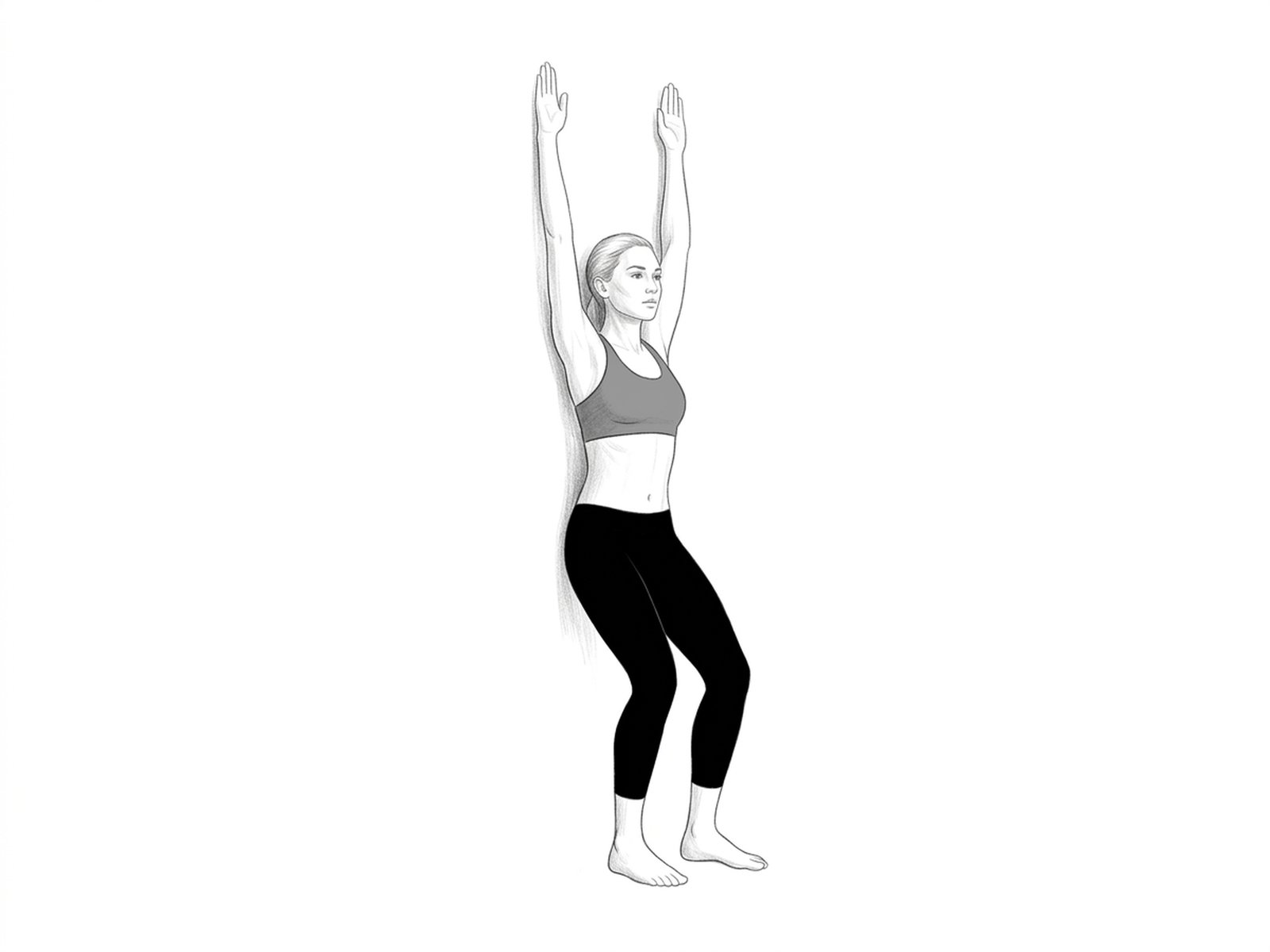
Wall Angels
Scapulothoracic mobilization in the posterior chain that corrects kyphotic posture. Indicated as an adjunct in cervical disc herniation to reduce compensatory overload.
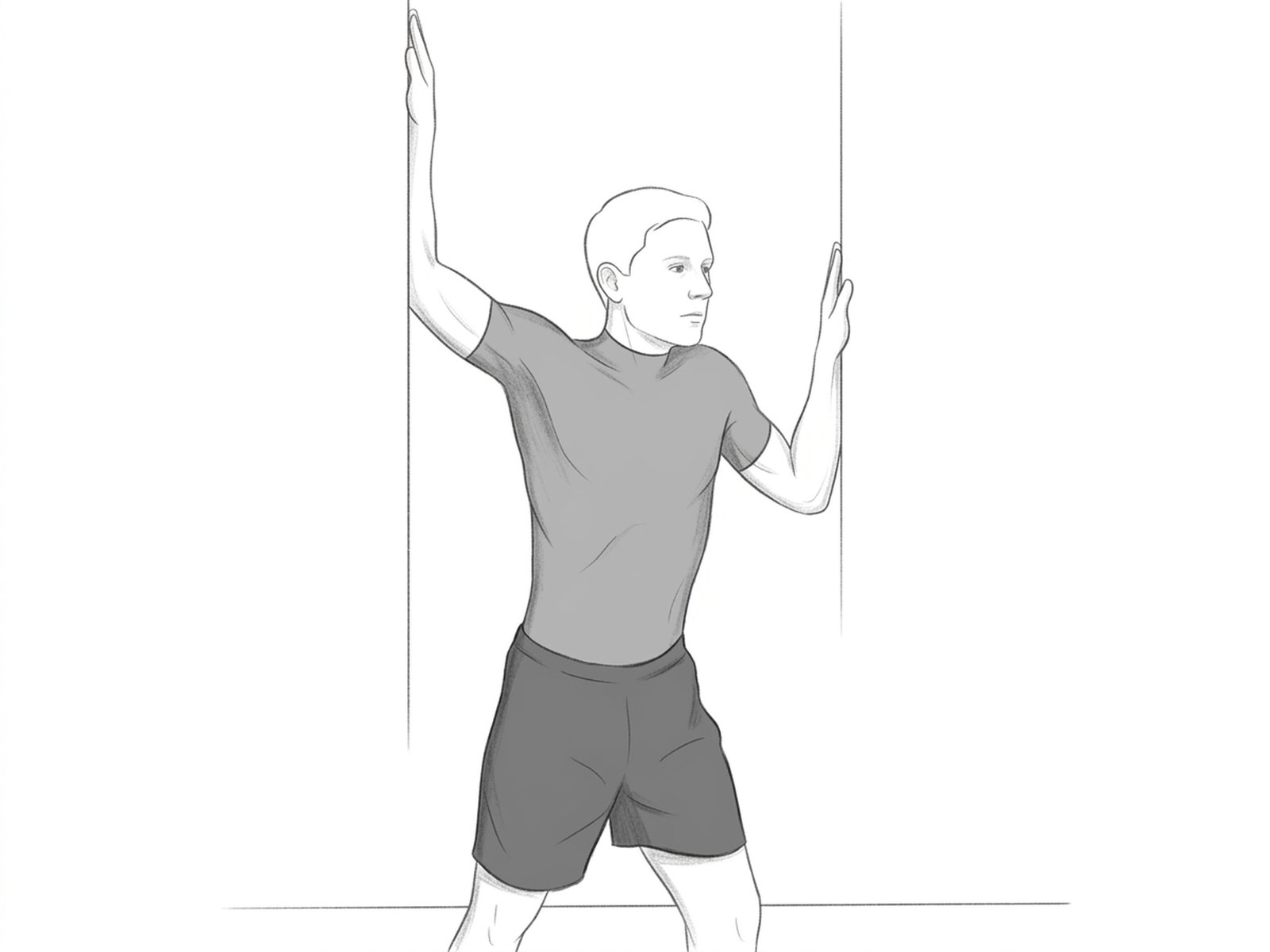
Pectoralis Minor Stretch
Specific stretch of the pectoralis minor — a muscle that inserts on the coracoid process of the scapula and is frequently shortened in patients with scapular dyskinesia, upper-crossed syndrome, and thoracic outlet syndrome. Unlike the pectoralis major stretch, it requires the arm to be positioned behind and below the body.
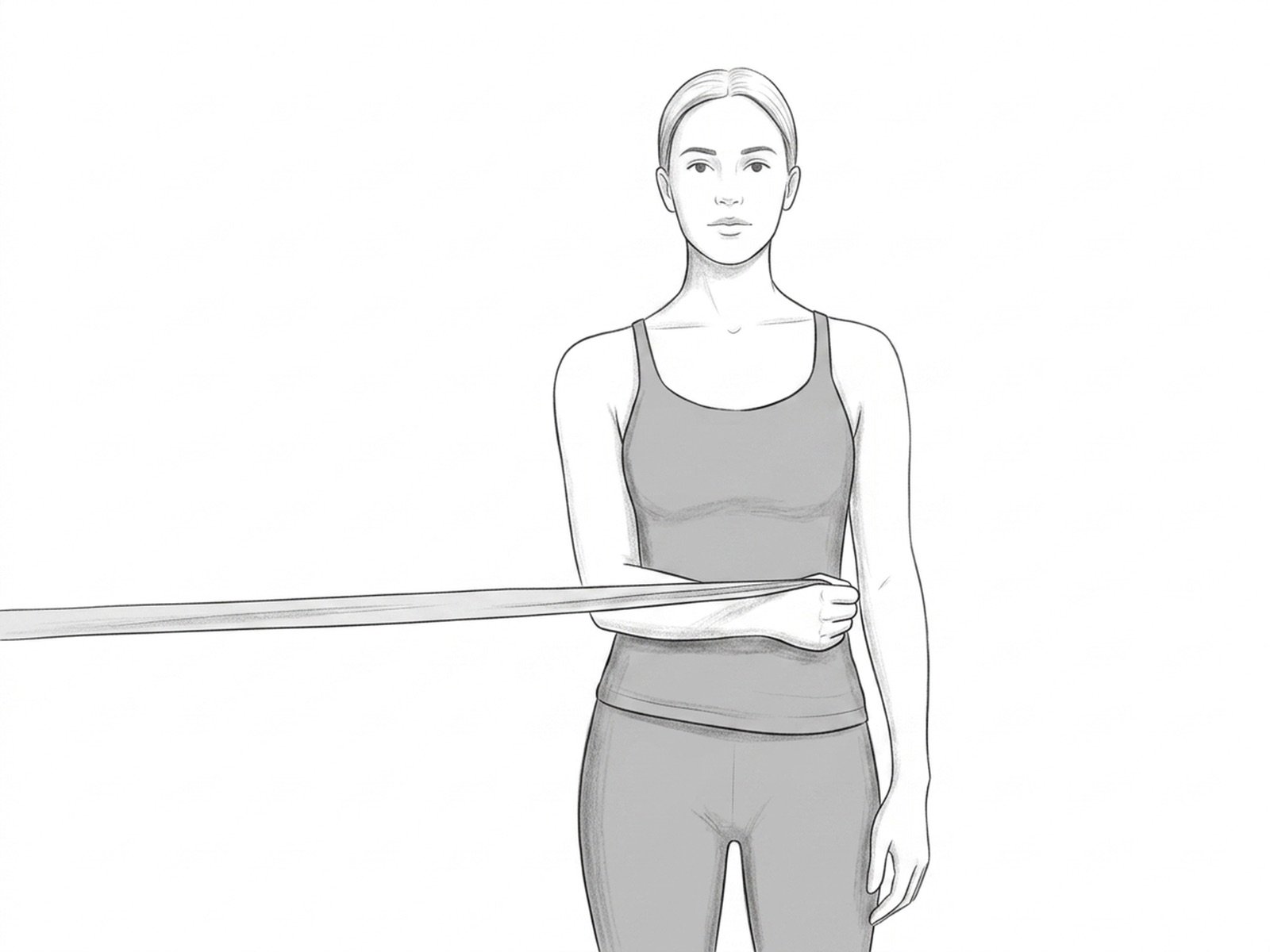
Banded Isotonic Internal Rotation
Dynamic strengthening of the shoulder internal rotators (subscapularis, pectoralis major, latissimus dorsi) with a resistance band. Complements rotator-cuff work in an advanced phase — internal rotation is frequently neglected in favor of external rotation, creating an imbalance.