Forearm pronation stretch
This exercise improves flexibility in the forearm by stretching the supinator and biceps muscles as the arm moves into end-range pronation. Restoring full rotational mobility helps reduce mechanical tension and fascial restriction around the elbow joint, which may help reduce secondary load on the ulnar nerve in cubital tunnel syndrome.
Muscles worked
Illustration demonstrating the position of the Forearm pronation stretch exercise.
Biomechanical Execution Sequence
04 phases- Starting position
Sit or stand with your affected elbow bent to 90 degrees and kept close to your body.
- Phase 2
Grasp the wrist or lower forearm of your affected arm with your opposite hand.
- Phase 3
Gently rotate the affected forearm so the palm faces downward until you feel a mild stretch.
- Return
Hold the stretch without forcing into pain, then slowly return to the starting position.
Prescribed in Clinical Guides
Medical disclaimer. These exercises are presented for informational purposes only. Always consult your physician before starting any exercise program, especially in case of acute pain, recent injury, or underlying clinical condition.
Related Exercises
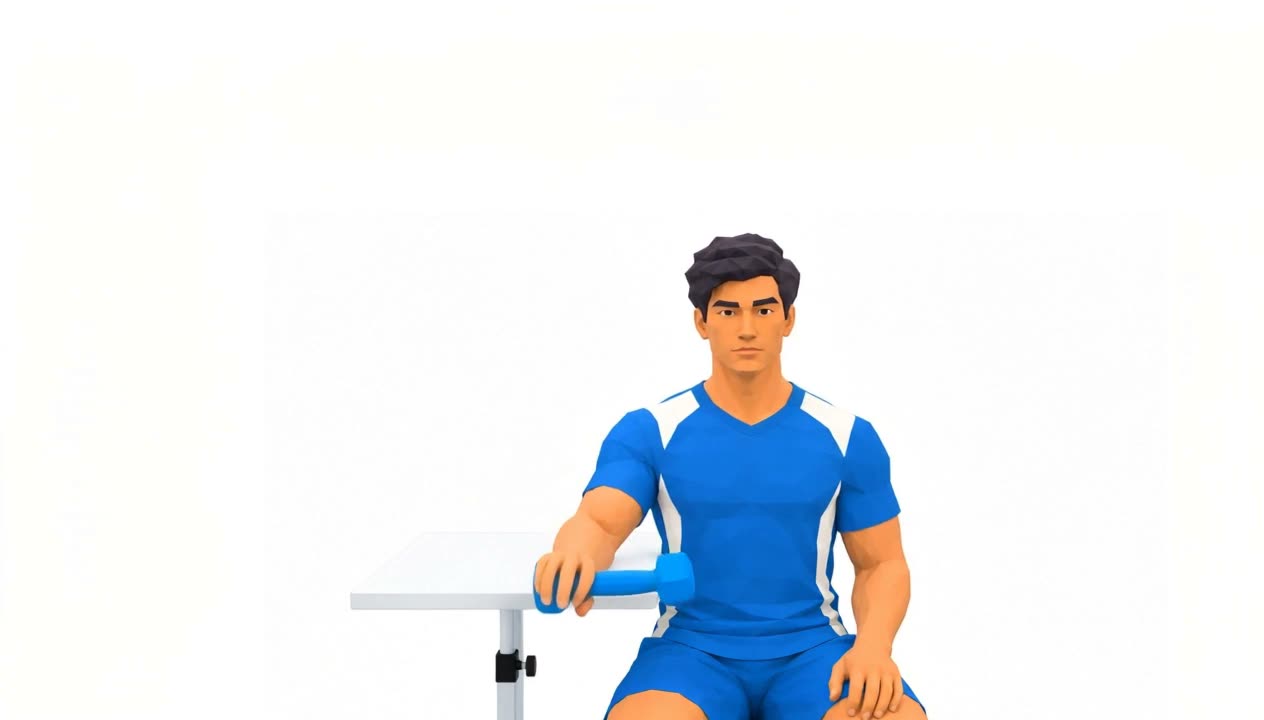
Supinator strengthening
Supinator strengthening targets the muscles responsible for turning the forearm palm-up, which share fascial connections and load requirements with the lateral elbow tendons. By improving the load capacity of the supinator, this exercise may help reduce excessive stress on the common extensor origin during gripping and twisting, supporting tissue adaptation in lateral epicondylalgia.
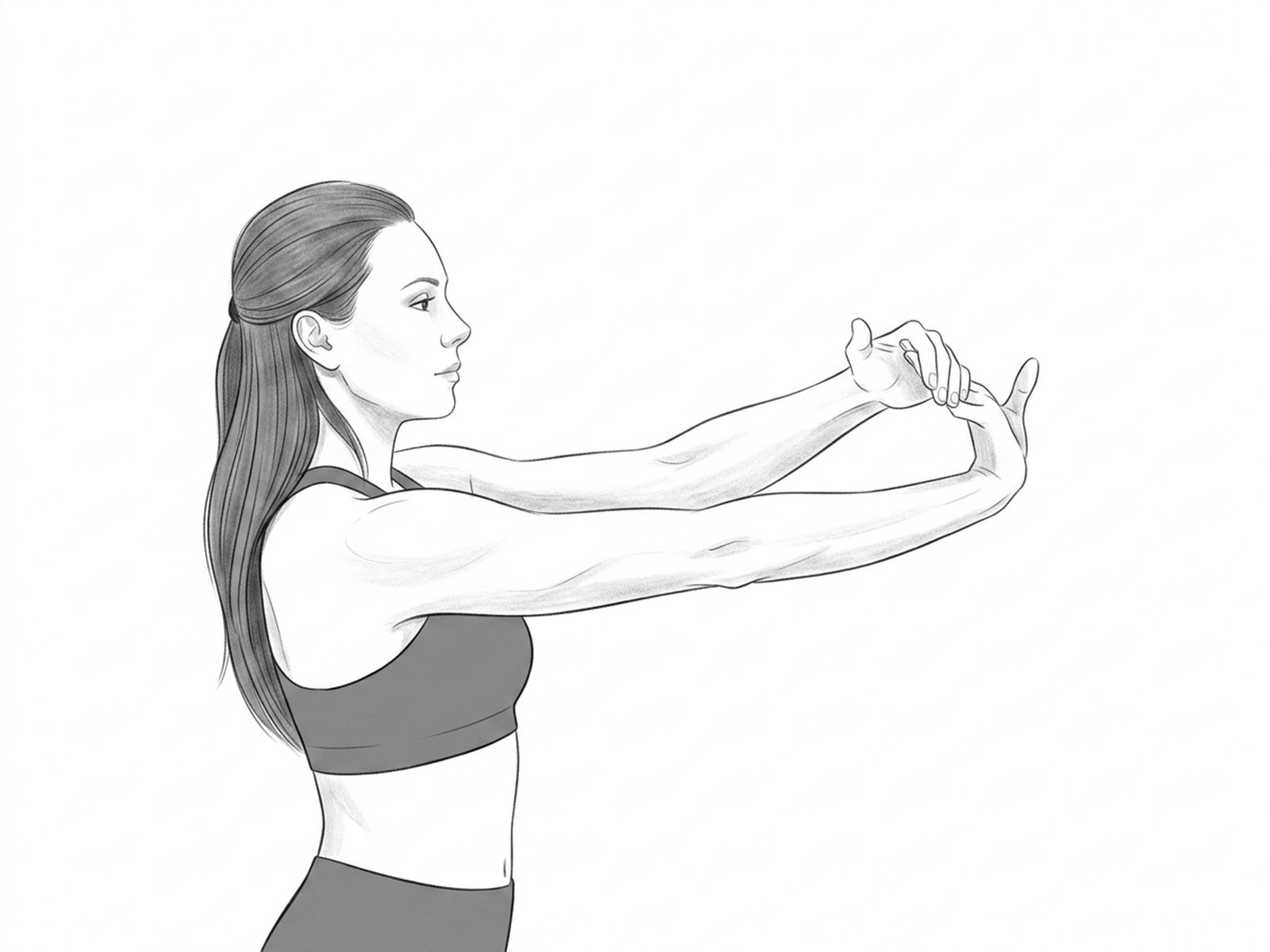
Wrist Flexor Stretch
Stretch of the wrist flexors and the common flexor apparatus. Reduces pressure in the carpal tunnel and complements the neural mobilization.
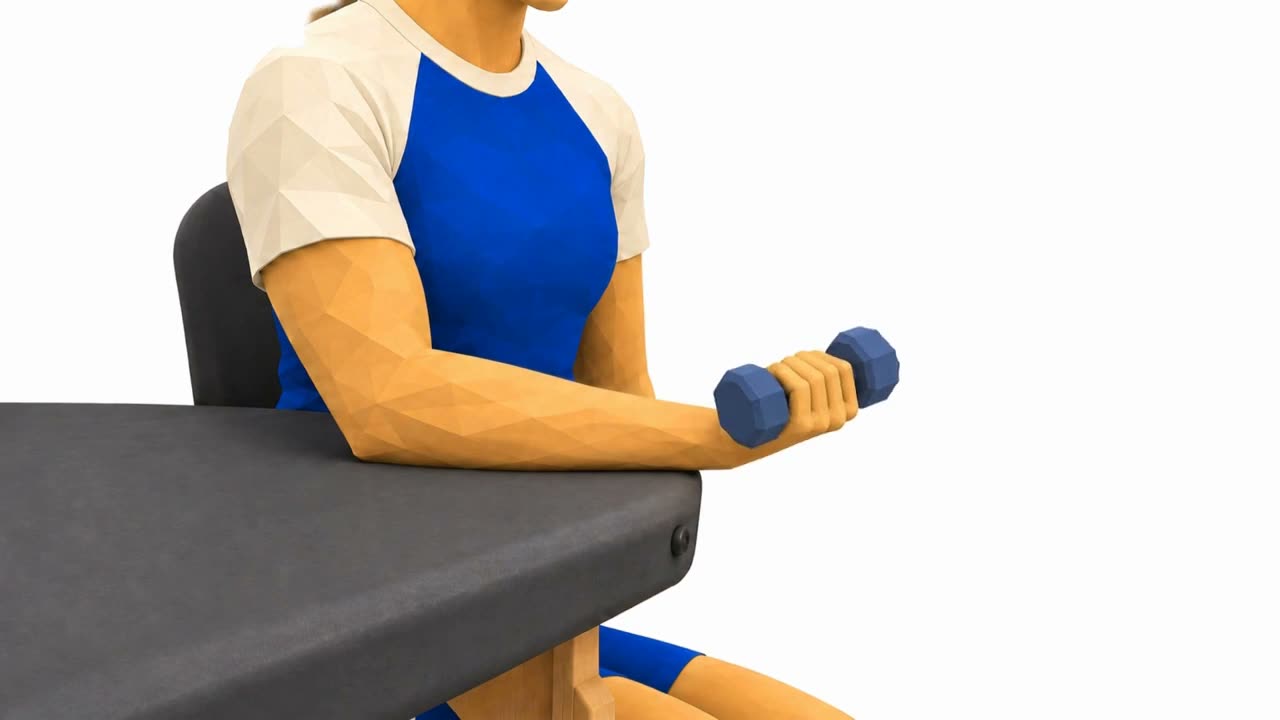
Wrist curls
With your palm facing up, you curl a light weight upward using only your wrist, then lower it slowly. It works the wrist flexors, the forearm muscles that start near the bony point on the inside of your elbow. The slow lowering is the part to focus on.