Therapeutic exercise
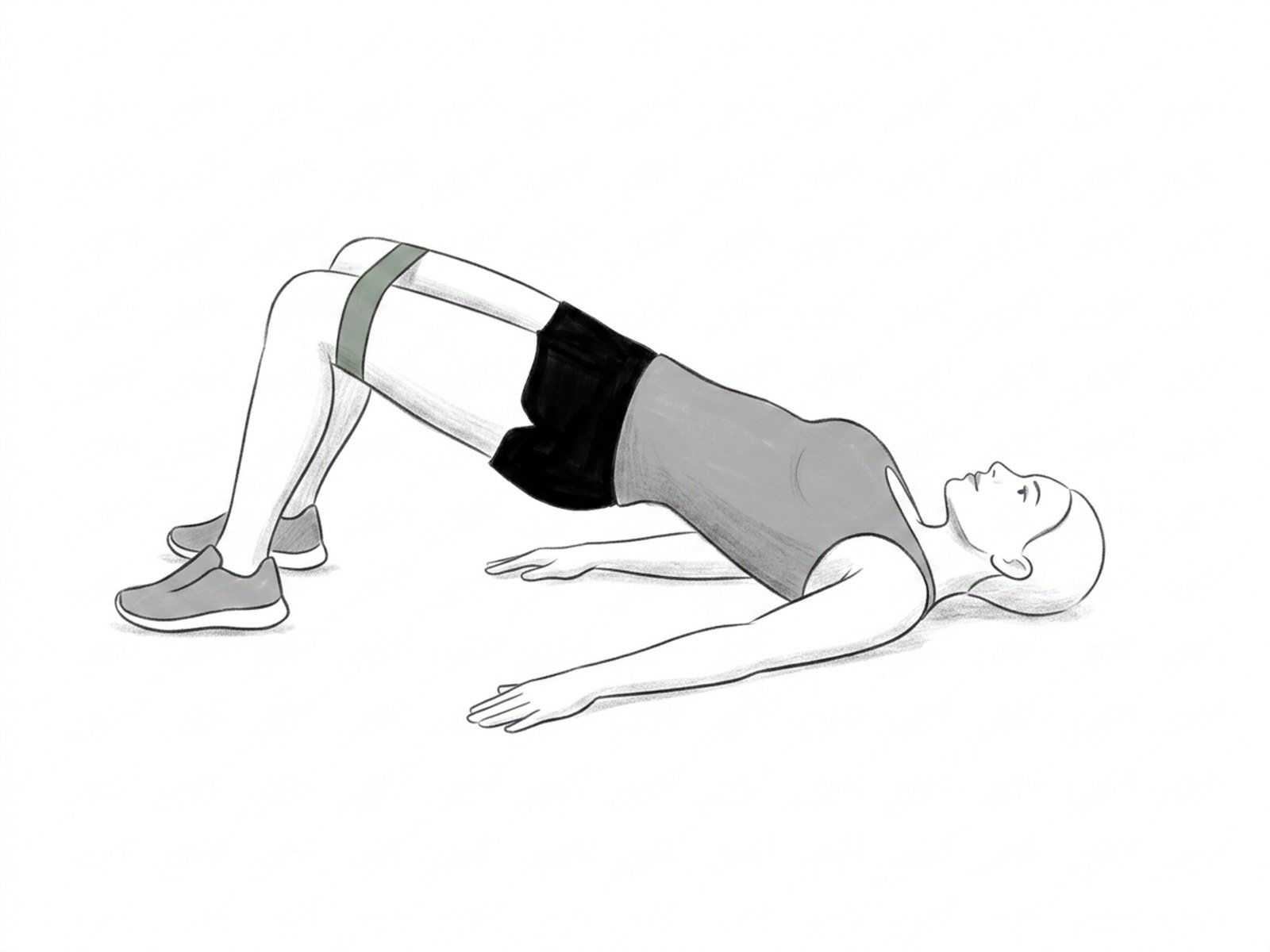
Banded Glute Bridge
Progression of the traditional glute bridge with a resistance band around the knees, adding an active abduction component during pelvic elevation. Recruits the gluteus medius simultaneously with the gluteus maximus — an advanced progression for pelvic-girdle stabilization.
How to perform
- Starting position. Lie face-up with knees bent and a resistance band around the upper knees.
- Step 2. Maintain light band tension throughout the entire movement — the knees should push against the band (active abduction).
- Step 3. Squeeze the glutes and lift the hips until the body forms a straight line from knee to shoulder, keeping band tension.
- Step 4. Hold the top position for 3 seconds, feeling both the gluteus maximus and medius activate.
- Return. Lower slowly over 3 seconds, controlling the descent vertebra by vertebra.
When not to perform
- Acute low back pain with radiation
- Trochanteric bursitis in an inflammatory phase
- Recent hip or spine surgery
- Acute sacroiliac pain
- Gluteal tendinopathy in a reactive phase
- Symptomatic lumbar disc herniation
Medical disclaimer. These exercises are presented for informational purposes only. Always consult your physician before starting any exercise program, especially in case of acute pain, recent injury, or underlying clinical condition.
Related Exercises
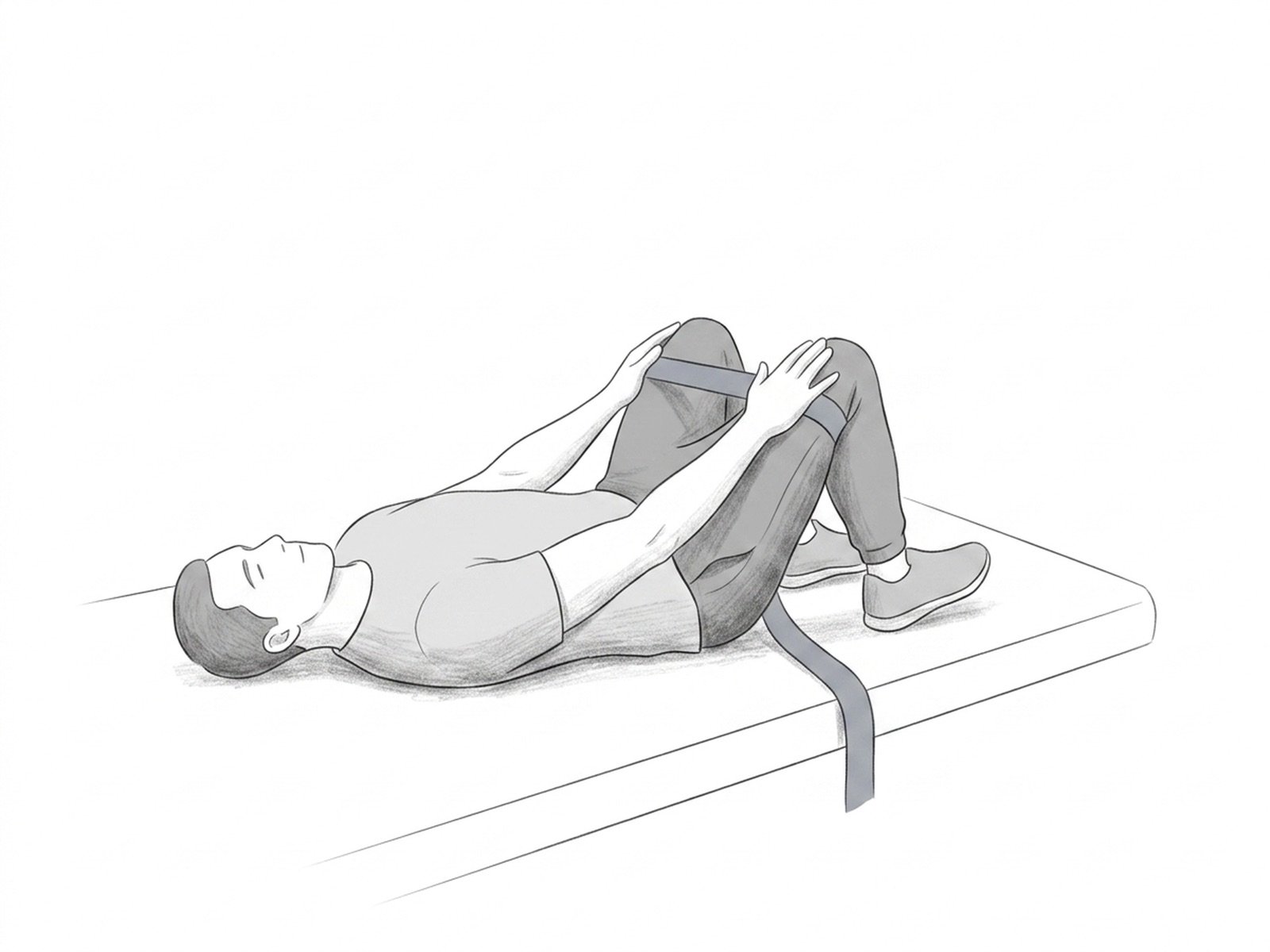
Isometric Hip Abduction with a Strap
Isometric contraction of the hip abductors against the resistance of a strap or band around the knees. Acts in the vector opposite to adduction, completing sacroiliac stabilization work — both isometrics (adduction and abduction) are prescribed together.
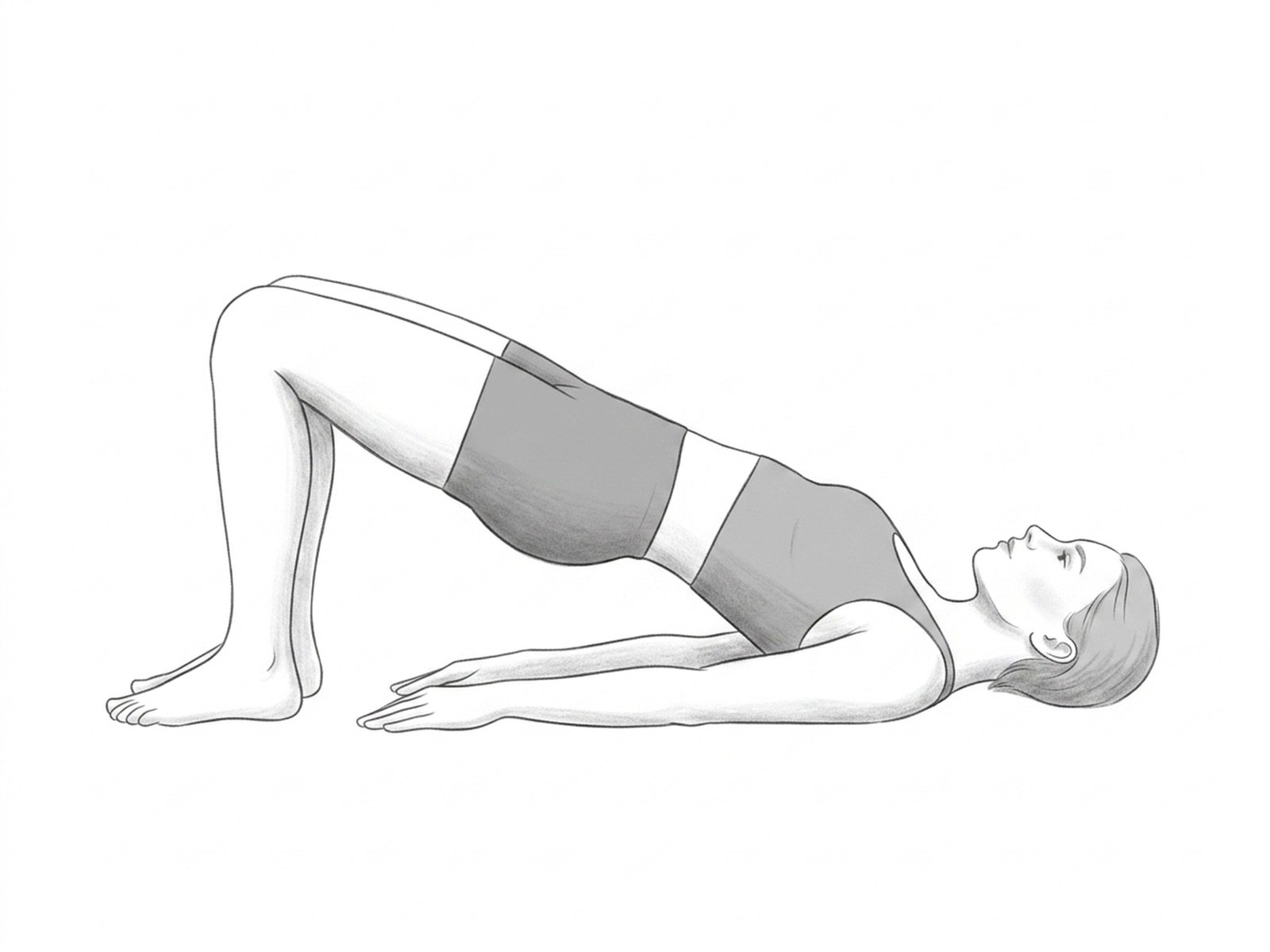
Glute Bridge
Strengthens the gluteus maximus and the posterior chain. Reduces the compensatory load on the lumbar musculature — a common pattern in people with gluteal weakness and an anterior pelvic tilt.
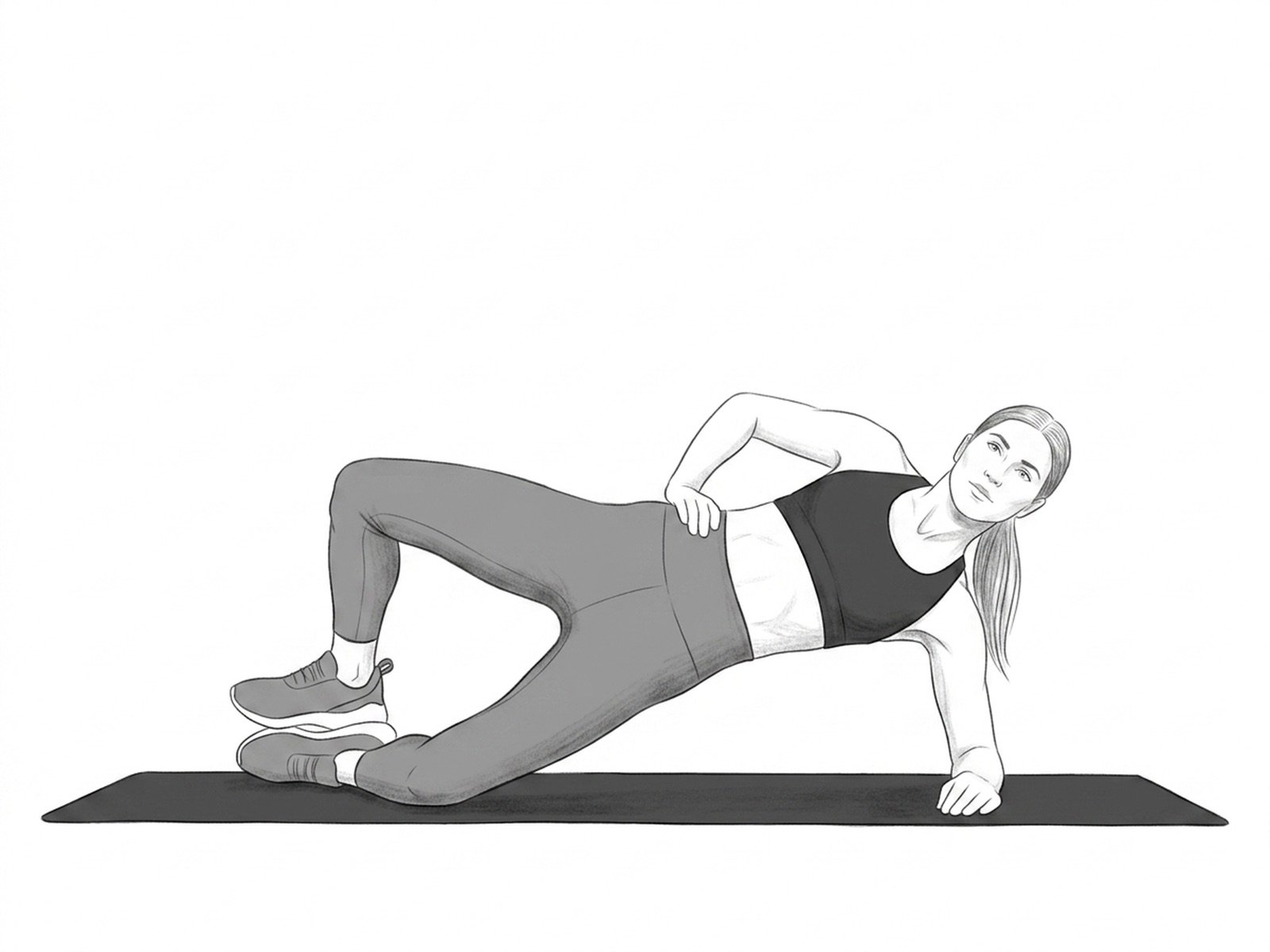
Clamshell
Strengthens the gluteus medius and the external hip rotators. Essential in hip osteoarthritis to reduce the compensatory Trendelenburg pattern during gait.