Hip hinge
A way to practice bending forward from your hips, with your knees soft, your back straight and no weight in your hands. No trial of it was found, and it is not shown to protect your back.
Muscles worked
Illustration demonstrating the position of the Hip hinge exercise.
Biomechanical Execution Sequence
07 phases- Starting position
Stand with your feet hip-width apart.
- Phase 2
Put your flat hands on your hips.
- Phase 3
Bend your knees slightly.
- Phase 4
Push your hips slowly back, as if closing a door behind you.
- Phase 5
Let your upper body tip forward, keeping your back straight from your hips to your head.
- Phase 6
Stop when you feel a mild stretch at the back of your thighs, or sooner if you need to.
- Return
Press your hips forward slowly to stand tall.
Prescribed in Clinical Guides
Medical disclaimer. These exercises are presented for informational purposes only. Always consult your physician before starting any exercise program, especially in case of acute pain, recent injury, or underlying clinical condition.
Related Exercises
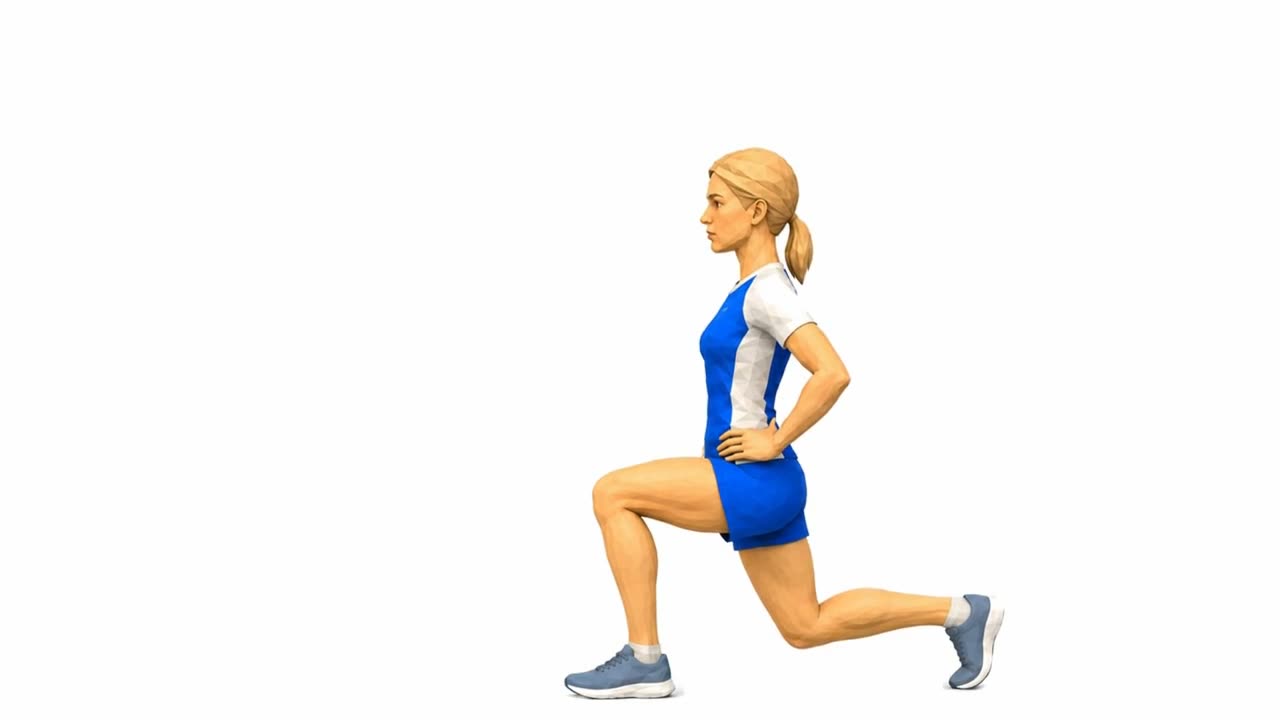
Reverse lunge
A lunge that steps backward instead of forward. You lower your body over a bent front leg, then step back up to standing. It works the thigh and buttock muscles. It is a general leg strength exercise, not a tested treatment for any condition.
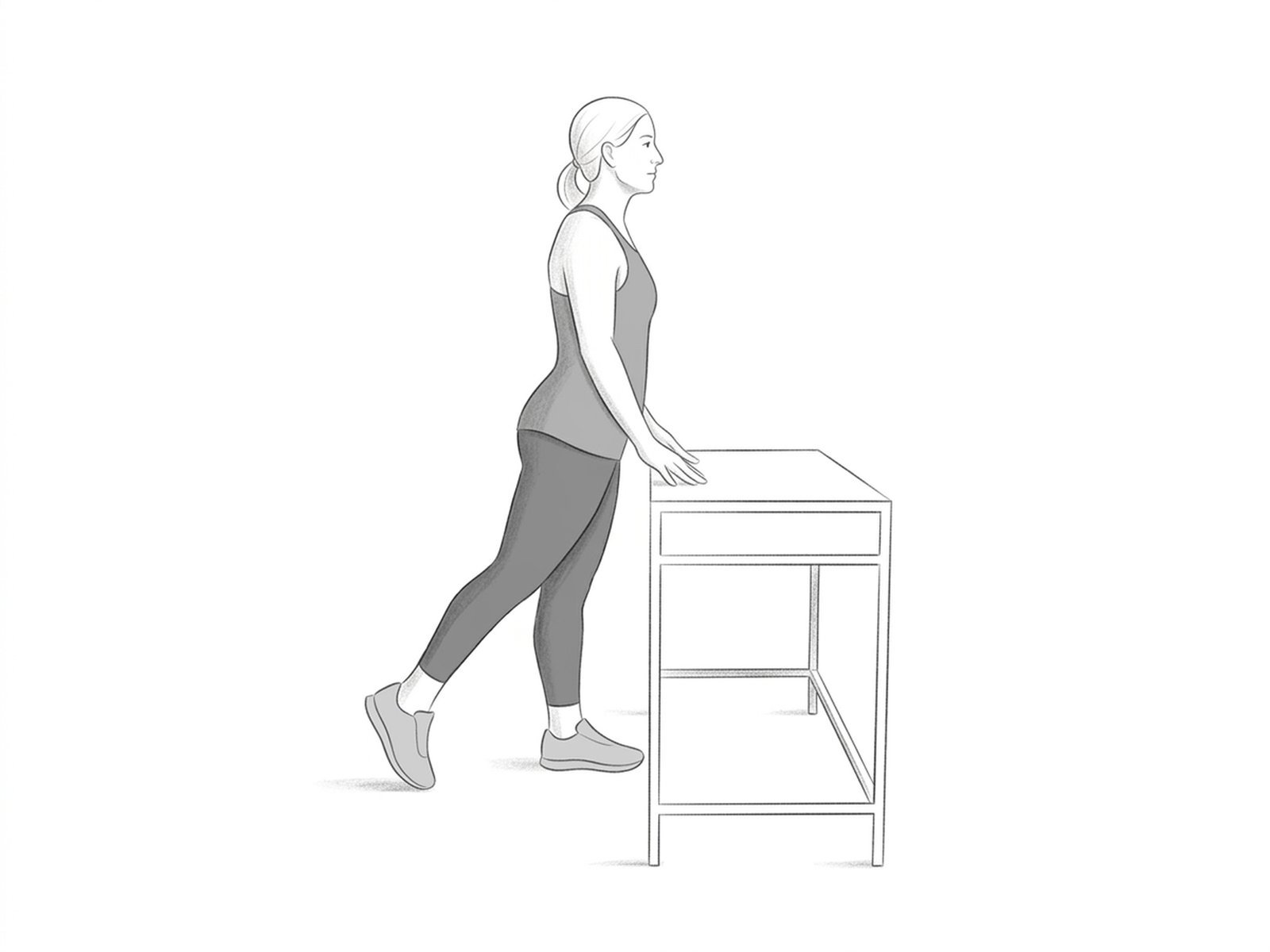
Standing Hip Extension
Strengthens the gluteus maximus in an open kinetic chain, with high target-muscle activation in a functional pattern. Essential in trochanteric bursitis associated with gluteal weakness.
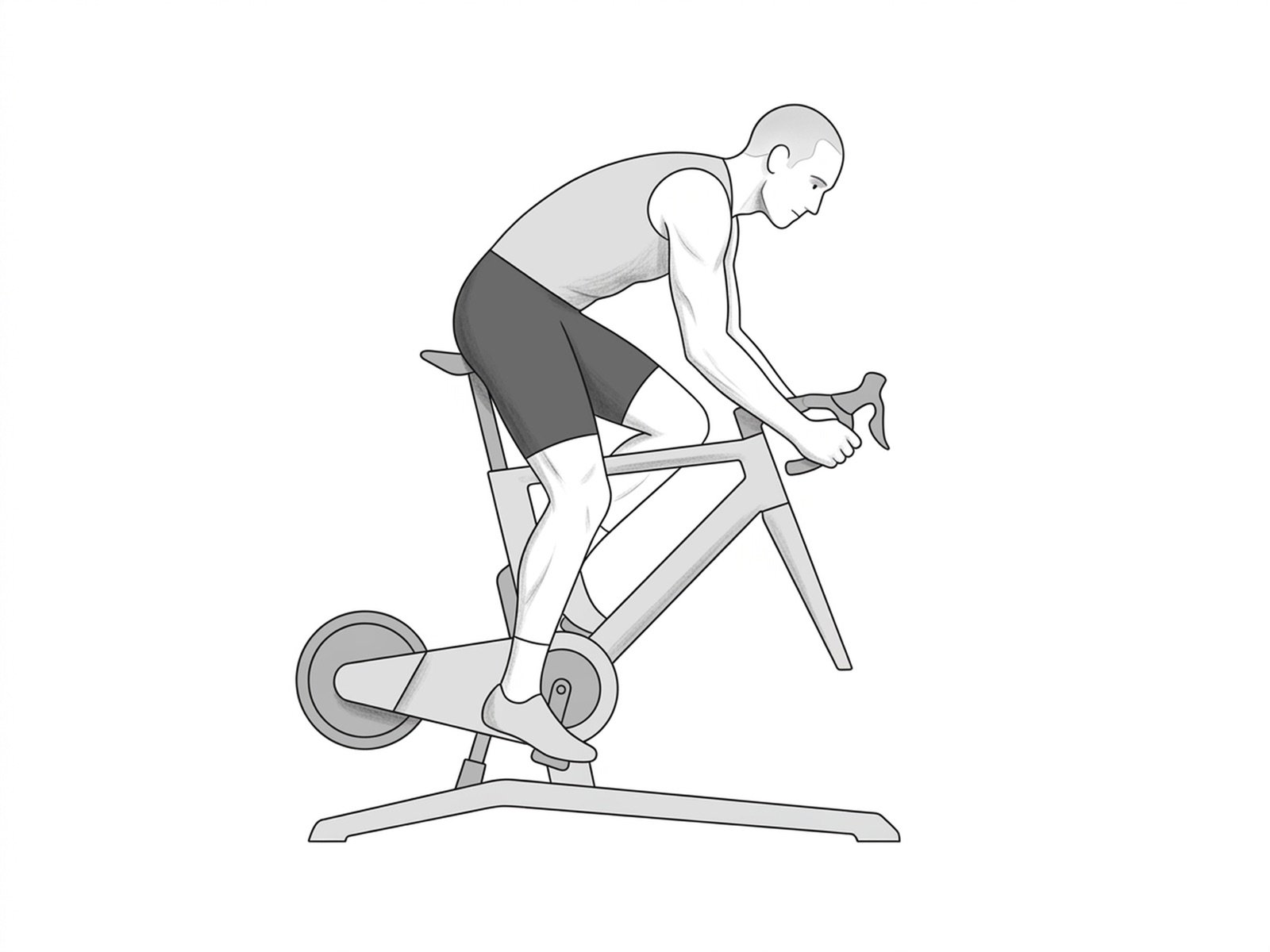
Stationary Cycling
Closed-kinetic-chain aerobic exercise on a stationary bike — cycling preserves the joints without impact while maintaining cardiovascular conditioning in patients with hip and knee osteoarthritis and spinal stenosis.