Therapeutic exercise
Isometric Shoulder External Rotation
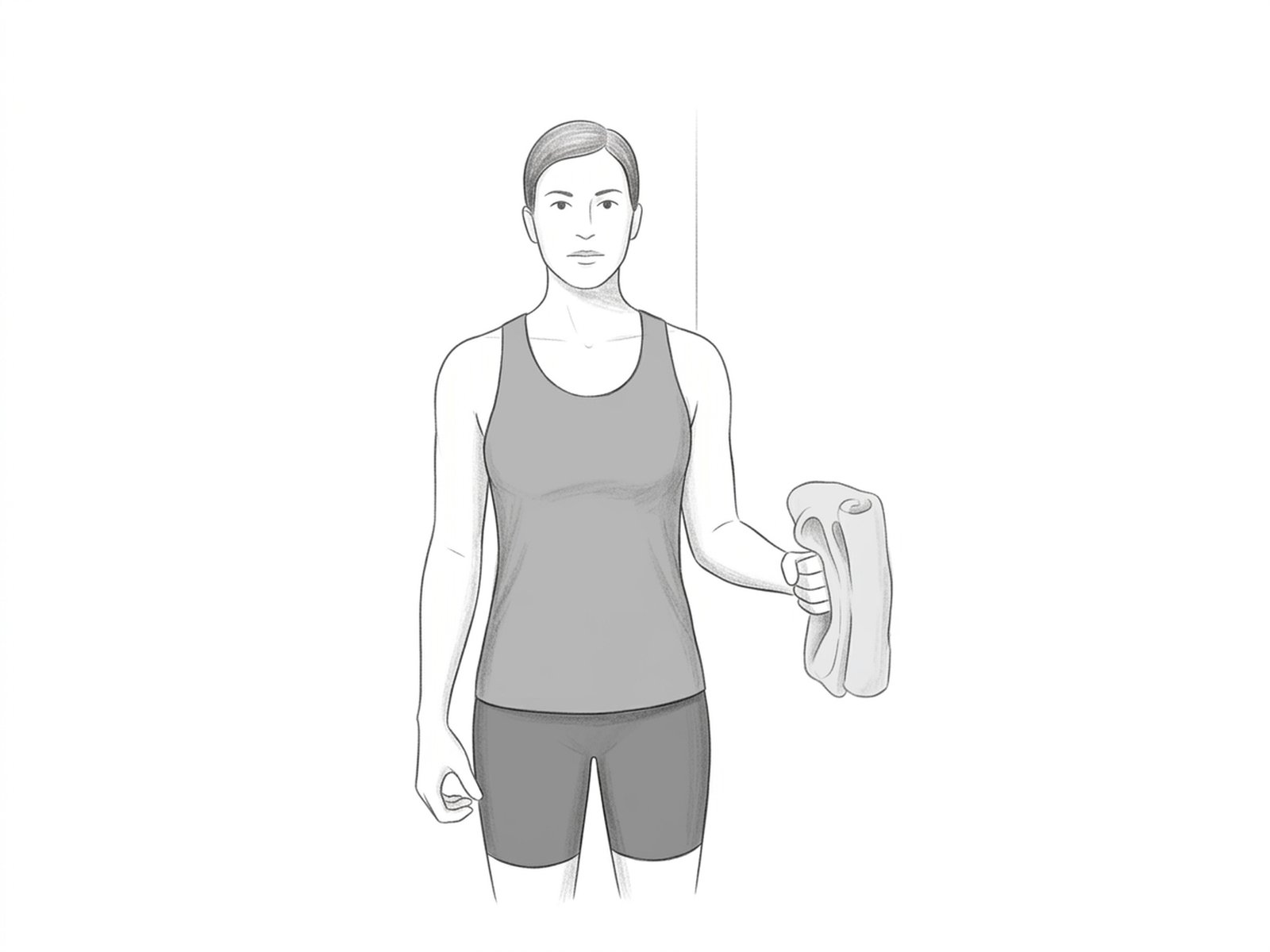
Isometric contraction of the shoulder external rotators (infraspinatus and teres minor) without joint movement. The first stage of rehabilitation in reactive rotator-cuff tendinopathy — reduces pain through central analgesic mechanisms without loading the inflamed tendon.
How to perform
- Starting position. Stand next to a wall, with the elbow on the affected side flexed to 90° and tucked against the trunk.
- Step 2. Place a rolled towel between the elbow and the trunk to keep the arm aligned.
- Step 3. With an open hand and a neutral wrist, press the back of the hand against the wall as if performing external rotation — but without allowing the movement.
- Step 4. Apply about 70% of maximum force and hold for 30–45 seconds, breathing normally.
- Return. Gradually release the contraction, rest for 1 minute, and repeat. There should be no pain during the contraction — if there is, reduce the intensity.
When not to perform
- Complete rotator-cuff rupture
- Post-operative shoulder in the first 6 weeks
- Anterior glenohumeral instability
- Uncontrolled arterial hypertension (isometrics raise intrathoracic pressure)
- Recent fracture of the humeral head
- Recent shoulder dislocation
Medical disclaimer. These exercises are presented for informational purposes only. Always consult your physician before starting any exercise program, especially in case of acute pain, recent injury, or underlying clinical condition.
Related Exercises
Side-Lying Shoulder Wiper
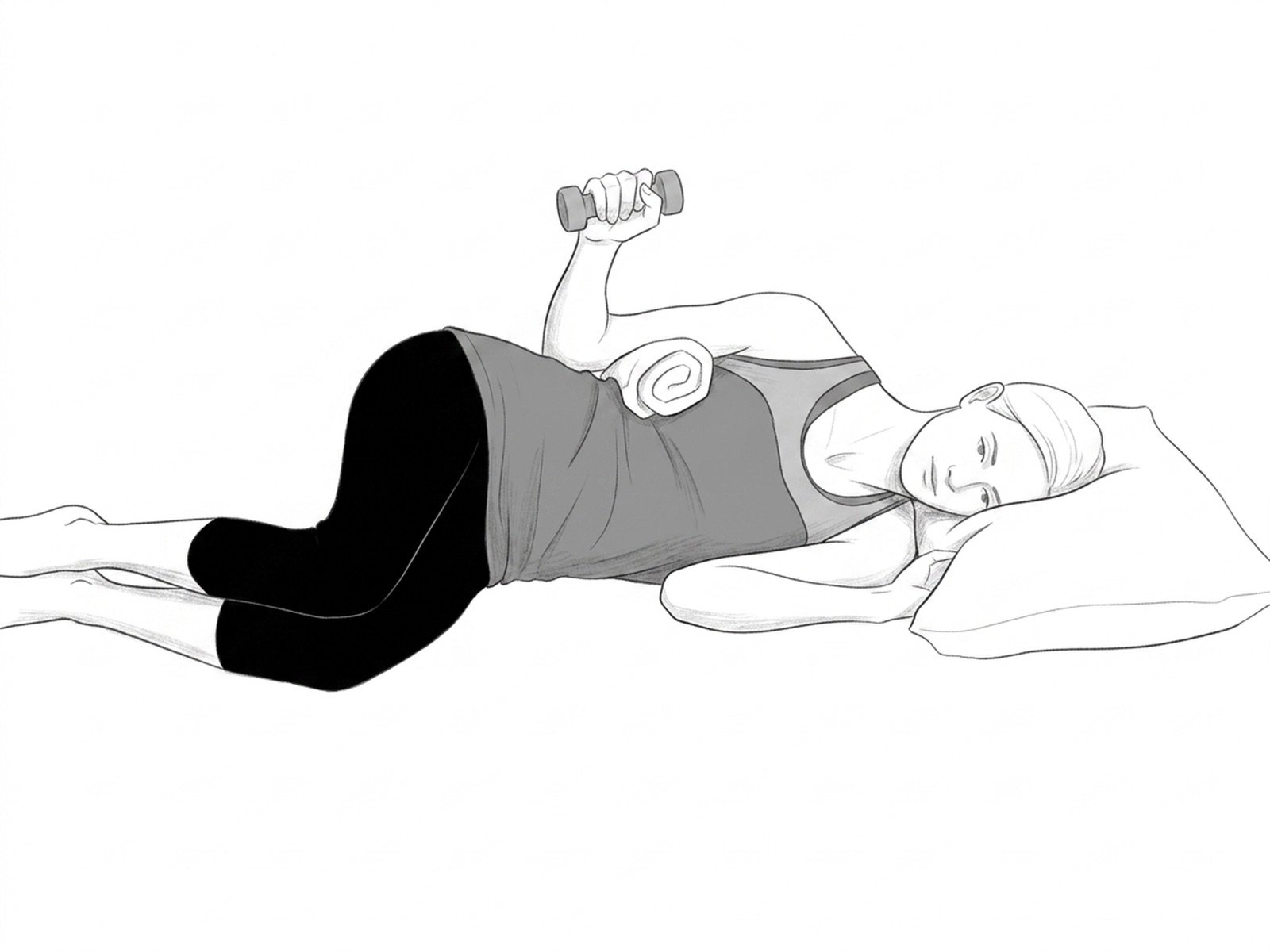
A wide windshield-wiper-like sweeping motion of the shoulder in side-lying, covering the range of internal and external rotation in a controlled manner. Isolates the subscapularis and the posterior cuff simultaneously — useful for recovering range and coordination after immobilization.
Side-Lying Eccentric External Rotation
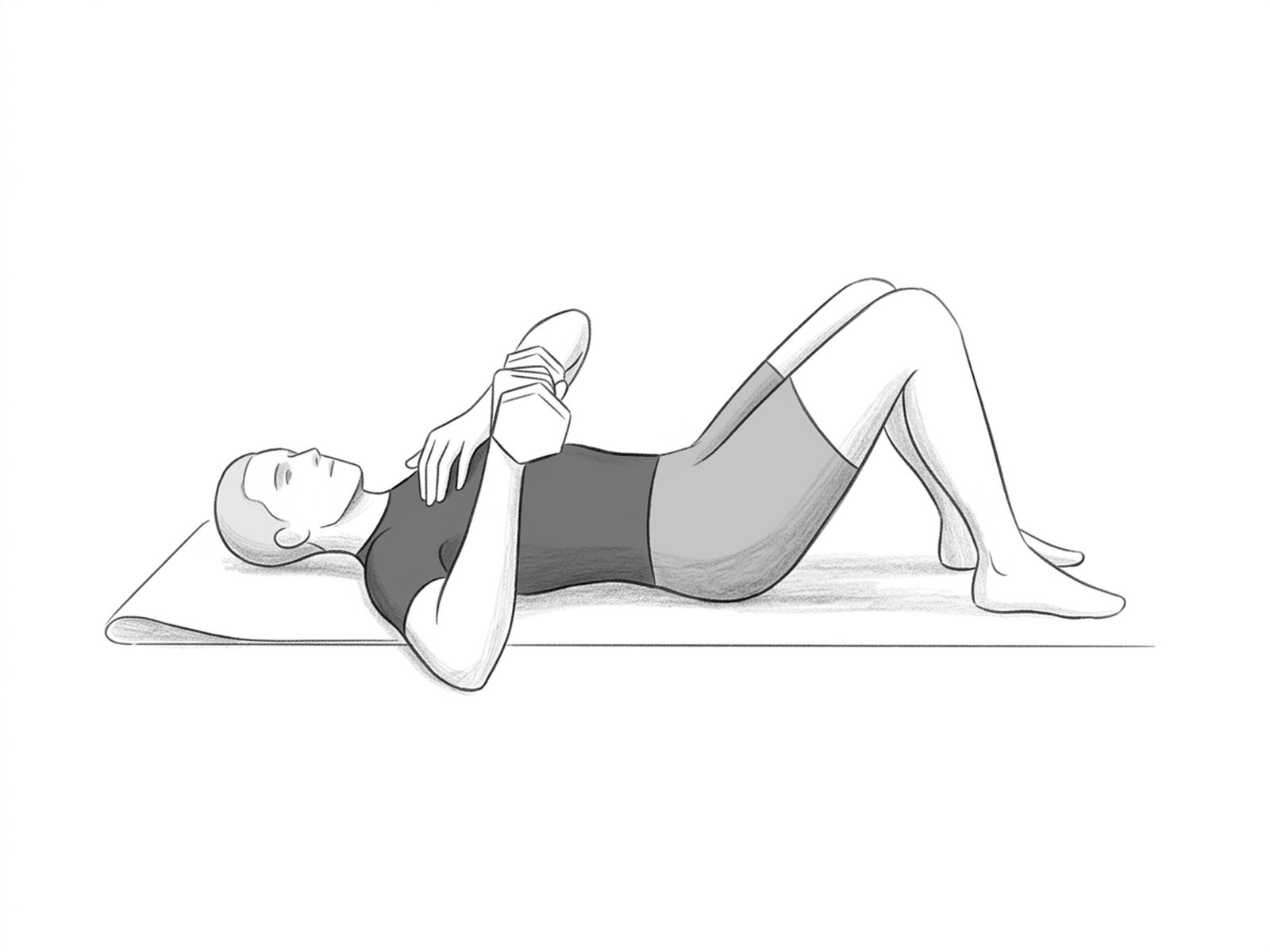
Eccentric variant of side-lying external rotation with a dumbbell. The focus is on the controlled lowering phase — essential in rotator-cuff tendinopathy rehabilitation, when the patient already tolerates dynamic load but needs to remodel the tendon with prolonged loading.
Banded External Rotation
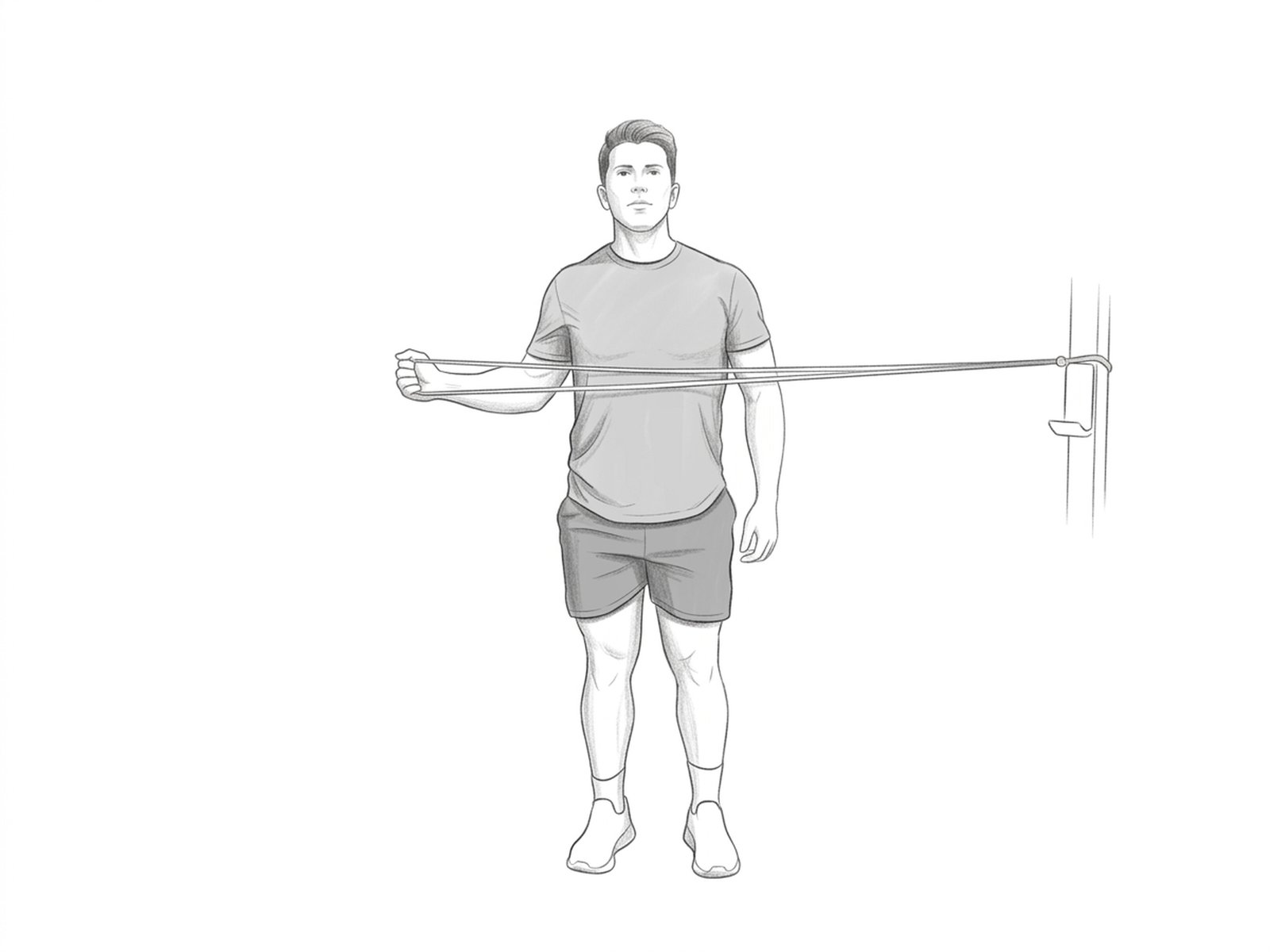
A functional variant of external rotation, performed standing with elastic resistance. Excellent for progression and maintenance in chronic rotator-cuff tendinopathy.