Therapeutic exercise
Hamstring Isometric Hold
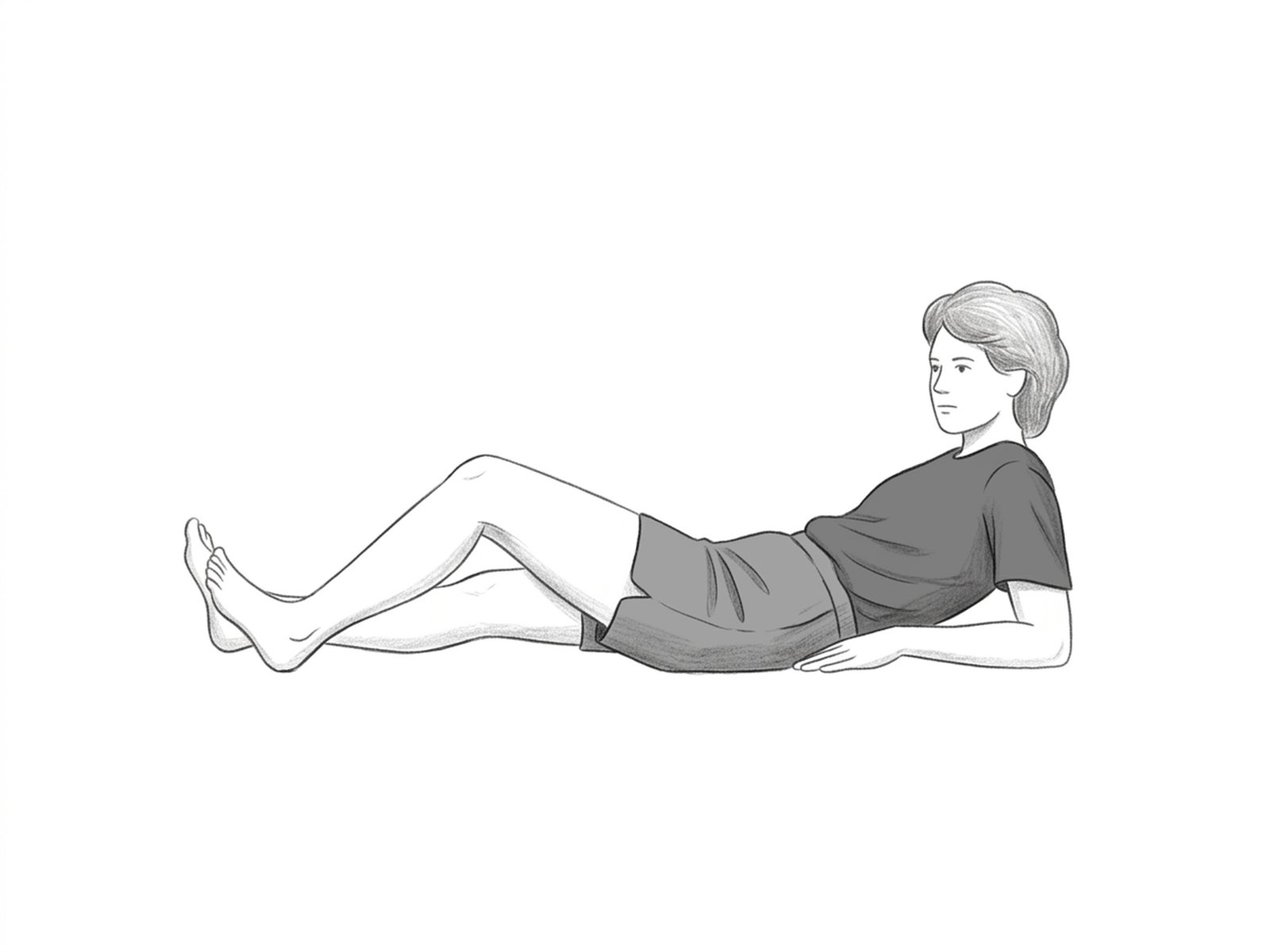
Isometric contraction of the hamstrings in knee flexion against fixed resistance. This is the first stage of hamstring strain rehab — it produces immediate analgesic effect and loads the tendon without generating dynamic micro-trauma.
How to perform
- Starting position. Lie face up on a mat with the knees flexed to about 30 degrees and the feet flat on the floor.
- Step 2. Place a firm pillow or ball under the posterior heel of the affected side, creating a small elevation.
- Step 3. Press the heel down into the pillow, attempting to flex the knee — but holding the position (the resistance does not give).
- Step 4. Apply about 70% of maximum force and hold for 30 to 45 seconds, feeling the intense contraction in the hamstrings.
- Return. Release gradually and rest 1 minute before repeating. There should be no severe pain during contraction — if there is, reduce intensity.
When not to perform
- Complete hamstring rupture
- Recent post-operative hamstring repair
- Acute muscle hematoma (first 72 hours)
- Lower-limb deep vein thrombosis
- Uncontrolled arterial hypertension (isometric loading raises blood pressure)
- Pain with radiation suggestive of associated radiculopathy
Medical disclaimer. These exercises are presented for informational purposes only. Always consult your physician before starting any exercise program, especially in case of acute pain, recent injury, or underlying clinical condition.
Related Exercises
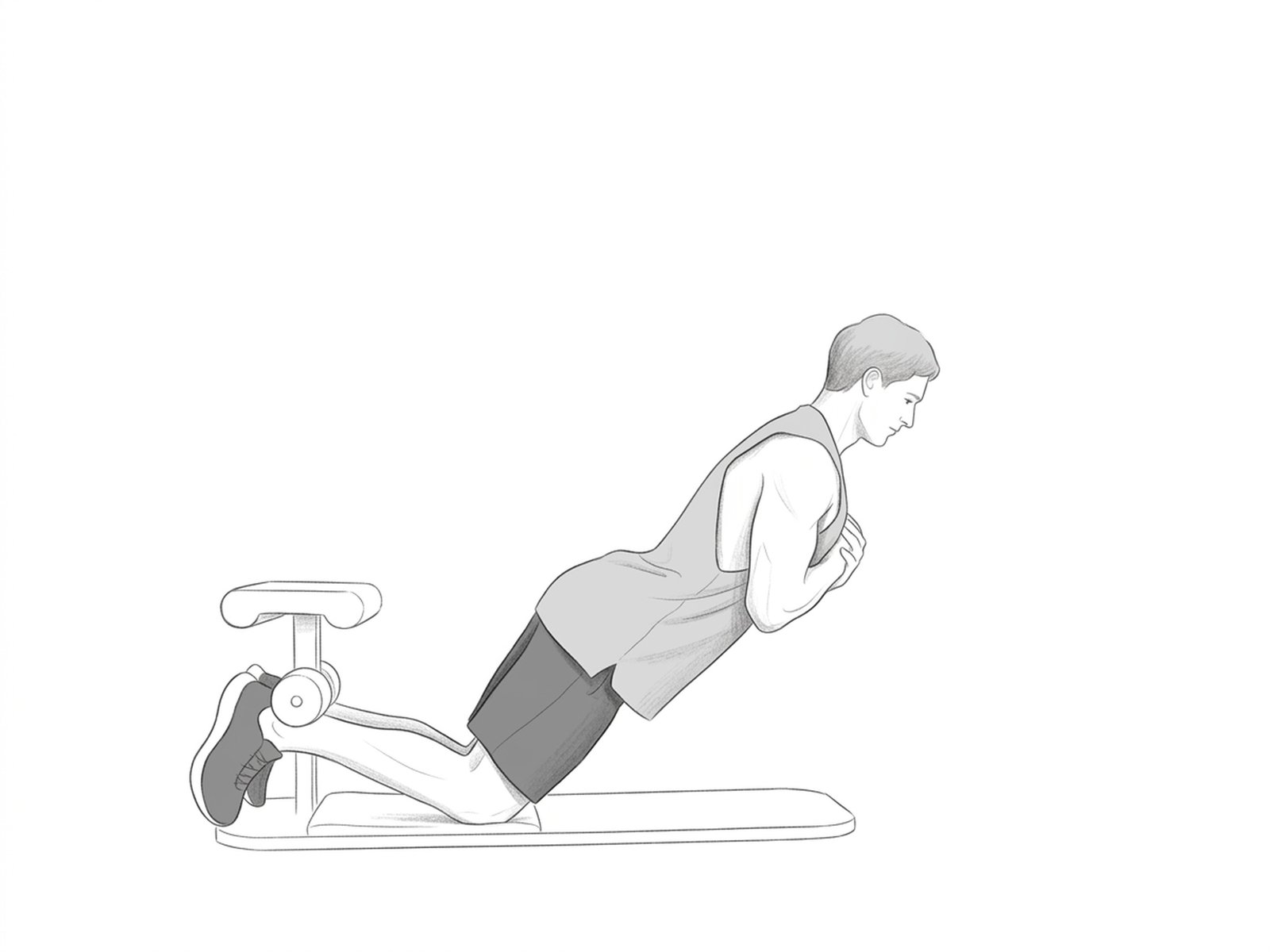
Nordic Hamstring Curl (Eccentric Hamstring)
Classic eccentric protocol for hamstrings — slow forward descent of the body with the knees flexed and ankles fixed. This is the exercise with the strongest scientific evidence for preventing and treating hamstring strain, reducing recurrence rates by up to 50% in athletes.
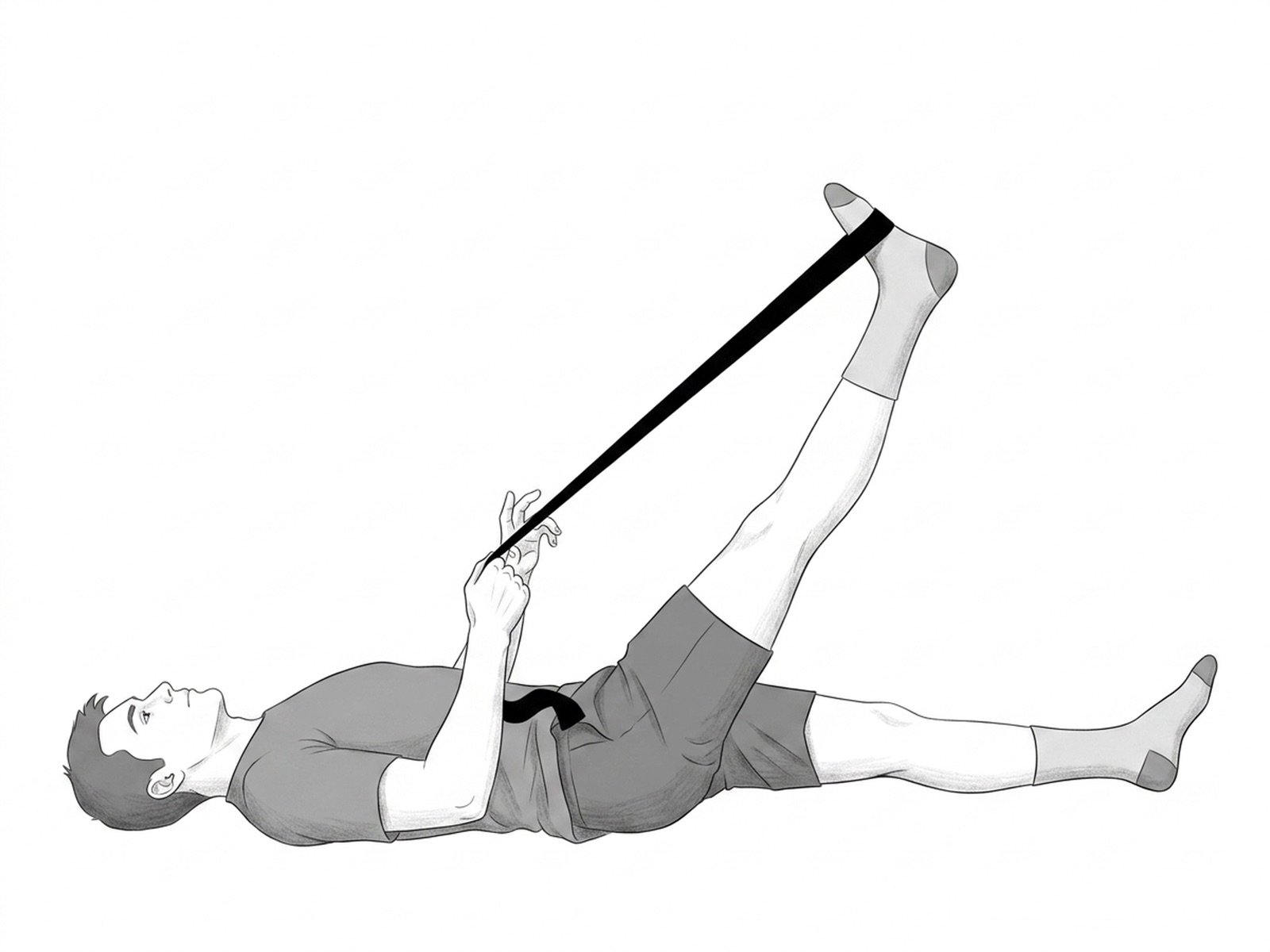
Supine Hamstring Stretch
Stretches the hamstrings without lumbar overload. A key exercise for chronic low back pain — shortened hamstrings increase pelvic flexion and disc loading.
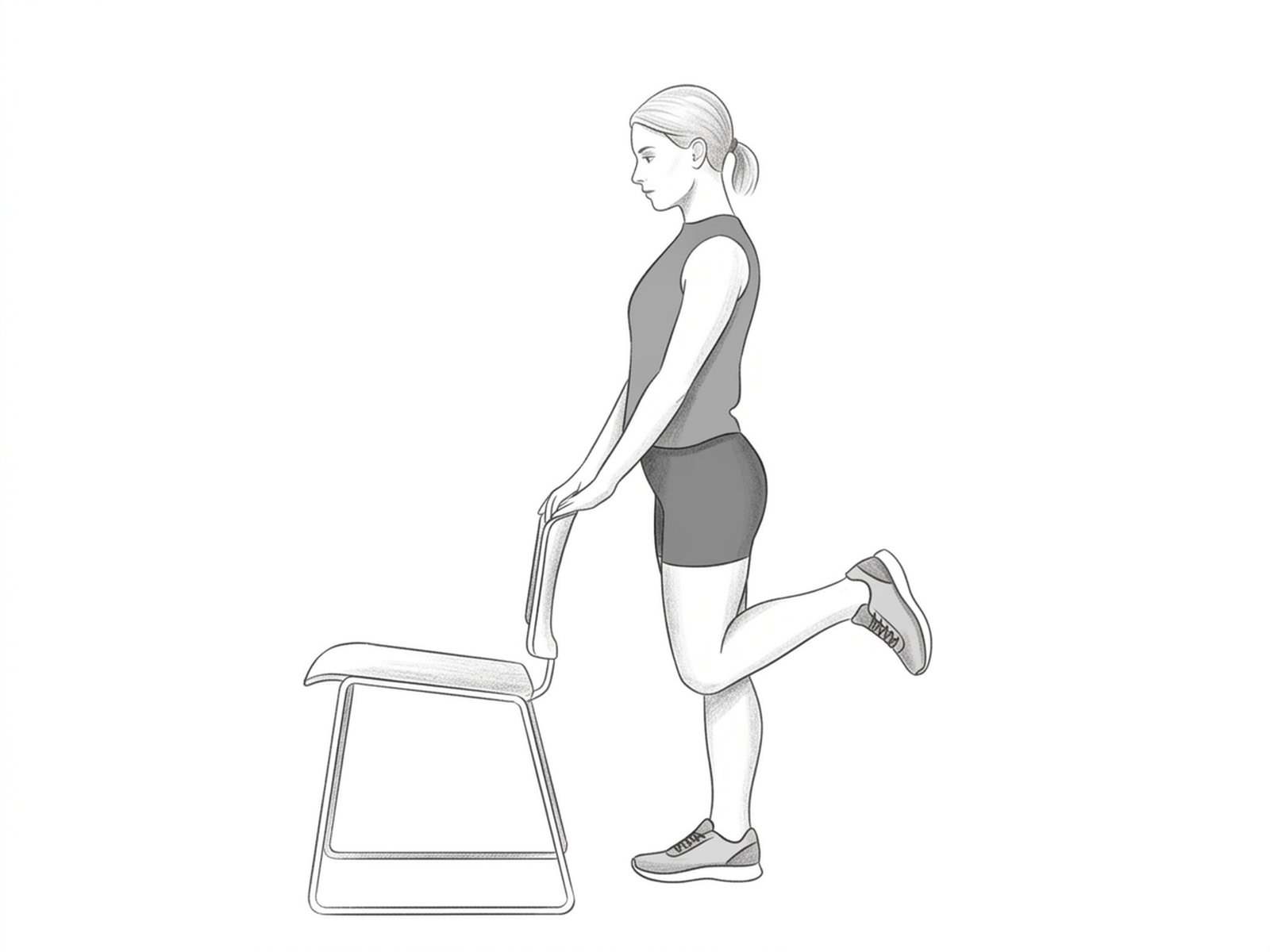
Standing Hamstring Curl
Isolated hamstring strengthening in an open kinetic chain. Re-balances the quadriceps-hamstring ratio, frequently disproportionate in patients with knee osteoarthritis and patellofemoral syndrome.