Therapeutic exercise
Neutral-Position Isometric Wrist Extension
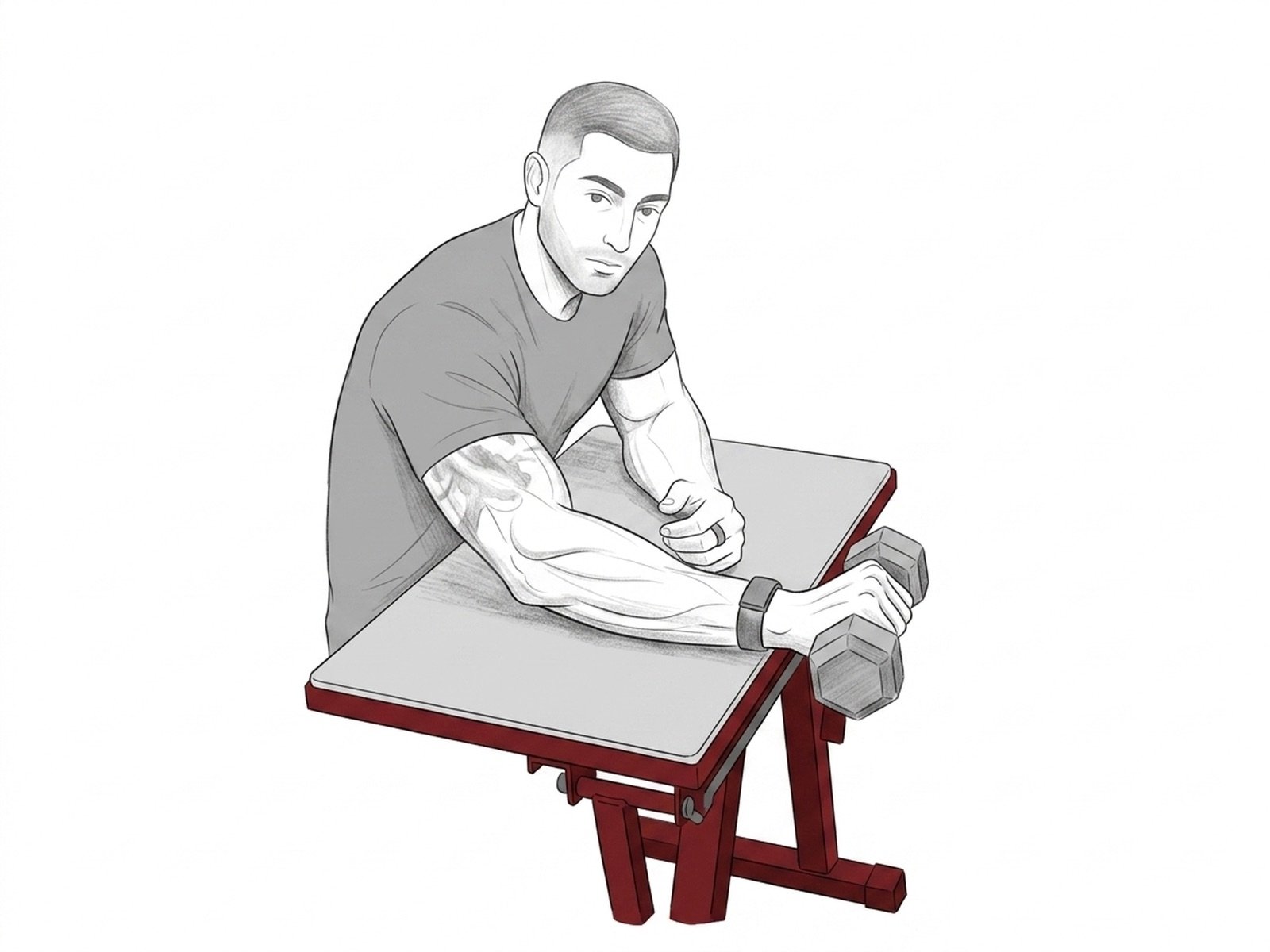
Isometric contraction of the wrist extensors in a neutral position, without dynamic mobilization. Indicated in radial tunnel syndrome during a reactive phase — maintains muscular capacity without generating dynamic compression of the deep radial nerve at the Arcade of Frohse.
How to perform
- Starting position. Sit in a chair with the forearm resting on a table, palm down, wrist neutral and hand off the edge.
- Step 2. Place the contralateral hand over the back of the affected hand, applying downward resistance.
- Step 3. Push the back of the hand against the contralateral hand's resistance, trying to extend the wrist — without allowing movement.
- Step 4. Apply about 70% of maximum force and hold for 30–45 seconds, breathing normally.
- Return. Release the contraction gradually, rest for 1 minute, and repeat. There should be no neural pain during execution — if there is, reduce the force.
When not to perform
- Radial tunnel syndrome with progressive paresis
- Lateral epicondylitis in an intense inflammatory phase
- Recent radial fracture
- Recent forearm surgery
- Uncontrolled arterial hypertension (isometrics raise pressure)
- Acute radial neuritis with severe neuropathic pain
Medical disclaimer. These exercises are presented for informational purposes only. Always consult your physician before starting any exercise program, especially in case of acute pain, recent injury, or underlying clinical condition.
Related Exercises
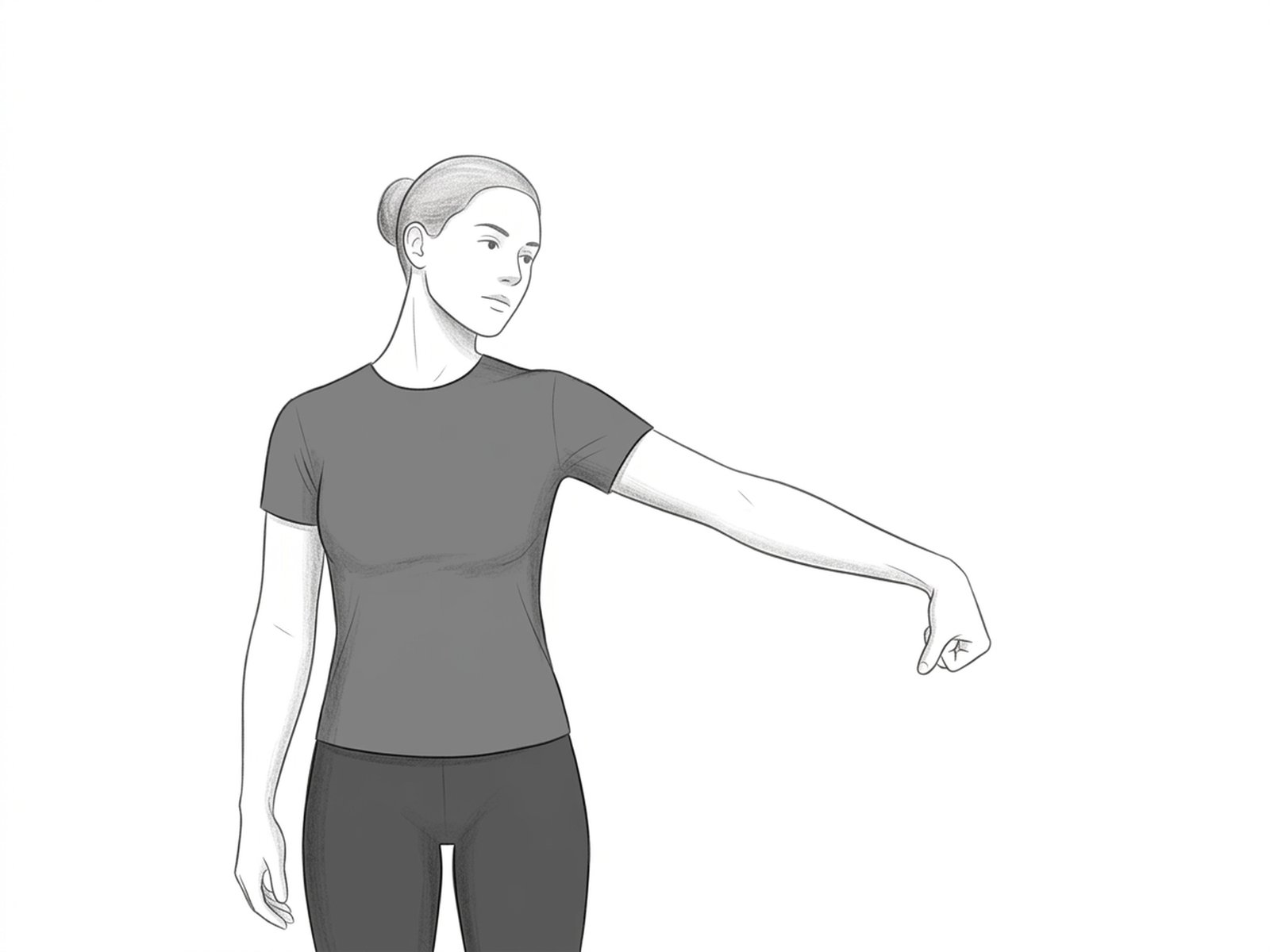
Radial Nerve Glide (Flossing)
Specific neural mobilization of the radial nerve along its path through the elbow and forearm. Indicated when there is a neurogenic component associated with lateral epicondylitis or radial-tunnel syndrome — pain radiates through the common extensor of the fingers, frequently masking the primary diagnosis.
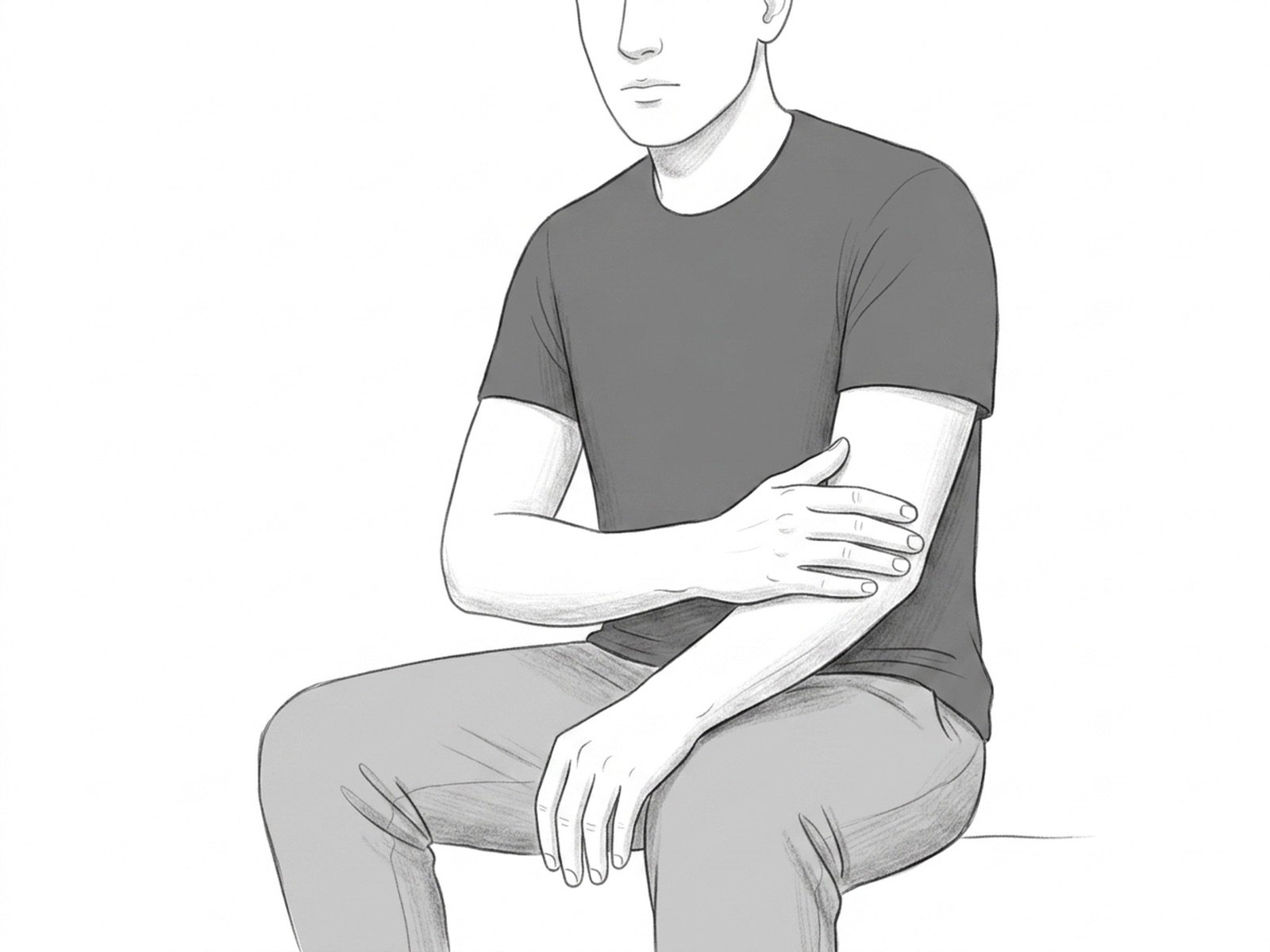
Active Supinator Release
Myofascial release of the supinator muscle combined with active pronation-supination movement. Specific for radial tunnel syndrome (compression of the deep branch of the radial nerve at the Arcade of Frohse) — releases the mechanical compression that generates the pain.
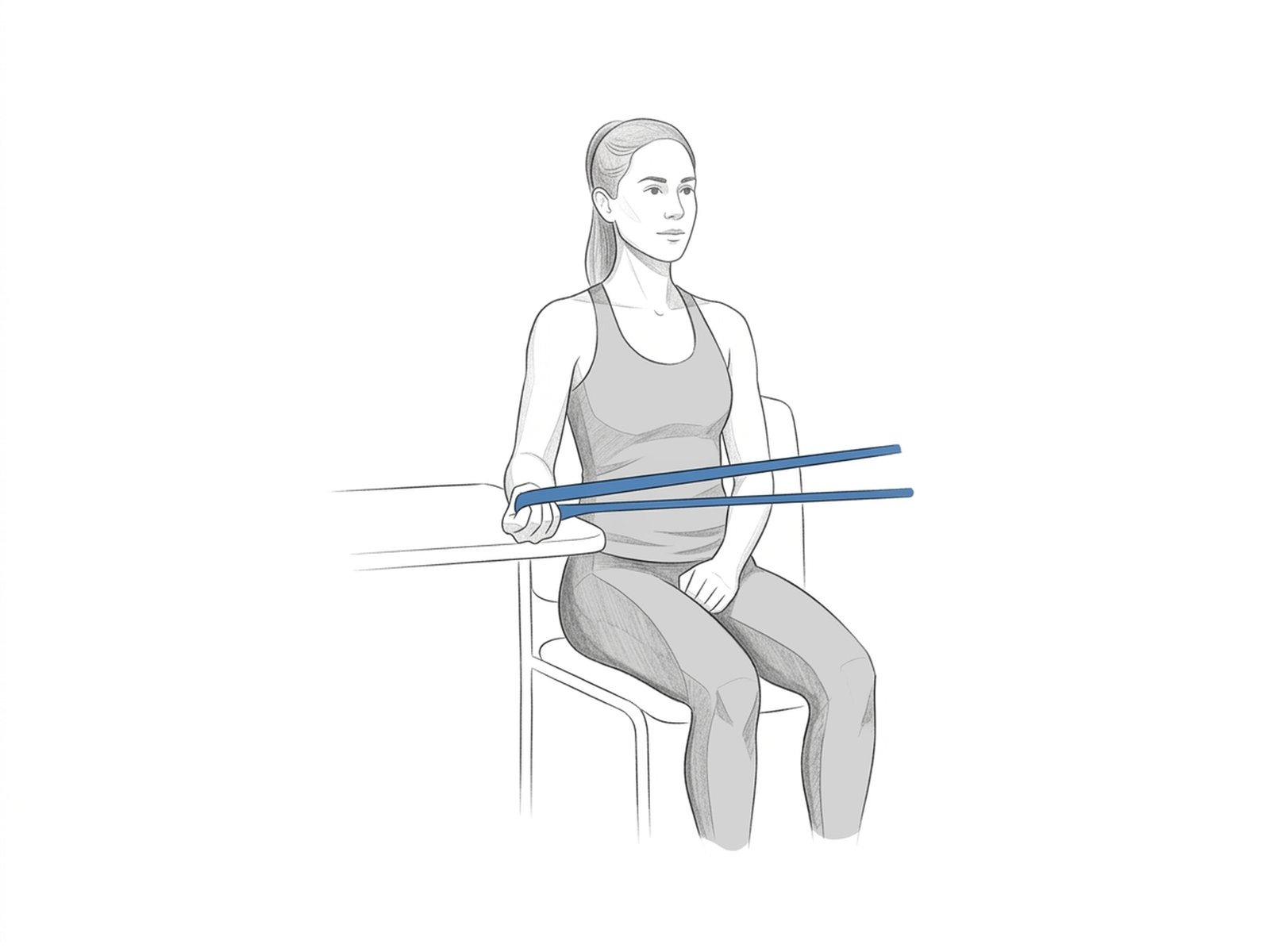
Banded Forearm Supination
Isolated strengthening of the supinator and biceps brachii through forearm rotation against elastic resistance. Useful in the combined treatment of bicipital tendinopathy and lateral epicondylitis — corrects imbalances between pronators and supinators.